Spiritual Travel Thailand : Where Journeys Go Beyond Destinations
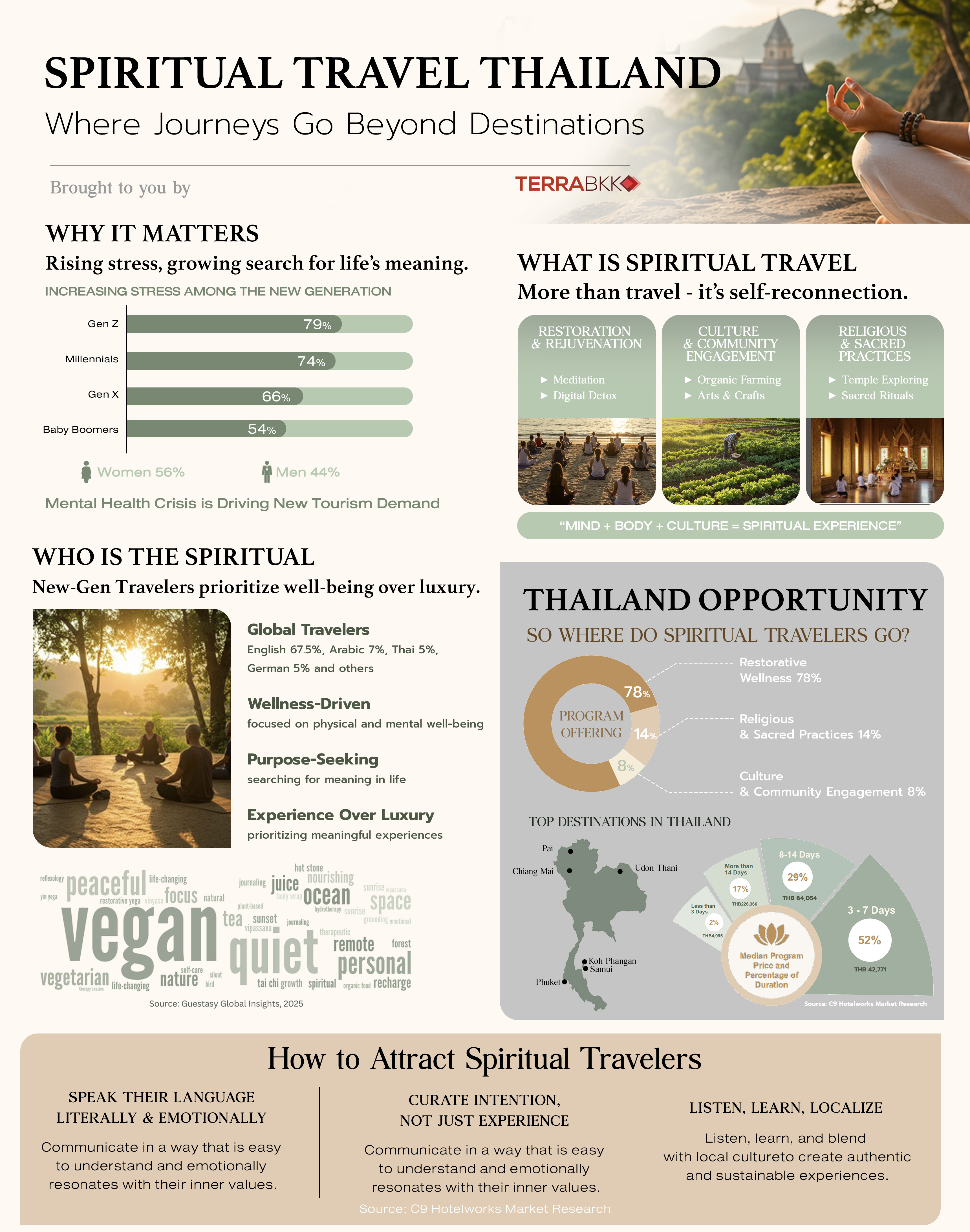
ในช่วงไม่กี่ปีที่ผ่านมา “Spiritual Travel” หรือการท่องเที่ยวเชิงจิตวิญญาณ ได้กลายเป็นหนึ่งในเทรนด์สำคัญของอุตสาหกรรมท่องเที่ยวทั่วโลก รวมถึงประเทศไทย โดยแก่นของการเดินทางรูปแบบนี้ไม่ใช่เพียงการไปถึงจุดหมายปลายทาง แต่คือ “การเดินทางภายใน” เพื่อค้นหาความสงบ สมดุล และความหมายของชีวิต ซึ่งสะท้อนชัดจากรายงาน Spiritual Travel Thailand (May 2025) ที่ชี้ให้เห็นว่าผู้คนยุคใหม่ โดยเฉพาะกลุ่ม Gen Z และ Millennials กำลังเผชิญกับความเครียดในระดับสูงถึง 79% และ 74% ตามลำดับ ส่งผลให้ความต้องการ “การพักใจ” และ “รีเซ็ตตัวเอง” กลายเป็นแรงผลักดันสำคัญของพฤติกรรมการเดินทาง
Spiritual Travel คืออะไร? เมื่อการท่องเที่ยวกลายเป็นการเยียวยาจิตใจ
Spiritual Travel คือการผสมผสานระหว่างการฟื้นฟูร่างกายและจิตใจ (Restoration & Rejuvenation) การมีส่วนร่วมกับวัฒนธรรมและชุมชน (Culture & Community Engagement) และการปฏิบัติทางศาสนาหรือจิตวิญญาณ (Religious & Sacred Practices) โดยครอบคลุมกิจกรรมตั้งแต่การทำสมาธิ (Meditation) การงดหรือลดการใช้อุปกรณ์อิเล็กทรอนิกส์และสื่อสังคมออนไลน์เป็นการชั่วคราว (Digital Detox) การทำเกษตรอินทรีย์ ไปจนถึงการเยี่ยมชมสถานที่ศักดิ์สิทธิ์ ซึ่งล้วนตอบโจทย์การ “ชะลอชีวิต” และการกลับมาเชื่อมโยงกับตัวเองอีกครั้ง
แก่นของ Spiritual Travel คือ “ประสบการณ์แบบองค์รวม” ที่เชื่อมโยงร่างกาย จิตใจ และสังคมเข้าด้วยกัน โดยมิติของ Spiritual ไม่ได้แยกจากสุขภาพกายหรือจิตใจ แต่เกื้อหนุนกัน เช่น การทำสมาธิช่วยลดความเครียด ขณะที่โภชนาการหรือสปาช่วยสร้างสมดุลภายใน นำไปสู่ความนิ่งและความตระหนักรู้ที่ชัดเจนขึ้น
อีกหนึ่งองค์ประกอบสำคัญคือการ “ลดสิ่งรบกวน” ไม่ว่าจะเป็นการลดการใช้เทคโนโลยี การอยู่กับธรรมชาติ หรือการใช้ชีวิตอย่างเรียบง่าย เพื่อให้ผู้เดินทางกลับมาอยู่กับปัจจุบัน (Present Moment) ได้มากขึ้น ขณะเดียวกัน Spiritual Travel ไม่ใช่การหลีกหนีโลก แต่คือการ “เชื่อมต่อใหม่” กับผู้คนและสิ่งแวดล้อม ผ่านกิจกรรมอย่างงานคราฟต์ท้องถิ่น การทำเกษตรอินทรีย์ หรือการใช้ชีวิตร่วมกับชุมชน ซึ่งช่วยเปิดมุมมองใหม่และสร้างความเข้าใจในวิถีชีวิตที่เรียบง่ายและยั่งยืนมากขึ้น
กลุ่มนักท่องเที่ยวสายนี้มีลักษณะเฉพาะที่น่าสนใจ พวกเขามักมองหาประสบการณ์ที่ “เงียบ สงบ และเป็นส่วนตัว” ให้ความสำคัญกับสุขภาพแบบองค์รวม (Holistic Health) เช่น โยคะ การทำสมาธิ การบำบัดด้วยเสียง (Sound Healing) และการพักผ่อนแบบรีทรีต อีกทั้งยังนิยมไลฟ์สไตล์ที่ใกล้ชิดธรรมชาติ เช่น อาหารวีแกน หรือการใช้ชีวิตเรียบง่าย ซึ่งสะท้อนความต้องการ “หลีกหนีความวุ่นวาย” ของโลกสมัยใหม่อย่างชัดเจน
ตลาด Spiritual Travel ไทย: การเติบโตที่มี “ดีมานด์จริง” รองรับ
ประเทศไทยกำลังถูกวางตำแหน่งเป็นจุดหมายปลายทางด้าน Spiritual Travel และ Wellness ระดับโลกอย่างชัดเจน โดยมี “การฟื้นฟูร่างกายและจิตใจ (Restorative Wellness)” เป็นแกนหลักของตลาด คิดเป็นสัดส่วนสูงถึง 78% ขณะที่กิจกรรมด้านศาสนาและวัฒนธรรมมีบทบาทรองลงมา ภาพนี้สะท้อนการเปลี่ยนผ่านสำคัญ จากการเป็นแหล่งท่องเที่ยวเชิงศรัทธาแบบดั้งเดิม ไปสู่การเป็น Wellness Destination ที่ตอบโจทย์ผู้คนยุคใหม่ ซึ่งมองหาทั้งการพักผ่อน การเยียวยา และการพัฒนาตัวเองในทริปเดียว
พฤติกรรมผู้บริโภคส่วนใหญ่เลือกโปรแกรมระยะ 3-7 วัน รองลงมาคือ 8-14 วัน และมีบางส่วนที่เข้าพักระยะยาว โดยระดับราคาที่เพิ่มขึ้นตามระยะเวลา สะท้อนให้เห็นถึงโครงสร้างตลาดระดับกลางถึงพรีเมียม โดยเฉพาะกลุ่ม Long Stay ที่ยอมจ่ายสูงเพื่อแลกกับประสบการณ์เชิงลึก ทั้งในแง่ของสุขภาพกายและการเปลี่ยนแปลงภายใน ขณะเดียวกัน จุดแข็งสำคัญของประเทศไทยคือความหลากหลายของทำเล ที่สามารถรองรับ Spiritual Travel ได้อย่างครอบคลุมในทุกภูมิภาค ภาคเหนืออย่างเชียงใหม่และปายโดดเด่นด้านธรรมชาติและบรรยากาศสงบ เหมาะกับการทำสมาธิและ retreat ระยะยาว ภาคใต้อย่างภูเก็ต สมุย และเกาะพะงัน เป็นศูนย์กลางของ wellness tourism ระดับโลกที่ผสานความหรูหราเข้ากับธรรมชาติ ขณะที่ภาคอีสานอย่างอุดรธานียังคงเอกลักษณ์ของวัดป่าและการปฏิบัติธรรมแบบเรียบง่าย ซึ่งตอบโจทย์ผู้ที่มองหาประสบการณ์ทางจิตวิญญาณอย่างแท้จริง
เมื่อพิจารณาในเชิงประสบการณ์ ตลาดนี้ขับเคลื่อนด้วย 3 องค์ประกอบหลัก ได้แก่ การเข้าพักใน wellness retreats หรือโรงแรมสุขภาพ การใช้ธรรมชาติเป็นพื้นที่เยียวยา และการเข้าร่วมศูนย์ฝึกสมาธิหรือ mindfulness โดยทั้งสามส่วนทำงานร่วมกันเป็น ecosystem ที่แข็งแรง ทำให้ประเทศไทยสามารถตอบโจทย์นักเดินทางได้หลากหลาย ตั้งแต่กลุ่มเริ่มต้นไปจนถึงผู้ที่ต้องการประสบการณ์เชิงลึก ด้วยโครงสร้างตลาดที่ชัดเจน ดีมานด์ที่เติบโตต่อเนื่อง และความได้เปรียบด้านทรัพยากรทั้งธรรมชาติและวัฒนธรรม ประเทศไทยจึงมีศักยภาพสูงในการก้าวสู่การเป็น “Global Wellness & Spiritual Hub” อย่างเต็มรูปแบบในอนาคตอันใกล้
สำหรับผู้ประกอบการ การจะดึงดูดกลุ่ม Spiritual Traveler ได้ จำเป็นต้องเข้าใจมากกว่าการสร้างโปรดักต์ท่องเที่ยวทั่วไป แต่ต้อง “สื่อสารให้เข้าถึงจิตใจ” ของนักเดินทาง ทั้งในเชิงภาษาและอารมณ์ พร้อมทั้งออกแบบประสบการณ์ที่มี “เจตนา” (Intention) ชัดเจน ไม่ใช่เพียงกิจกรรมเชิงผิวเผิน รวมถึงการปรับบริการให้สอดคล้องกับบริบทท้องถิ่น (Localization) เพื่อสร้างความรู้สึกเชื่อมโยงที่แท้จริง
ท้ายที่สุด Spiritual Travel ไม่ใช่เพียงเทรนด์ชั่วคราว แต่เป็นการสะท้อนการเปลี่ยนแปลงเชิงลึกของผู้คนในยุคปัจจุบัน ที่เริ่มหันมาให้ความสำคัญกับ “คุณภาพชีวิตภายใน” มากขึ้น ประเทศไทยในฐานะจุดหมายปลายทางที่มีทั้งธรรมชาติ วัฒนธรรม และความเชื่อที่เข้มแข็ง จึงมีโอกาสก้าวขึ้นเป็นศูนย์กลางของการท่องเที่ยวเชิงจิตวิญญาณระดับโลกได้ในอนาคต หากสามารถพัฒนาและสื่อสารคุณค่าเหล่านี้ออกมาได้อย่างถูกต้องและลึกซึ้ง
Spiritual Travel Thailand : Where Journeys Go Beyond Destinations
In recent years, “Spiritual Travel” has emerged as a significant trend within the global tourism industry. At its core, this form of travel is not merely about reaching a destination, but rather about embarking on an “inner journey” to delve into peace, balance, and a deeper sense of purpose in life. The Spiritual Travel Thailand (May 2025) reported that modern individuals—particularly Gen Z and Millennials—are experiencing high levels of stress, at 79% and 74% respectively. As a consequence, the desire for mental restoration and personal reset has become a key driver of contemporary travel behavior.
What is Spiritual Travel? When Travel Becomes Emotional and Mental Healing
Spiritual Travel represents a convergence of physical and mental restoration (Restoration & Rejuvenation), cultural and community engagement (Culture & Community Engagement), and religious or spiritual practices (Religious & Sacred Practices). It encompasses a wide spectrum of activities, ranging from meditation and digital detox programs to organic farming and visits to sacred sites—all of which respond to the need to “slow down” and reconnect with oneself.
At its essence, Spiritual Travel offers a “holistic experience” that integrates the physical, mental, and social dimensions of well-being. The spiritual aspect is not isolated from physical or mental health; rather, these elements are mutually reinforcing. For instance, meditation contributes to stress reduction, whereas proper nutrition and spa therapies help restore internal balance—ultimately fostering equanimity and heightened self-awareness.
Another key component is the intentional “reduction of distractions,” whether through limiting technology use, immersing oneself in nature, or adopting a simpler lifestyle. These practices allow travelers to be more focused with the present. Importantly, Spiritual Travel is not about escaping the world, but about “reconnecting” with people and the environment. Activities such as local crafts, organic agriculture, and community-based living offer new perspectives and cultivate a deeper appreciation for simple and sustainable ways of life.
This group of travelers exhibit distinct characteristics. They tend to seek experiences that are quiet, peaceful, and private, while placing strong emphasis on holistic health practices such as yoga, meditation, sound healing, and retreat-style relaxation. Many of them embrace nature-oriented lifestyles, including vegan diets and minimalist living—clearly reflecting a desire to escape the chaos of modern life.
Thailand’s Spiritual Travel Market: Growth Driven by Genuine Demand
Thailand is increasingly being recognized as a global destination for Spiritual Travel and wellness tourism. “Restorative Wellness” serves as the primary driver of the market, accounting for nearly 78%, followed by Religious and cultural activities, which are notably important. This dynamic reflects a significant transition—from traditional religious-based tourism toward a comprehensive wellness destination that caters to modern travelers seeking relaxation, healing, and self-development within a single journey.
Consumer behavior indicates a preference for programs lasting 3–7 days, followed by 8–14 days, with a segment of travelers opting for long-term stays. The pricing structure, which increases with duration, highlights a predominantly mid- to premium-market positioning. Notably, long-stay travelers are willing to invest significantly in exchange for deeper, more transformative experiences—both physically and mentally.
Thailand’s competitive advantage lies in the diversity of its destinations, which collectively support a wide range of Spiritual Travel experiences. Northern regions such as Chiang Mai and Pai are renowned for their natural landscapes and tranquil atmosphere, making them ideal for meditation and long-term retreats. Southern destinations like Phuket, Koh Samui, and Koh Phangan serve as global wellness hubs that seamlessly blend luxury with nature. Meanwhile, northeastern provinces such as Udon Thani retain the authenticity of forest monasteries and traditional spiritual practices, appealing to those seeking genuine and immersive spiritual experiences.
From an experiential perspective, the market is driven by three core components: stays in wellness retreats or health-focused accommodations, the use of nature as a healing environment, and participation in meditation or mindfulness centers. Together, these elements form a robust ecosystem that enables Thailand to cater to a broad spectrum of travelers—from beginners to those seeking profound personal transformation. With a well-defined market structure, steadily growing demand, and strong advantages in both natural and cultural resources, Thailand is well-positioned to become a fully developed “Global Wellness & Spiritual Hub” in the near future.
For operators, attracting Spiritual Travelers requires more than simply offering tourism products. It demands the ability to “communicate with the mind and heart” of travelers—both linguistically and emotionally—while designing experiences with clear intention, rather than superficial activities. Equally important is the adaptation of services to local contexts (localization), ensuring an authentic sense of connection.
Ultimately, Spiritual Travel is not a passing trend, but a reflection of a deeper societal shift in which individuals are placing greater value on their “inner quality of life.” Thailand, endowed with rich natural resources, cultural heritage, and deeply rooted spiritual traditions, holds strong potential to emerge as a global center for spiritual tourism—provided it can effectively develop and communicate these values with clarity and depth.
Source : C9 Hotelworks