Decoding the 'Airport of the Future': A Major Challenge for Advancing Thai Airports to Global Standards
The global aviation and airline industry is facing significant challenges, particularly due to the changing demands of passengers as the tourism sector rapidly rebounds. Countries like Thailand, where tourism is a key driver of the economy, must also prepare to tackle this major issue.

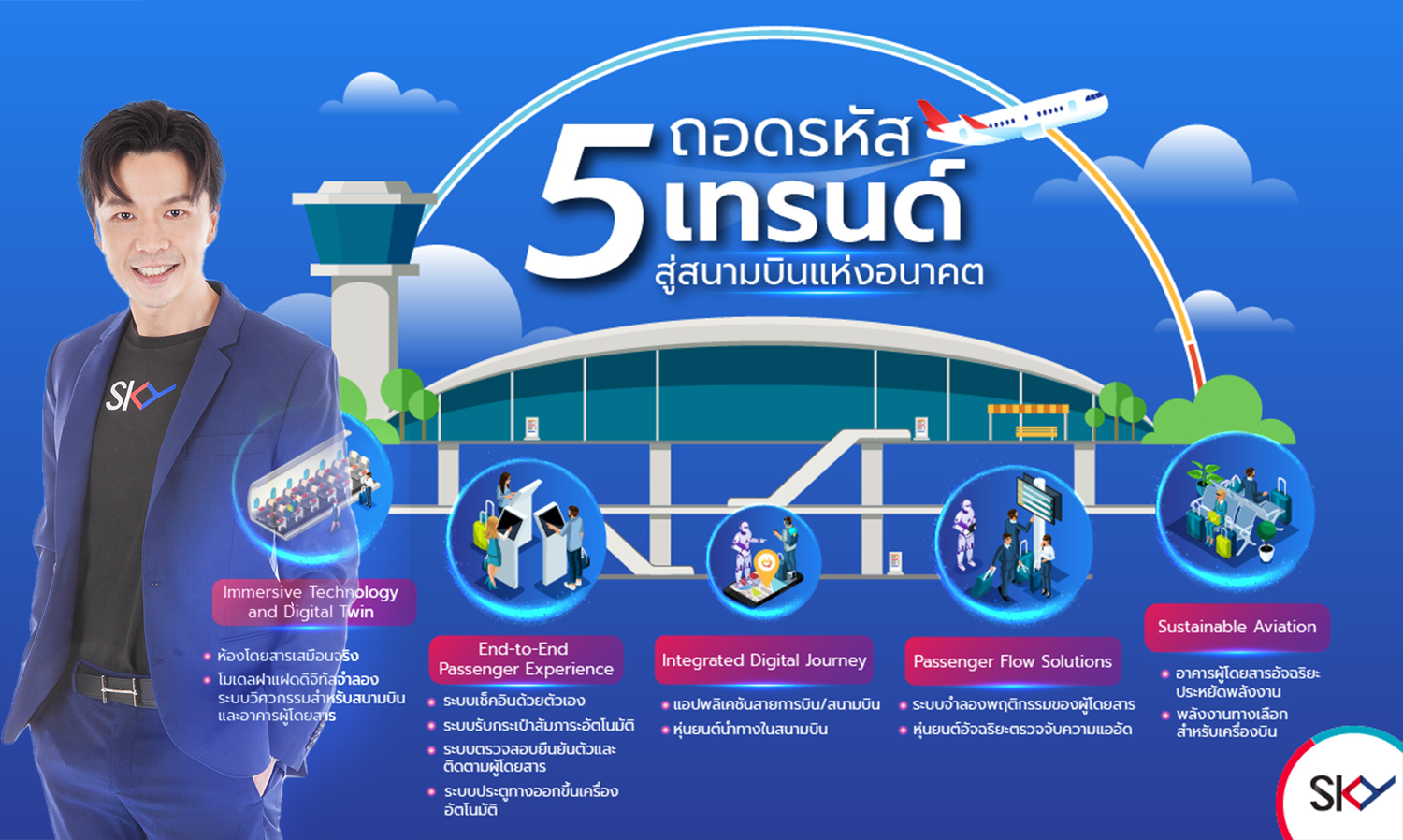
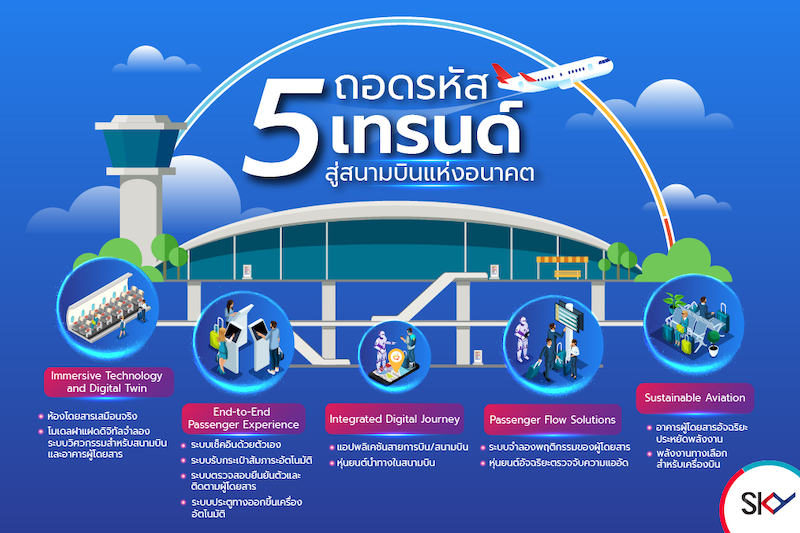
Khayal Tantichatiwat, Chief Marketing Officer of Sky ICT Public Company Limited (SKY), stated that as a leader in developing aviation-related technology (Aviation Tech), SKY is accelerating its study and development of technologies that enhance airport services to deliver memorable experiences for travelers from the moment they disembark from the aircraft. In recent years, the global airport industry has adopted technology to elevate airport services, leading to new trends such as:
1. Immersive Technology and Digital Twin
Following the trend where many businesses have adopted immersive technology, including Augmented Reality (AR) and Virtual Reality (VR), to connect consumer experiences with various products and services in the virtual world, airlines have developed platforms that simulate cabin views and atmospheres to help passengers book tickets and choose seats more easily. Additionally, the aviation industry utilizes Digital Twin technology to model structures from real objects and employs sensors to detect real-time changes, aiding in the design and production of aircraft and monitoring engineering systems within airports to enhance safety and reduce risks associated with system failures that could affect passenger travel times.
2. End-to-End Passenger Experience
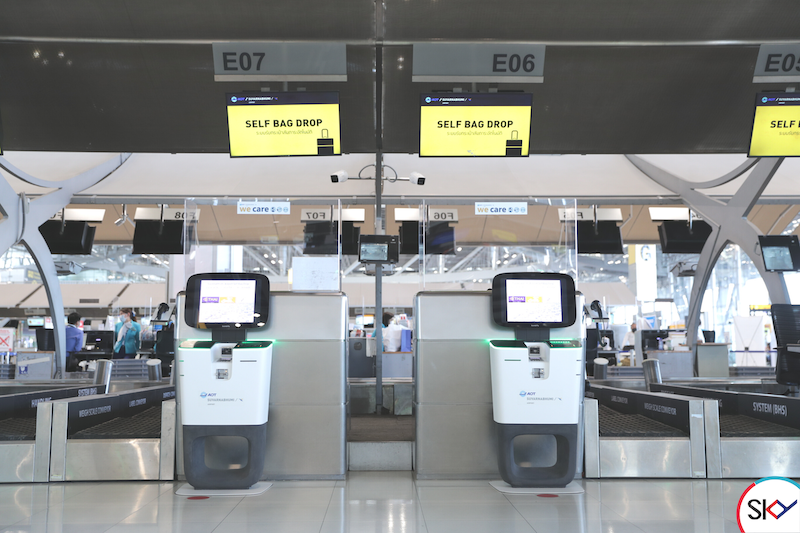
The COVID-19 situation has made people accustomed to using contactless systems that allow for quick self-service at every step. Modern airport services must simplify processes by integrating smart solutions to enhance passenger convenience from check-in to disembarkation. Examples include Check-In Kiosks and Self Bag Drop stations for self-check-in and baggage loading, as well as e-Gates that use biometric technology to scan faces, irises, or fingerprints for identity verification, enabling passengers to check in and pass through immigration in just seconds.
3. Integrated Digital Journey
Travelers, especially younger generations, seek technology to facilitate their journeys. Airports and airlines have developed applications that allow passengers to manage every step via their smartphones 24/7, such as searching and booking flights, online check-in, flight notifications, and tracking luggage from departure to arrival. Some airports even employ navigation robots to guide passengers to various service points within the airport accurately.
4. Passenger Flow Solutions
The sudden resurgence of tourism has led many airports to face congestion issues, prompting the implementation of solutions to manage passenger flow. Technologies such as sensors for real-time tracking of passenger movement have been introduced to simulate user behavior, including travel times to immigration checkpoints, boarding gates, and remaining shopping time before flights. This analysis helps design more efficient airport services. Recently, some airports have developed intelligent robots using artificial intelligence (AI) to analyze passenger numbers and address congestion while detecting suspicious objects.
5. Sustainable Aviation
Sustainability is another critical challenge facing the aviation industry due to global warming, and modern consumers are increasingly concerned about the environment. Airports and airlines are striving to reduce carbon emissions by redesigning terminal buildings to minimize energy consumption, implementing smart building systems to monitor heating and cooling, incorporating indoor green spaces, installing solar panels to reduce electricity use, utilizing renewable energy sources, and exploring alternative fuels for aircraft, such as hydrogen fuel.
Khayal further explained that Thailand has been continuously developing concepts for the airport of the future, particularly at its main airport, Suvarnabhumi Airport, which has integrated various smart technologies to facilitate global passengers and elevate Thai airports to become smart airports (Digital Airports). Examples include the Common Use Passenger Processing System (CUPPS) for ticket scanning, self-check-in kiosks, and automated boarding gates, along with the SAWASDEE by AOT application, which offers a variety of features to meet all travel needs, ensuring passenger care from pre-departure to exiting the airport.
Meanwhile, SKY's technology development team collaborates with ESIC Lab from the Department of Computer Engineering at King Mongkut's Institute of Technology Ladkrabang (KMITL) to connect airport knowledge with digital technology, enhancing service quality with diverse data sources at airports, such as passenger behavior in airport areas, flight information, and passenger density in different zones. This aims to improve both passenger experience and staff operations, adhering to the principle of providing accurate and timely information to stakeholders to maintain service standards that can accommodate the growing number of passengers and move towards becoming the airport of the future.
Sky ICT Public Company Limited (SKY Group) is a leading technology provider in Thailand specializing in aviation-related technology, intelligent security, and digital platforms. The company is committed to delivering new solutions that align with the growth of the aviation industry while enhancing quality of life and providing the best travel experiences for passengers through various services, including system integration, applications, security systems, and passenger facilitation services within airports.