Singha Estate Commercial & Retail Decoding Workplace Ecosystems from Green to Great: Uniting Every Small Step to Create Sustainable Outcomes
It's clear that right now, the world is sending out a warning!
Various sources confirm that 2024 is set to be the hottest year on record, with ocean heat levels at an all-time high. This is a signal that the climate crisis has reached an urgent level that can no longer be ignored.
This climate change is no longer a distant environmental issue; it is a direct threat to our health and well-being today.
Considering the workplace where we spend at least 8 hours a day, reducing energy consumption and managing waste in office buildings is not a trivial matter but a crucial part of stabilizing the global climate and a key factor in caring for employee health. Wellbeing is a Major Concern! The health crisis and environmental crisis converge at a point that cannot be separated.
Recognizing this urgency, Singha Estate, as a leading real estate developer, has launched the Go Green Together, Change Tomorrow initiative, creating the Tenant Green Synergy campaign to support and encourage tenants in four office buildings: S-OASIS, SINGHA COMPLEX, SUNTOWERS, and S-METRO to work together towards the goal of Carbon Neutrality by 2030.
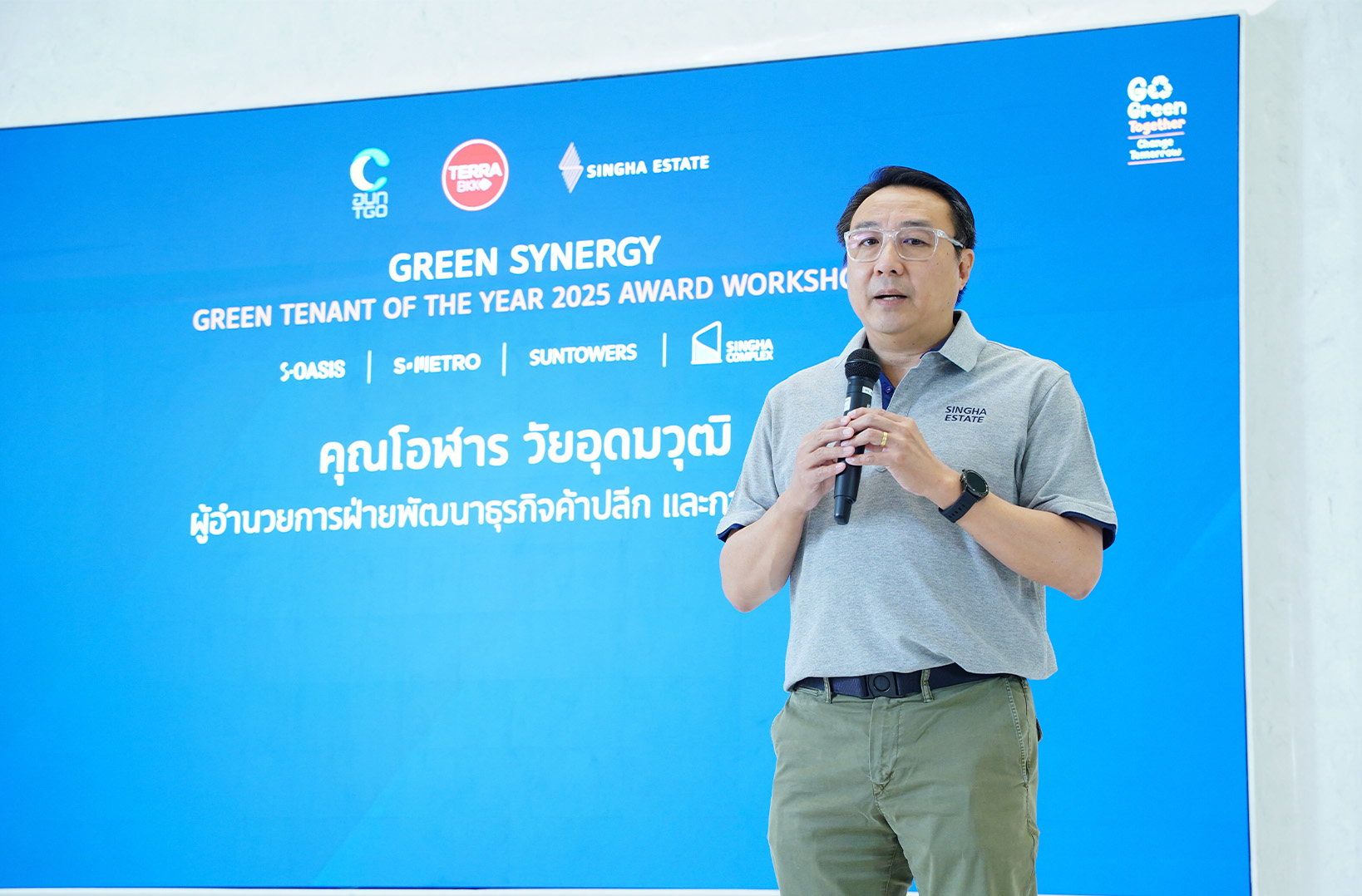
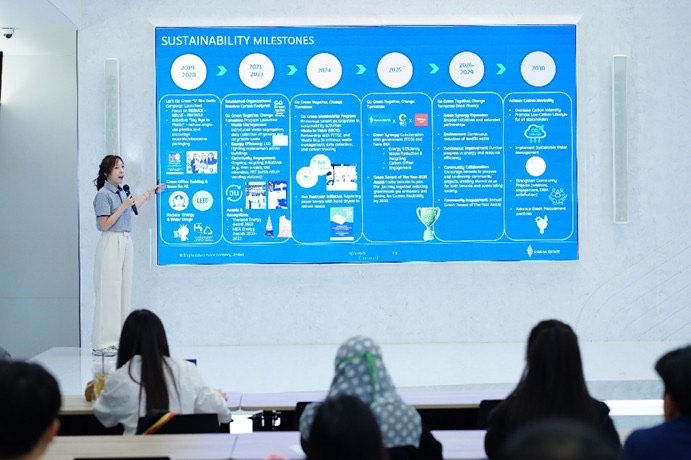
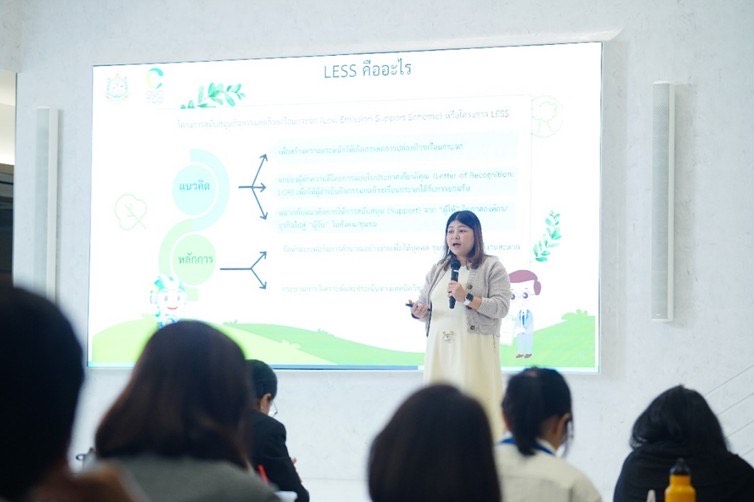
To ignite this powerful collaboration, Singha Estate has partnered with government experts like TGO, the Greenhouse Gas Management Organization (Public Organization), and real estate research consultants Terra BKK to conduct workshops. TGO provided guidance on preparing for LESS certification step by step, while Terra BKK presented on the topic “From Green to Great: The Synergy of Work Ecosystems Driving Sustainability and Wellbeing” to inspire and motivate sustainable practices in our workplaces.
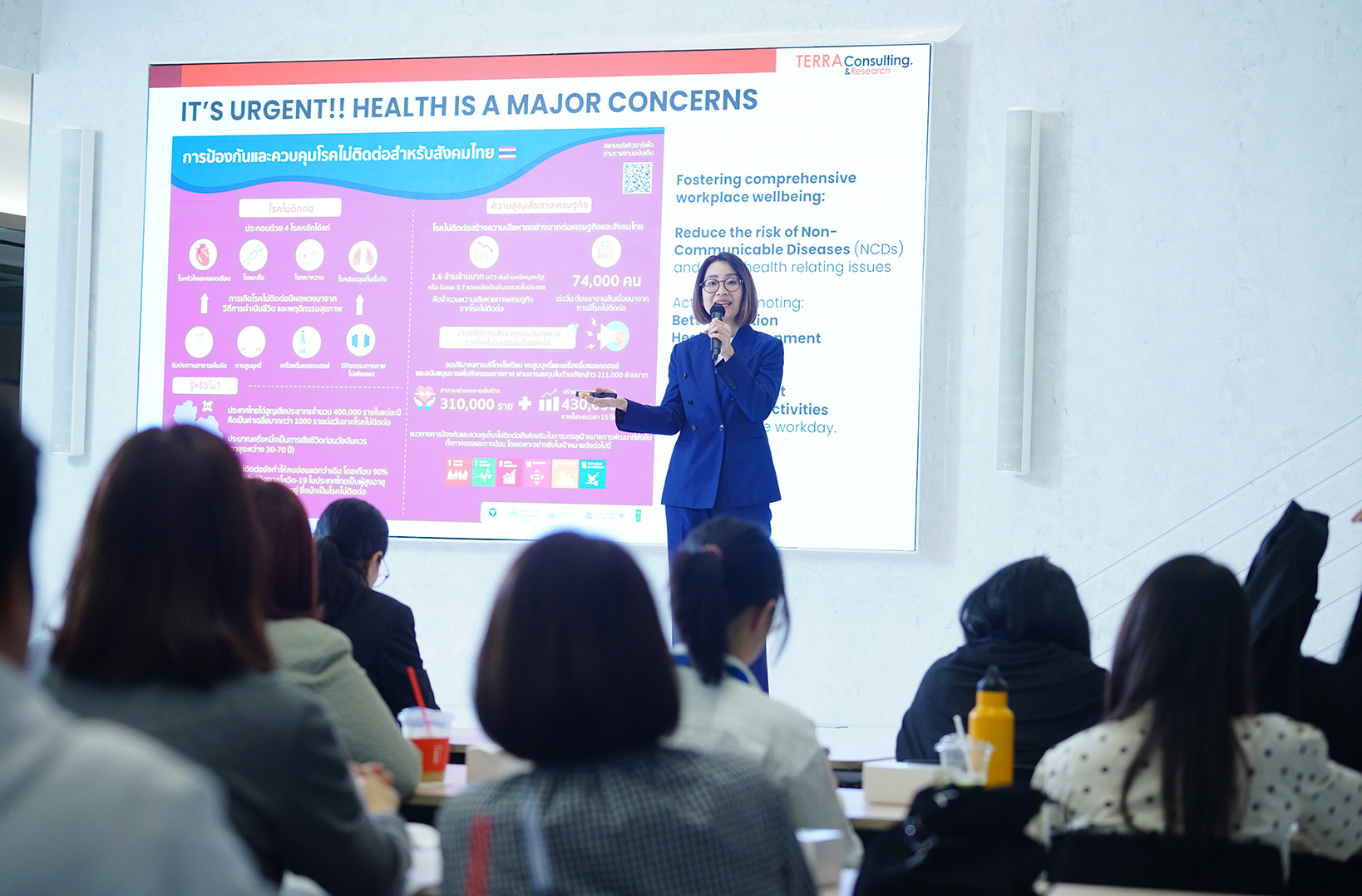
ONE WORLD, ONE WELLBEING: Sustainability vs. Wellbeing, an Indivisible Relationship
The key content of this lecture highlighted an important concept that many may overlook: for a sustainable workplace ecosystem to thrive, we must recognize the interdependent relationship between Sustainability and Wellbeing. These two factors mutually reinforce each other, meaning that:
● Sustainability boosts Wellbeing: In the context of office buildings, sustainability is not limited to construction but encompasses the impact throughout the building's lifecycle, which determines the environment in which people work. When the physical and environmental conditions improve, building users benefit in terms of health and happiness.
● Wellbeing drives Sustainable Practices: Conversely, having a healthy workforce contributes to better business outcomes, which motivates participation in sustainable practices. When employees feel good and are in good health, they naturally become more aware and ready to engage in environmentally friendly actions.
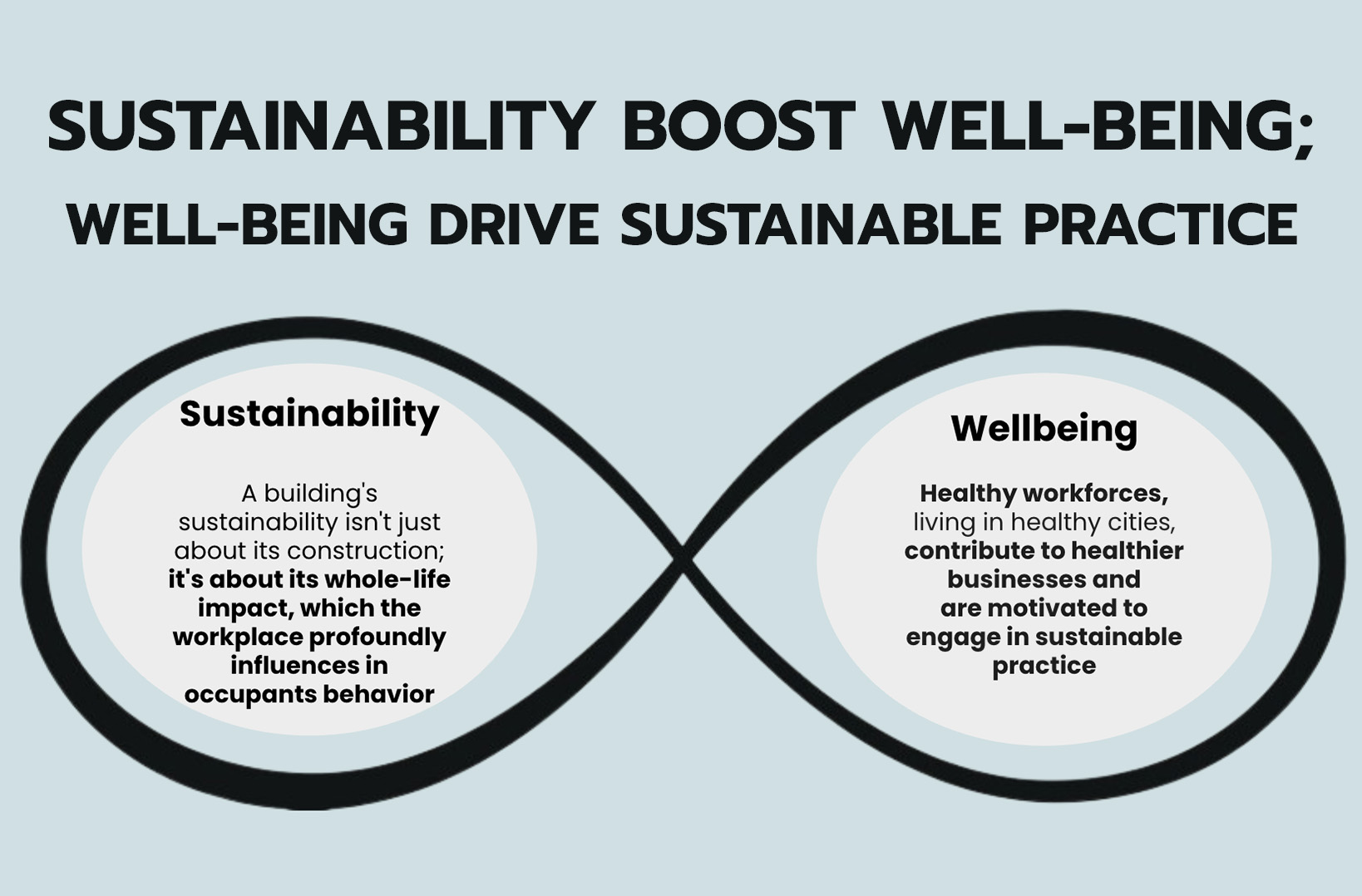
The foundation of this connection comes from the mindset called “ONE WORLD, ONE WELLBEING,” which transcends traditional thinking.
This means that the wellbeing of people, animals, and the environment we share is interconnected. We all live on one planet, and the good health of all living beings is a component of the overall health of this world.
When the environment is healthy, our health improves, and when we are healthy, we are ready to take better care of the world.
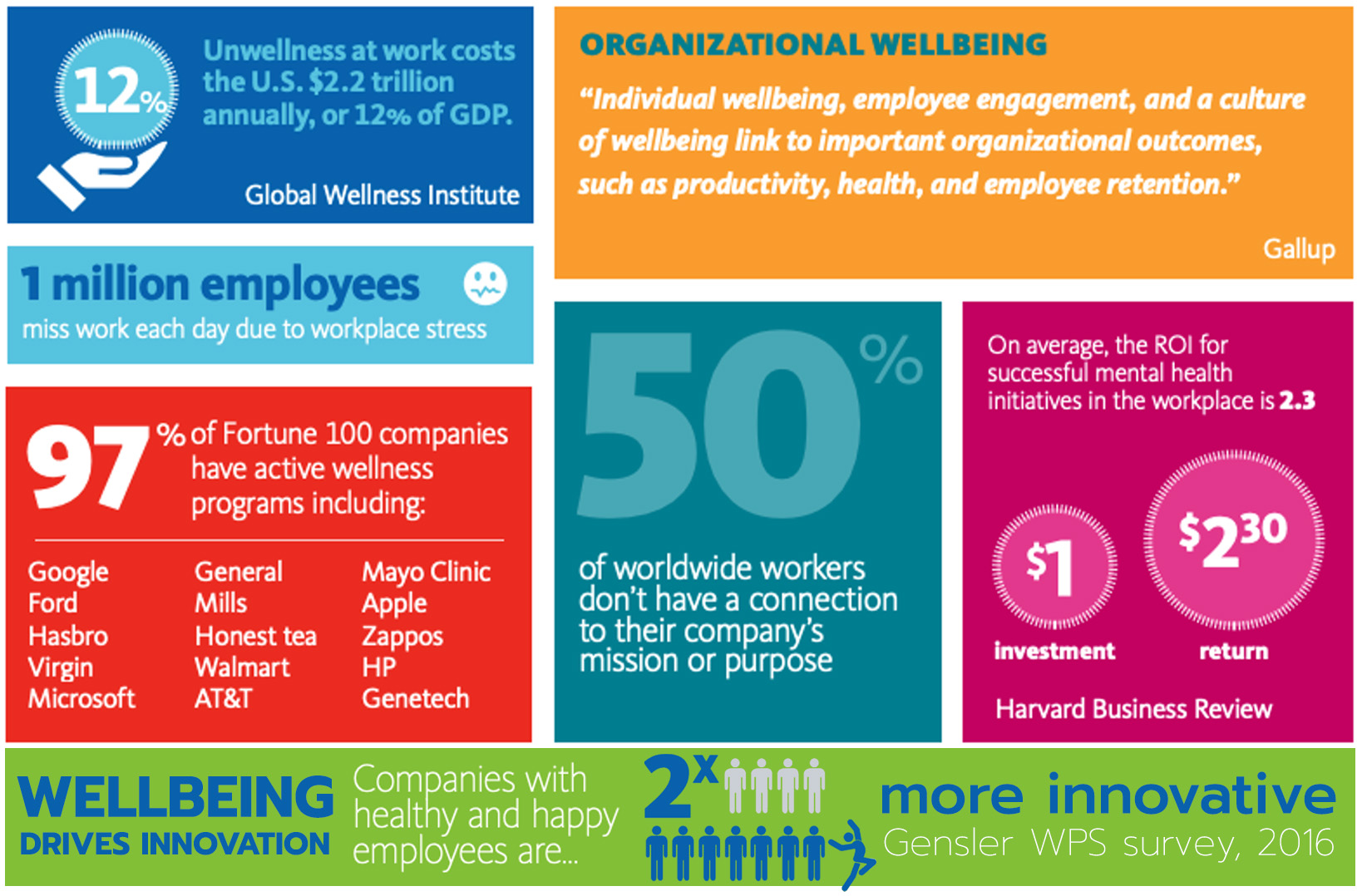
Investing in employee happiness yields more than double the returns.
The inseparable relationship between Sustainability and the wellbeing of people in buildings, or employees, is a significant focus for large organizations. Employee happiness and good health have a tremendous impact on business performance, as evidenced by a survey from Gensler, a global architecture firm focused on creating a better world through design. In 2016, it was proven that investing in a good work environment is not just an expense but a smart investment.
Global organizations like Google, Ford, Hasbro, Virgin, and Microsoft have health promotion programs that reinforce the clear link between organizational wellbeing and key business outcomes such as productivity, health, and employee retention.
Shocking statistics show that companies with healthy and happy employees achieve productivity levels more than twice as high. The average return on investment (ROI) for mental health initiatives in the workplace is $2.30 for every $1 invested (data from Harvard Business Review).
Caring for Working Wellbeing thus elevates innovation, efficiency, and employee engagement with the organization simultaneously.
Attitude Leads to Action
Today, sustainability approaches are not just organizational policies but have deeply rooted themselves in the lifestyles and attitudes of people. This aligns with ongoing research from Terra BKK that consistently highlights market trends toward sustainability, indicating that workplaces need to have EV charging systems, waste management systems, and PM2.5 air filtration innovations. Singha Estate has prioritized and incorporated all these elements, earning global recognition such as the Global Business Outlook Award, LEED certification standards, and national awards like the Thailand Energy Award, MEA Energy Award, and TFMA Sustainable Management Building Award.
However, awareness and commitment to sustainability can be categorized into three levels that influence our actions:
● Social Level: Awareness and consciousness for society, such as campaigns to reduce global warming from various businesses, and discounts for not using plastic bags, which raise awareness.
● Practical Level: Seeking tangible ways to take action, such as using recycled products, tote bags, or personal water bottles to reduce plastic.
● Personal Level: Taking genuine personal action, such as reducing plastic use, separating waste, driving electric vehicles (EVs), or planting more trees. This is the level where everyone in an office can create immediate change.
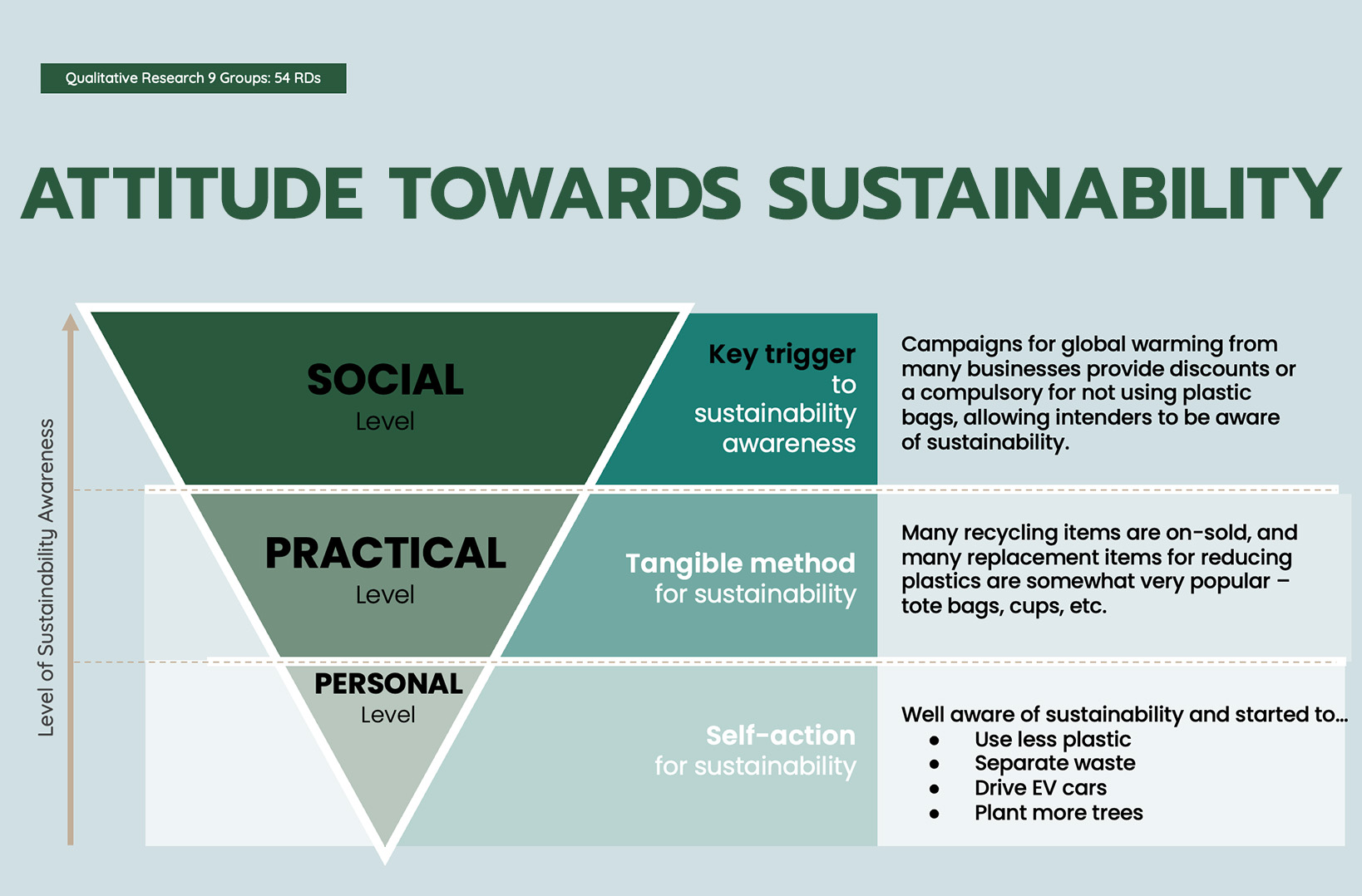
Everyone can take action; it starts with the process.
Ultimately, achieving true sustainability cannot be done alone. It requires integrated action where everyone can participate, from management to employees and all tenants. Driving a business towards sustainability must have clear steps to achieve measurable and sustainable outcomes, consisting of five main processes that can be applied by both small SMEs and large organizations:
- MATERIALITY (Understanding the Context): Study and understand the organizational context and define stakeholders.
- POLICY (Setting Policies): Define and announce commitment policies.
- STRATEGY (Developing Strategies): Establish operational frameworks for the short, medium, and long term.
- IMPLEMENTATION (Taking Action): Implement according to the Plan, Do, Check, Act principles.
- DISCLOSURE (Monitoring Results): Monitor and disclose results to the public.
Case Study Work Well: Design Approaches for the Wellbeing of People in Buildings
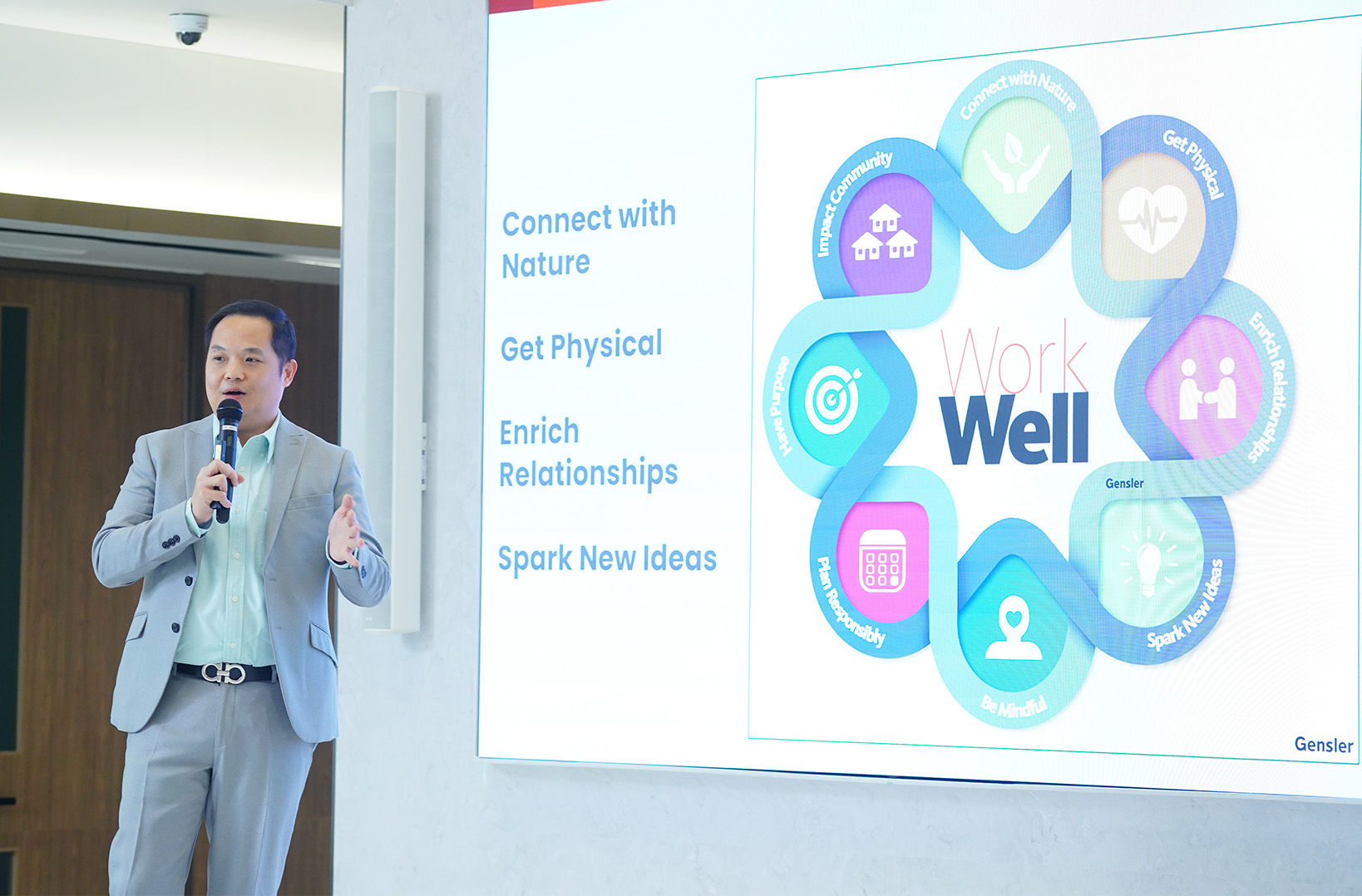
Creating workspaces that promote employee wellbeing and lead to organizational success can take various forms depending on the organization and the nature of the space. However, Gensler has shared the Work Well approach as a framework for all buildings to adapt, divided into two main categories:
1. Wellbeing (Personal Wellbeing)
● Get Physical: Workplaces should promote physical activity, balancing exercise, nutrition, and ergonomics.
● Connect with Nature: Designing spaces to access green areas or natural light helps calm the mind, improve focus, reduce stress, and recharge.
● Plan Responsibly: Organizations that help employees manage health, finances, and resources will make employees more prepared, less stressed, and more efficient.
● Be Mindful: Creating moments of pause and having spaces for mental relaxation enhances resilience, emotional intelligence, and creativity.
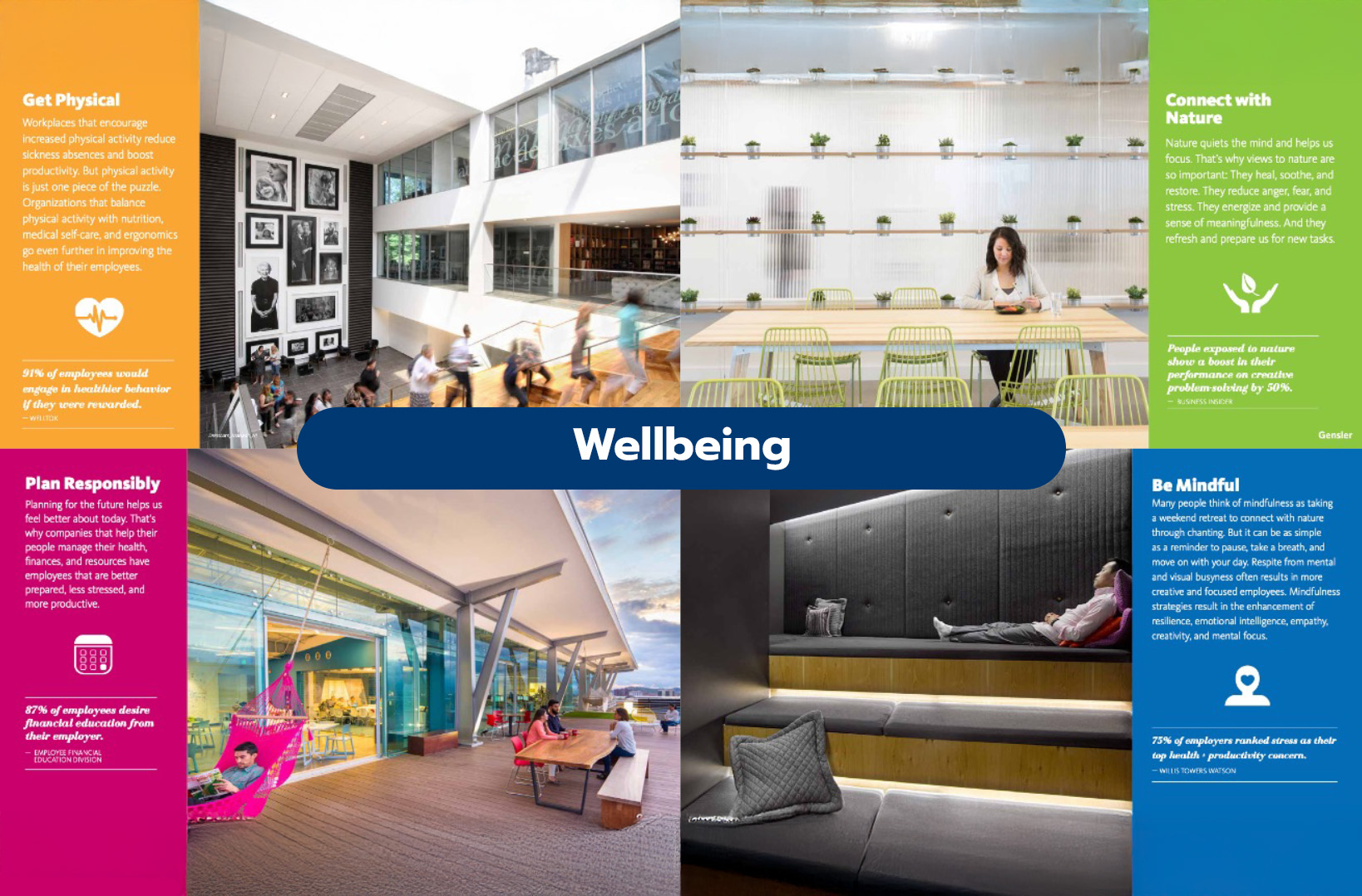
Image: Gensler
2. Social Wellbeing
● Enrich Relationships: Designing spaces and organizing programs that connect people with their work community helps develop teamwork and morale.
● Spark New Ideas: Creating an environment that promotes collaboration and diversity stimulates creativity, a key skill for business success.
● Have Purpose: Having a clear shared purpose helps rally the troops and gives daily work meaning, forming a strong and sustainable culture.
● Impact Community: Organizations should incorporate community impact as a key part of their operations, not just through donations but by creating better outcomes for both the community and employees.
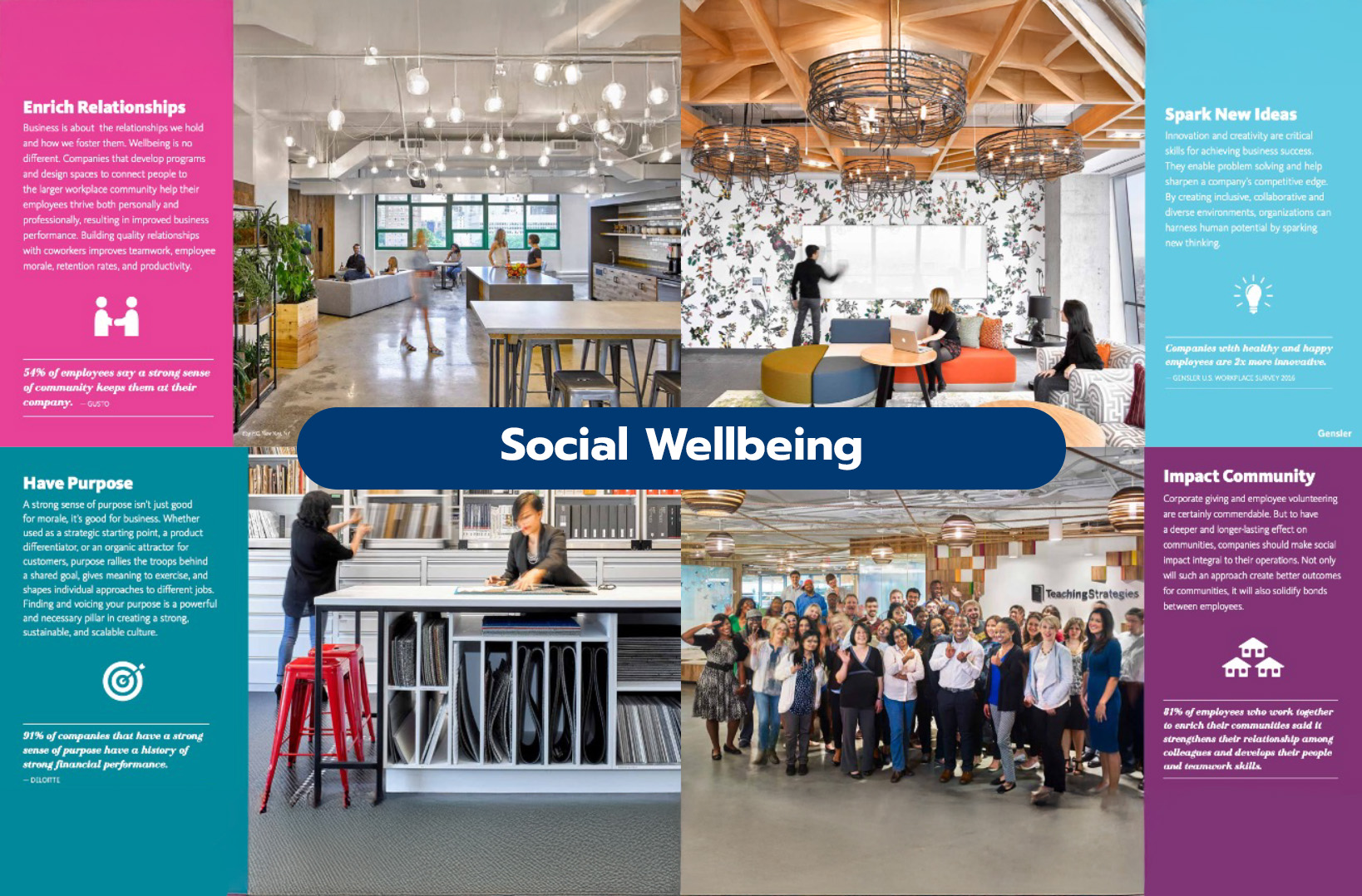
Image: Gensler
Case Study BULLITT CENTER, USA: A Building that Harmonizes Environment and Wellbeing
Real sustainability is achievable, as evidenced by the clear case study of the BULLITT CENTER, USA, which is a NET POSITIVE BUILDING or a building with a net positive performance.
This building achieved this status through revolutionary design that innovatively integrates everything, such as generating energy from large solar panels on the roof for self-use and surplus, water management with a 56,000-gallon rainwater tank for drinking, and using composting toilets that significantly reduce water usage.
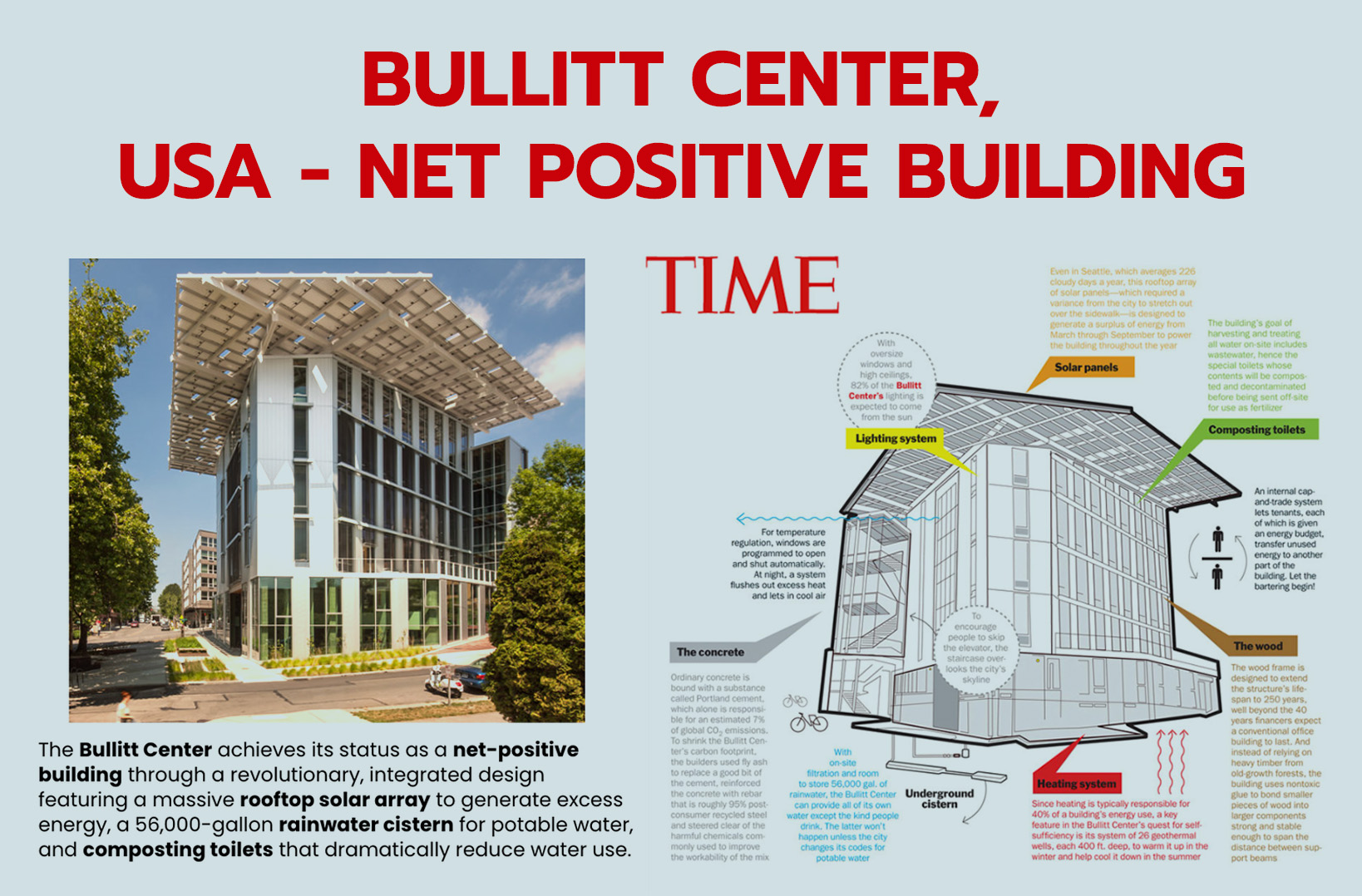
Additionally, it promotes walkability and provides bike parking and repair facilities for building users.
These case studies are not just stories but “real numbers and systems that are already functional,” which can inspire ideas for tangible activities to create measurable greenhouse gas reductions throughout the year.
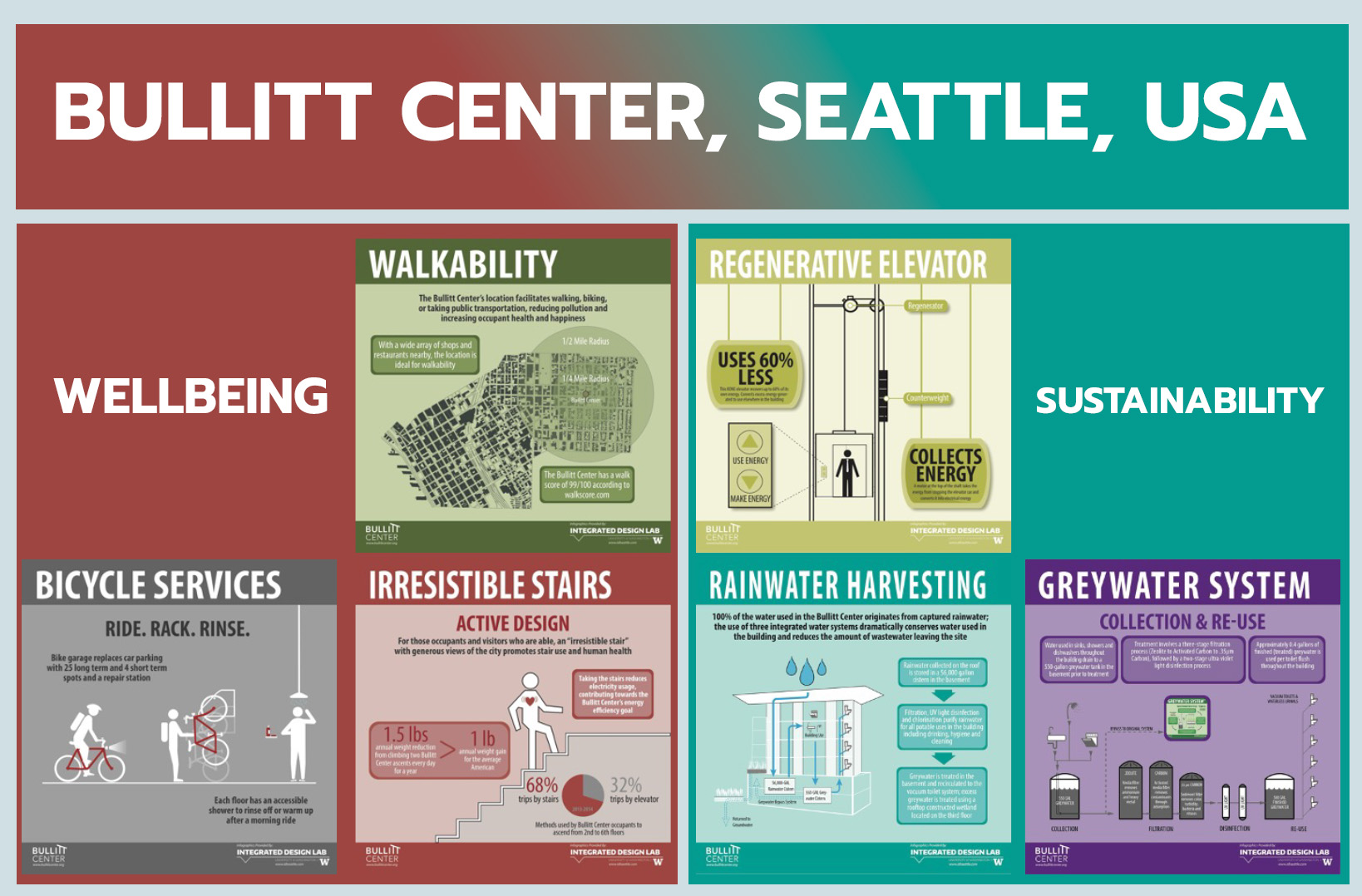
Image: bullittcenter.org
Green Synergy: An Opportunity for Collaboration to Create Unexpected Outcomes
All of this is part of the knowledge framework of Social Wellbeing that Singha Estate wants to share and inspire everyone to see the importance of small steps that can lead to great things.
In the past, Singha Estate has undertaken various projects that have continuously and sustainably driven initiatives, with the Go Green Together, Change Tomorrow project and the Tenant Green Synergy campaign being one of the collaborative activities aimed at reducing carbon emissions, allowing all tenants to participate in creating significant change together, targeting Carbon Neutrality by 2030.
The uniqueness of this campaign is that for every ton of carbon dioxide equivalent (CO2e) reduced, 10 trees will be planted at Singha Park.
This is a model for multiplying both carbon and brand impact while creating a Green Community. It not only helps reduce environmental impacts in buildings but also creates tangible green spaces for the world, fostering connections between organizations while enhancing the wellbeing of employees and communities simultaneously.
Because Singha Estate believes that significant change can only occur through collaboration and action from everyone across all sectors, which is the most crucial first step in transforming workplaces from 'Green' to 'Great' that yields extraordinary results.
#SinghaEstate #TenantGreenSynergy #GoGreenTogetherChangeTomorrow
#WorkLifeIntegration #EnrichingLife
#SinghaEstateCommercial #CarbonNeutrality2030
#ReduceCarbon #ReduceEnergy #WasteSeparation #PlantReplacementTrees #TERRABKK