9 Political Parties' Policies and Vision for Advancing Thai Industry
During the seminar titled <\/span>"Vision for Advancing Thai Industry" by 9 political parties <\/span>at the <\/span>2023 Annual General Meeting under the theme "EMPOWERING THAI INDUSTRIES FOR POWERFUL THAILAND" <\/span>, the development directions of the industry from all 9 parties were presented, showcasing interesting and diverse approaches. Ultimately, all parties share a common goal of supporting Thai entrepreneurs and fostering the growth of the Thai industry.<\/span><\/strong><\/p>
“Move Forward” proposes that Thai industry must shift from Made in Thailand to Made with Thailand.<\/strong><\/span><\/p>
Mr. Pita Limjaroenrat, leader of the Move Forward Party, <\/strong><\/span>stated that the party's progressive industrial policy aims to enhance the competitiveness of the industry through three key points: starting with a shared future goal for the industry and political parties, developing the industry to be high-tech, incorporating digital and design elements.<\/span><\/p>
The development direction must change, as the economy in the near future cannot rely solely on Made in Thailand. It must transition to Made With Thailand to integrate Thailand into the supply chain without limiting itself to domestic markets. The focus should not only be on products but also on the processes involved.<\/span><\/p>
Regarding production factors, the past emphasis on manufacturing industries that rely heavily on labor must evolve. To develop into Industry 5.0, we must integrate the concept of how machines and people can work together to create products that have greater value than just price.<\/span><\/p>
In recent times, Thailand has only exported 27% of its technology. The Move Forward Party envisions incorporating design to create brands, transforming into high-tech industries through its experienced team.<\/span><\/p>
Thus, when the goal of transformation is Made With Thailand, Thailand must be upgraded through five policies:<\/span><\/p>
1. Regulatory reforms must enhance competition across all industries, reducing regulations by 50% to facilitate easier business operations. Simultaneously, processes must be digitized to ensure licensing results are available within 15 days.<\/span><\/p>
2. Education and vocational training must be free, with skill enhancement or career change vouchers provided.<\/span><\/p>
3. Support for the establishment of a free electricity trading market, with the government overseeing transmission lines and implementing a "fair electricity price" to reduce reserve production capacity.<\/span><\/p>
4. Address corruption through AI systems to detect fraud, in collaboration with the Anti-Corruption Commission, ensuring accountability to the public.<\/span><\/p>
5. A comprehensive green economy, emphasizing the use of electric buses with a budget of 10 billion baht, while also introducing energy-saving technologies that can reduce costs by 1.5-2 times.<\/span><\/p>
“United Thai Nation” urges the new government to listen to entrepreneurs and avoid policies that hinder trade.<\/strong><\/span><\/p>
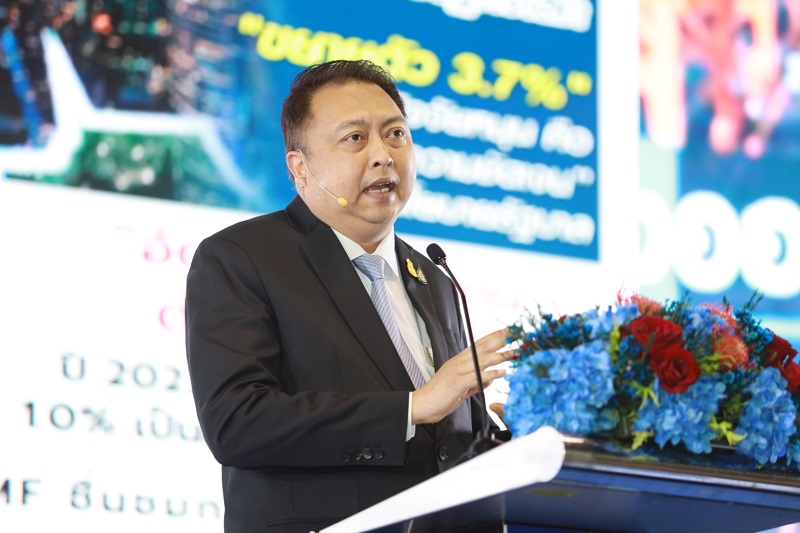
Mr. Suchart Chomklin, a member of the strategy and policy committee of the United Thai Nation Party, <\/strong><\/span>noted that data from the IMF indicates that in 2022, during the COVID-19 pandemic, Thailand had the lowest unemployment rate in the world at just 1%, demonstrating a high level of employment, even surpassing pre-COVID levels. The Ministry of Labor and government policies received praise for their effective support during the crisis.<\/span><\/p>
The United Thai Nation Party continues to advance its policy of "Do it – Continue it," having previously worked to restore relationships with various countries to create strong alliances. The continuation of this policy will focus on attracting foreign investment of no less than 1 trillion baht, along with increasing GDP per capita by an additional 20,000 baht per person per year.<\/span><\/p>
For the new government to ensure the Thai industry moves forward, it must work closely with entrepreneurs, listen to their problems, opinions, and suggestions, and avoid creating regulations that hinder trade. Entrepreneurs already possess the capability to conduct business; the government should support them in making business operations easier, avoiding conflicting policies. The new government is encouraged to be mindful and transform itself into an SME-friendly entity to increase the number of entrepreneurs and industries.<\/span><\/p>
<\/p>
“Pheu Thai” is ready to transform from an obstacle government to a supportive government that accelerates market access for Thai businesses.<\/strong><\/span><\/p>
Dr. Phrommin Lertsuriyadech, chairman of the economic committee and policy committee of the Pheu Thai Party, <\/strong><\/span>stated that the party's core belief is that the government collects 20% tax on business profits, thus positioning itself as a shareholder in all private enterprises in Thailand. Shareholders must play a role and have a stake in the business, making it essential for the government to assist the private sector.<\/span><\/p>
In the past, the government has been a significant obstacle to business operations. Therefore, the first priority for the Pheu Thai Party is to transform the government from an obstacle into a supporter, driving all mechanisms to grow together.<\/span><\/p>
As partners, there must be a joint strategy for the country, understanding strengths and weaknesses. Previously, provincial committees had limited roles, so it is necessary to address this by setting KPIs for governors to work more closely with provincial commerce.<\/span><\/p>
Additionally, another stance is to advocate for international negotiations to find markets and investments. We will push for peace and mutual prosperity on international platforms by leveraging diplomatic relations with other countries, supporting the restructuring of energy costs, and enhancing productivity through tax mechanisms, upskilling, reskilling, and reducing transportation burdens to facilitate international trade negotiations.<\/span><\/p>
<\/p>
“Chart Pattana Kla” promotes the policy of "Good Jobs, Good Money, Affordable Goods" with an initial focus on doubling tourism to urgently revive the Thai economy.<\/span><\/strong><\/p>
Mr. Suwatch Lipthapallop, chairman of the Chart Pattana Kla Party, <\/span><\/strong>stated that we must revive the economy to grow at least 4-5% today. Key factors such as trade wars, economic downturns, interest rate hikes, and ECG all compel investors to think carefully before investing. Today, if we aim to revive the economy and attract investment, I believe investors will certainly delay their investments due to the large amount of capital required and the need for credibility and stability. Therefore, to urgently revive the economy, we must leverage our strengths in tourism. After reopening the country for half a year, Thailand has welcomed 25 million tourists, improving the economy. Tourism is a business that does not require confidence, is not affected by inflation, and is not related to global warming. If tourism thrives, income will flow into communities, helping to reduce inequality.<\/span><\/p>
The Chart Pattana Kla Party sees the urgent economic recovery direction through tourism and thus proposes a policy to double the number of tourists, aiming for tourists to spend and stay longer by about 20%, which will bring tourism revenue into the system at around 5 trillion baht, an increase from the previous 2 trillion baht, simply by creating growth and seriously stimulating tourism. The government must assist in developing infrastructure, tourist attractions, products, street food, and soft power to facilitate tourists.<\/span><\/p>
As for exports, they remain strong despite a slight slowdown, necessitating the search for new markets in the Middle East, Africa, and Latin America, where there are still gaps. Additionally, nationalism must emphasize public-private investments, such as the EEC, accelerating the construction of railways and airports, which will significantly stimulate the economy. We must use the crisis as an opportunity to rapidly adjust the country's economic base. From now on, Thailand must operate its economy by leveraging its strengths as an agricultural powerhouse, including rice, sugarcane, rubber, cassava, and corn, which we have yet to fully innovate.<\/span><\/p>
If we can achieve this, our economy will recover quickly and sustainably. Currently, Thailand has a low technology export rate but a high import rate, leading to a trade deficit. Therefore, we must renovate the industrial sector to incorporate more technology. BCG and ESG are new concepts that the industrial sector must urgently understand and transform into strengths, creating new industries that can sustain themselves and enhance the country's strengths.<\/span><\/p>
The Chart Pattana Kla Party thus proposes a color-coded industry policy worth 5 trillion baht, categorizing the economy into different colors, such as yellow for soft power, green for the environment, white for tourism, and silver for the health economy for the elderly, all based on the party's overarching policy of "Good Jobs, Good Money, Affordable Goods."<\/span><\/p>
“Palang Pracharath” emphasizes 3 urgent policies and 8 accelerated measures to revive the Thai economy through a 300 billion baht public fund.<\/strong><\/span><\/p>
Mr. Uttama Savanayana, chairman of the policy drafting committee of the Palang Pracharath Party, <\/strong><\/span>stated that the party has comprehensive policies ready for practical implementation. This is not the time for trial and error, as the economy remains fragile post-COVID. Therefore, we must consider two urgent issues: finding the best immediate alternatives and ensuring that Thailand's economic growth is linked to the global stage, while still facing constraints, particularly in financial and budgetary matters. The Palang Pracharath Party proposes that we must drive the economy in parallel along two main dimensions: addressing urgent national issues and accelerating the foundation for sustainable economic development, aligning with the 3 urgent and 8 accelerated policies to revive the economy. The three urgent measures include rapidly addressing debt through capital infusion, ensuring welfare for Thai citizens, and enhancing the quality of life, particularly for early childhood groups.<\/span><\/p>
Regarding BCG, the industry must consider the global context of changes to create new industries in Thailand, developing strategic areas where the EEC will connect and expand industries to other sectors through transportation systems and digital infrastructure that will support communication, transitioning Thailand into a truly digital economy. All of this will be facilitated through a 300 billion baht public fund.<\/span><\/p>
“Democrat Party” proposes a 300 billion baht SME support policy, aiming to control the Ministry of Energy to limit marketing costs and refinery profits to no more than 1 baht per liter.<\/strong><\/span><\/p>
Mr. Kiat Sithi-amorn, economic policy committee member of the Democrat Party, <\/strong><\/span> stated that the party's main policy is "Creating Money, Creating People, Creating the Nation," with 16 policies aimed at strengthening the grassroots economy through 300 billion baht in SME support, which is part of over 1 trillion baht that has yet to be utilized. We must urgently help solve problems for SMEs, particularly regarding energy costs, by controlling the Ministry of Energy to ensure that marketing costs and refinery profits do not exceed 1 baht per liter.<\/span><\/p>
Additionally, Thailand must aim to become the R&D center of Asia, with state banks such as SME Bank or Exim Bank adjusting their roles to support rather than compete with private banks, ensuring that policies grow and support investment promotion through cluster-based economic zones with legal backing and tax benefits that comply with global regulations. Finally, for Thai businesses to thrive, they must excel in negotiations to open markets for the industrial sector on the global stage.<\/span><\/p>
“Thai Sang Thai” aims to increase GDP from SMEs to 50% within 3 years, focusing on strengthening Thai industries.<\/strong><\/span><\/p>
Mr. Suphan Montree, deputy leader and chairman of the economic committee of the Thai Sang Thai Party, <\/strong><\/span>stated that there are four obstacles in the industry that hinder economic improvement. The first issue is legislation, which presents obstacles to business operations through over 1,400 regulations, including those from the FDA and hotel laws that vary based on hotel size. The second issue is access to funding, which is currently overseen by the Credit Guarantee Corporation, but it is essential to help SMEs secure guarantees of no less than 60% for their survival, as many SMEs still struggle to access funding. A serious SME fund is necessary, along with innovation, which is the most critical aspect that has been continuously pushed forward. The next issue is creating competitive advantages for industries, including support from the BOI to help entrepreneurs access land at special prices, and adjusting KPIs to set targets for the BOI to support SMEs each year to strengthen this significant business sector. If this sector increases its income, it will contribute taxes to sustain the country.<\/span><\/p>
Moving forward, generating income and reducing costs must focus on areas of expertise, such as agriculture, tourism, health, lifestyle, and R&D in agriculture to reduce costs through platforms. The government should support the private sector in this regard, ensuring that it can be achieved. Finally, we must aim to increase the GDP contribution of SMEs from 35% to 50% within 3 years. If achieved, we will see Thailand's strength across the board.<\/span><\/p>
“Chart Thai Pattana” emphasizes job creation in industries to reduce Thailand's inequality.<\/strong><\/span><\/p>
Dr. Santi Kiranant, policy and strategy committee member of the Chart Thai Pattana Party, <\/strong><\/span>stated that today, Thailand faces significant economic inequality, necessitating a return to considering how to create industries that address this issue, particularly First Industry and next-gen Industry, where businesses of all sizes must work together.<\/span><\/p>
The six issues presented include: 1. Energy costs, which have a distorted structure; 2. Industrial technology is expensive, making it inaccessible for medium and small enterprises, necessitating serious efforts to make research publicly available; 3. Labor does not match industry demands; although Thailand has a very low unemployment rate, there is still a significant labor shortage, requiring upskilling and reskilling; 4. The government must promote large companies to compete in the global market to allocate domestic market space for smaller enterprises; 5. Social and environmental responsibility, particularly ESG, which the Chart Thai Pattana Party proposes as a core policy, as we must not forget that global warming and greenhouse issues will become obstacles to industrial development in the next 15 years; and finally, we propose merging the Ministry of Industry and the Ministry of Commerce into MITI to allow the market to drive industrial production, which will undoubtedly help create added value.<\/span><\/p>
“Pride Thai” proposes using green industries to drive Thailand's economy towards global market leadership.<\/strong><\/span><\/p>
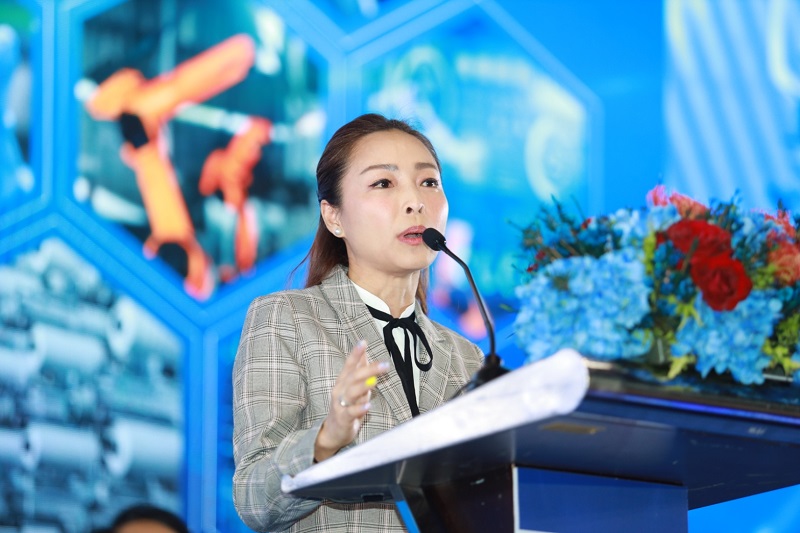
Ms. Phada Worrakan, a prospective candidate for the Din Daeng-Phaya Thai district from the Pride Thai Party, <\/strong><\/span>stated that the main policy is to leverage Thailand's existing strengths in the industrial sector to make significant leaps forward. During the recent COVID period, promoting local herbs such as Andrographis paniculata and Kaempferia galanga helped Thailand survive the pandemic. If we strengthen our capabilities, foreign investors will certainly be interested in investing in our country, especially in the bioproducts, food, agriculture, herbal, and medical industries, collectively referred to as green industries. The Ministry of Industry is already performing well in this regard, and the new government can immediately continue this work.<\/span><\/p>
It is important to emphasize that regardless of which government comes into power, they must demonstrate sincerity in helping to address and drive the industrial sector's growth. Thailand must be positioned as a leader in bioproducts in ASEAN, as this will foster development in the already strong agricultural sector combined with industry, creating jobs and income for local communities, thereby reducing social inequality.<\/span><\/p>
For example, the cannabis herb is a highlight of the Pride Thai Party's policy ideas, creating a new economy that connects agriculture with the medical industry, promoting and consuming herbs. This market is still relatively pure, and we can lead the world in producing cannabis for health and medicinal purposes.<\/span><\/p>
If the new government promotes this correctly, from research to cultivation and production, we believe the private sector can expand without limits, and Pride Thai will strive to make Thailand a city of herbs, serving as a soft power for the country.<\/span><\/p>
<\/span><\/p> 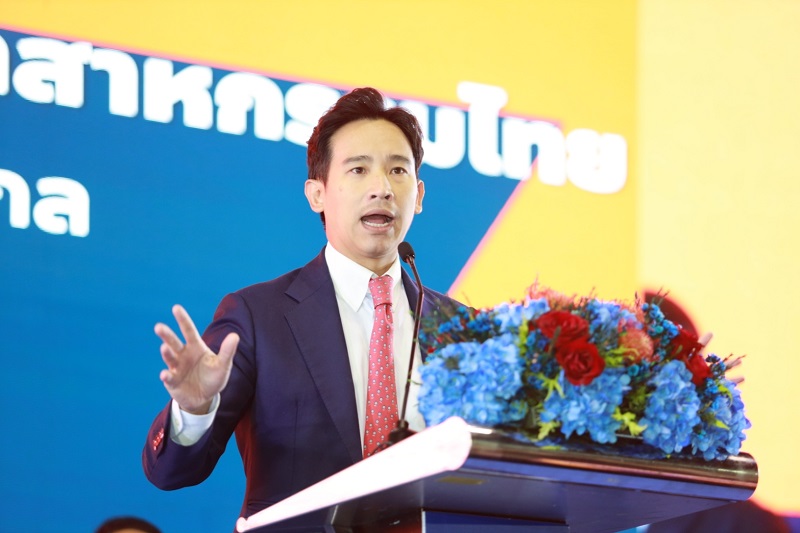 <\/p>
<\/p>
 <\/p>
<\/p>
 <\/p>
<\/p>
 <\/p>
<\/p>
 <\/p>
<\/p>
 <\/p>
<\/p>
 <\/p>
<\/p>
 <\/p>
<\/p>
 <\/p>
<\/p>