Report on the Economic Situation of Thailand and Abroad for April 2026 (Kasikorn Research Center)
Global Economy
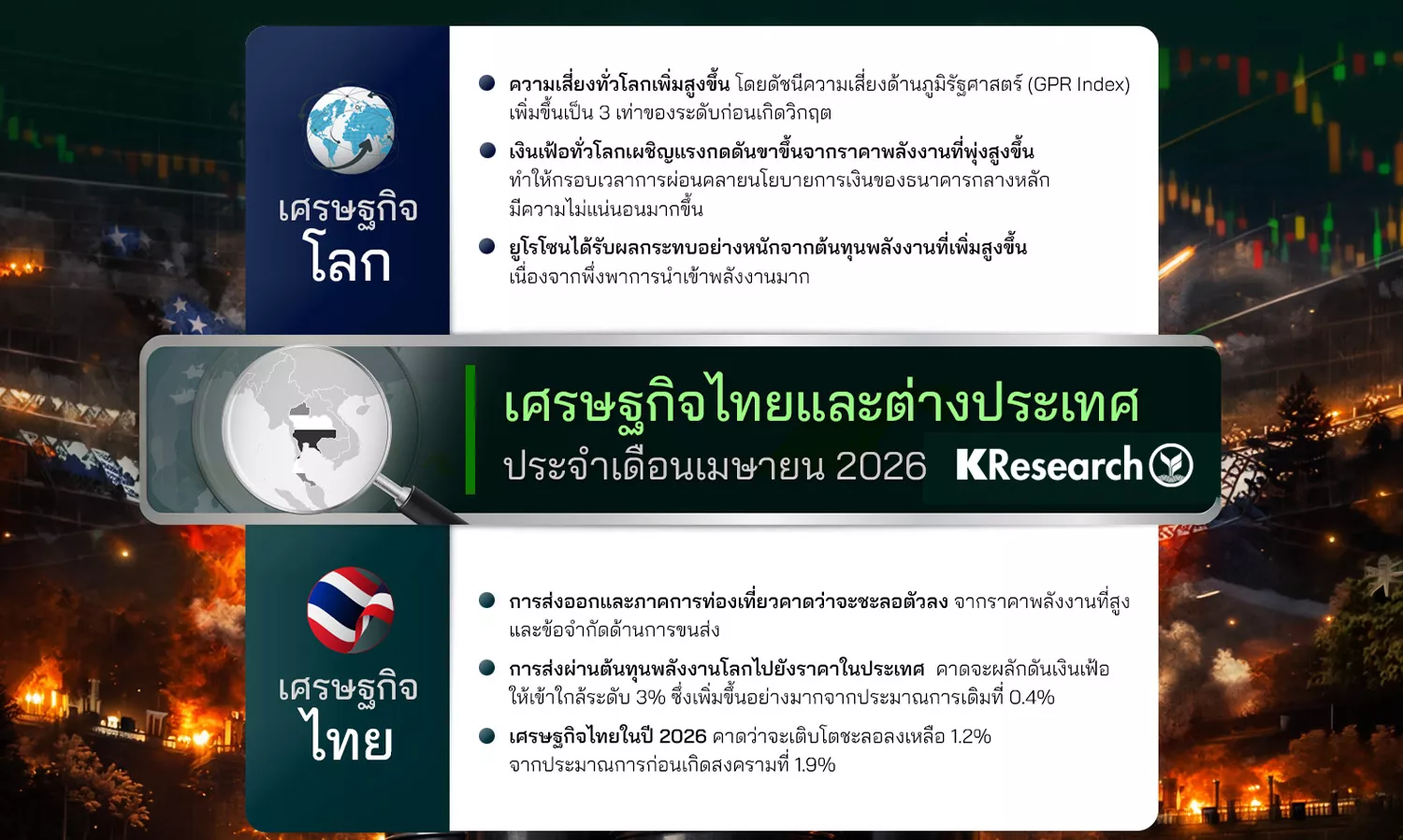
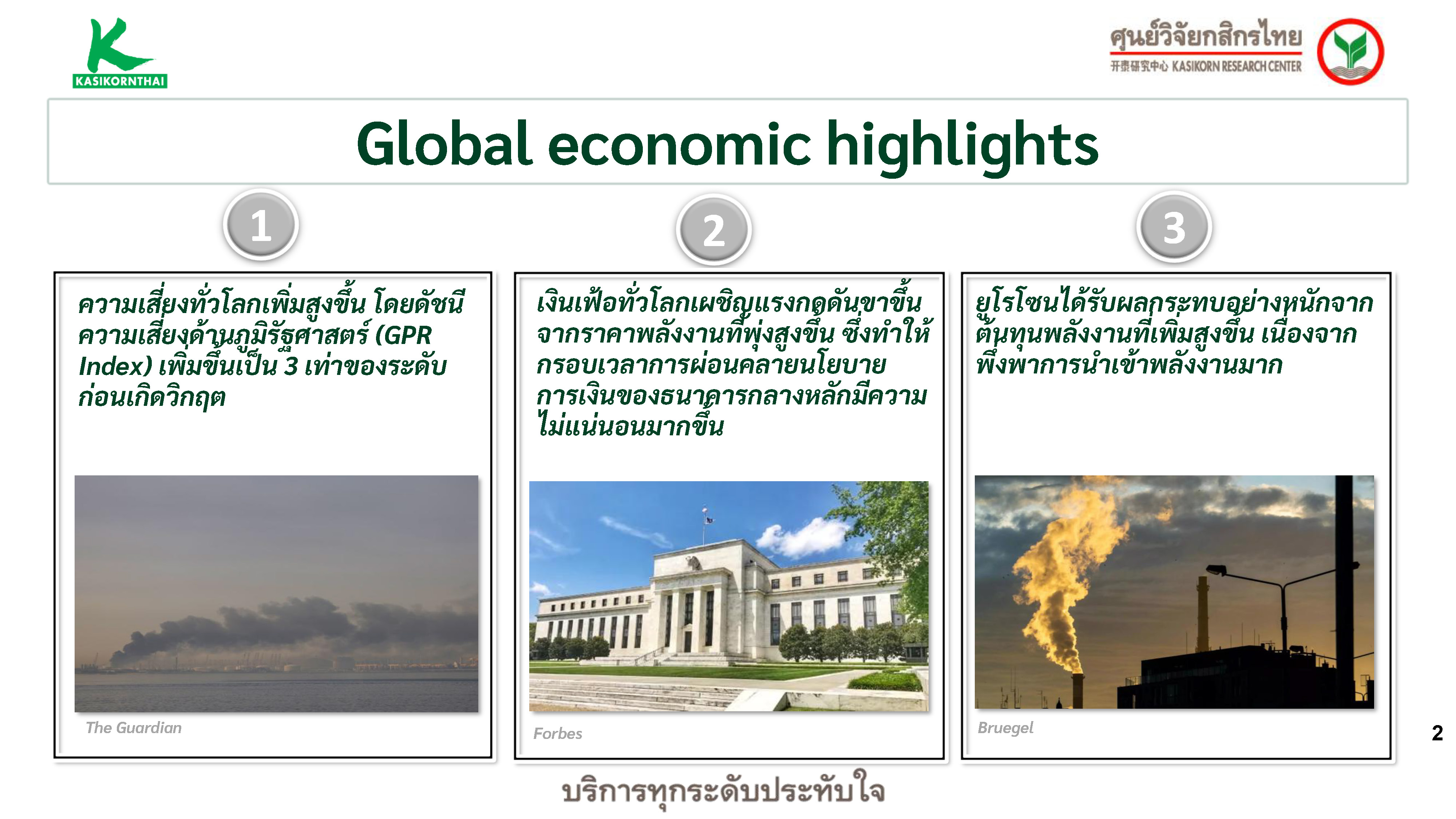
- Global risks have increased significantly, with the Geopolitical Risk Index (GPR Index) rising to three times its pre-crisis level.
- Global inflation is facing upward pressure from soaring energy prices, leading to greater uncertainty regarding the timeline for easing monetary policy by major central banks.
- The Eurozone has been heavily impacted by rising energy costs due to its reliance on energy imports.
Thai Economy
- Exports and the tourism sector are expected to slow down due to high energy prices and transportation constraints.
- The pass-through of global energy costs to domestic prices is expected to push inflation closer to 3%, a significant increase from the previous estimate of 0.4%.
- The Thai economy is projected to grow at a slower rate of 1.2% in 2026, down from the pre-war estimate of 1.9%.
Amid global uncertainties in 2026, the April Monthly Economic Report clearly reflects that the global economy is entering another turning point. This significant shift is not merely a result of traditional economic cycles but stems from structural shocks, particularly in “energy” and “geopolitics,” which are shaping the broader economic direction. What is happening now is not just an economic slowdown but a convergence of rising costs and declining growth, gradually leading the world into a state known as stagflation. The primary pressure on the global economy this time comes from significantly rising energy prices, with Brent crude oil reaching approximately $106 per barrel, up over 49%, while natural gas in Europe has surged by 71%, and jet fuel has skyrocketed by more than 113%. The increase in energy prices is affecting not only the energy sector but is also flowing through to production costs, transportation fees, and global product prices continuously.
The outcome is a picture of an economy being squeezed from both sides:
• Production costs are rising due to energy and raw material prices.
• Economic growth is slowing down due to weak purchasing power.
The World Trade Organization (WTO) has revised its global economic growth forecast for 2026 down to about 2.5%, while the Purchasing Managers' Index (PMI) in several countries is beginning to reflect weakening demand alongside persistently high costs. A key factor that makes this crisis different from past ones is that the “root of the problem” does not stem from the financial sector or bubbles but arises from a structural supply shock, particularly the disruption of the world's most critical energy route, the Strait of Hormuz. This strait is a major artery of the global energy system, accounting for about 38% of global crude oil transport, and when including LNG, LPG, and other energy products, it represents over 70% of total energy trade. However, during the recent conflict, transport through this route has significantly decreased, resulting in bottlenecks in logistics systems and rapidly increasing energy and transportation costs.
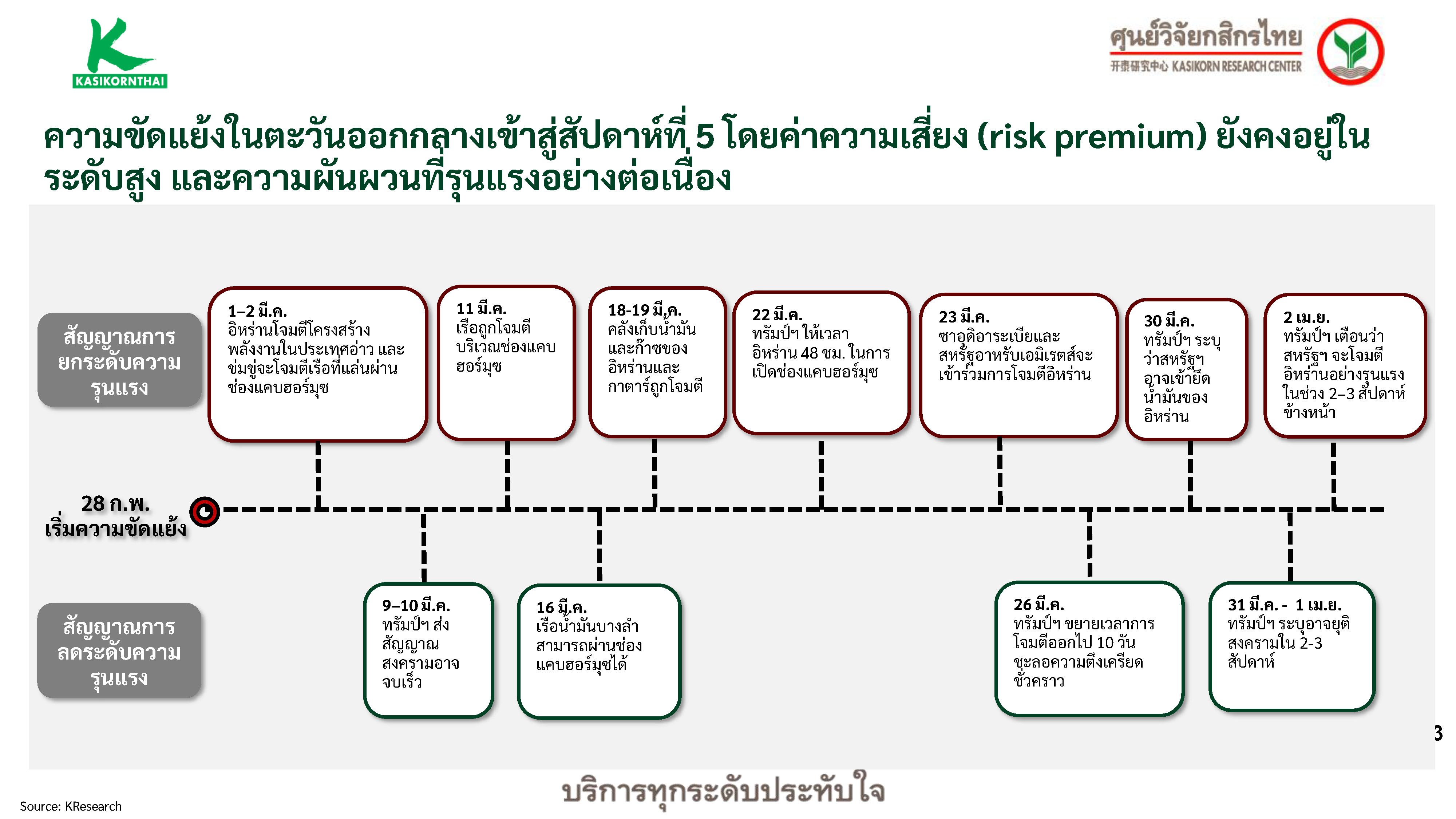
What is occurring is not merely short-term volatility but a shift in the balance of costs across the entire global economy. On the other hand, global monetary policies are being pressured to change direction. U.S. inflation is trending to exceed 3%, leading the Federal Reserve to likely delay interest rate cuts or maintain high rates throughout the year.
This situation leads to several significant impacts:
• The dollar strengthens.
• Asian currencies weaken, including the Thai baht.
• Capital flows back into safe assets.
Looking back at Thailand, the picture is one of an economy inevitably facing external shocks. The Thai economy in 2026 has had its growth forecast revised down to just 1.2% from the previous estimate of 1.9%, while inflation is expected to rise close to 3% from just 0.4%. This means that Thailand is clearly facing a situation of “slower growth but higher living costs.” One of Thailand's significant vulnerabilities is its high dependence on energy imports, especially from the Middle East, with crude oil accounting for about 59% of imports and refined oil at 63.1%, making the Thai economy highly sensitive to fluctuations in global energy prices.
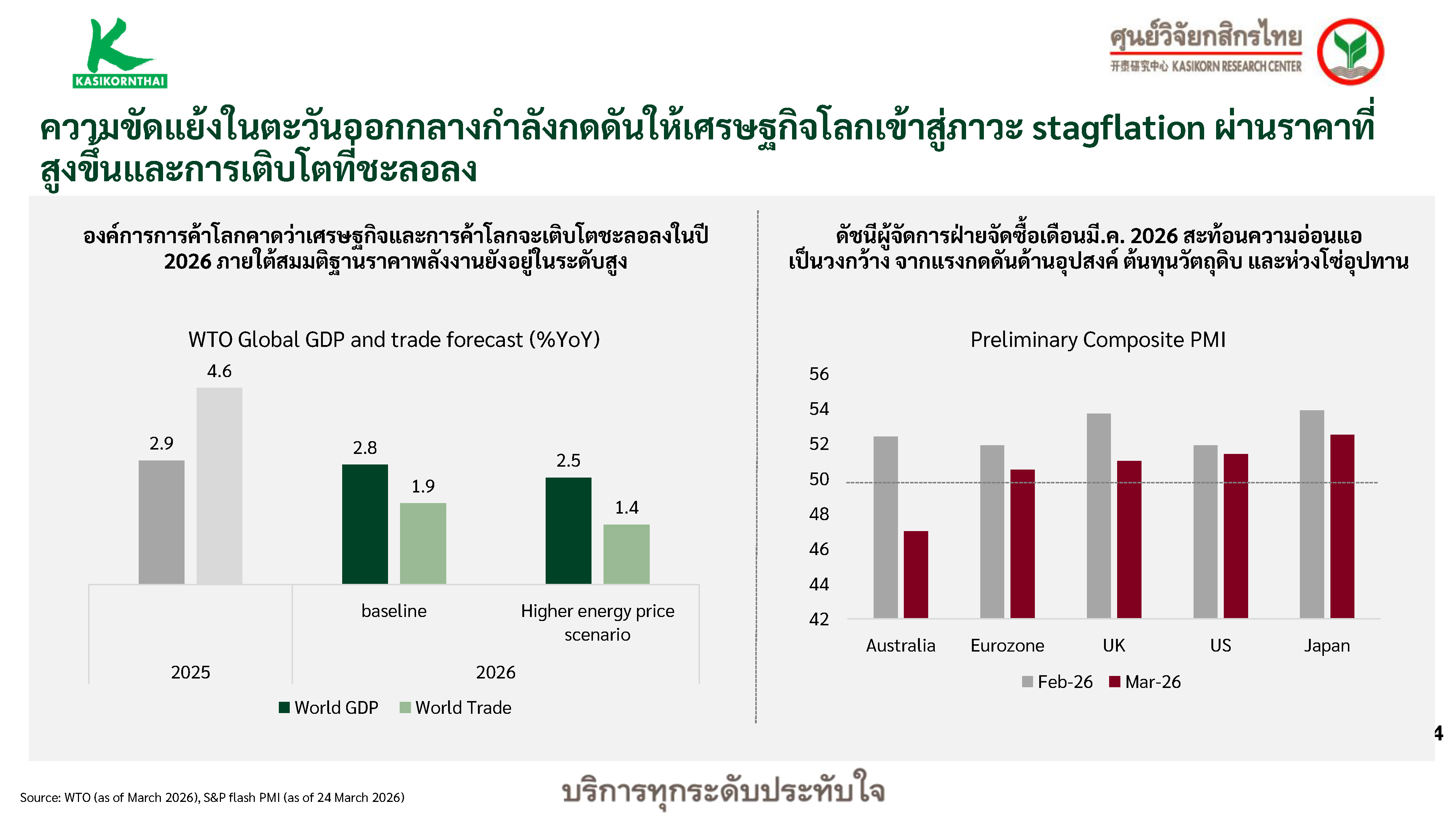
At the same time, Thailand's export sector is facing pressure from both rising costs and logistics constraints. Export growth in 2026 is expected to be below 1%, while shipping rates have increased due to changes in shipping routes. The tourism sector, a crucial engine of the Thai economy, has also been affected, with about 1,000 flights canceled during the conflict and the number of long-distance tourists dropping by more than 20% compared to the previous year. A closer look at the industry level reveals that businesses heavily reliant on energy and transportation costs will be the most affected, particularly in logistics, manufacturing, and SMEs.
• Energy costs in some industries account for 30–40% of total costs.
• Transportation costs have increased by about 3%.
• Agriculture, fertilizer, and plastics businesses are facing direct pressure.
Conversely, businesses related to energy and commodities are likely to benefit from rising prices, as are those that can pass costs onto consumers. The government has attempted to implement measures to mitigate the impacts, such as reducing fuel excise taxes, providing assistance to low-income individuals, offering low-interest loans for SMEs, and promoting the use of alternative energy like E20. However, budget constraints and the effectiveness of these measures remain factors to monitor. Ultimately, what this report reflects is not just a picture of a short-term crisis but a structural change in the global economy, where energy costs and geopolitical risks will play an increasingly significant role in the long term.
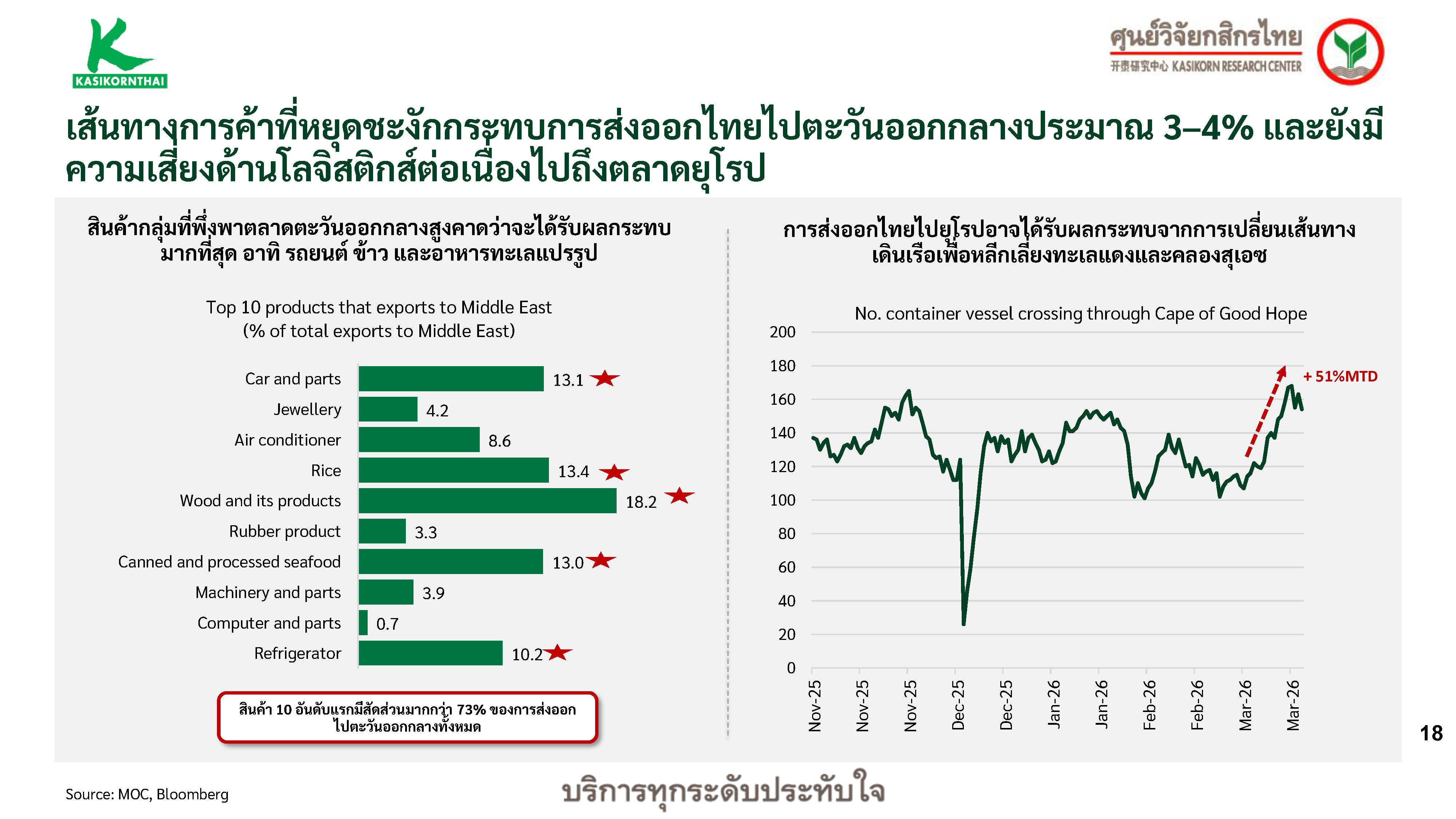
For investors and entrepreneurs, understanding the “core of the problem” will be more crucial than merely looking at short-term numbers. In a world where costs will not return to previous lows, those who can adapt quickly and strategize effectively will be the ones who can withstand the economic volatility of this period.