The Automotive Industry in 2022 Shows Slow Signs of Recovery Amid Risks from War and Ongoing Semiconductor Shortages
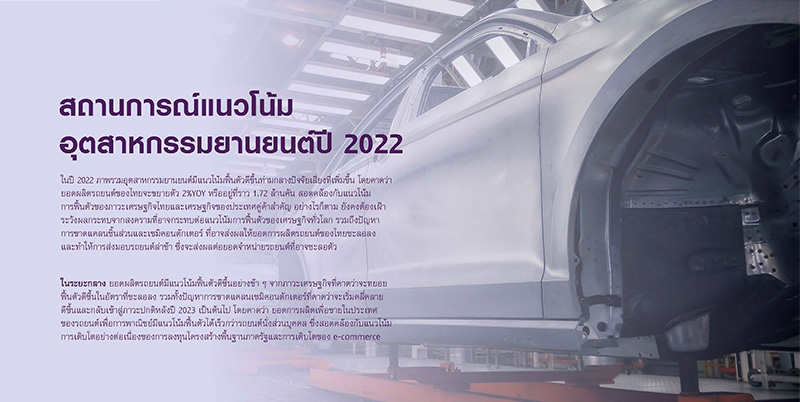
The overall outlook for Thailand's automotive industry is showing signs of gradual recovery, although the growth rate is slightly slower than earlier predictions made at the beginning of the year.
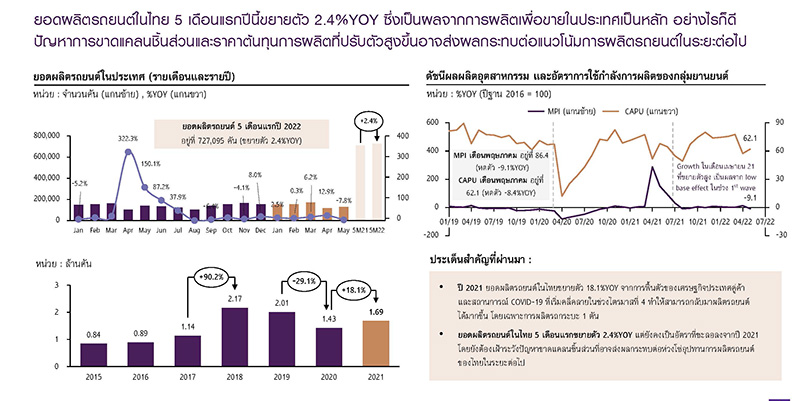
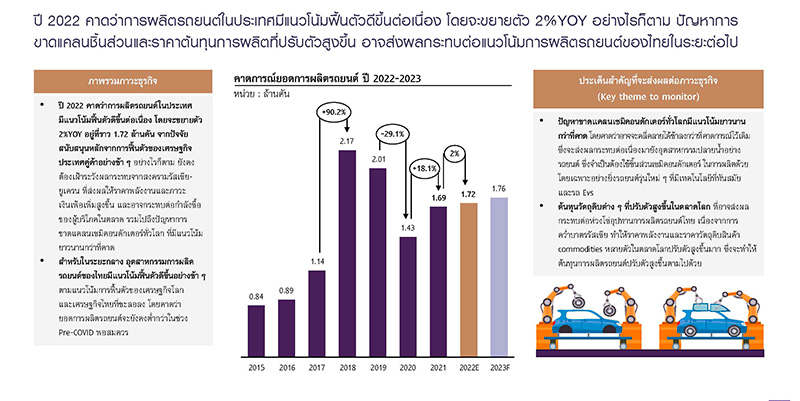
- Car production in 2022 is expected to grow by about 2%, reaching 1.72 million units due to the impacts of the Russia-Ukraine war, which may affect the automotive supply chain, along with ongoing semiconductor shortages and rising production costs in the global market driven by increasing raw material prices.
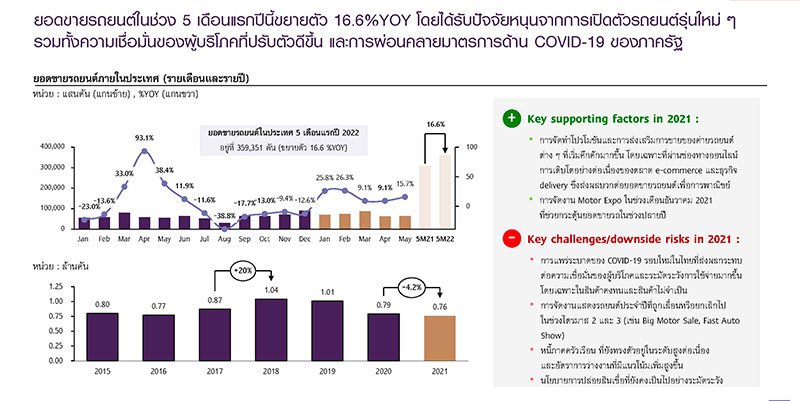
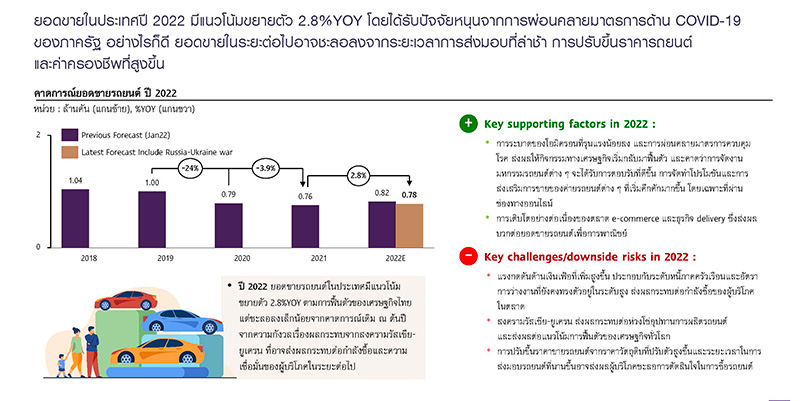
- Domestic car sales in 2022 are projected to grow by 2.8% YOY, or approximately 780,000 units, a decrease from the earlier forecast of 820,000 units at the beginning of the year. The inflationary pressures stemming from the Russia-Ukraine war, along with rising interest rates, are expected to limit consumer purchasing power.
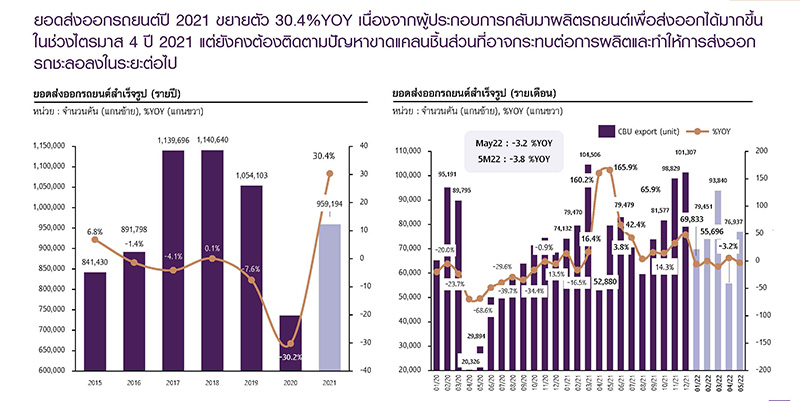
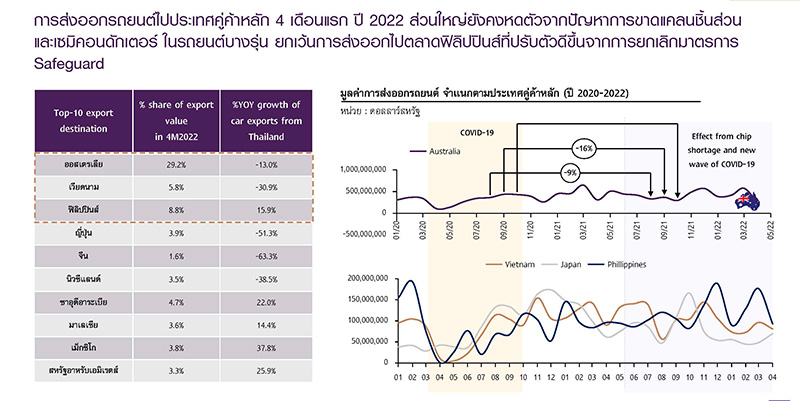
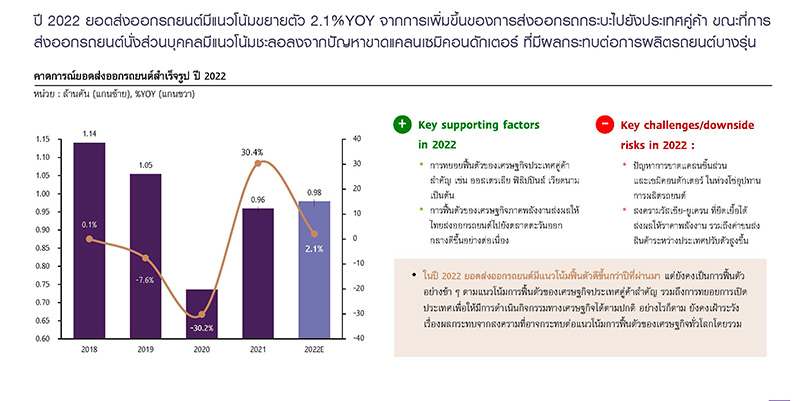
- Exports of vehicles in 2022 are expected to grow by 2.1% YOY, or around 980,000 units, showing a gradual recovery compared to the previous year, although it remains a slow recovery in line with the gradual economic recovery of trading partner countries. However, the global economic recovery trend should be monitored as it is expected to slow down.
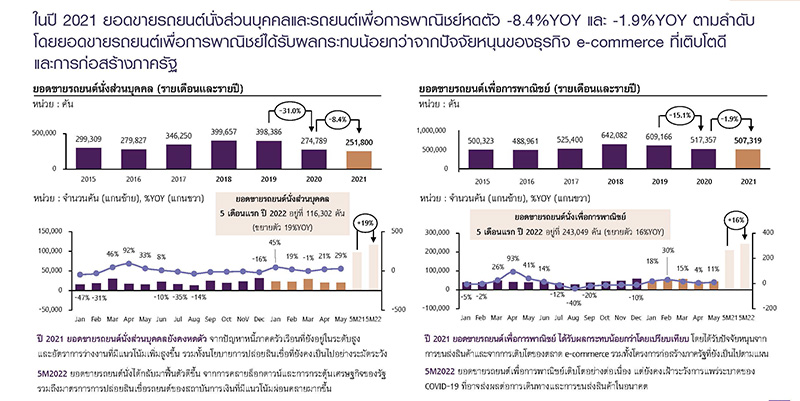
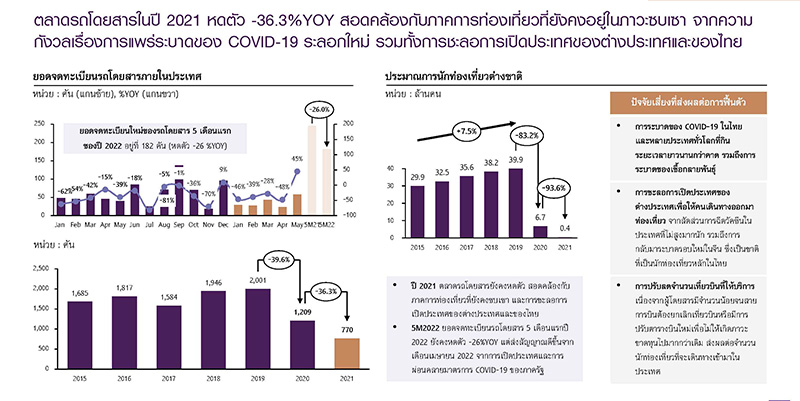
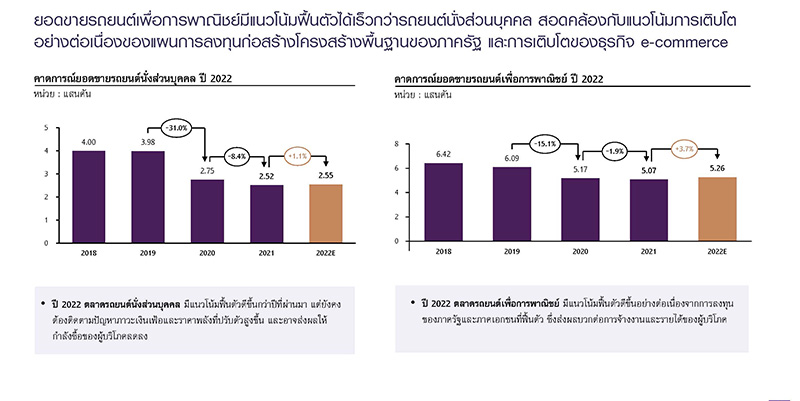
The automotive industry's recovery is expected to be driven by the truck and motorcycle segments, while the passenger car and bus segments are recovering slowly in line with the economic and tourism sector recovery.
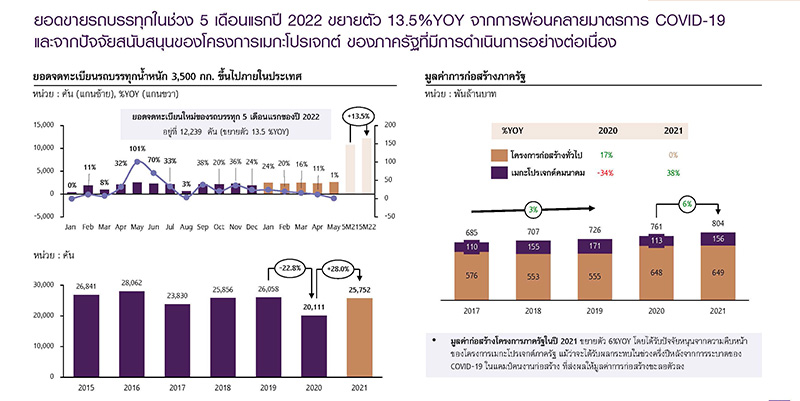
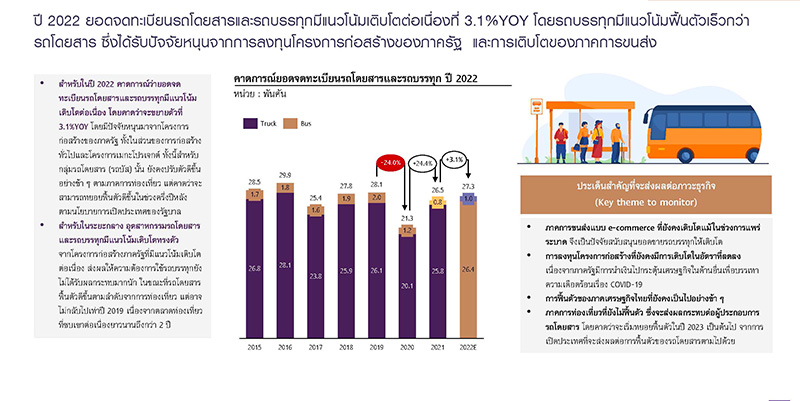
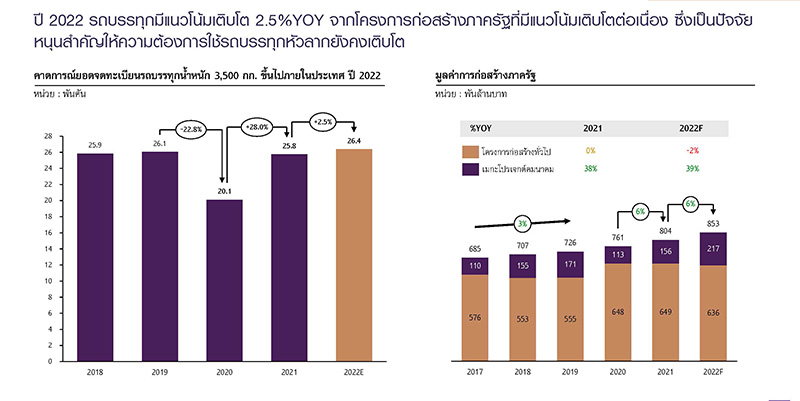
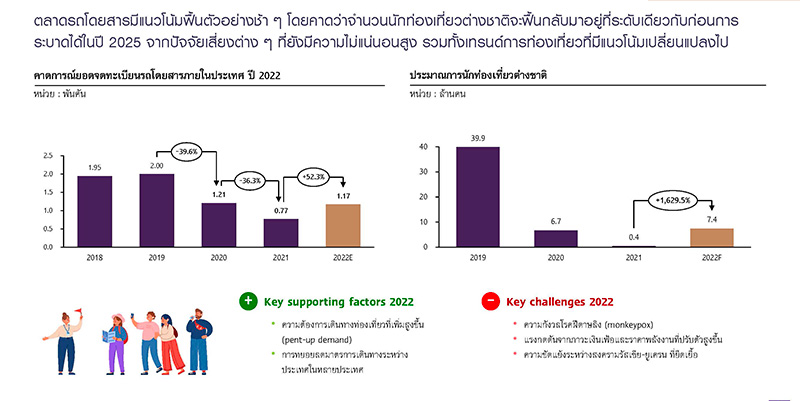
- Sales of passenger vehicles and trucks in 2022 are expected to recover, with registrations projected to grow by 3.1% YOY, supported by government construction projects, both general construction and mega-projects. The bus segment is also expected to gradually improve in line with the tourism sector, with a clearer recovery anticipated in the second half of the year following the government's reopening policy.
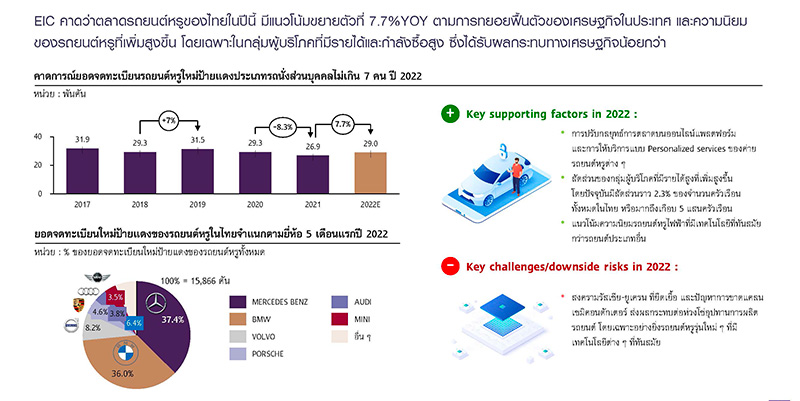
- Sales of personal cars in 2022 are expected to recover slowly, with projections indicating a 1.1% YOY growth due to easing lockdown measures and government economic stimulus. However, inflation and rising energy prices may still impact consumer purchasing power.
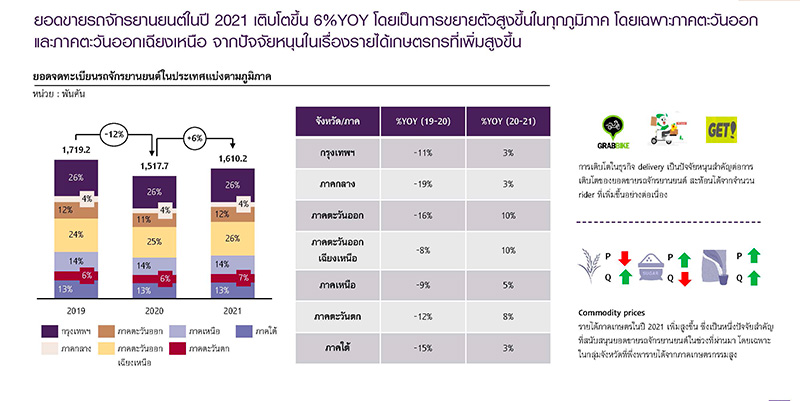
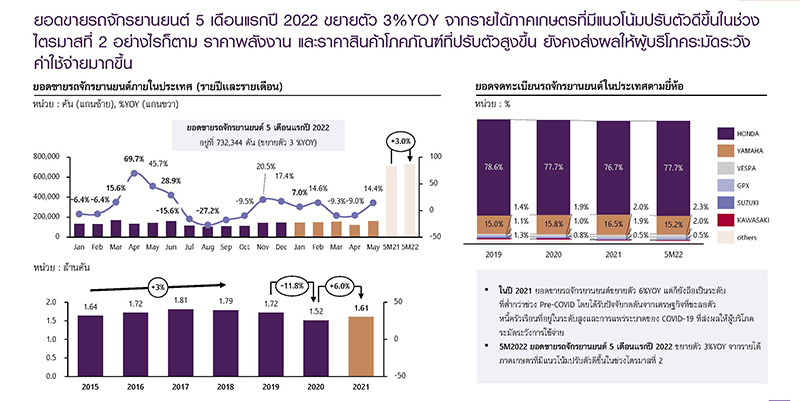
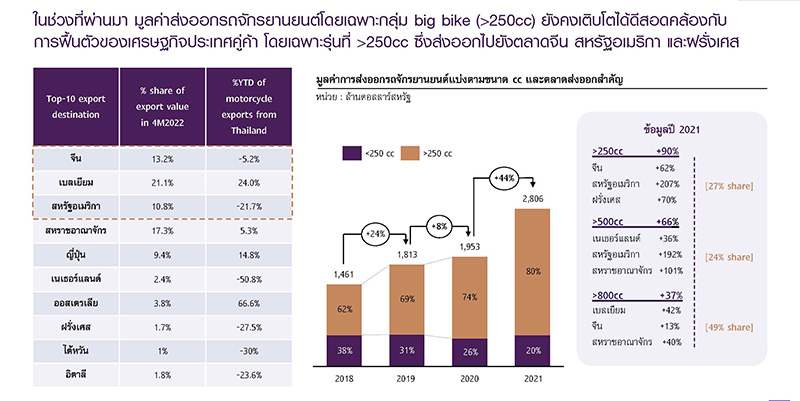
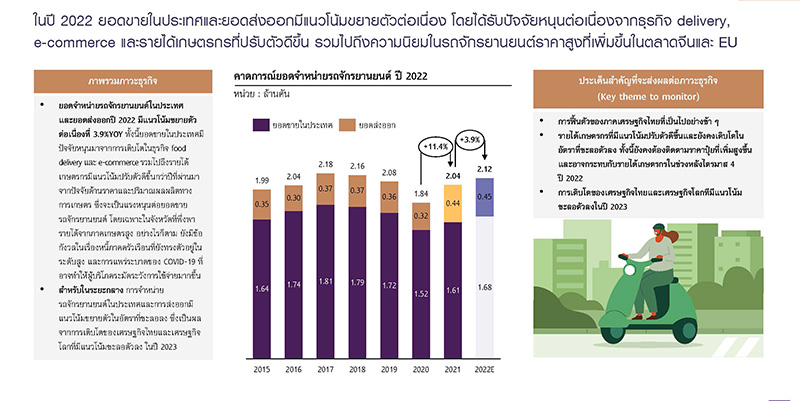
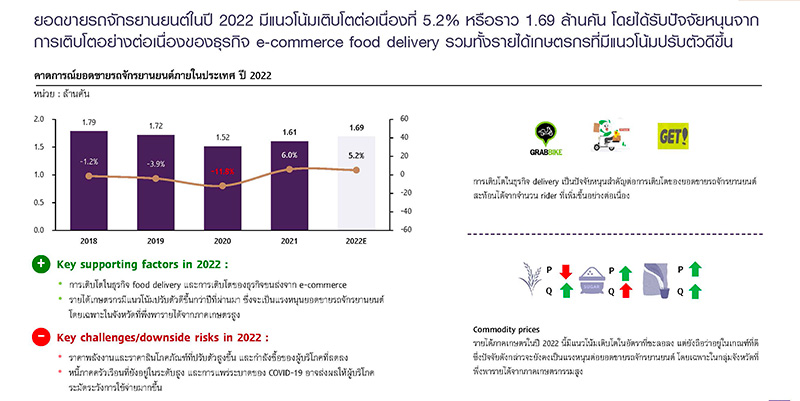
- Sales of motorcycles domestically and exports of motorcycles in 2022 are expected to continue growing at 5.2%, or about 1.69 million units, supported by the delivery business, e-commerce, and improved farmer incomes, as well as increasing popularity of high-priced motorcycles in the Chinese and EU markets.
However, despite the positive recovery outlook for Thailand's automotive manufacturing industry, there are still risks that need to be monitored.
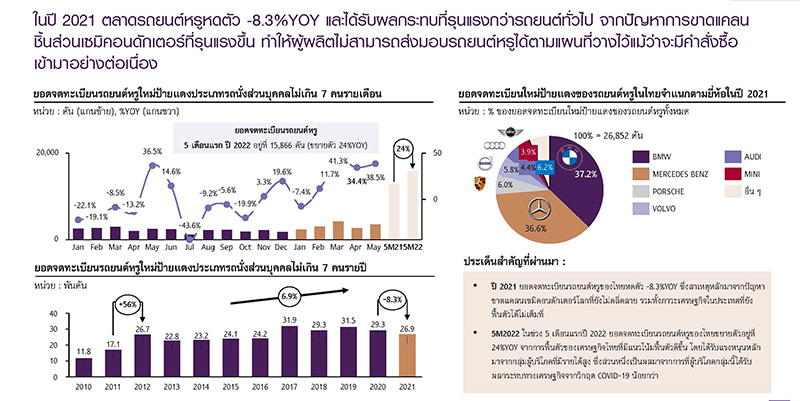
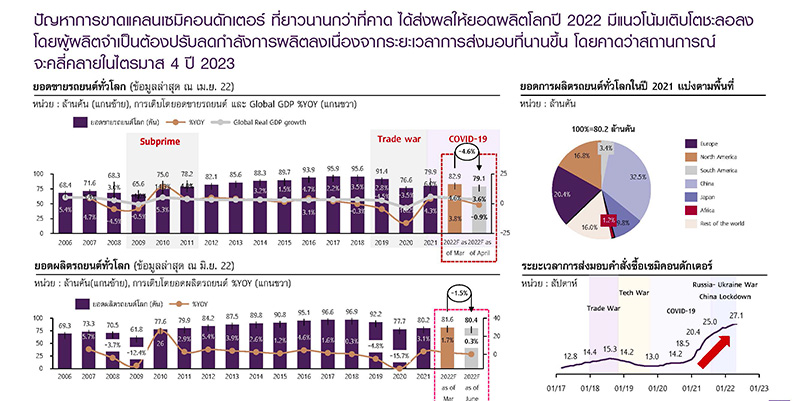
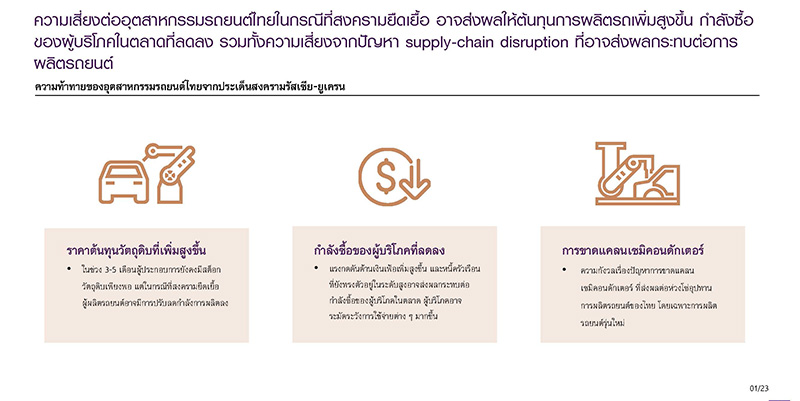
- The global semiconductor shortage is expected to last longer than anticipated, which will continue to impact downstream industries such as automotive, which rely on semiconductor components for production, especially for new models with advanced technology and electric vehicles (EVs).
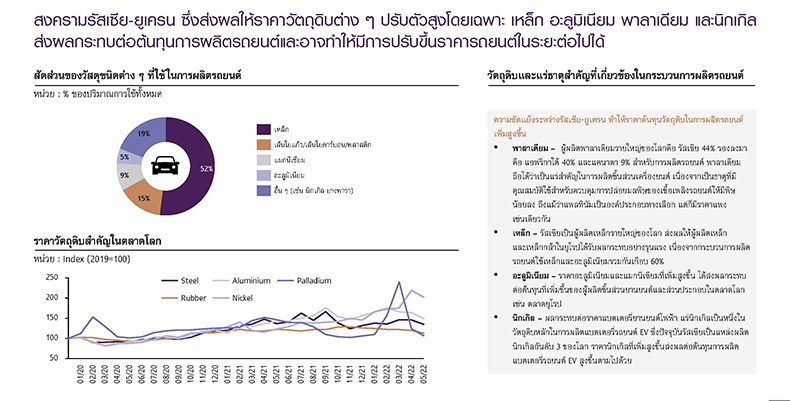
- Rising raw material costs in the global market may affect the supply chain for Thai automotive production due to sanctions on Russia, leading to significant increases in energy prices and commodity prices, which will subsequently raise automotive production costs.
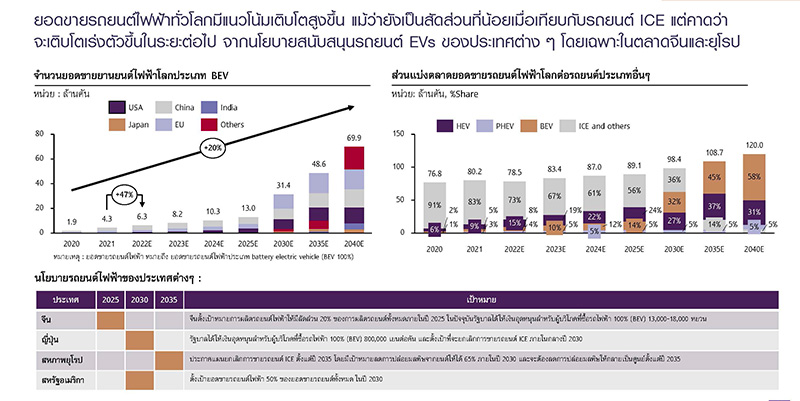
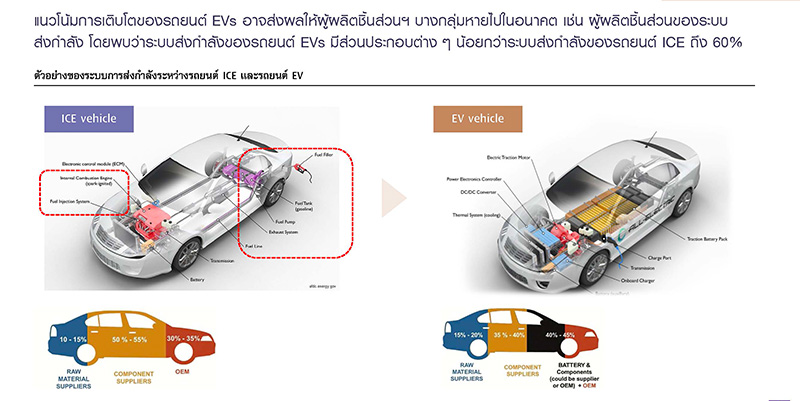
- The transition towards EVs will have long-term impacts on Thailand's automotive supply chain, particularly for manufacturers of components and equipment used in internal combustion engine (ICE) vehicles, except for certain parts like chassis, body, suspension systems, and wheels, which will be less affected than other components not involved in the EV supply chain.
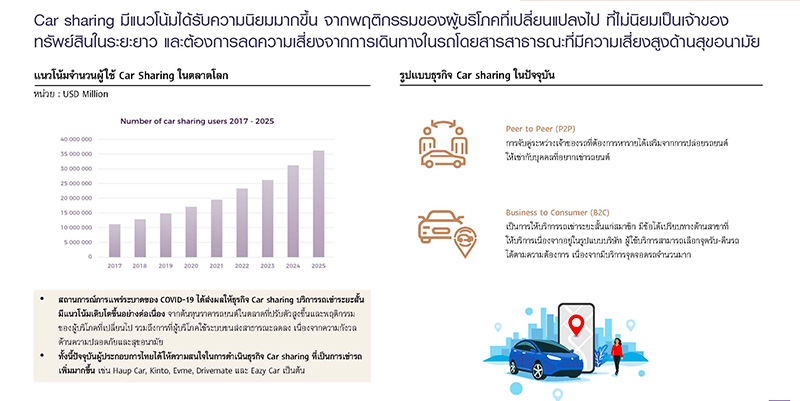
- The growth trend of the car-sharing business and changing consumer behaviors among younger generations, who prioritize ownership less than older generations, may affect future demand for cars.
Given the issues to watch regarding semiconductor shortages, rising raw material costs, EV market trends, and changing consumer behaviors, EIC believes that automotive industry operators must adjust their strategies to cope with the situation as follows:
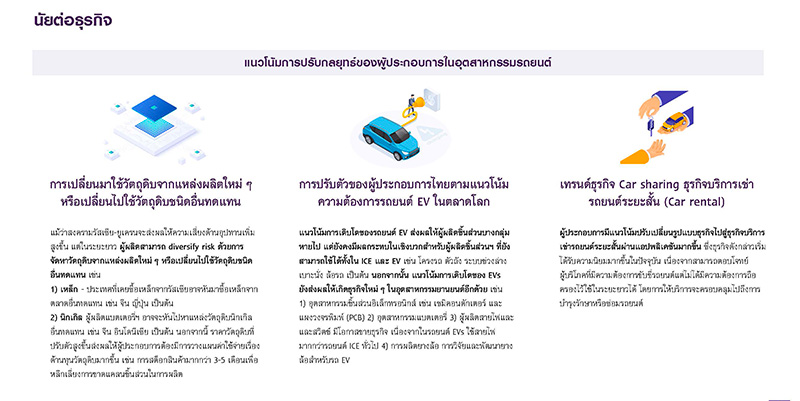
- In light of the semiconductor shortage and rising raw material costs, operators need to seek new sources of raw materials or switch to alternative materials.
- With the growing demand for EVs in the global market, car manufacturers will need to adjust their production plans to align with government policies promoting electric vehicles. For certain types of parts and equipment that can still be used interchangeably between the two types of vehicles, quality improvements will be necessary to support EV production. For other parts that cannot be used with EVs, manufacturers may need to develop new products or expand into the replacement parts market (REM).
- The trend of car-sharing businesses will lead to new business opportunities as consumer behaviors change. Today's consumers may want to drive cars without the desire for long-term ownership. Therefore, short-term car rental services offered in various formats, such as hourly or monthly rentals, will meet consumer needs.


Read the full report at... https://www.scbeic.com/th/detail/product/automotive-110722