EIC Adjusts Thailand's Economic Growth Forecast for 2022 to 2.9%, Monitoring Inflation at a 24-Year High
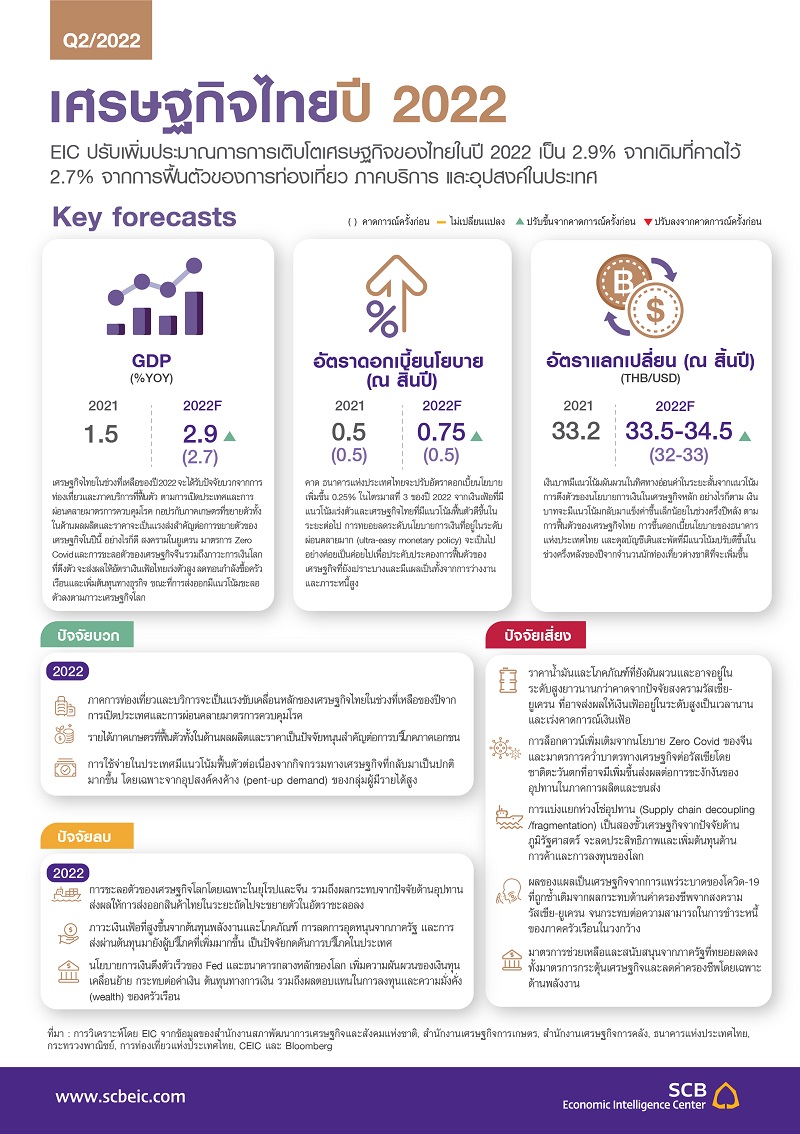
The Economic Intelligence Center (EIC) has revised its forecast for Thailand's economic growth in 2022 to 2.9%, up from the previous estimate of 2.7%. This adjustment is attributed to the recovery of the tourism and service sectors following the reopening of the country, as well as the agricultural sector benefiting from rising global food prices, which has boosted domestic demand. However, inflation is expected to reach a 24-year high, and the likelihood of a slowdown in exports due to the global economic situation poses risks that could hinder Thailand's economy.
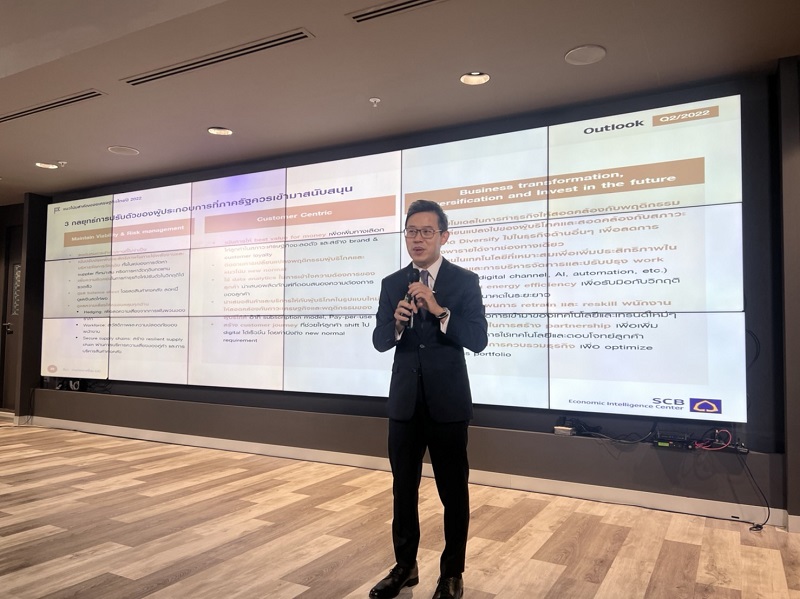
Dr. Sompawin Manprasert, Deputy Managing Director and CEO of the Economic Intelligence Center (EIC) at Siam Commercial Bank, stated that the EIC has raised its forecast for Thailand's economic growth in 2022 to 2.9% from the previous 2.7%, based on the recovery of tourism and services. It is estimated that 7.4 million foreign tourists will visit Thailand this year, up from the previous estimate of 5.7 million. The domestic service sector is also showing signs of recovery as people return to outdoor activities. Increased agricultural income and pent-up demand from consumers with purchasing power will still face pressure from inflation, which is expected to peak at a 24-year high (with an average inflation rate of 5.9% for the year). Meanwhile, exports are likely to slow down in line with the global economic slowdown.
Globally, the economy in 2022 is expected to slow down compared to the previous year due to three main factors:
1. The Russia-Ukraine war has exacerbated supply chain issues and prolonged them beyond expectations, while commodity prices, especially in energy and food, are expected to remain high.
2. Strict lockdown measures and pandemic control policies under China's Zero Covid policy have impacted domestic demand and further aggravated global supply issues, given China's role as a major manufacturing country and a global transportation hub.
3. The tightening monetary policy of major central banks, implemented rapidly and forcefully to curb inflation, is putting pressure on global economic growth and increasing volatility in global financial markets. The EIC expects the U.S. Federal Reserve to raise the policy interest rate (Fed funds rate) at every remaining meeting this year (a total of 7 increases throughout 2022), with increases of 50 basis points in the next three meetings, potentially bringing the upper limit of the U.S. policy interest rate to 3% by the end of the year. Additionally, the Fed has begun the process of reducing its balance sheet since June.
As a result, the EIC has lowered its forecast for global economic growth to 3.2% in 2022, down from 5.8% the previous year, reflecting a simultaneous slowdown among major economies, including the U.S., Europe, and China. The global economy is entering a period of imbalance following the COVID crisis, with many economies at increased risk of recession.
However, the slowing global economy presents increasing risks in the near future, which could lead to a slowdown in exports, a crucial driver of the economy in recent times, due to weakening demand from trading partners amid the global economic and trade situation, particularly in China, which faces risks from stringent pandemic control measures and domestic economic restructuring, as well as in Europe, which is at risk from the ongoing war. This will have a continued impact on private sector investment, which has already been affected by supply chain disruptions and rising material and commodity costs. Although public construction is expected to continue to grow well this year due to progress on large-scale projects, overall momentum will decrease as funds for new projects under the 500 billion baht borrowing bill are reduced to only 48 billion baht for spending.
Regarding inflation, the EIC expects the inflation rate to rise to 5.9% on average for this year (up from the previous estimate of 4.9%), marking the highest level in 24 years. This is occurring amid the gradual reduction of government subsidies for living costs, which will pressure purchasing power and domestic consumption, as well as slow down business investment. The EIC analyzes that household income is expected to grow slowly due to the labor market not fully recovering, which will limit the ability to cope with rising living costs this year, particularly for households already struggling with insufficient income to cover expenses. This group comprises over 7 million households, or nearly one-third of all households in Thailand, and the high inflation this year will exacerbate their financial situation, leading to decreased liquidity and increased debt for some households that need to borrow to cover insufficient income. This represents an increasing vulnerability of Thai households. Additionally, businesses will face challenges from rising cost burdens, which can only be passed on to consumers to a limited extent, especially for non-essential goods.
On the monetary policy front, the EIC expects the Bank of Thailand to raise the policy interest rate to 0.75% in the third quarter of 2022 due to rising inflation and an improving economy following the reopening, in order to mitigate risks to price stability and slow the acceleration of rising inflation expectations, which have begun to adjust upwards. The short-term inflation expectation (for the next year) of households has adjusted to 3.1% in May 2022, while Thailand's real interest rate (the interest rate adjusted for inflation) is currently still negative and relatively low compared to neighboring countries, which may lead to capital outflows from Thailand and a potential depreciation of the baht. The reduction of the ultra-easy monetary policy will be gradual to support the recovery of Thailand's still-fragile economy, which bears scars from the COVID crisis, including unemployment, slow income recovery, and high household debt.
As for the Thai baht against the U.S. dollar, since the beginning of 2022 until June 7, the baht has depreciated by about 3.6%, which is in line with and similar to other currencies in the region. The EIC views that in the short term, the baht will continue to face pressure from the Fed's interest rate hikes and the risks of war, leading to a depreciation trend within the range of 34.5-35.5 baht per U.S. dollar. However, the baht is expected to appreciate slightly towards the end of 2022 due to an improving economy and a better current account balance driven by the service sector. By the end of 2022, the EIC predicts that the baht may appreciate slightly to a range of 33.5-34.5 baht per U.S. dollar.