Monitoring the Economy and Inflation to Curb Real Estate Growth: Real Estate Market Index Report Indicates Strong Rental Trends
DDproperty, Thailand's number one real estate marketplace website, reveals that the overall real estate market in 2022 is still showing signs of slowing down in line with the economic situation. Coupled with inflation warnings since the beginning of the year, consumers are tightening their belts and being more cautious with their spending. The housing price index in the first quarter of the year has shown a continuous downward trend, contrary to the supply index, which continues to grow. The number of single-family homes has increased the most as developers and consumers with horizontal products are bringing them to market to meet the needs of real demand buyers. Real estate developers plan to launch new projects to aggressively enter the market in 2022, even though the absorption rate remains low, there are no signs of a real estate bubble. It is expected that government measures will be a key factor linking the demand of developers and consumers, pushing residential sales to become more active this year. It is still seen as a golden opportunity for financially ready buyers to own homes at reasonable prices after developers signal price increases this year.
The latest data from DDproperty Thailand Property Market Report Q1 2022 - Powered by PropertyGuru DataSense reveals that the housing price index in Bangkok has decreased to 84 points, a 1% drop from the previous quarter, as developers continue to compete by offering attractive promotions to stimulate purchasing decisions. Horizontal housing continues to meet consumer lifestyles better, as evidenced by the ongoing increase in popularity. The index for single-family homes has increased by 5% from the previous quarter and by 13% from the previous year, while the townhouse price index has increased by 1% from the previous quarter, remaining stable from the previous year. In contrast, the condominium index continues to decline due to the current living trend where consumers are more interested in horizontal projects, coupled with a significant decrease in investors and foreigners in the market, resulting in a 1% drop in the condominium price index from the previous quarter and a 10% drop over the year.
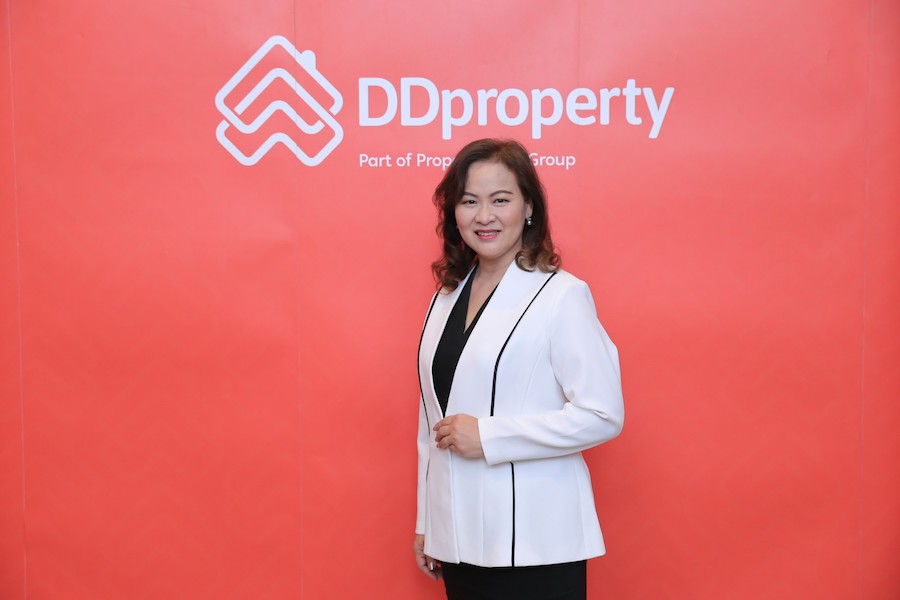
Ms. Kamolpath Saengkit, Managing Director of DDproperty in Thailand, stated: “Although the start of the new year in 2022 may not be as bright as many expected, due to the overall economy still not recovering and the ongoing pandemic situation affecting consumer purchasing power for a long time, there is also inflation that has become a significant variable. Data from the Bank of Thailand (BOT) shows that the latest inflation rate as of January has risen to 3.23%, higher than the original forecast of 1.7%. This directly impacts consumers in terms of living costs and increasing household debt burdens, leading consumers to choose to delay purchasing homes or take longer to make decisions.”
“However, there are movements from real estate developers who are continuously launching business plans to penetrate the market this year. It is expected that various marketing promotions will help drive the real estate market to become active again, along with government measures that facilitate home purchases, such as reducing transfer fees and mortgage fees for both new and second-hand homes, as well as temporarily relaxing loan-to-value (LTV) regulations from the BOT. These are positive factors that will make it easier for consumers to decide to buy and represent a golden opportunity for buyers who are ready at this time because housing prices are reasonable and valuable before new projects enter the market and prices rise according to current costs,” Ms. Kamolpath added.
“Nevertheless, even though the housing price index in the first quarter of 2022 shows a continuous downward trend and is expected to remain unchanged in the next quarter, the direction of the Thai real estate market from now on will grow according to the economic situation and the purchasing power of domestic consumers, which still needs to be monitored for inflation from the continuously rising living costs that directly affect consumers' purchasing decisions,” Ms. Kamolpath concluded.
Keeping an Eye on the Real Estate Direction in 2022: How Much Can the “Rental-Purchase” Trend Still Grow?
The DDproperty Thailand Property Market Report Q1 2022 - Powered by PropertyGuru DataSense reveals in-depth information about the Thai real estate market in the first quarter of 2022, along with updates on the rental and purchase housing trends of Thai consumers that are worth monitoring.
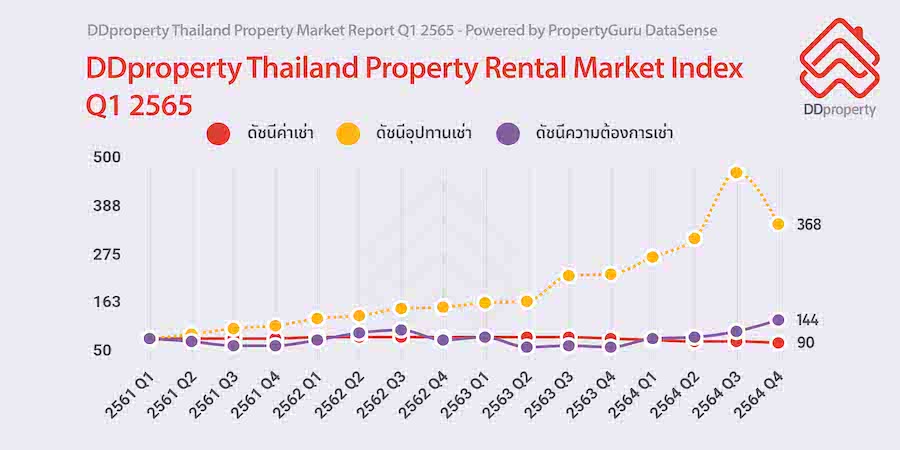
The rental trend remains strong, with demand surging over 22%. The rental housing trend continues to meet the financial status of consumers today, as evidenced by the rental index showing a downward trend that facilitates renting at lower rates according to consumer purchasing power. The DDproperty Thailand Property Market Report Q1 2022 - Powered by PropertyGuru DataSense found that the rental index in Bangkok has decreased to 90 points from 93 points, a 3% drop from the previous quarter. Compared to the period before the pandemic, it has decreased by 13%. The condominium rental index has dropped the most by 2% from the previous quarter due to the lockdown, which caused both Thai and foreign tenants to disappear from the market for a long time. Landlords have had to lower prices to stimulate rental decisions among the existing target groups. In contrast, the single-family home rental index has increased by 6%, while the townhouse rental index has remained stable from the previous quarter, aligning with the trend of seeking both purchase and rental housing in horizontal formats. However, the rental market in all forms continues to show growth, evident from the demand for rentals this quarter increasing by 22%, with condominiums being the most popular among tenants, showing a 26% increase in rental demand from the previous quarter, followed by single-family homes and townhouses, which increased by 13% and 10%, respectively.
In contrast, the supply of rental properties has decreased significantly by 24% from the previous quarter but has increased by 47% from the previous year, with all types of housing supply decreasing from the previous quarter. Condominiums decreased by 24% (up 48% from the previous year), single-family homes decreased by 27% (up 18% from the previous year), and townhouses decreased by 15% (up 46% from the previous year). This reflects that it is still a good opportunity for those who have properties to rent out to meet the current market demand instead of selling, as it is not yet a favorable time for profitable sales.
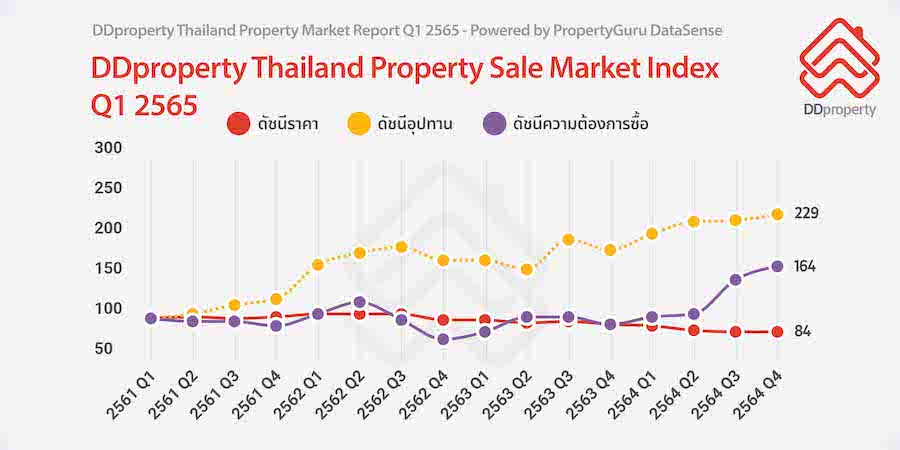
Supply Continues to Grow: A Golden Opportunity Still Awaits Buyers In 2022, signs of developers launching new projects are beginning to emerge after a slowdown in 2021. Overall, the supply index or the number of housing units in the market continues to increase, standing at 229 points, up from 223 points, a 3% increase from the previous quarter. Single-family homes have seen the largest increase of 7% from the previous quarter or 42% from the previous year, reflecting that developers and consumers with horizontal products are bringing them to market more to meet the demand of real demand buyers. Condominiums, while not experiencing explosive growth, still have demand in the market, increasing by 3% from the previous quarter or 21% from the previous year. Meanwhile, townhouses remained stable from the previous quarter, increasing by 32% from the previous year. The current supply in the market is sufficient to meet consumer purchasing demand, responding to government measures supporting home ownership this year. Although the absorption rate in the buying market remains low, it is beneficial for consumers to have more options and represents a golden opportunity for buyers and long-term investors who are ready to own housing at affordable prices before the selling prices of new projects gradually rise according to market mechanisms in the future.
Electric Trains are Key: Driving People to Seek Homes in Suburban Areas The trend of consumers searching for housing continues to focus on easily accessible suburban areas. This is evident from the top five locations with the highest price index increases this quarter being outside the central business district (CBD), most of which benefit from new electric train projects, both those that are already operational and those under construction. The Blue Line, from Hua Lamphong to Lak Song, has resulted in the Bang Khae area seeing the highest price index increase of 9% from the previous quarter. The Pom Prap Sattru Phai area has seen a price index increase of 5% from the previous quarter, while the outer Bangkok area, such as Taling Chan, which has the light red electric train line running through it, has seen a price index increase of 4% from the previous quarter. The Min Buri area has also seen a price index increase of 4% from the previous quarter, benefiting from the Orange Line, which is planned to open in 2024. Additionally, another outer Bangkok area, Bang Khun Thian, although currently without an electric train passing through, has seen a price index increase of 6% from the previous quarter, making it a suburban area worth watching and having potential for future business development due to its large community, proximity to job sources, and leading educational institutions.