Decoding Thai Real Estate: A New Definition of Real Green Real Estate - The New Game of Business
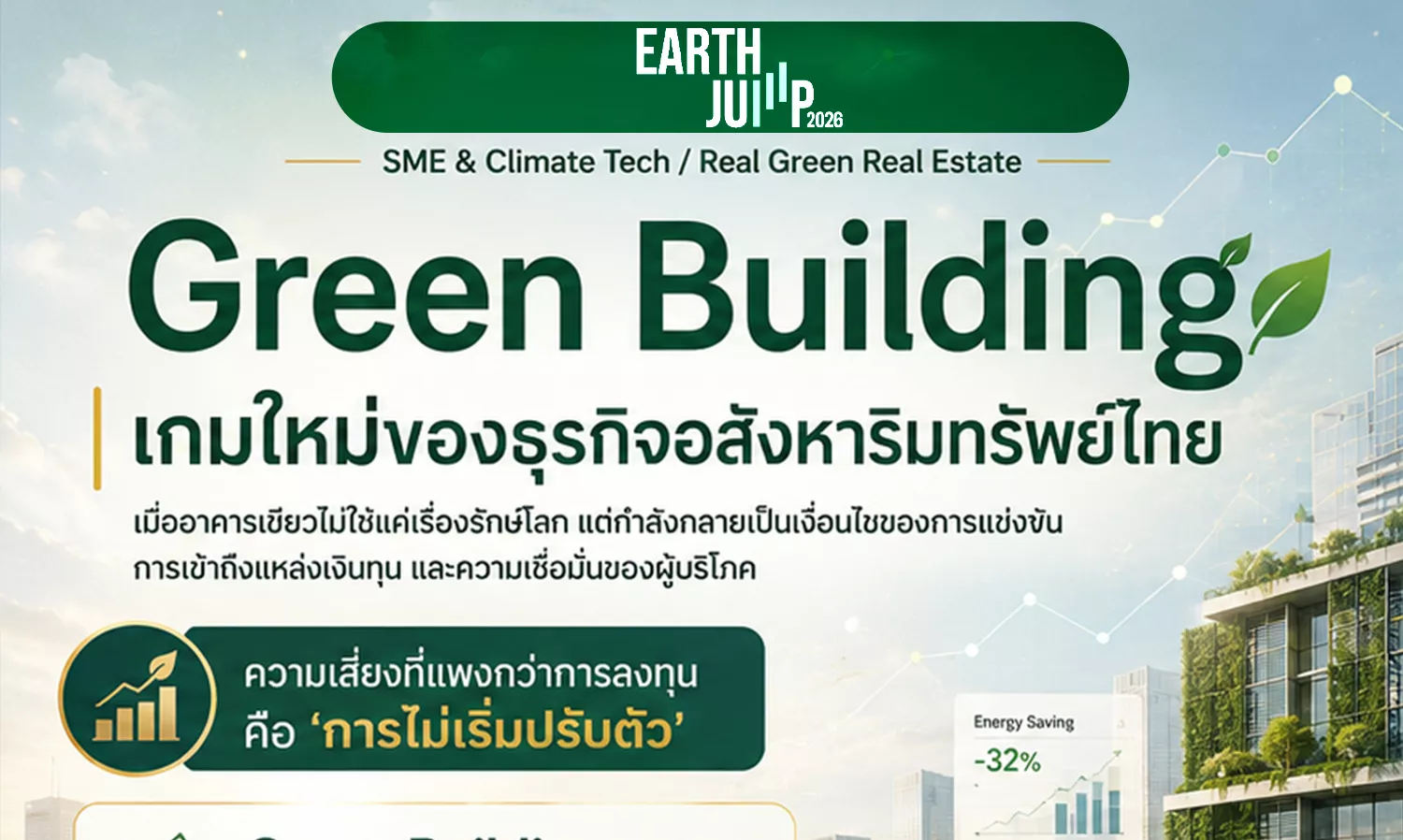
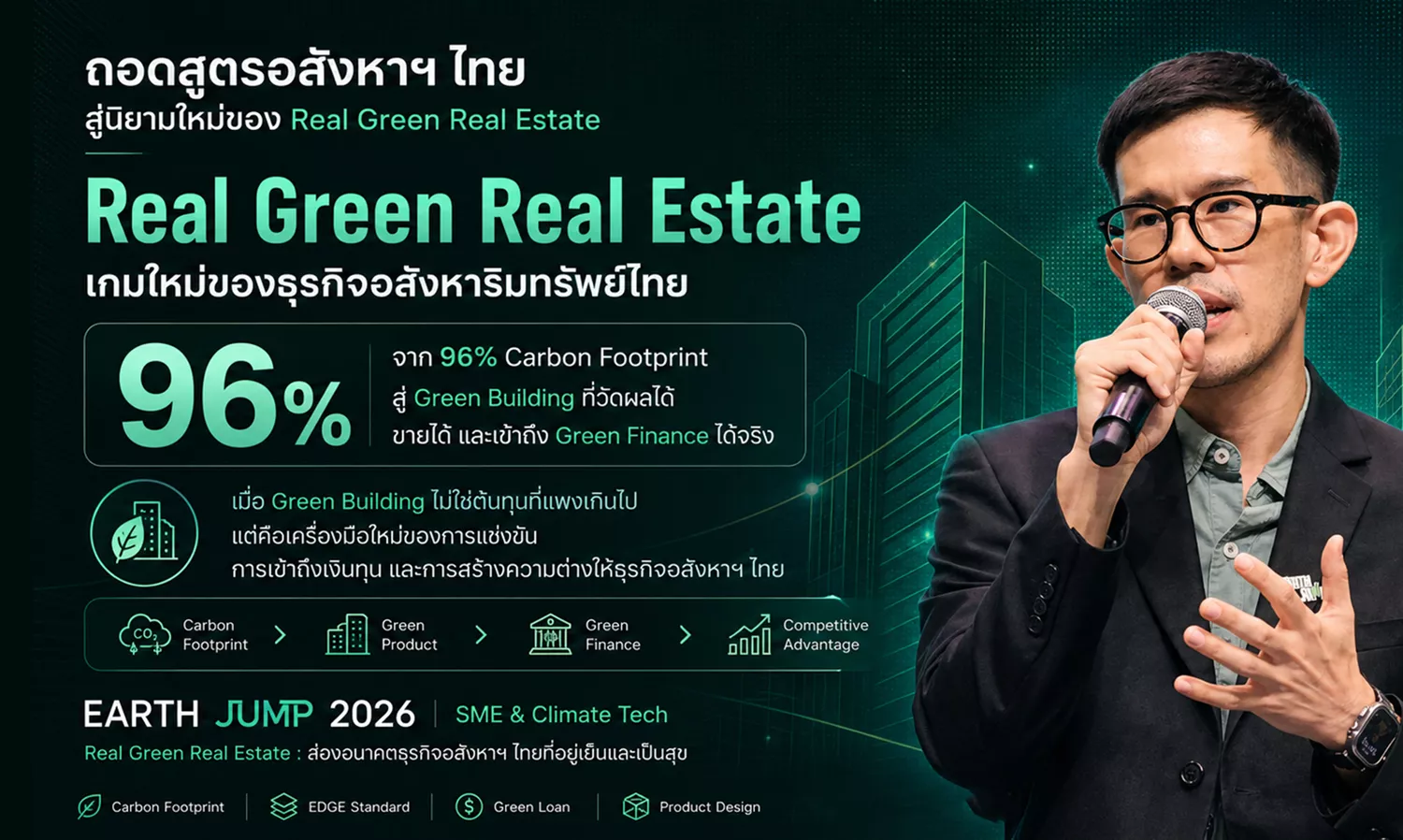
✨Panel discussion on Real Green Real Estate: Exploring the Future of Thai Real Estate for a Sustainable and Happy Living at the SME & Climate Tech stage during EARTH JUMP 2026, featuring Mr. Arakdet Udomsiri, Deputy CEO of Arasirin Holding Public Company Limited.
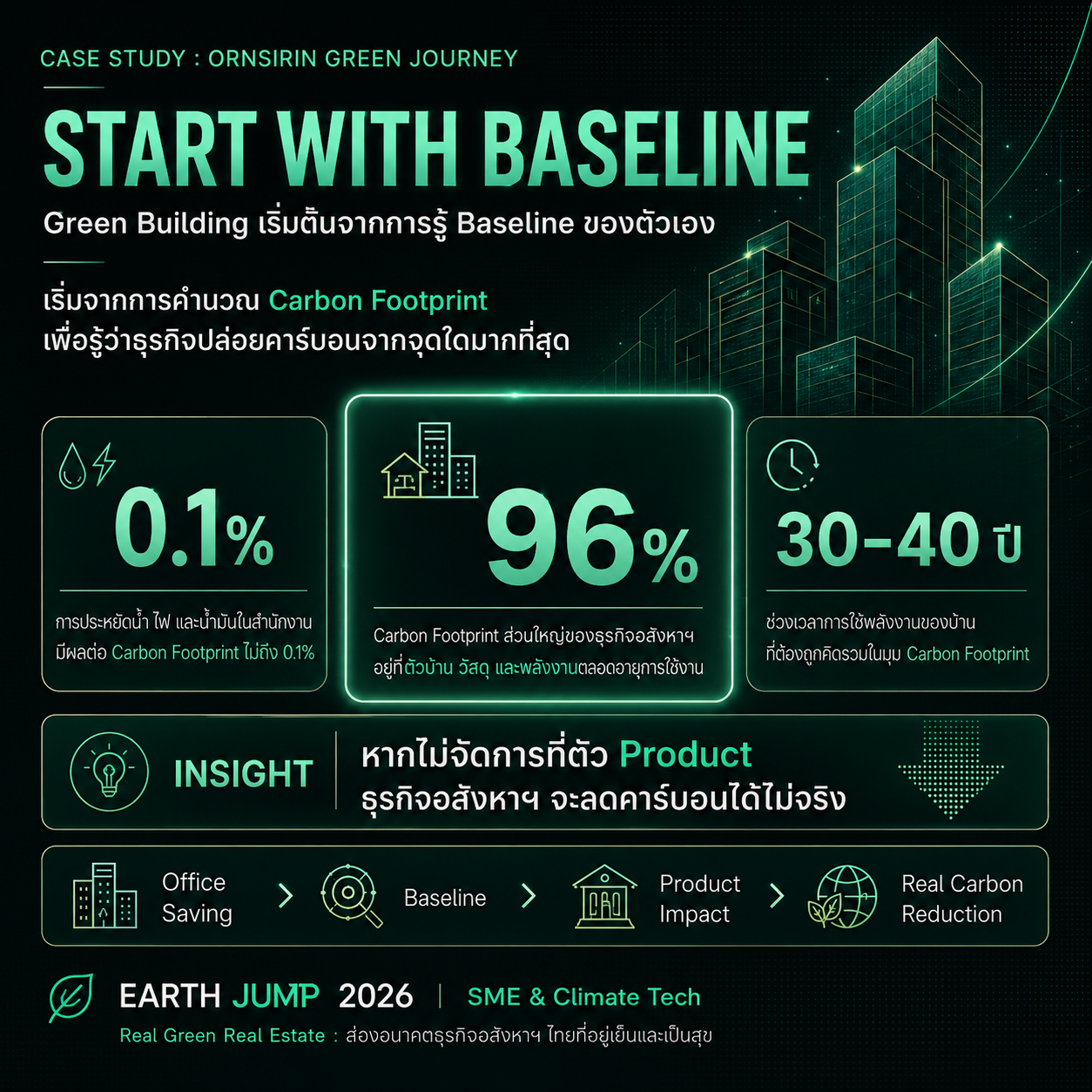
The journey of Arasirin with ESG began after the company went public, necessitating a focus on ESG issues and the annual submission of sustainability reports to the stock exchange. Initially unsure where to start, they began by calculating the organization's Carbon Footprint to establish their baseline. The calculations revealed that campaigns encouraging employees to save water, electricity, and fuel in the office had an impact of less than 0.1%. However, the homes and materials sold to customers, such as cement, bricks, paint, and roofing (considering the energy used in homes over 30-40 years), accounted for a staggering 96% of the total Carbon Footprint. Without addressing the product itself, carbon reduction would be impossible.
Thus, Arasirin consulted with Kasikorn Bank (KBank), which helped find partners and the IFC team to build knowledge and understanding.
Mr. Arakdet shared about the Pilot Project, stating that at the outset, everyone in the company opposed it due to fears of high costs and customer rejection if prices were raised. This led to the proof that being green is not as expensive or difficult as imagined. They started with a pilot project involving a low-rise 4-story condominium under development in downtown Chiang Mai, covering 4,000 square meters (no EIA required), targeting the Economy Class market at approximately 60,000 THB/sqm. The challenge was to keep the product affordable while ensuring it was green, which they achieved through design strategies, such as using white building materials to reflect heat and planting plenty of greenery, while also addressing the issue of hot rooftop units by incorporating Solar Slabs or concrete walkways with air gaps underneath to mitigate heat.
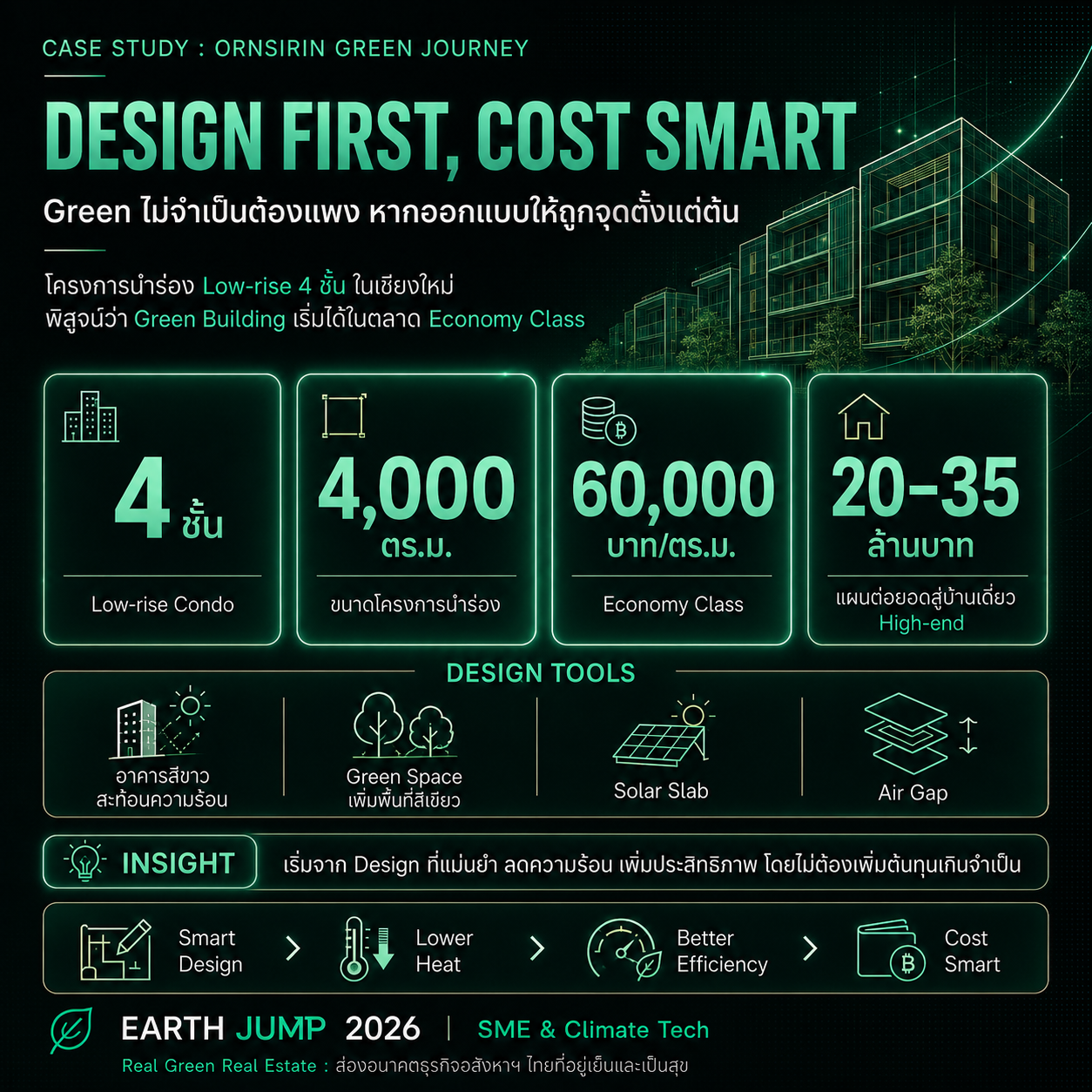
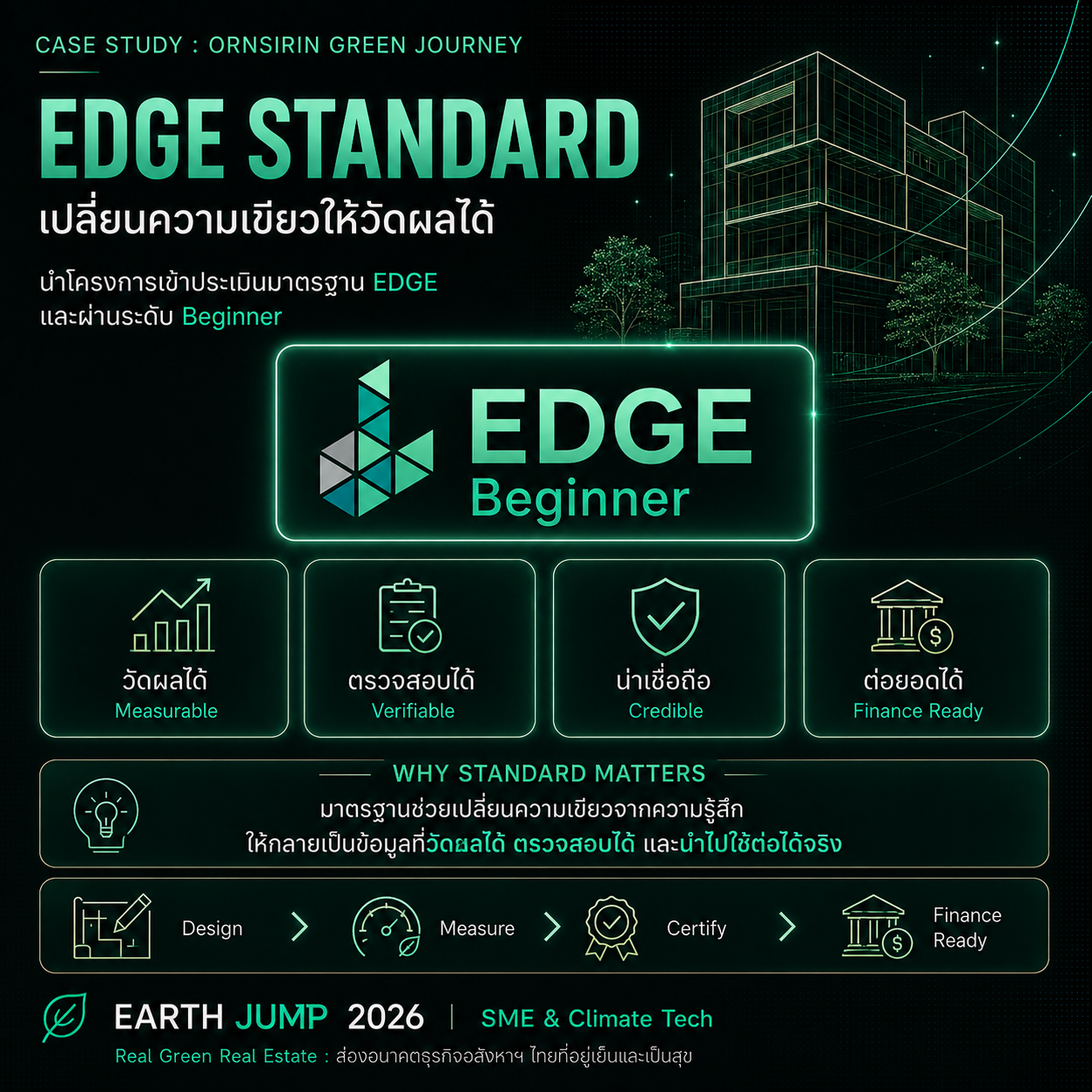
When this project was evaluated, it passed the EDGE standard at the Beginner level, proving that good design processes could meet the criteria with virtually no additional costs, successfully dispelling the belief within the organization that green initiatives are expensive.
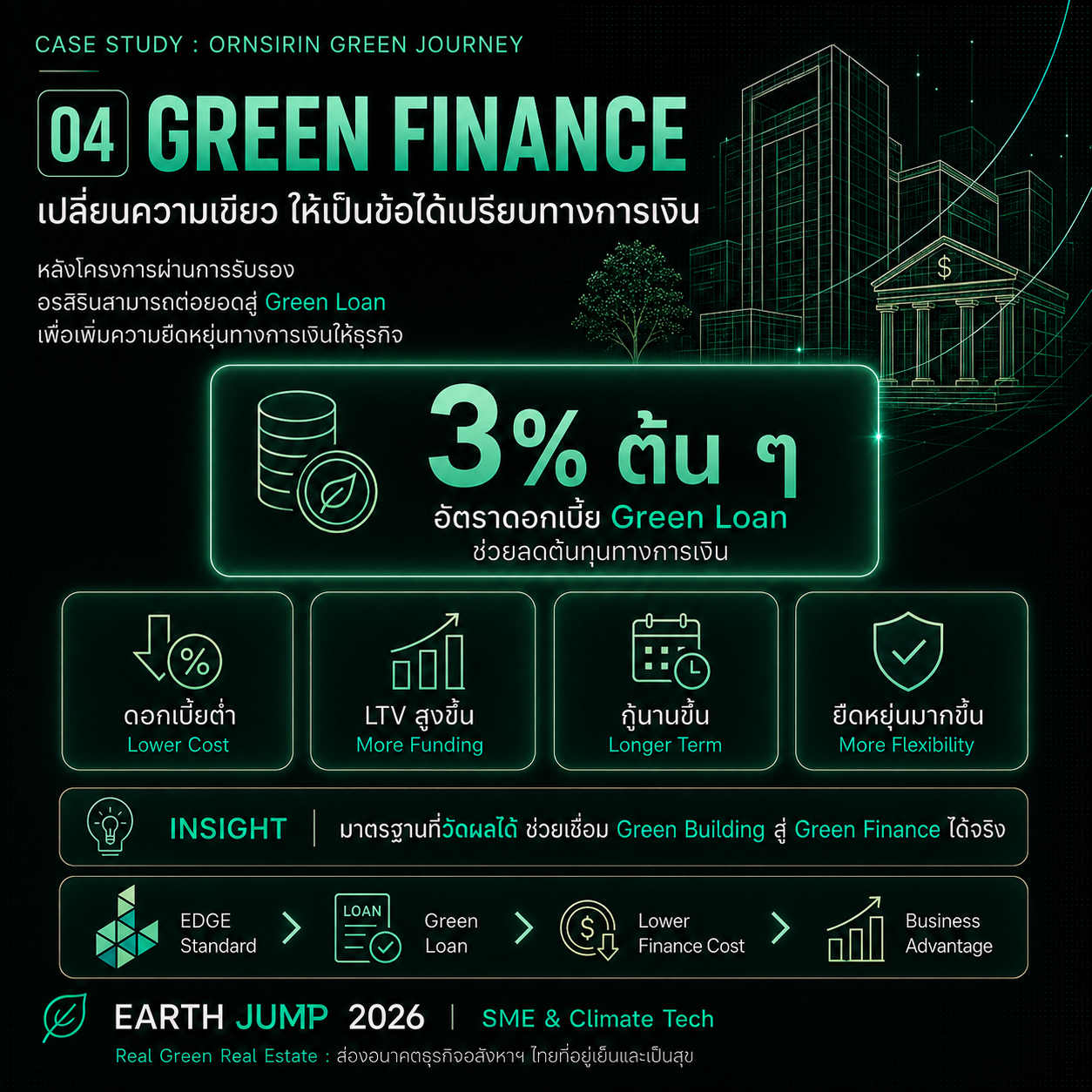
Regarding financial benefits (Green Finance) and business opportunities through KBank's offerings (Green Loan), after the first project succeeded, Arasirin planned to expand into high-end single-family home projects priced between 20-35 million THB and applied for certification to seek Green loans from the bank. The benefits received included:
▪️ A low-interest rate starting in the 3% range, which is very low for the current real estate business.
▪️ A higher Loan-to-Value (LTV) ratio.
▪️ A longer loan term, which helps reduce the burden and increase financial flexibility.
Additionally, there are benefits for consumers (Post-finance) as customers purchasing energy-efficient homes will also receive lower mortgage interest rates from the bank, reducing monthly payments or increasing purchasing power.
With a Net Zero target for 2050, Kasikorn Bank is moving towards a Net Zero Pathway by that year, meaning that in the future, organizations that do not adapt to green practices may no longer be able to request future funding from the bank. Therefore, adapting now is a preparation for what is to come.
In terms of collaboration with the EDGE standard system (IFC) and internal improvements, the first challenge was getting the organization's personnel to believe in and understand the initiative collectively. The team had to change their mindset and collaborate in the process of inputting data regarding materials and Carbon Footprint.
Next was using the EDGE program, a tool from the IFC, which initially seemed difficult due to the manual and tools being in English. However, the IFC provided close support and training, and once they tried it, they found it was not as hard as they thought. The program is user-friendly; by inputting real data, the system calculates energy and carbon (Embodied Carbon) reductions, indicating where adjustments are needed and whether the investment is worthwhile.
What they gained was more than just financial figures (Brand Recognition) because building green homes creates a competitive advantage in the highly competitive Thai real estate market. Arasirin, a local company around 10 years old, would struggle to compete solely on price or size against big brands that have been around for 40-60 years. Thus, the green aspect has become a crucial selling point, especially among customers in Phuket and Samui, who are mostly Europeans and Australians. This customer base already has a foundational understanding of environmental issues, and when they explain energy-efficient homes, they immediately see the value and difference.
.