Strategies for Building a Rental Portfolio to Attract Expats in Thailand
Many may view a declining real estate market as a nightmare, but if we shift our perspective from "selling prices" to analyzing "rental demand," we will find that Thailand in 2026 is becoming a "gold mine" for adaptive rental investors. Especially since Thailand's target audience is not just locals but also expats from around the world who see Thailand as their "second home."
Why is 'Renting' the Hero in a Sluggish Buying Market?
As interest rates and lending criteria make property ownership a challenge for locals, a clear phenomenon has emerged: "Generation Rent," a group of young people and expats who choose not to tie themselves down to a single deed but prefer to "rent" for the freedom to live their lives.
Data from the Real Estate Information Center (REIC) indicates that owning assets in the lower market is becoming increasingly difficult, but in prime locations that cater to lifestyle needs, rental rates are significantly rising. This is the moment when investors with cash on hand or strong borrowing capacity can scoop up properties at "sale" prices to create more stable passive income.
Work-from-Thailand: When Offices Can Be Anywhere, It Boosts the Rental Market
Imagine an expat working on a laptop with a view of Phuket's sea from their balcony or a luxury condo in the heart of Sukhumvit. By 2026, the Digital Nomad trend will no longer be a temporary fad but a core lifestyle, especially as the Thai government promotes the LTR (Long-Term Resident) visa and continuously improves visa conditions to attract "High-Potential Foreigners."
This group is not just looking for a square room; they seek an "eco-system" for living, including high-speed internet, co-working spaces within projects, and importantly, proximity to communities that facilitate both work and life.
If you want to be a successful landlord, you must first know “who your target audience is” and “what they want” and “where they want to be.”
Currently, the Grade A rental market in Thailand is driven by three main groups:
1. Medical and technology professionals working in the Eastern Economic Corridor (EEC) and Bangkok.
2. Expat families sending their children to top international schools, often renting long-term for 3-5 years or more.
3. The "Silver Hair" group, or retirees from Japan and Europe looking for high-security wellness residences.
Understanding the specific needs of these groups is the key to ensuring your rooms and spaces are never vacant.
Attracting Expats with Services Beyond Just Handing Over Keys
In a market with many options, what will make your room stand out?
The answer is "Empathy," or understanding the challenges faced by expats living abroad, whether it’s providing fully furnished accommodations or decorating in a Minimal or Scandi-Modern style.
However, what truly adds value are additional services, such as having an English-speaking housekeeping team and pre-arranging internet or cable TV services.
These are the "magnets" that attract tenants to choose you and are willing to pay 10-15% more than the average market rent.
Expats moving to Thailand often face "Culture Shock" and difficulties managing public utilities. Therefore, if you can act as a "Personal Assistant" during their first month, you can transform from an ordinary landlord into a "super host" that tenants want to renew their contracts with for many years.

The first strategy to win hearts is "The Welcome Kit Strategy." Instead of leaving the room empty, prepare a neighborhood guide in English that includes the nearest convenience stores, waste separation methods from the management, contact numbers for popular food delivery apps, or even reliable dry cleaning locations. These help significantly reduce the anxiety of starting a new life.
The second strategy, "Tech-Ready Setup," is essential. In an era where everyone works from anywhere, having high-speed internet installed and ready for use from day one included in the rent, or providing power plug adapters in the room, shows care that expat tenants often share in reviews within the Expat Community on social media, which is the most effective channel for finding tenants.
Lastly, "Maintenance Response Time" is the secret of a pro landlord. Having contacts for electricians, plumbers, or air conditioning technicians who can communicate basic English, or being ready to coordinate immediately when issues arise, creates a fast response that impresses tenants, making them feel they are not abandoned in a foreign land.
This is why they are willing to pay a "Premium Price" for peace of mind.
Spotting 'Hot Zones' Where Demand Never Sleeps
"Location" remains king, but in 2026, a good location means more than just being near the BTS. It requires understanding the character of each area and catering to the right target audience. In 2026, here are three zones where rental bookings remain strong despite economic trends:
1. The Ultimate Japanese Soul: Phrom Phong - Thonglor
Despite many new projects, "Phrom Phong-Thonglor" remains the perennial champion for Japanese families due to its complete ecosystem, from Japanese supermarkets (UFM Fuji Super), hospitals with specialized interpreters (Samitivej Hospital), to Japanese language tutoring schools. Investing in this zone should focus on units with "bathtubs" and strict security systems, as these are basic requirements for Japanese families.
2. The Digital Corridor: Rama 9 - Ratchadapisek
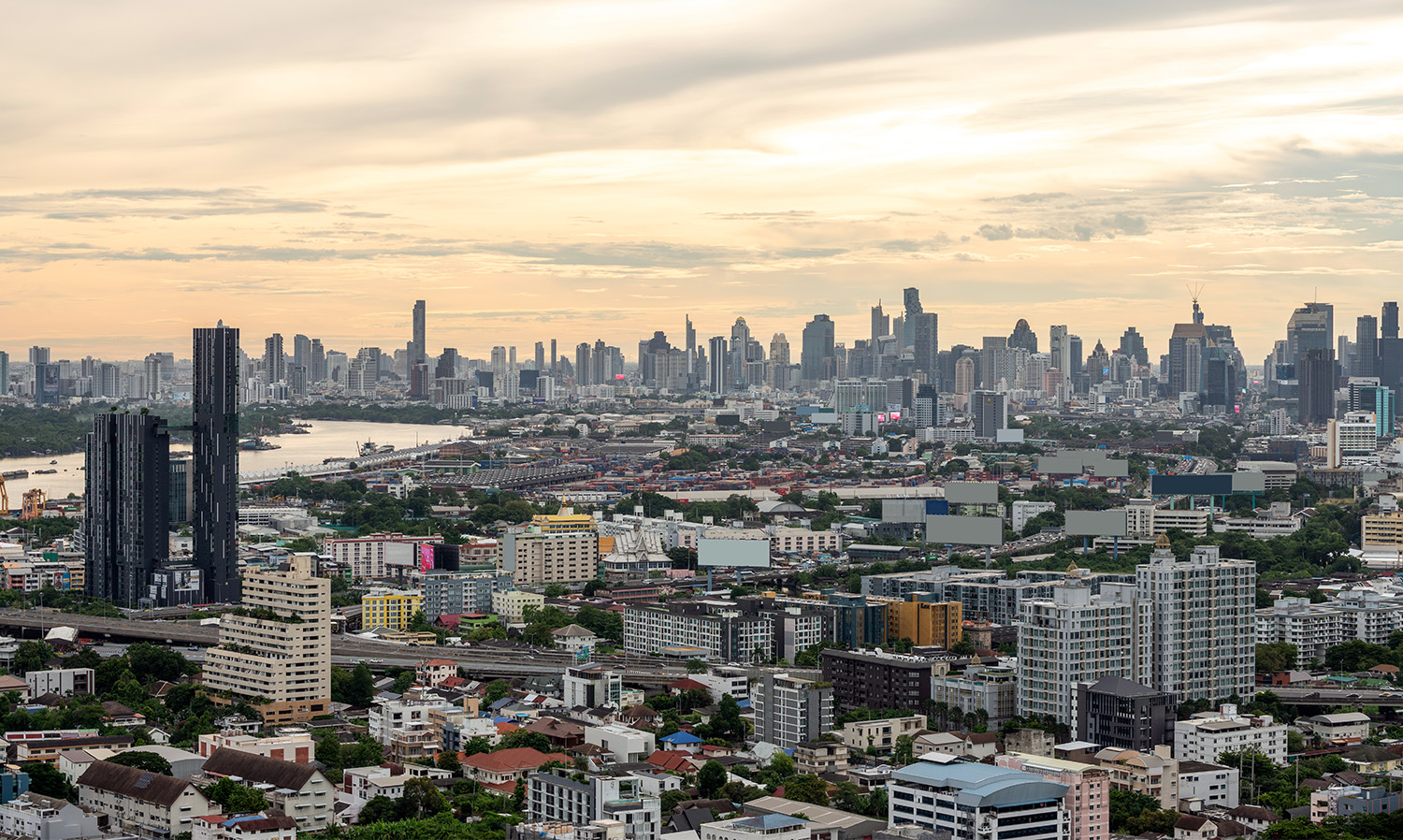
Moving to the most vibrant area for young people from China, Korea, and tech talent from around the world, this area has become a perfect new CBD with Grade A office buildings and large shopping malls. Demand in this zone focuses on "Compact Luxury" condominiums, emphasizing convenient commuting via the blue and orange BTS lines that connect the city. Tenants here prioritize mobility, enjoy Smart Home technology, and require 24-hour amenities to accommodate different time zones.
3. The Lifestyle Sanctuary: Bang Tao - Cherng Talay, Phuket
If Bangkok is the economic center, Phuket is the center of "quality of life," especially in Bang Tao, which has become a second home for wealthy individuals worldwide. Reports from various news agencies indicate that luxury villas and condos in this zone have high occupancy rates nearly year-round, not just from tourists but also from the "Workation" group relocating their offices to the beach. Investing in this zone should focus on properties that offer high privacy and architectural beauty, as this tenant group is willing to pay for "aesthetics" and "ambiance" that enhance their creativity.

In summary, investing in Thai real estate amidst a downturn is not about luck but about choosing the right "asset" at the right "time."
References
- The housing market situation in Q4 2026 continues to recover from government measures, showing signs of moving past the lowest point towards stability, with a structural market adjustment (https://www.reic.or.th/Activities/PressRelease/272)
- Economic and investment stimulus measures by attracting high-potential foreigners to Thailand (Long-Term Resident Visa: LTR Visa) (https://www.dct.or.th/th/knowledge/detail/158)
- The Secretary-General of the BOI attended the first meeting of the committee supporting economic and investment stimulus measures by attracting high-potential foreigners to Thailand (KSDC) in 2026 (https://www.boi.go.th/th/boi_event_detail/?module=activity&topic_id=138586)
- Generation Rent: A trend of young people preferring to rent homes over buying! 37% of Thais choose to rent to save money (https://forbesthailand.com/news/property/generation-rent-july-2025)
- Thailand Rental Market Trends in 2026: Buying is Out, Renting is In (https://nestopa.com/th-en/articles/thailand-rental-market-trends-2026-buying-is-out-renting-is-in)
- International schools in Thailand are booming, listing high-society families who own them? (https://www.reic.or.th/News/RealEstate/469472)
- Spotting signals of a booming rental market during slow real estate growth (https://www.reic.or.th/News/RealEstate/469910)
- What are the steps for foreigners renting condos? Here are 4 tips to prepare a room that appeals to expats (https://www.ddproperty.com)
- A fresh perspective on the 'Ratchada-Rama 9' area (https://www.terrabkk.com/articles/204222)
- Phuket transforms real estate from a tourist island to a billion-dollar battlefield (https://www.bangkokbiznews.com/business/property/1219540)
- What do you need to know to rent a condo to foreigners? (https://origin.co.th/origin-blog/condo-for-rent-to-foreign-tourists/)
- 10 tips for renting condos to Japanese tenants (https://primo.co.th/articles/10-tips-for-renting-condos/)
- Exploring the 3 popular areas: 'Asoke-Ratchada-Silom' where foreigners prefer to 'rent' and favor 'condos' (https://www.reic.or.th/News/RealEstate/470365)