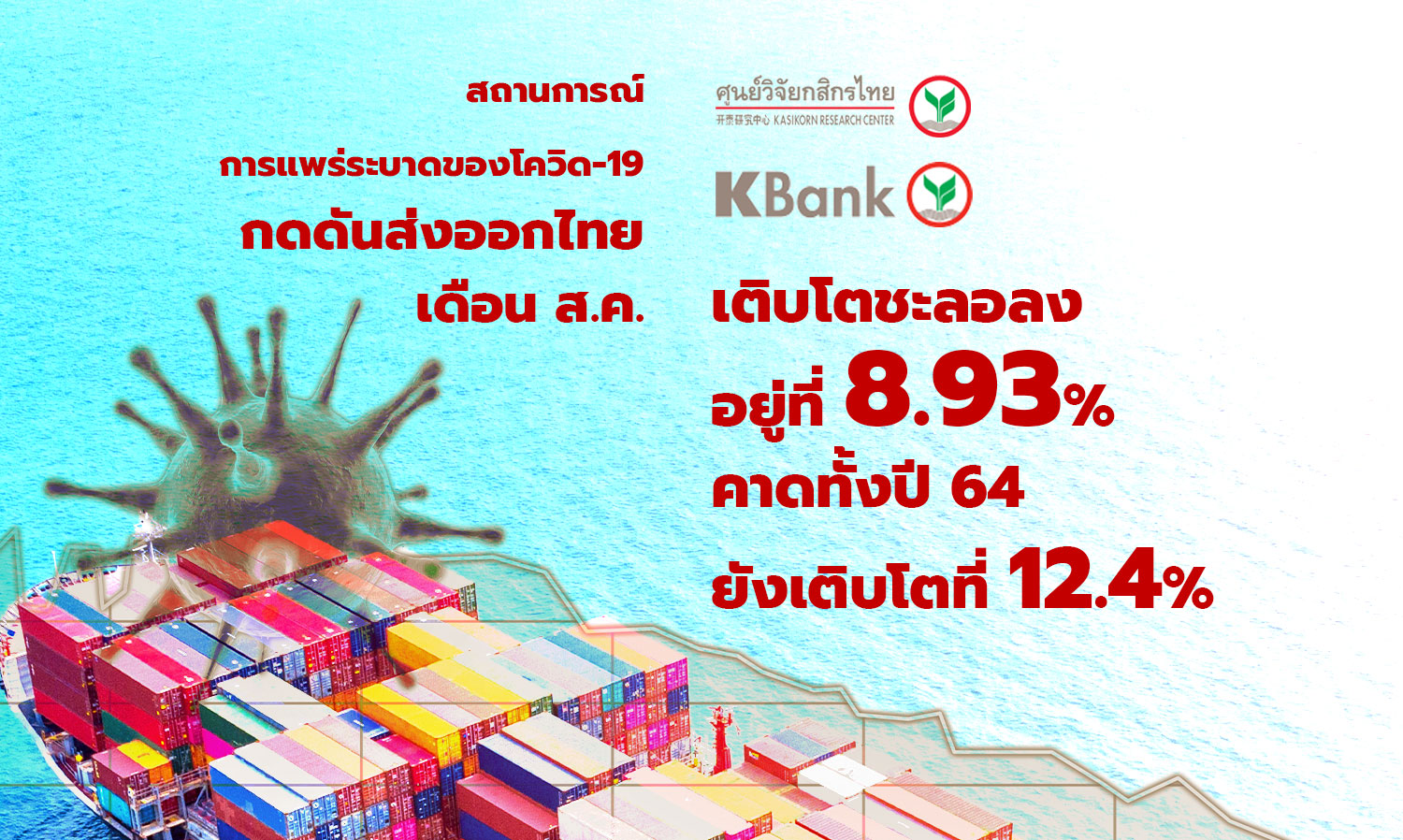
COVID-19 Pandemic Pressures Thai Exports in August, Growth Slows to 8.93%, Projected Annual Growth at 12.4% (Kasikorn Research Center)
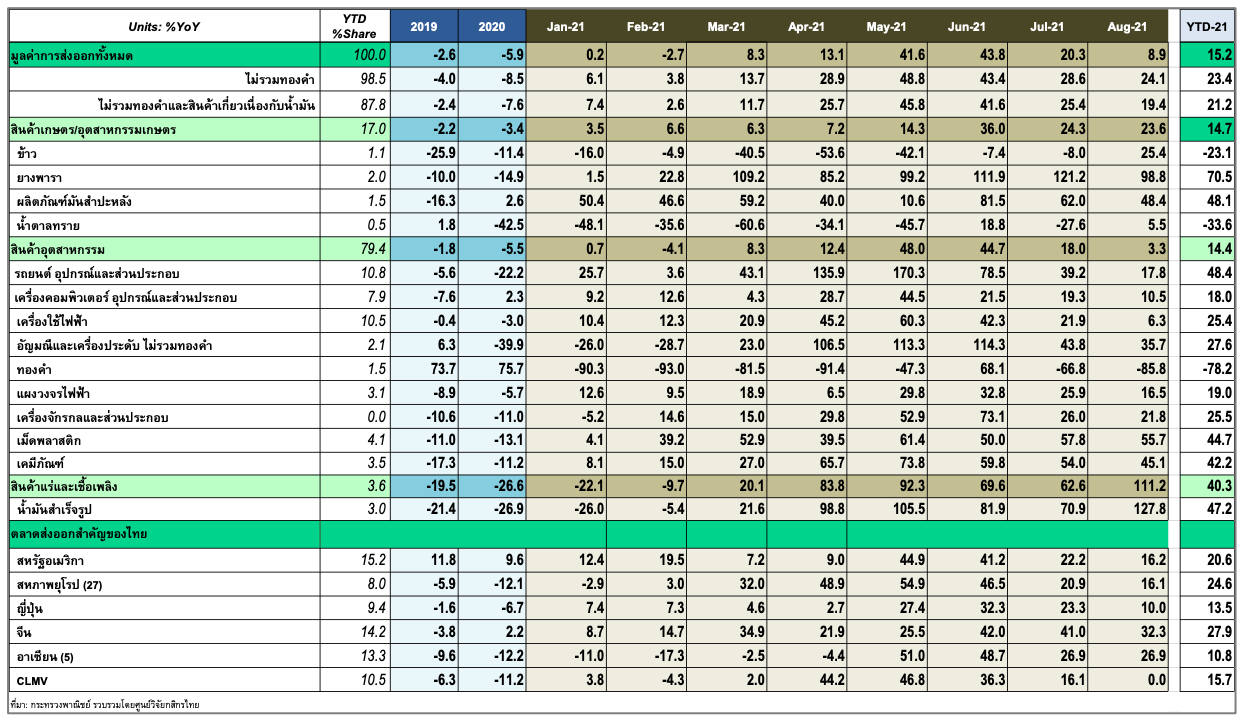
• In August, the COVID-19 Delta variant outbreak intensified in several countries across Asia, impacting economic activities and the manufacturing sector, leading to a slowdown in export growth for Thailand. As a result, Thailand's exports in August 2021 grew by 8.93%, down from 20.3% in July. However, when excluding oil-related products, gold, and military equipment, the export figures for August still showed a continuous growth of 19.43%, reflecting strong global market demand.
• Economic activities in Thailand's key trading partners faced pressure from the COVID-19 outbreak, causing export growth to these countries to slow down in August 2021. Exports to the United States grew by 16.2%, down from 22.2%, marking 15 consecutive months of growth. The European Union (27 countries) saw a growth of 16.1%, maintaining growth for six consecutive months. Meanwhile, despite some lockdown measures in certain areas of China due to the outbreak, exports to China still grew by 32.3%. However, exports to CLMV countries contracted for the first time in six months, decreasing by 0.03%, largely due to a significant drop in exports to Vietnam (-17.2%) following severe lockdown measures.
• An analysis of specific products shows that items related to working from home and those aimed at infection control continued to grow well. In contrast, some agricultural and agro-industrial products were affected by outbreaks in factory clusters, with the number of affected factories rising to 320 in August from 24 in May. Products impacted included fresh, frozen, and processed chicken (-31.9%) and fresh, frozen, canned, and processed seafood (-10.4%). However, rice exports rebounded (+25.4%) due to increased production and a weaker Thai baht, making prices more competitive against Vietnam and India. High-value consumer goods, such as jewelry and accessories (excluding gold), also showed growth, indicating a recovery in purchasing power among trading partners.
• The Kasikorn Research Center maintains its export growth forecast for 2021 at 12.4%, believing that exports will continue to be a key driver of economic growth for the remainder of the year. Although the export sector faces risks from outbreaks in factories, particularly in the food, electronics, clothing, metal, and plastic industries, September has shown a downward trend in national infection rates, coupled with a significant acceleration in vaccination rates. Additionally, the government is addressing export sector issues through initiatives like the Factory Sandbox program and will promote export activities for the remainder of the year, such as international trade fairs. On the international front, the economies of Thailand's key trading partners, like the U.S. and Europe, are showing signs of strong recovery, which will support increased demand for goods. Therefore, the export growth rate for the remaining four months of the year is expected to remain high, although it may slightly slow compared to the first eight months due to lower base factors and the easing of pent-up demand.
Current Situation of Key Thai Export Products and Markets