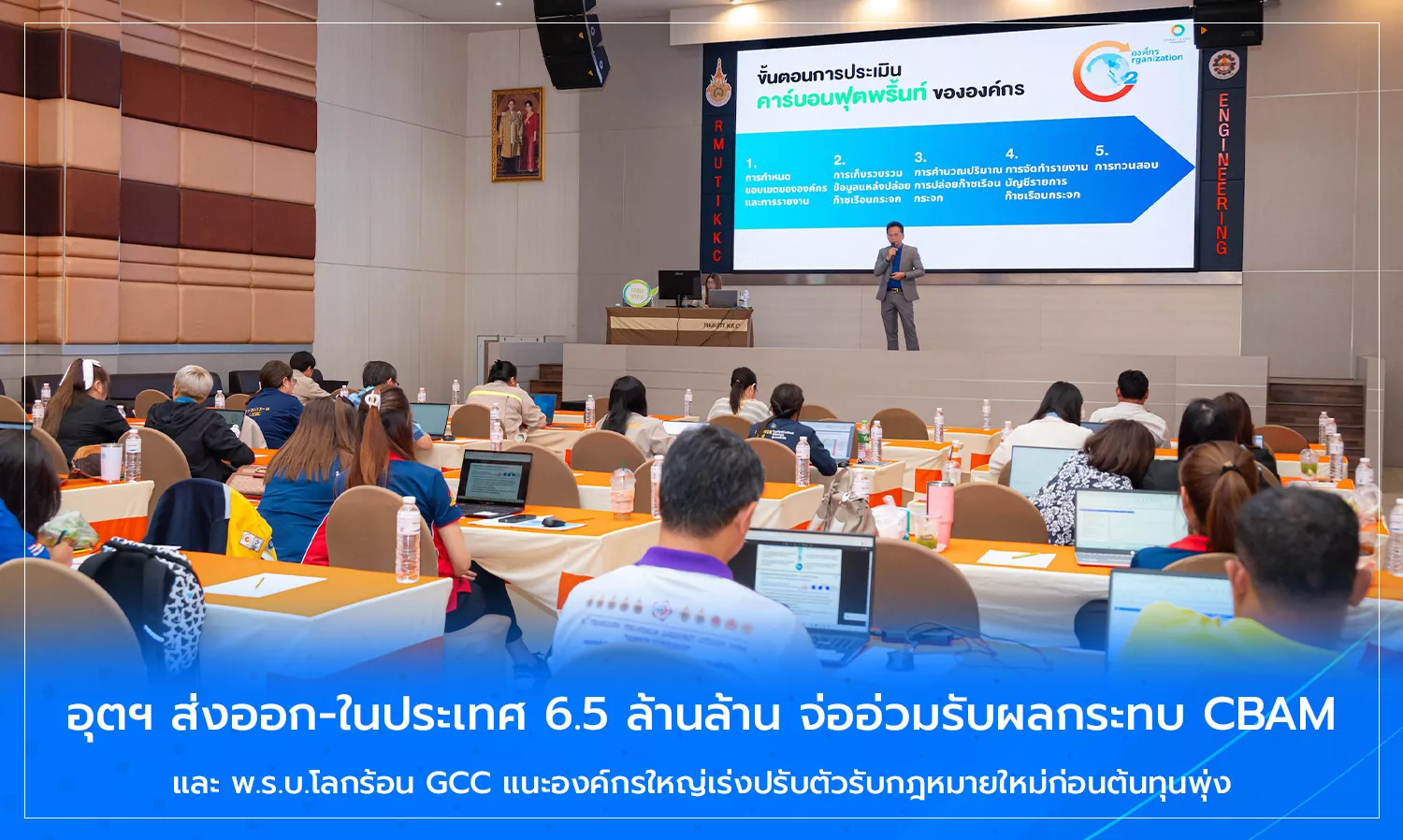
Export and Domestic Industries Face 6.5 Trillion Impact from CBAM and Climate Change Act
6 Export Industries are set to face rising costs as the European Union intensifies the enforcement of the Carbon Border Adjustment Mechanism (CBAM). This will be compounded by the new Climate Change Act, set to take effect in 2026, which will tighten regulations on greenhouse gas emissions reporting and impose carbon tax obligations on various industries worth 6.5 trillion baht. The Global Carbon Corporation advises organizations to adapt to these new laws and measures, highlighting opportunities to reduce costs and create new revenue streams from carbon credits while addressing sustainable environmental issues.
Mr. Treeteep Palakawong Na Ayutthaya, CEO of Global Carbon Corporation (GCC), revealed that starting from October 1, 2023, the European Union (EU) has mandated the implementation of the Carbon Border Adjustment Mechanism (CBAM) for producers and exporters in six industries exporting to the EU, including steel, aluminum, cement, fertilizers, electricity, and hydrogen. This means that Thai companies exporting these goods to the EU must report their greenhouse gas emissions, leading to increased competitive costs and reduced competitiveness when facing competitors from other countries with lower emissions.
The CBAM is transitioning out of its grace period and will be fully enforced starting January 1, 2026. Exporters will bear additional costs by covering the expenses for “CBAM certificates” for importers based on their greenhouse gas emissions. At the same time, Thailand is expected to announce the implementation of the Climate Change Act in 2026 to align with global standards. This act will directly impact various industries through a three-phase enforcement plan, representing an industrial value of over 6.5 trillion baht or 37% of GDP.
“The Climate Change Act will be Thailand's first law imposing direct legal obligations on operators regarding greenhouse gas emissions, including regulations on emissions, tax mechanisms, and participation from various sectors to drive the country towards carbon neutrality and address climate change impacts. A major concern is that most operators are still unaware of the impending impacts and costs, have not started learning how to record carbon, and have not prepared measures to reduce greenhouse gas emissions in their production processes, which will ultimately lead to higher carbon tax rates,” Mr. Treeteep stated.
The industries affected under the three phases include Phase 1 (2026) covering transportation, energy, public utilities, metals, and non-metals (steel, aluminum) with an industrial value of 1.71 trillion baht or 10% of GDP. Phase 2 includes the petroleum, rubber, plastics, petroleum drilling, chemicals, coal mining, and paper industries, totaling 1.77 trillion baht or 10% of GDP. Phase 3 encompasses agriculture and livestock, food and beverages, computers and electronics, and electrical equipment, amounting to 3.02 trillion baht or 17% of GDP, along with the waste management industry, which has an estimated value of several billion baht.

Mr. Treeteep further noted that in addition to the directly affected industries, other industries that supply these sectors are also likely to face indirect impacts from the new law, as the method for recording greenhouse gas emissions will extend down the supply chain. This means that producers in these industries will require greenhouse gas emission data from their suppliers and implement stricter measures on them to reduce their own carbon tax costs.
“Companies must be acutely aware of the changes under this new law, as it aligns with global environmental protection measures. A significant issue is that organizations in Thailand still lack knowledge about the entire related processes, from measuring and reporting carbon footprints of both products and organizations to strategies for reducing greenhouse gas emissions to lower tax costs, enhance competitiveness, prepare for cost and market mechanisms, and adapt to climate change,” Mr. Treeteep added.
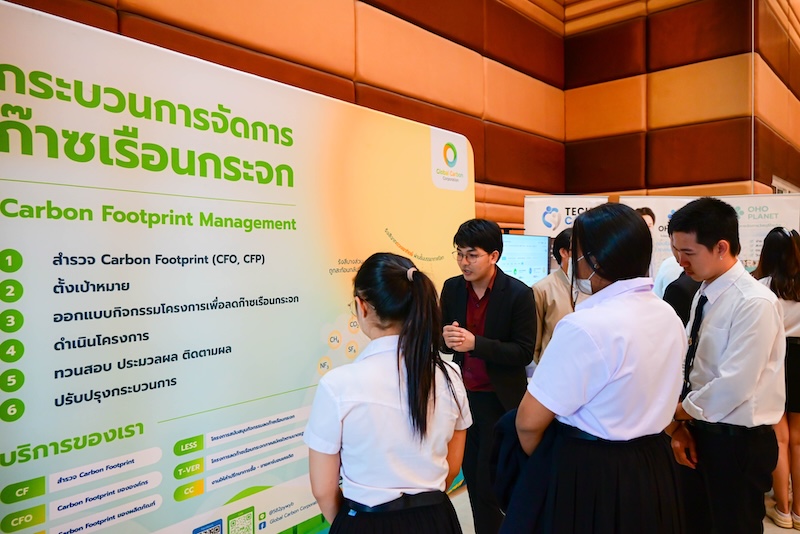
Global Carbon Corporation was established with the goal of managing greenhouse gases both during the transition before the law takes effect and after its implementation. The organization has a team of experienced personnel in corporate sustainability, ready to assist all organizations through consulting services (GHG Consult) that provide guidance from the initial stages to understand how much greenhouse gas the organization emits, as well as advice on reducing emissions through various services such as organizational carbon footprint (CFO), product carbon footprint (CFP), event carbon footprint (CF-Event), voluntary greenhouse gas reduction projects under Thailand's standards for carbon credit acquisition (T-VER), greenhouse gas reduction promotion projects (LESS), training (GHG Academy), auditing (Validation & Verification Body), technology for managing greenhouse gases (Carbon Footprint Platform), and carbon credit buying and selling (Carbon Credit Broker). They are prepared to help organizations adapt to the impacts of the CBAM and the new law set to take effect in 2026.