Understanding Urban Heat and Heat Management: A Solution for Warming Cities through Innovation
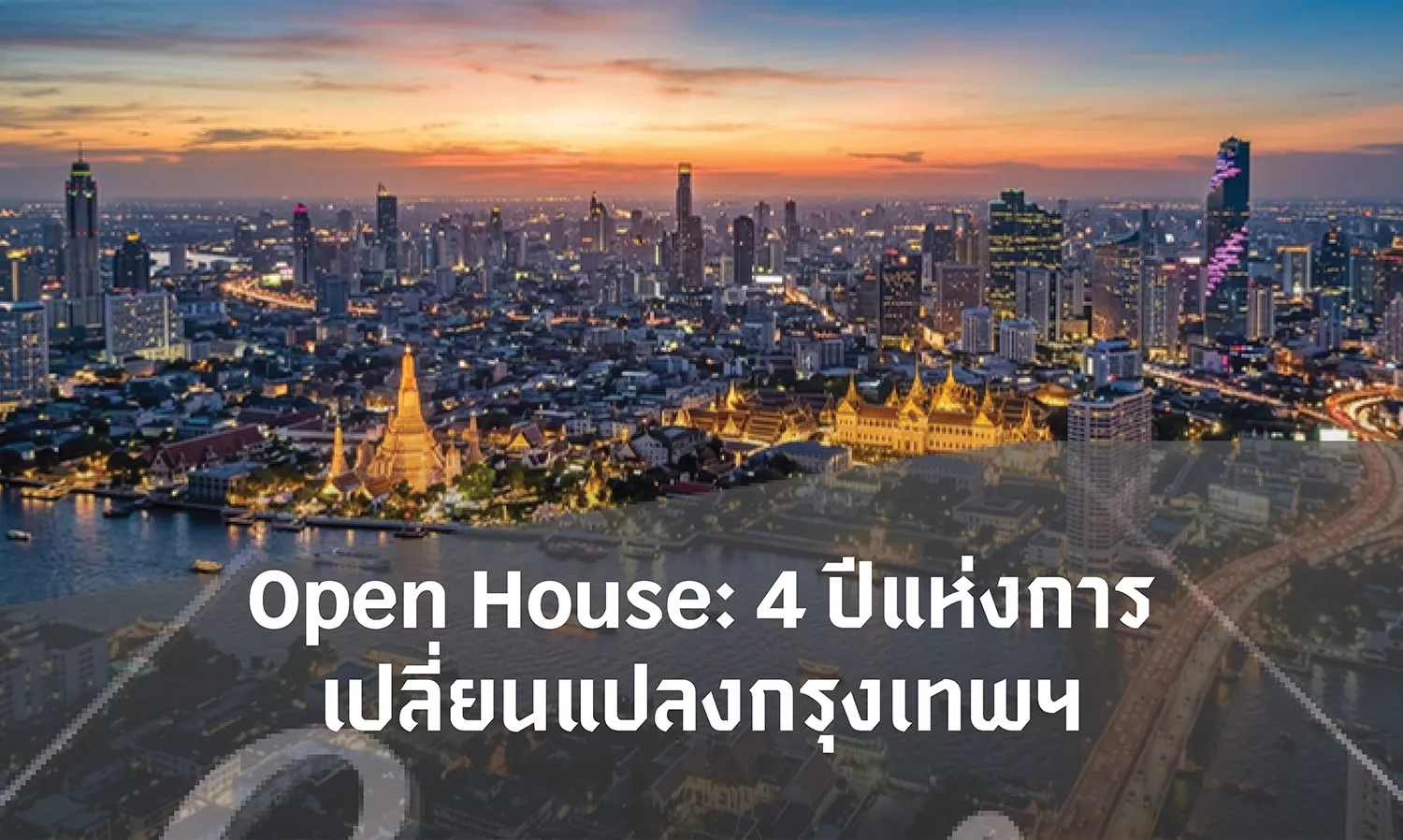
In recent times, many have questioned, "Is Bangkok really getting hotter, or is it just our perception?" And how will we survive this?
This is not just a feeling; it is a harsh reality.
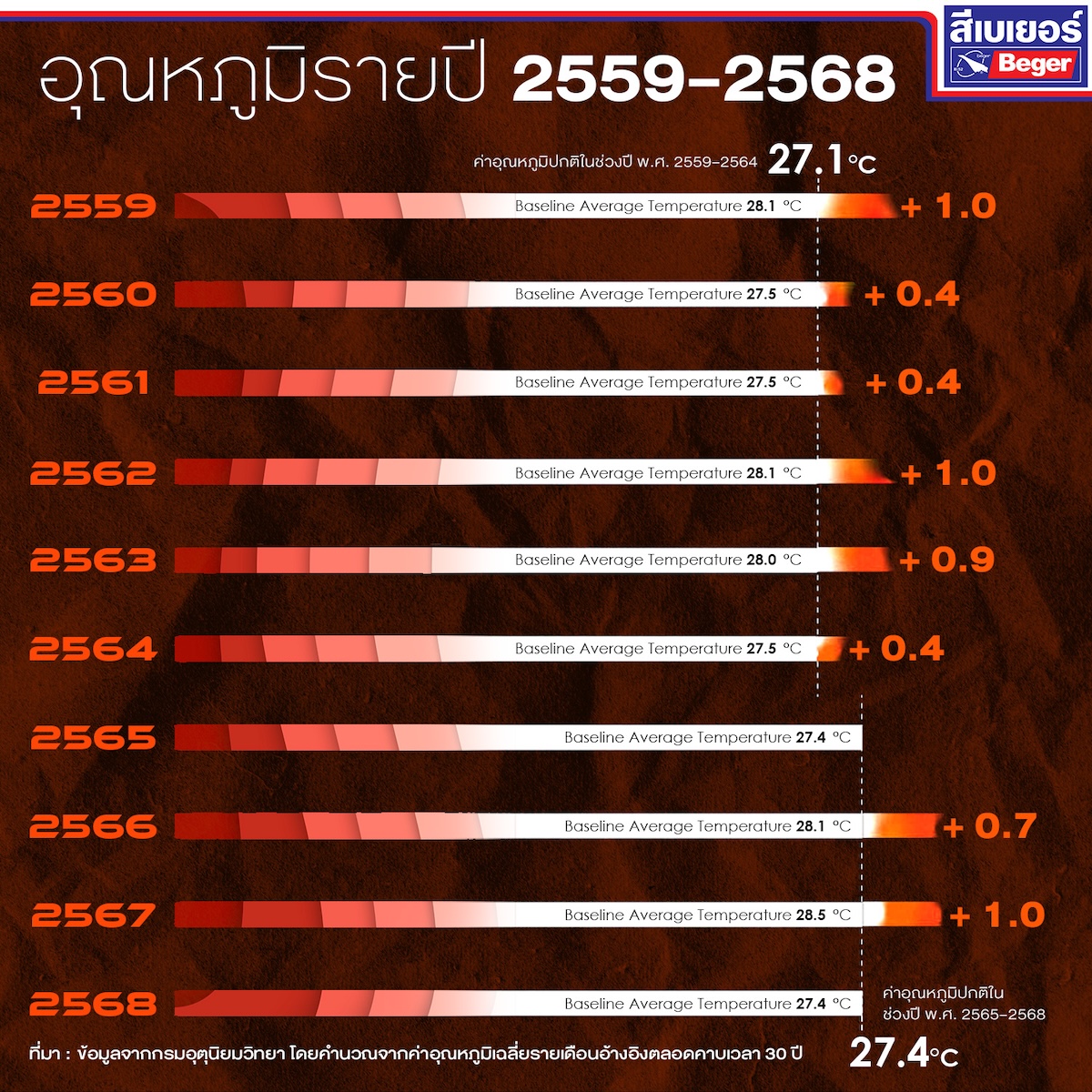
The answer is clearly supported by shocking statistical data. A World Bank report from 2025 indicates that over the past 50 years, the average temperature in Bangkok has been steadily rising, with daily minimum temperatures increasing by 1.97 degrees Celsius from 1980 to 2012. This reflects that "heat accumulation" in the city has become a significant problem, not merely a seasonal issue.
This aligns with data from the Meteorological Department, which shows that Thailand is experiencing increasingly higher average temperatures, making this extreme heat no longer a normal occurrence.
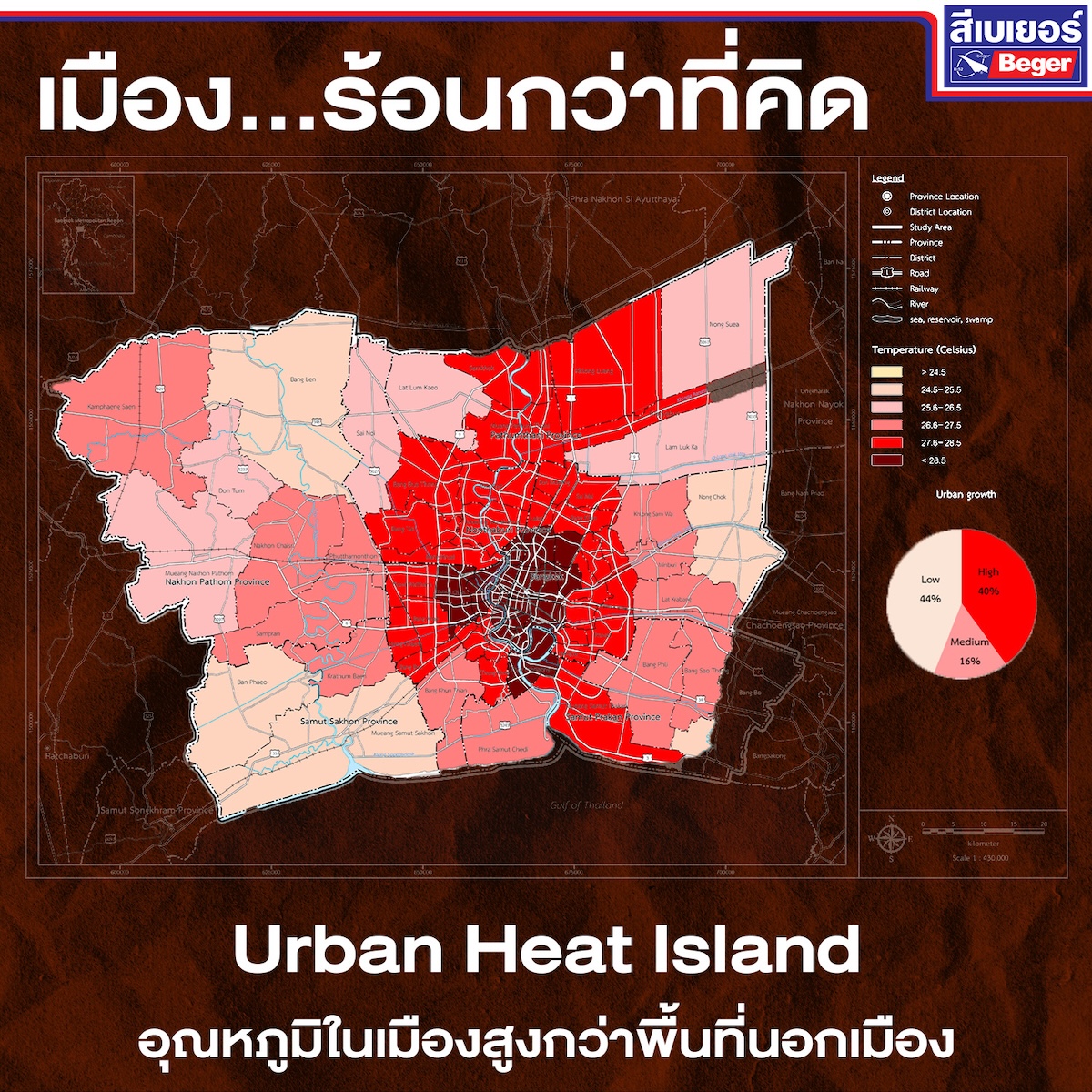
This phenomenon is known as the Urban Heat Island effect, which makes Bangkok a "heat-retaining city" far more than the surrounding natural areas.
Urban Heat Island: When the "City" Becomes an Oven Retaining Heat
To understand the heat problem at the urban level, we must first look at the bigger picture: large cities are not only influenced by global warming, but "the city itself" is a "major source of heat production and retention", with buildings and urban planning being the main hidden factors in this issue.
The Urban Heat Island effect, also known as the heat island phenomenon, occurs when urban areas have significantly higher temperatures than the surrounding rural areas. The primary cause is urban development that transforms natural surfaces into roads, concrete, and high-rise buildings, which absorb and retain heat far more than green spaces.
In other words, "While all areas receive heat from the sun equally, the absorption and reflection of heat are not the same."
When looking at Bangkok through various Heat Maps, it is evident that urban areas have significantly higher temperatures than the outskirts. This is primarily due to the rapid expansion of the city, which disrupts the natural balance, coupled with a concerning reduction in green spaces that once helped absorb heat and release moisture.
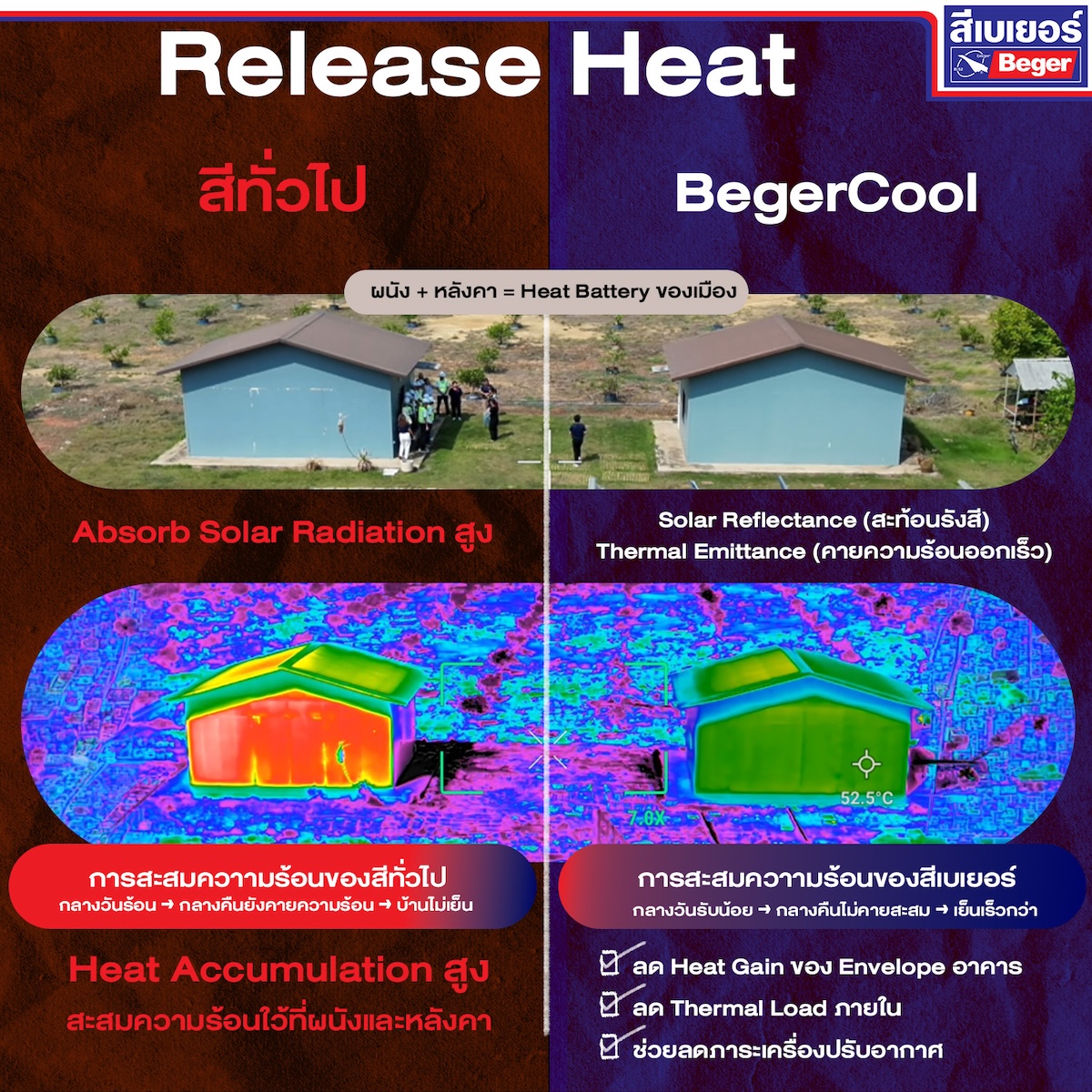
This change in landscape directly impacts the city's Heat Gain (amount of heat) significantly, as modern construction materials have specific properties that allow them to "absorb heat radiation" during the day. Concrete and asphalt accumulate heat energy from sunlight, and when the sun sets, these materials do not easily release the heat but gradually emit the accumulated heat throughout the night. This results in nighttime temperatures not cooling down as they should, meaning the city never gets a break.
Behind the Formation of the 'Heat Dome' in Large Cities
The urban heat island phenomenon has several main causes, which can be summarized as follows:
1. The increase in various buildings creates a barrier that prevents heat from the ground from rising into the sky at night.
2. The heat absorption and reflection properties of construction materials like concrete and asphalt make it easier for the heat island phenomenon to occur.
3. The lack of evaporation or transpiration due to the scarcity of green spaces and trees in urban areas compared to the proportion of buildings. The evaporation or transpiration of plants is a crucial factor that can help lower ground temperatures. Thus, with fewer green spaces, there is no assistance to cool the city.
4. The wind blockage caused by high-rise buildings, as the density of buildings obstructs natural wind directions (Urban Ventilation), trapping heat in the spaces between buildings, creating an endless heat cycle. The denser the buildings, the more heat is accumulated.
5. The increase in heat from air conditioning, industrial factories, and other heat sources in the city also contributes to the heat island phenomenon.
6. The dense population leads to massive energy and fuel consumption, with car travel causing smog, pollution, and various environmental issues, all contributing to atmospheric changes.
'Air Conditioning' is Not the Answer: Health Crisis and Economic Burden Hidden in Heat
Of course, the impact of Urban Heat is not just about feeling irritated by the extreme heat; it is a much larger issue. The phenomenon of Thermal Comfort arises when urban dwellers face excessive heat, causing stress on the body, leading to long-term health problems, especially among vulnerable groups living in high-density building areas. This phenomenon puts urban residents at a significantly higher risk of heat stroke or heat stress compared to those in rural areas.
Moreover, there is a psychological burden and a decline in quality of life when homes or buildings cannot effectively block heat, leading to a reliance on air conditioning.
This creates a frightening cycle because air conditioning merely moves heat from inside the house to the outside, raising outdoor temperatures further. We then have to run the air conditioning harder to combat that heat, creating waste heat and increasing our carbon footprint without realizing it.
In the bigger picture, the "heat" we face impacts health, energy, and economic issues, including rising electricity bills, increased energy consumption, intensified global warming, and deteriorating mental health due to an unlivable environment.
Thus, relying solely on air conditioning to solve the problem is a reactive approach that is not economically viable in the long term. A primary long-term solution should focus on the "building envelope," which is the first point of contact between heat radiation and the building.
Managing the building envelope to have heat-resistant properties is part of stopping the cycle of buildings as "heat emitters" and transforming them into "heat barriers" instead.
Addressing the Root Cause with Heat Management Solutions
However, addressing the urban heat crisis requires a combination of various methods, with three main dimensions: 1. Creating Places that provide a comfortable environment, 2. Raising Awareness among People to protect themselves, and 3. Institutional Advocacy through sustainable regulatory policies.
At the residential level, or creating places that promote comfort, we can start by shifting the perspective from 'fighting heat with energy' to 'managing heat' (Heat Management) by choosing appropriate building materials from the construction or renovation stage.
One material that many overlook is paint. Nowadays, modern paint innovations are not just about aesthetics; they can seriously function as "Heat Gain Reduction" or reducing the amount of heat entering the building. A technology that completely redefines painting is BegerCool (Beger paint), recognized as a Heat Management Solution innovation due to its use of Aero Tech technology, the same technology NASA uses to protect spacecraft from heat, which fundamentally alters the molecular structure of the paint to act as a barrier against heat radiation.
R-E-I Mechanism: Transforming Your Home's Walls into Smart Barriers
Using paint as a “Heat Management Solution” is not just about applying a product to the walls; it is about creating a living and intelligent Building Envelope that can manage heat on its own.
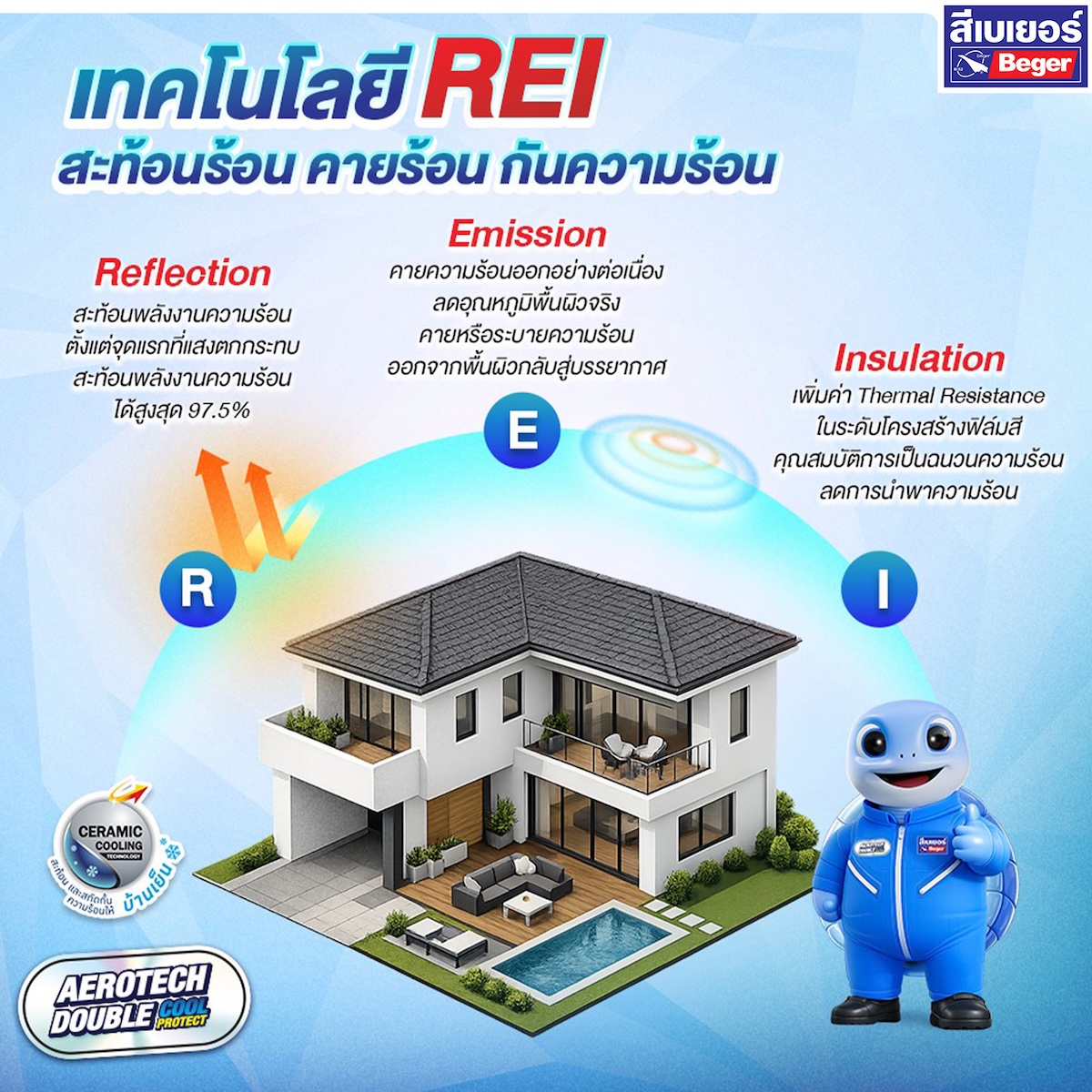
To understand how this paint innovation works, we must look back at the AeroTech innovation that integrates Ceramic Cooling technology unique to BegerCool, under the R-E-I (Reflective – Emission – Insulation) heat management system, which is a crucial component designed for the paint to control reflection, emission, and resistance to heat transfer at the structural level of the paint film.
AeroTech was developed using inspiration from NASA's international nanomaterial technology used to protect spacecraft from heat, characterized by being lightweight thermal insulation with numerous tiny air pockets, primarily serving to create a paint film structure resistant to heat transfer, ensuring that heat does not easily pass through the film layer into the walls of the house.
Meanwhile, Nano Ceramic Cooling is a mechanism that enhances cooling efficiency, systematically managing energy on the surface and within the paint film through the R-E-I concept.
- Reflective (R): Effectively reflects heat energy from UV and IR radiation.
- Emission (E): Rapidly emits heat back into the atmosphere, preventing heat from lingering on the wall surface.
- Insulation (I): This directly connects to Aero Tech, incorporating nano structures with air pockets combined with Nano Ceramic, making the resulting paint film a comprehensive insulation solution that not only reflects but also resists heat transfer through the film layer, reducing heat conduction.
Measurable Results with Scientific Evidence
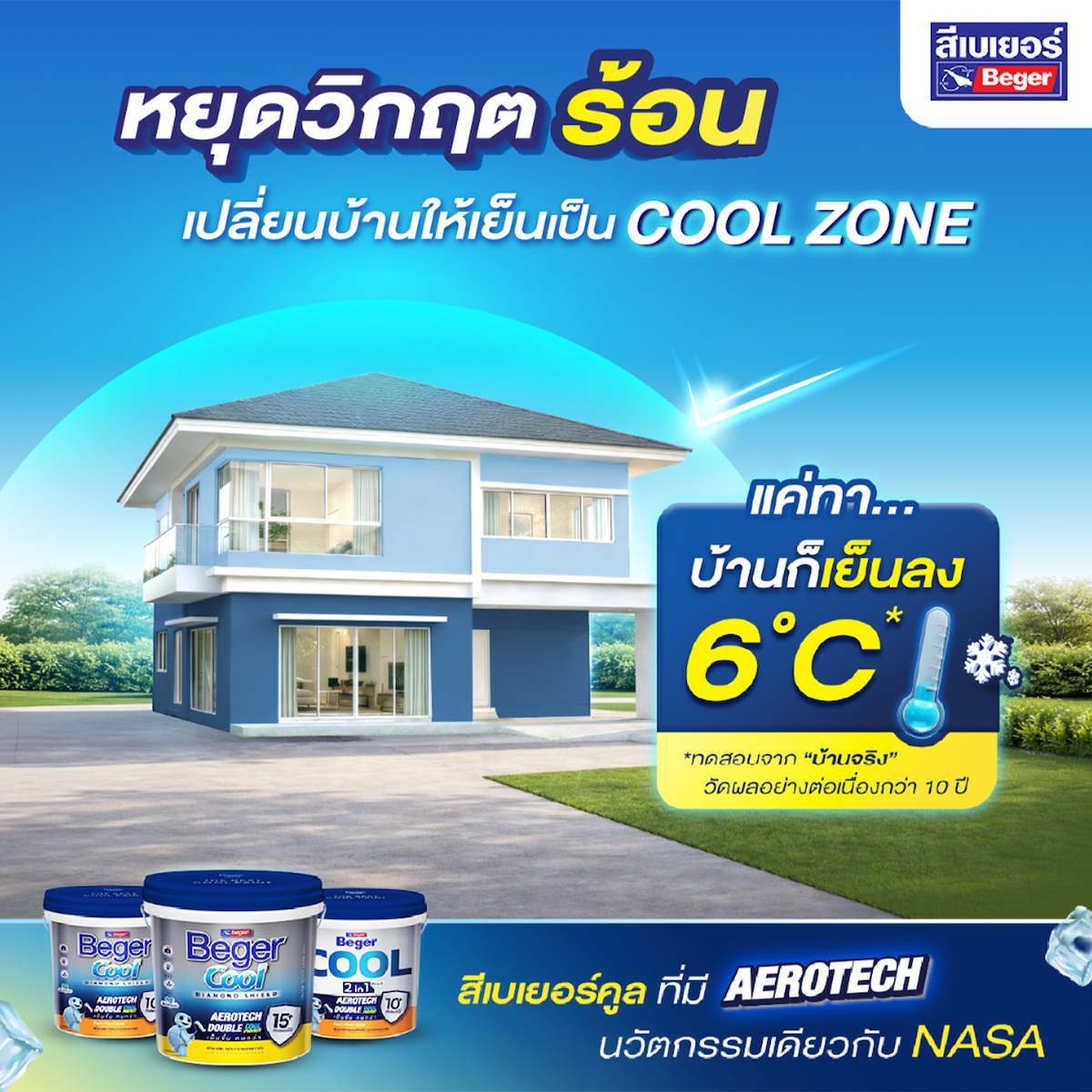
When considering the cost-effectiveness of residential investment, choosing materials supported by clear research is crucial. BegerCool has undergone continuous testing and measurement over an extended period, confirming the effectiveness of this innovation in transitioning cities towards sustainability, with tangible results, including:
- Cooling homes by 2-6 degrees Celsius: This temperature difference is noticeable to the body, improving Thermal Comfort within the home without over-relying on air conditioning, reducing stress from accumulated heat. The temperature reduction depends on the environment but can lower temperatures compared to regular paint.
- Saving up to 32% on electricity bills annually: This reduces unnecessary fixed expenses in the long term, turning what was once spent on electricity into savings, representing economic value.
- Durability of over 15 years: This indicates sustainable investment value, reducing the need for frequent repainting or maintenance, and also helping to reduce waste from repairs.
- Low carbon paint: Reducing electricity consumption translates to a reduction in greenhouse gas emissions, contributing to the creation of Low Carbon Buildings in a tangible way.
This is not just ordinary heat-reflective paint; it is the result of 18 years of research and proven effectiveness in reducing temperatures and heat accumulation entering buildings from the outset.
Addressing Urban Heat is not the responsibility of any one individual but a collective duty of everyone in society. As Bangkok and cities worldwide continue to heat up, the decision to choose the right and smart technology and materials (Smart Material) will determine how we thrive in this changing environment.
Starting to change from small points in your home is not just about comfort and reducing expenses; it is a sustainable responsibility towards both ourselves and this planet for future generations.