Rider: A New Driving Force in the Motorcycle Market by Krungthai COMPASS
Key Highlights
- Motorcycle sales in the country have seen significant growth in the first seven months, contrasting with the automotive market. Motorcycle sales grew by 13.7% in the first seven months, recovering from an 11.8% decline the previous year. In comparison, automotive sales only grew by 9.7% after a steep decline of 21.4% last year. This growth is noteworthy due to the New Normal lifestyle, where On-Demand Delivery has surged, leading riders to adopt motorcycles as their primary mode of transport, potentially driving motorcycle sales this year.
- Provincial data indicates that the growth in the motorcycle market this year is more influenced by increased farmer incomes than by the growth in the number of riders. Provinces where motorcycle sales have rebounded significantly compared to pre-COVID-19 levels are those with crops that have seen high prices and yields this year. Conversely, the motorcycle market in Bangkok and its vicinity, as well as major cities with dense On-Demand Delivery activity, has grown at a slower rate.
- Looking ahead, the On-Demand Delivery market, expected to continue expanding and covering more regional areas, will drive the motorcycle market alongside farmer incomes. Riders, whose average income after costs is around 15,000 baht per month, are in a position to afford motorcycle installment payments (for models not exceeding 150cc and automatic). Additionally, various platforms offer special financing support for motorcycle purchases, potentially reducing monthly payment burdens.
Recently, the motorcycle market has started to saturate
Five years before the COVID-19 pandemic, motorcycle sales peaked at 1.8 million units in 2017, then gradually slowed until 2020. Many operators acknowledge that the market has begun to saturate, with a high cumulative registration of around 21 million units, resulting in a high motorcycle ownership ratio per capita. As the market saturates, many operators have shifted their marketing focus towards higher-value motorcycles, such as those over 250cc, leading to growth in the large motorcycle segment in Thailand, contrasting with the slowing main motorcycle market.
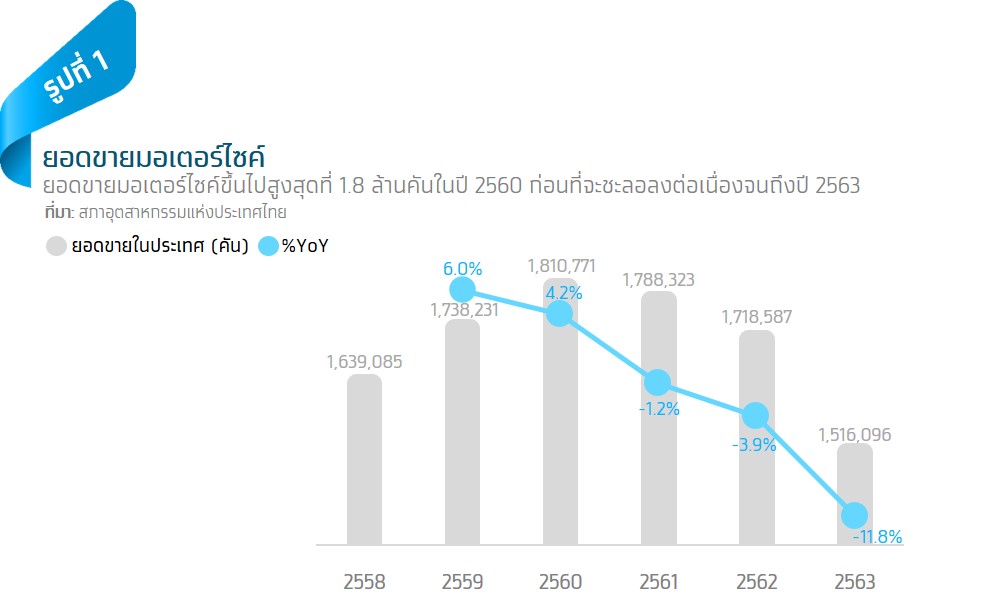
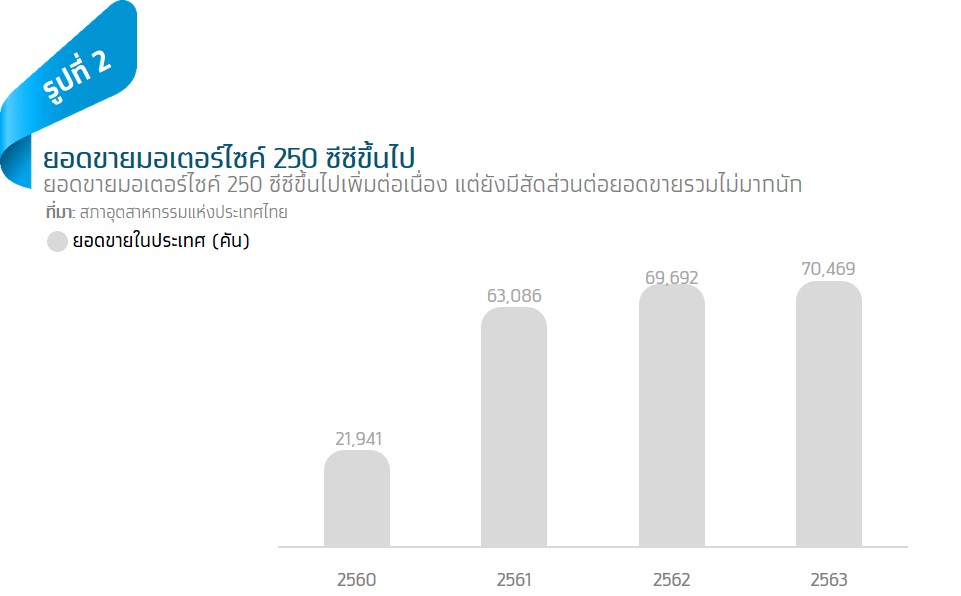
The motorcycle market has rebounded well in the first seven months of this year, growing at a higher rate than the previous year's decline
Overall, motorcycle sales grew by 13.7% in the first seven months, recovering from an 11.8% decline last year, while automotive sales only grew by 9.7% after a 21.4% decline last year. Thus, the growth in motorcycle sales is not solely due to a low base from the previous year but reflects the strength of the motorcycle market compared to the automotive market.
The growth in the motorcycle market this year is primarily regional. Analyzing new motorcycle registrations in the first seven months, new registrations in the regions grew by 16.9%, while growth in Bangkok and its vicinity was only 5.8%. The lower growth in motorcycle registrations in Bangkok and its vicinity compared to the regions has slightly reduced their share of total registrations.
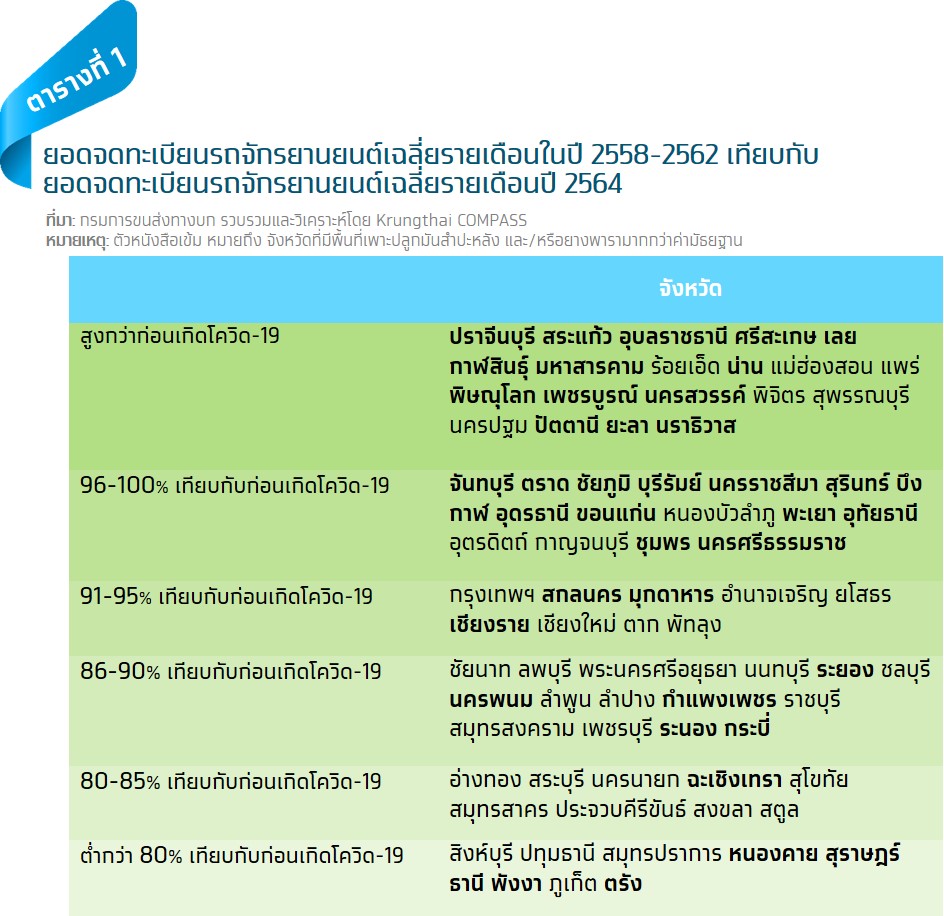
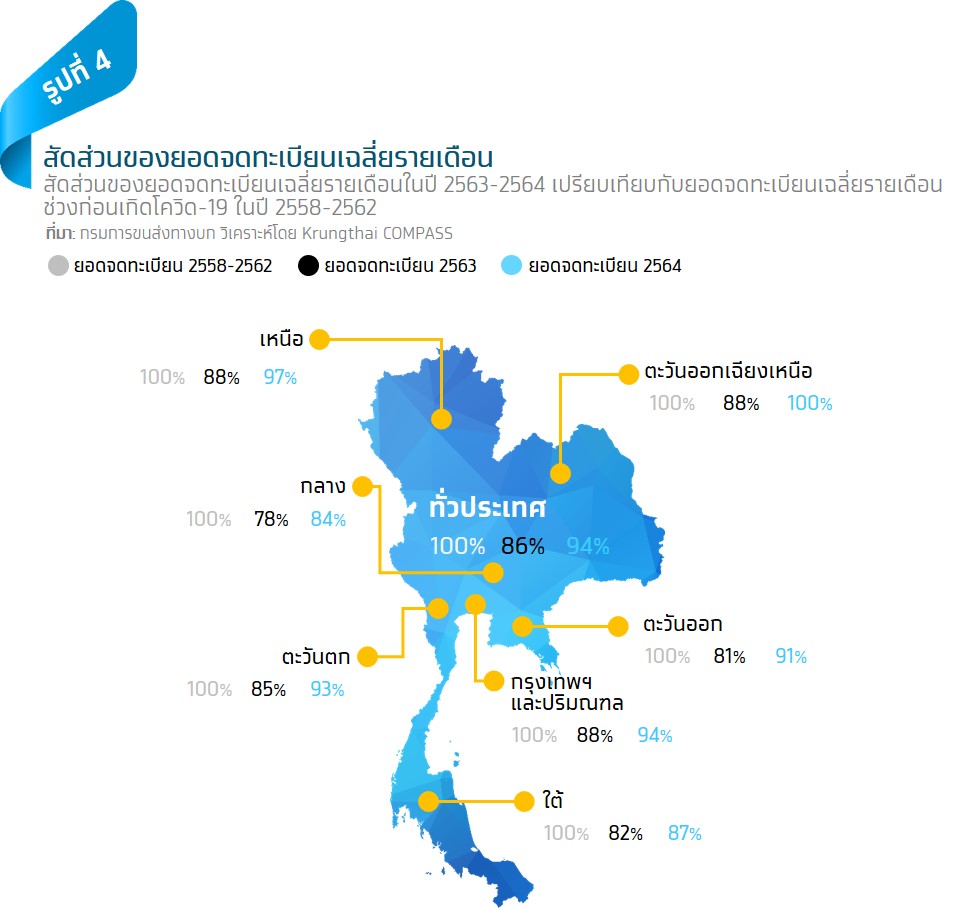
The Northeast is the only region where motorcycle registrations have returned to pre-COVID-19 levels
Although the motorcycle market has grown well this year, the Northeast is the only region that has recovered to levels comparable to before the COVID-19 pandemic. Analyzing whether motorcycle markets in each region have returned to pre-pandemic levels is based on the average monthly registration ratio in 2021 compared to the average monthly registration from five years before the pandemic (2015-2019). The analysis shows that only the Northeast has average monthly motorcycle registrations returning to pre-pandemic levels, while the North is close at about 97%. Other regions still have significantly lower registration levels, particularly Bangkok and its vicinity, which were expected to benefit from delivery services in the New Normal but did not.
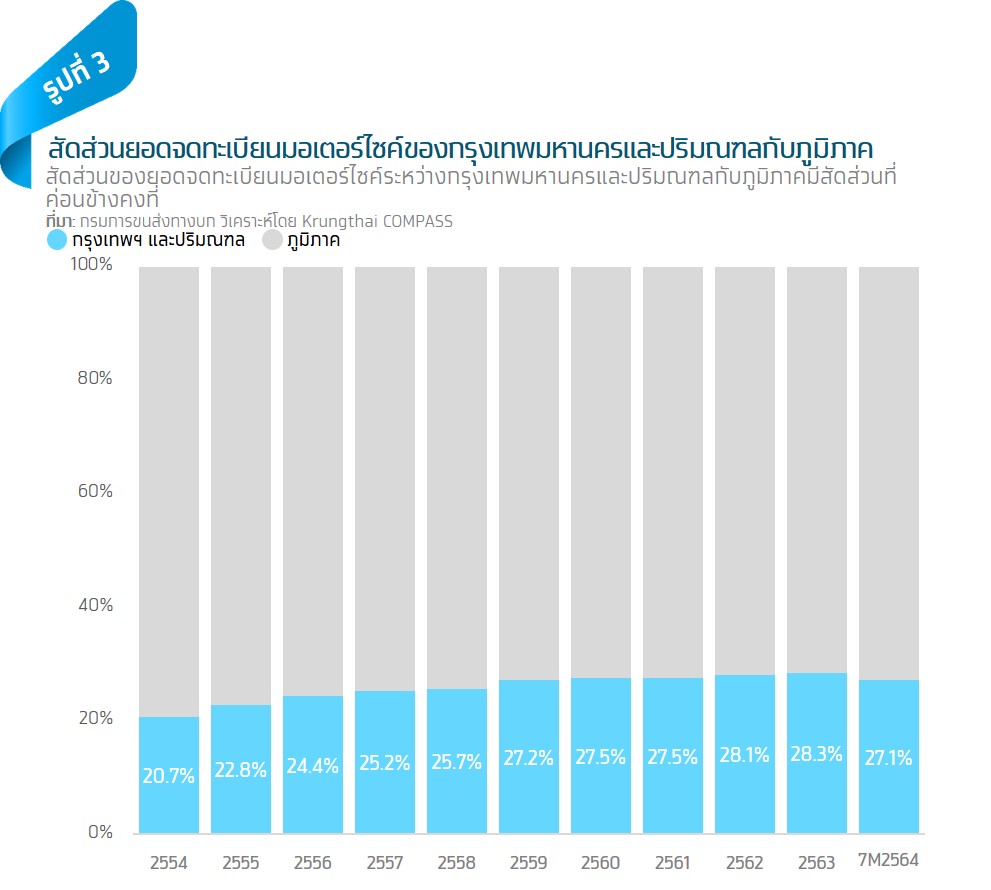
What has driven motorcycle registrations in the Northeast to return to pre-COVID-19 levels?
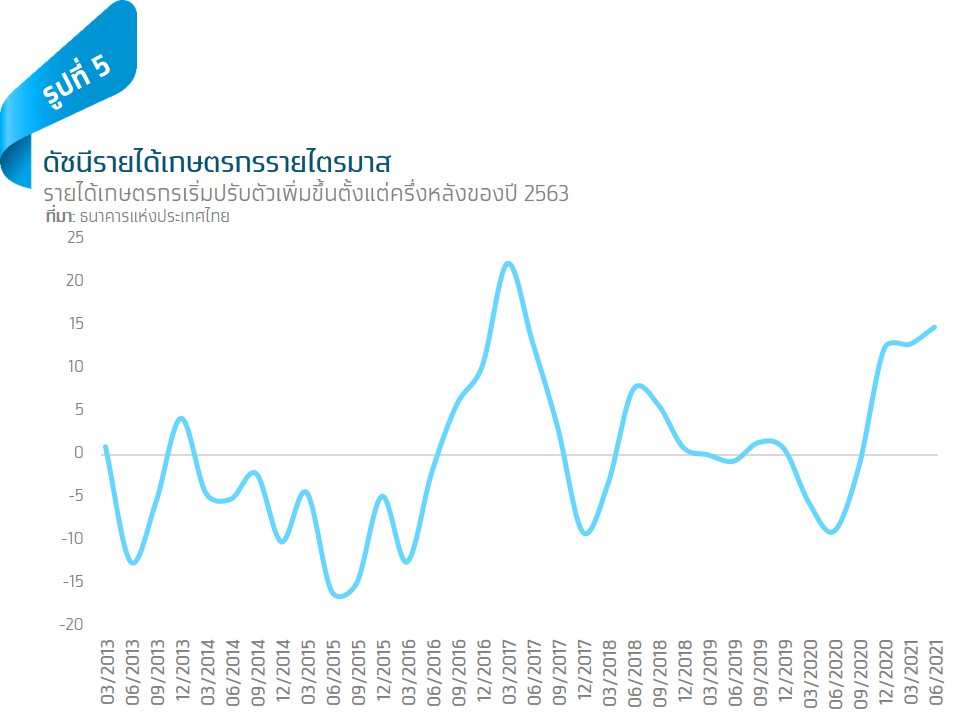
The significant increase in farmer incomes has impacted the motorcycle market this year. The motorcycle market relies on rural markets for over 70%, making it heavily dependent on farmer incomes. The increase in farmer incomes since the second half of last year has contributed to the growth of the motorcycle market.
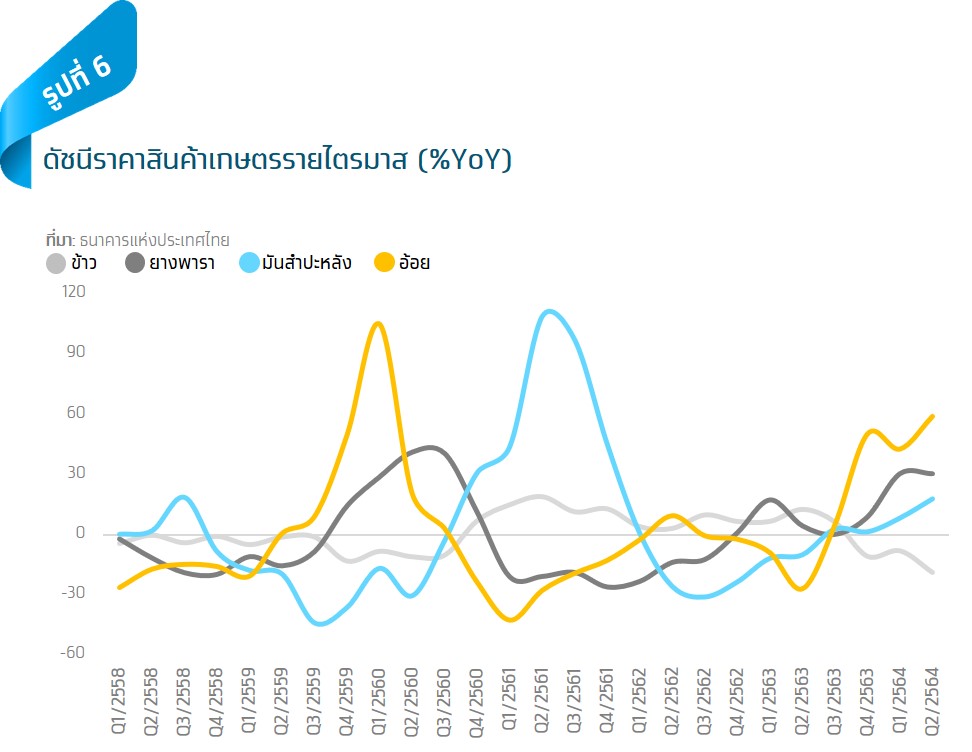
Farmer income is calculated from agricultural product price indices and agricultural production indices over time. In 2021, the prices of major agricultural products like rice declined compared to the previous year, while the prices of sugarcane, rubber, and cassava increased significantly. However, in terms of production, rubber and cassava saw improved yields, while sugarcane production decreased, meaning farmers primarily growing sugarcane may not have seen significant income increases.
Provinces with large areas for cassava and rubber cultivation are concentrated in the Northeast. Analyzing provincial data shows that many provinces have average monthly registrations this year higher than the average monthly registrations from the five years before COVID-19, with several provinces nearly matching pre-COVID-19 levels, particularly those with substantial cassava and rubber cultivation, which have seen high prices and yields this year. This aligns with the increase in farmer income this year from cassava and rubber, primarily concentrated in the Northeast, explaining the rise in motorcycle registrations in that region to pre-COVID-19 levels.
The growth of the motorcycle market this year is primarily driven by farmer incomes and not significantly by On-Demand Delivery activities. Notably, in Bangkok and its vicinity (except Nakhon Pathom), as well as major cities in each region expected to have more On-Demand Delivery activities than other provinces, motorcycle registrations have not rebounded compared to pre-COVID-19 levels. This suggests that the growth of the motorcycle market this year is mainly due to increased farmer incomes.
Will On-Demand Delivery drive the motorcycle market in the future?
With the New Normal lifestyle, the On-Demand Delivery market is expected to continue growing. Euro Monitor forecasts that the Food Delivery market, which holds a significant share of the On-Demand Delivery market in Thailand, will continue to grow, with an average growth rate of about 10.7% from 2022 to 2024, aligning with consumer behavior in the New Normal that prioritizes hygiene. Thus, even as the government gradually relaxes dining-in measures, Food Delivery is expected to continue thriving.
The growing On-Demand Delivery market will increase the demand for riders, and the motorcycle market will benefit. Data on motorcycle registrations by province shows that the Thai motorcycle market still has over 70% of its share in rural areas, driven significantly by farmer incomes and low-income earners. However, in the future, the On-Demand Delivery market, which is likely to continue expanding, will progressively extend its reach into rural areas, increasing the demand for riders. Additionally, most platforms require applicants to be riders to own their motorcycles, which will further positively impact the motorcycle market. A report titled "Rider-Hero-Chain: Working Conditions and Social Security of Food Delivery Workers in the Platform Economy During the COVID-19 Pandemic" from Chulalongkorn University indicates that the average income of riders nationwide is about 18,000 baht per month. After deducting costs for fuel, wear and tear, and internet expenses averaging around 3,000 baht per month, riders are left with approximately 15,000 baht per month, which is within the range to afford motorcycle installment payments suitable for riders (not exceeding 150cc and automatic), ranging from 2,035 to 4,207 baht per month, or about 13.6% to 28.1% of their net income.
Moreover, several platforms, such as Robinhood and Grab, offer special financing support for motorcycle purchases, potentially reducing the monthly payment burden. However, the positive factors for the motorcycle market may be challenged by the high level of household debt, which recently rose to 90.5% of GDP in Q1 2021, the highest in 18 years. Additionally, the regional markets, which are the main markets for motorcycles, may face increased pressure from a report by the Bank of Thailand titled "X-Ray Household Debt in the Regions," indicating that the high household debt burden is primarily from the regions, with a significant proportion of vulnerable households also concentrated in these areas.