How the Pet Humanization Phenomenon Accelerates the Growth of the Pet Business
Key Highlights
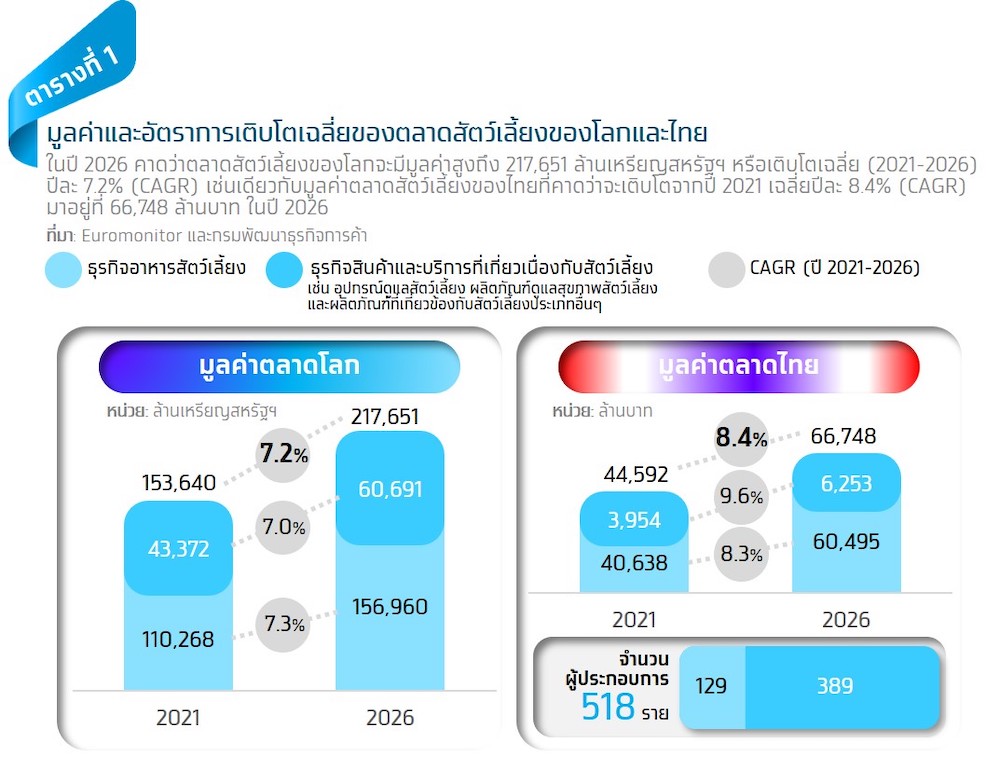
- The phenomenon of Pet Humanization, or treating pets as family members, has become more pronounced, partly due to the COVID-19 pandemic. This has led to a growing market value for the global pet industry, expected to reach $217.651 billion, or over 6.9 trillion baht, by 2026, with an average annual growth rate (CAGR) of 7.2%. In Thailand, the pet industry is anticipated to grow even faster at over 8.4% (CAGR), reaching 66.748 billion baht by 2026.
- Pet owners are increasingly willing to spend more to enhance their pets' quality of life and happiness, presenting opportunities for entrepreneurs to develop new premium products or services, such as specialized pet health services, pet detective services, pet supplements, pet furniture, and pet insurance.
- Krungthai COMPASS advises entrepreneurs to accelerate the development of new products and services to meet the evolving needs of pet owners and their pets. This includes developing pet food made from plant and insect proteins and focusing on online marketing channels. Additionally, they should leverage government investment promotion benefits (BOI) to facilitate business expansion.
Rebecca A. Johnson, Director of the Human-Animal Bond Research Institute at the University of Missouri, stated that simply looking at our beloved pets releases oxytocin in our brains, making us happier and helping to relieve stress and fatigue from work. This fosters a bond between owners and pets, leading to better care and attention. It is no surprise that the trend of pet ownership has increased, especially during the COVID-19 pandemic, which has made the phenomenon of Pet Humanization more evident as people sought activities to relieve stress while staying at home. According to The American Pet Products Association (APPA), the percentage of American households owning pets rose to 70% in 2021, up from an average of 67% between 2018 and 2020, particularly for dogs and cats.
What is Pet Humanization?
Pet Humanization generally refers to the behavior of pet owners who treat their pets as children or family members, differing from those who view pets merely as animals for utility or specific benefits, such as guarding the home, with simpler care methods. Owners who adopt a Pet Humanization approach tend to provide better care and prioritize their pets more.
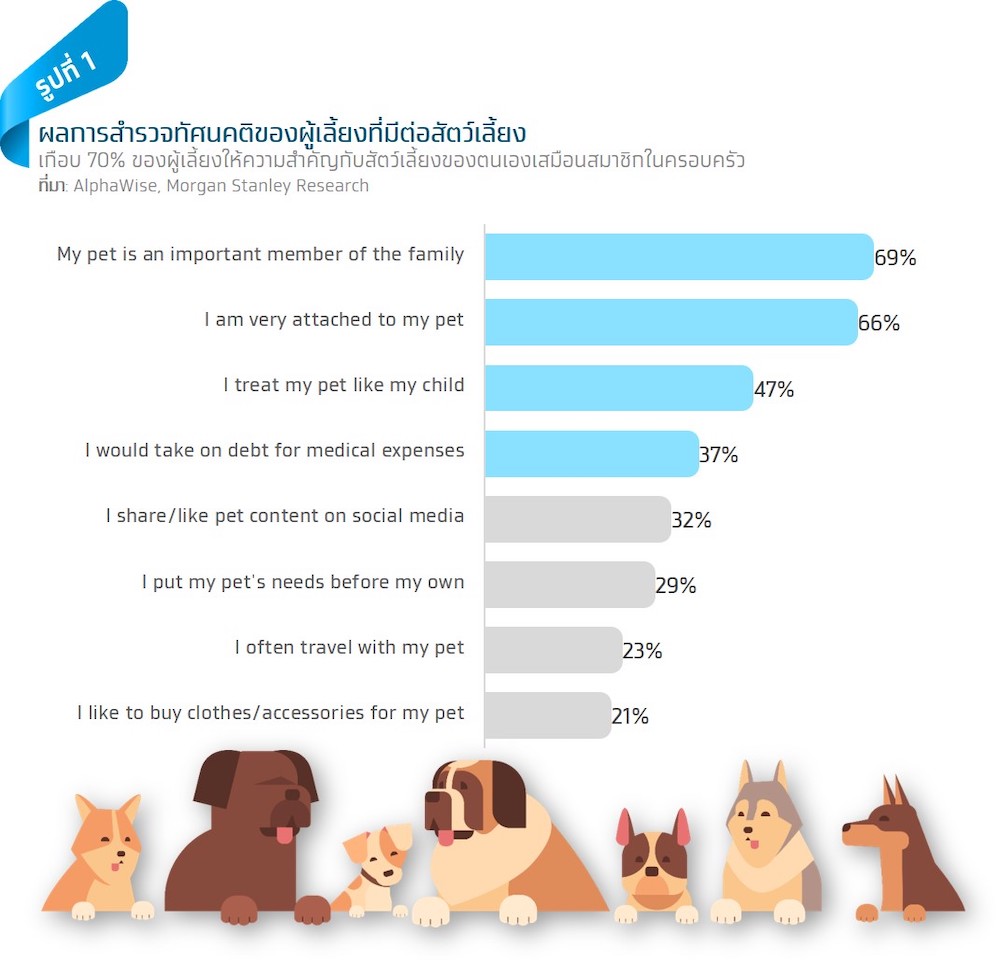
This group is significantly and continuously increasing, reflecting a phenomenon. A survey by Morgan Stanley Research indicates that nearly 70% of current pet owners consider their pets as family members, with 66% expressing strong affection for their pets, and 47% treating their pets as children. Additionally, 37% of owners are willing to go to great lengths to fulfill their pets' desires. Morgan Stanley defines this behavior as "Petriarchy," or what is colloquially referred to as "dog slaves" or "cat slaves." (See Image 1)
How does Pet Humanization affect the pet-related business?
1. Increased spending on pets due to the love and bond between owners and their pets leads to a willingness to spend on various products and services to ensure their pets' happiness (Gardyn, R, 2001). According to the American Pet Products Association (APPA), household spending on a single pet is expected to rise from $980 in 2020 to $1,292 by 2025. Similarly, a report from The Household and Pet Care CPG indicates that sales in the pet food, products, and equipment sector will grow at an average rate of 15% per year from 2018 to 2023.
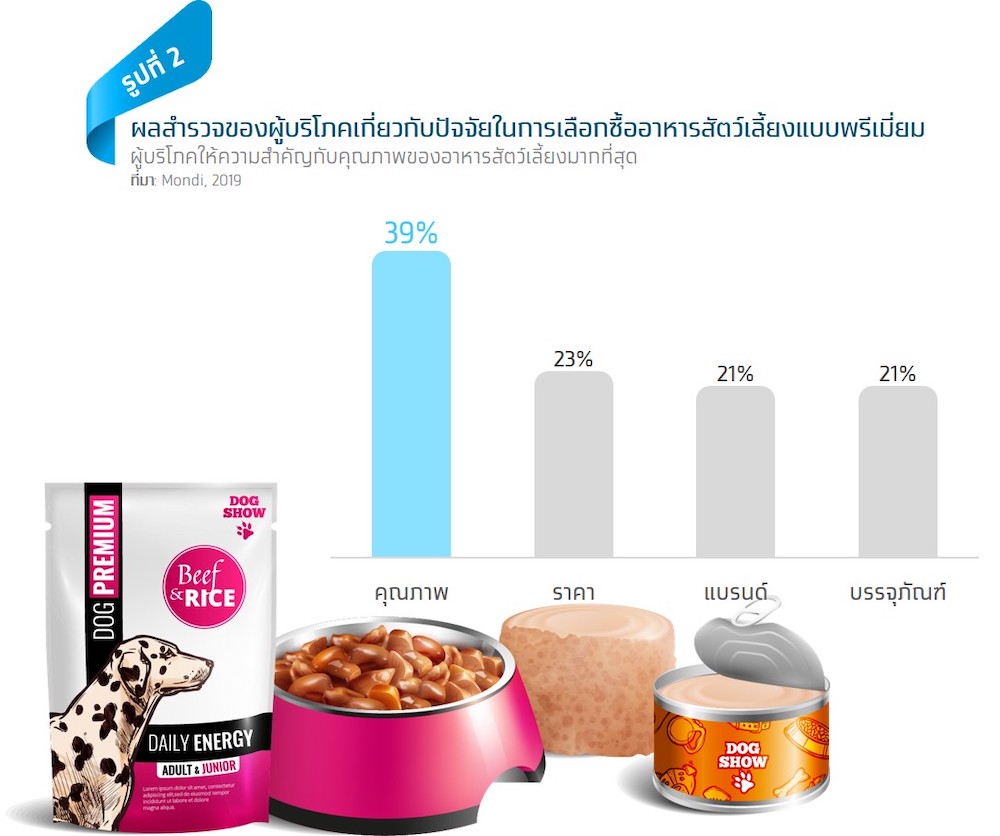
One significant expense for pets is food, with owners increasingly seeking premium pet food options. Data from ADM Outside Voice shows that 30% of pet owners worldwide are spending more time searching for the best food options. Owners prioritize nutritional value, quality, and safety standards in pet food, often looking for products that offer health benefits similar to human food. ADM Outside Voice reports that half of pet owners are willing to pay more for high-quality, safe food products, leading to a growing popularity of premium pet food. Additionally, a survey by Mondi on premium pet food purchasing decisions found that consumers prioritize product quality, believing that using high-quality ingredients and good manufacturing standards positively impacts their pets' health.
The global premium pet food market still has significant growth potential. According to Mordor Intelligence Analysis, the global premium pet food market was valued at $83.022 billion in 2021 and is expected to grow to $105.096 billion by 2026, with an average annual growth rate of 4.8%. Although premium pet food is priced higher than regular pet food, it is produced using quality ingredients and nutritional value that meet the needs of owners seeking health benefits for their pets, such as food that aids digestion, skin and coat health, oral health, and joint support, as well as natural, chemical-free, and organic pet food.
2. New services emerge to meet the Pet Humanization trend. Pet services are increasingly resembling human services, with new business models emerging to cater to specific segments. For example, health services are incorporating specialized tools and technology for pets, such as the physical therapy center at Taling Chan Animal Hospital, managed by specialized veterinarians using underwater treadmill equipment for muscle rehabilitation and pain relief, helping pets return to normal life. Another interesting service is pet detective services, popular in China, where a pet detective searches for lost pets using fur or urine samples and modern technology like temperature detection devices or electronic noses.
Moreover, in the digital age, pet services are increasingly being developed and offered through online platforms. For instance, "Dutch" provides pet telemedicine services, while "DoorDash" has partnered with "PetSmart," a retail chain with over 1,500 locations across the U.S., to develop on-demand delivery services for pet care products, food, toys, and more.
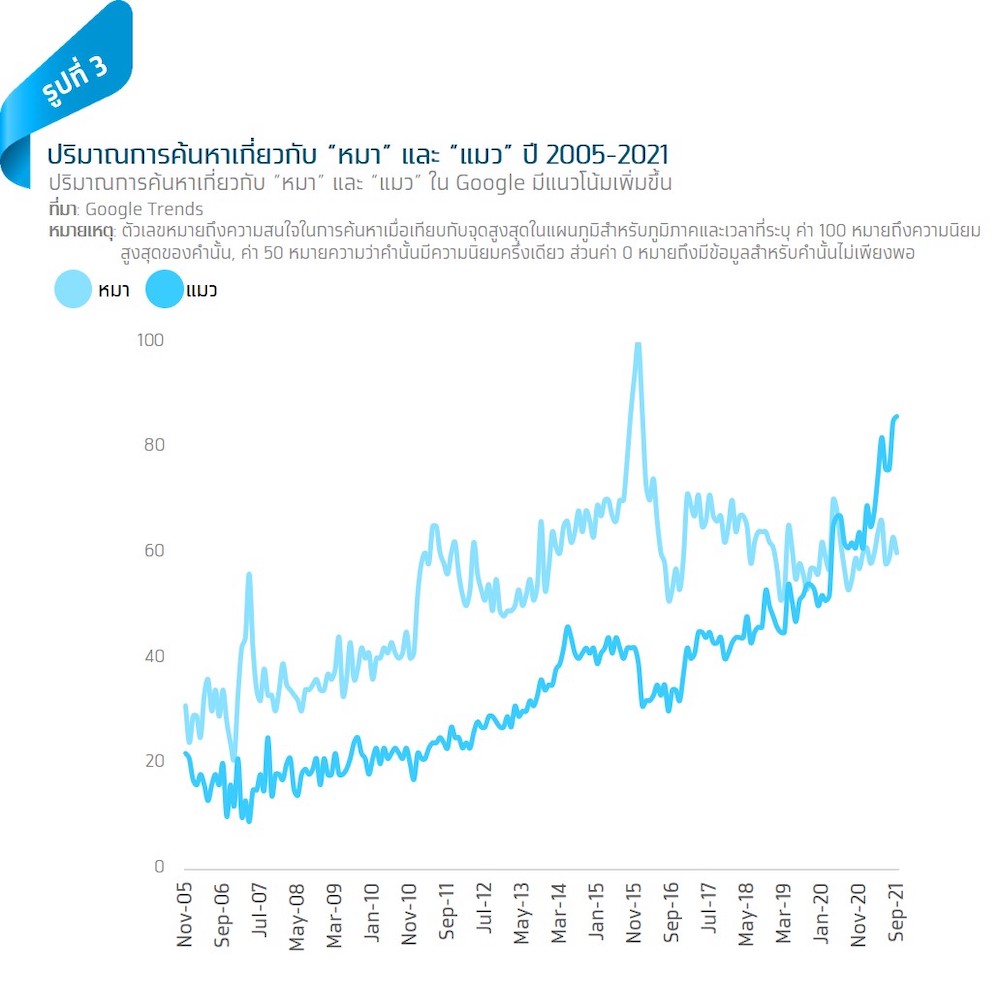
3. Increased use of pets in advertising campaigns or as selling points for products. Nowadays, we see that various products, even those not directly related to pets, often use pets as selling points or tie-ins. For example, advertisements for tissue paper, insurance companies, or even condominiums highlight pet-friendliness as a selling point. This aligns with data from Mandala Analytics (www.mandalasystem.com), which shows that Thais are continuously searching for and interested in pets, especially dogs and cats. The trend in Google search volume indicates a significant number of pages producing pet-related content online. Additionally, advertising with pets helps brands connect with people and become more memorable, as consumers can easily imagine the connection between products and familiar animals.
Which consumer age group exhibits the most Pet Humanization behavior?
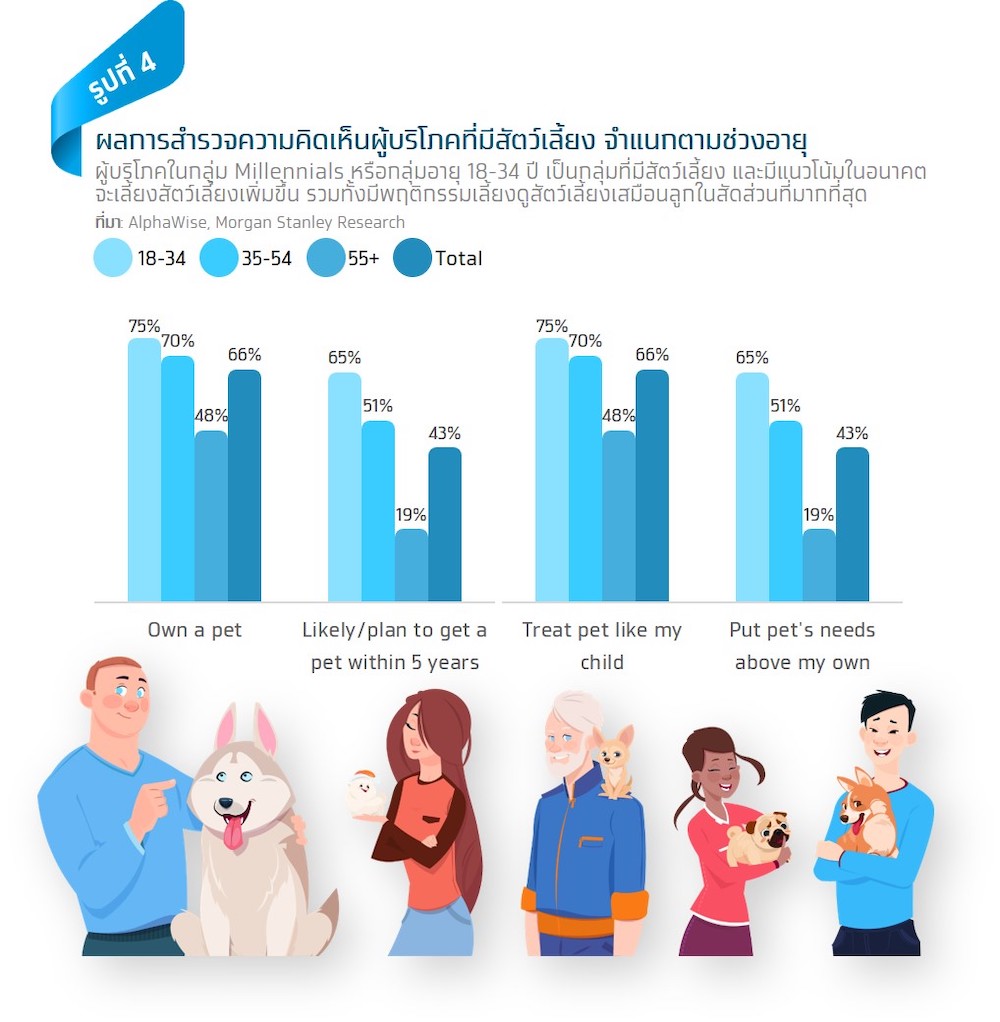
Consumers in the Millennials group, aged 18-34, are the largest demographic owning pets and are likely to increase their pet ownership in the future, exhibiting the highest tendency to treat pets as children. According to Morgan Stanley Research, 75% of consumers aged 18-34 own pets, and 65% plan to acquire more pets within the next five years (See Image 4, left). Additionally, this age group is the largest segment that treats pets as children and prioritizes their pets (See Image 4, right).
Which businesses benefit from this trend?
Krungthai COMPASS believes that the Pet Humanization phenomenon will positively impact businesses within the pet supply chain, both in export and domestic markets. Furthermore, some businesses may not yet exist in Thailand, presenting opportunities for entrepreneurs to adapt successful cases from abroad to expand their businesses in Thailand, such as:
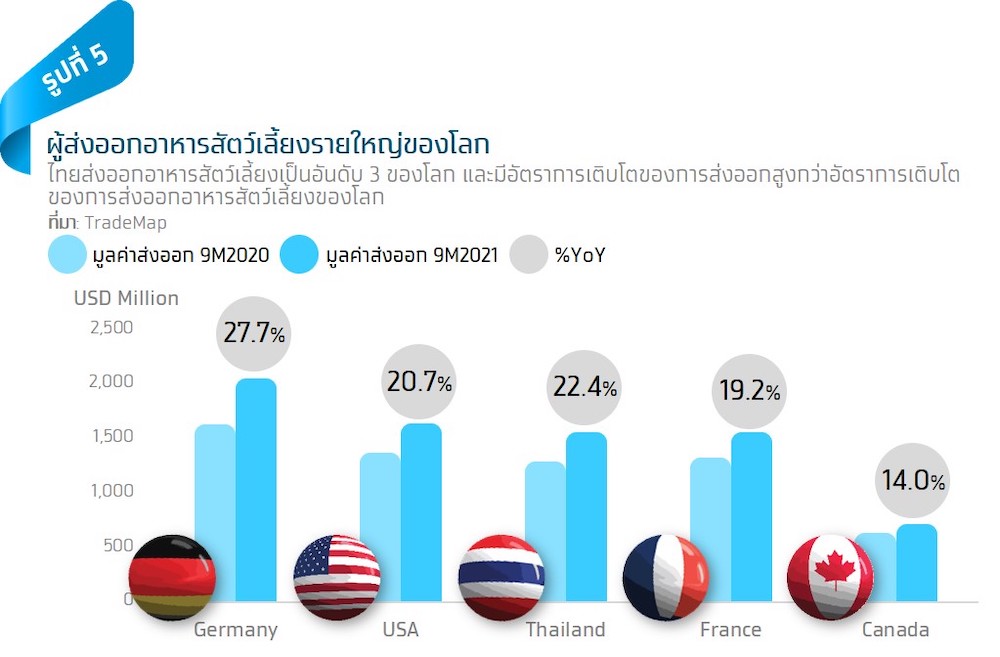
1. Pet food and supplements The pet food business still has significant growth potential. According to Euromonitor, the global pet food market is expected to reach $110.268 billion in 2021 and grow to $156.960 billion by 2026, with an average annual growth rate of 7.3%. Similarly, the Thai pet food market is projected to grow from 40.638 billion baht in 2021 to 60.495 billion baht by 2026, with an average annual growth rate of 8.3%. This presents opportunities for Thai pet food producers to expand both domestically and internationally. Thailand ranks as the third-largest exporter of pet food globally, following Germany and the U.S., with pet food exports valued at $1.468 billion in the first nine months of 2021, reflecting a remarkable 22.4% year-on-year growth, surpassing the global pet food export growth rate of 13.7%. This growth is particularly evident in Thailand's main markets, such as the U.S. and ASEAN, which expanded by 27.5% and 29.6% year-on-year, respectively (See Image 5), due to the high quality of Thai products and the development of value-added products to meet specific consumer demands.
Additionally, the pet supplement business is also gaining popularity among consumers. A market research report by Packaged Facts in the U.S. indicates that in 2020, sales of pet supplements increased by 21% year-on-year, nearing $800 million. This growth is partly due to pet supplements that enhance immunity and promote good health for pets, as well as supplements specifically designed for senior pets to support joint and bone health. Furthermore, there is a growing interest in natural and organic pet supplements, with surveys showing that 77% of pet owners prefer products made from natural ingredients, and 68% opt for organic pet supplements.
2. Pet care services include pet hotels or accommodations, pet training, and grooming services. For example, Groomit in the U.S. allows customers to book grooming services through an app, providing convenience and expert care for pets. In Thailand, GrabTaxi has introduced GrabPet, a service for passengers traveling with pets, offering an option for pet owners without personal vehicles or those who prefer not to drive.
3. Pet equipment and furniture such as collars, food containers, pet houses, crates, pet pads, and cat litter. One increasingly popular product is the System Toilet for cats, which combines special cat litter and pads to reduce the frequency of changes and minimize odors. Additionally, pet bedding that helps eliminate odors and reduce fur cling is also gaining traction.
4. Pet cafes cater well to both pet owners and animal lovers, allowing pets to play and enjoy food while their owners dine. Additionally, animal lovers who cannot own pets can spend time with the pets provided by the cafe. Examples include KitTea, a cat cafe in San Francisco, and several pet cafes in Thailand, such as BLABLA-b๋oo Premium Dog Café, Dog In Town - Dog Cafe, and Caturday Cat Café.
5. Pet insurance has become increasingly important for covering accidents and illnesses, providing peace of mind and controlling health care costs for pet owners. According to the North American Pet Health Insurance Association 2021 (NAPHIA), nearly 3.4 million pets in the U.S. and Canada have been insured for accidents and illnesses since 2016, with an average annual growth rate of 18.9% and 12.6%, respectively. Pet owners in the U.S. spend an average of $49.92 and $28.44 per month on accident and illness insurance for dogs and cats. In Thailand, pet insurance is becoming more common, with products like TIP PET LOVER from Thai Insurance and Muang Thai Cats & Dogs Plus from Muang Thai Insurance.
6. Exhibitions and events for animal lovers have become a continuous trend, with increasing public interest. It is expected that after the COVID-19 pandemic subsides, such events will become more vibrant again. Before the pandemic, major pet-related events occurred almost monthly throughout the year, attracting nearly 200,000 attendees each time, as reported by Impact Exhibition Management.
Implication:
• Krungthai COMPASS recommends that entrepreneurs accelerate product development to create selling points and meet the evolving needs of pet owners and their pets for opportunities in both export and domestic markets. This includes developing pet food made from plant and insect proteins, which are gaining popularity. According to a survey by The American Pet Products Association (APPA), 51% of pet owners desire environmentally friendly and sustainable food options, which aligns with findings from Petco that 55% of pet owners seek sustainable products for their pets.
• Additionally, for businesses producing pet food or pet food ingredients, there are opportunities to access government investment support, such as corporate income tax exemptions for three years and exemptions on imported machinery and research, as well as raw material duties for export. According to the Thailand Board of Investment (BOI), in 2020, companies in the pet food or pet food ingredient sector received BOI approval for a total investment of over 2.3 billion baht, a 24% increase from 2019.
• Entrepreneurs should prioritize online sales channels, particularly E-Commerce. According to Morgan Stanley Research, during the COVID-19 pandemic in 2020, consumer spending on pet products online increased to 30% of total retail sales in the pet product category, compared to 23% in 2019 before the pandemic. Furthermore, in the second quarter of 2020, when the pandemic was severe, online pet product spending surged to 36%, and it is expected that the trend of purchasing pet products online will continue to rise, particularly among the largest potential customer group, Millennials aged 18-34, who favor online shopping.