Weekly Economic Report from the Fiscal Policy Office as of October 8, 2021
The Fiscal Policy Office (FPO) reports the weekly economic situation as of October 8, 2021, as follows:
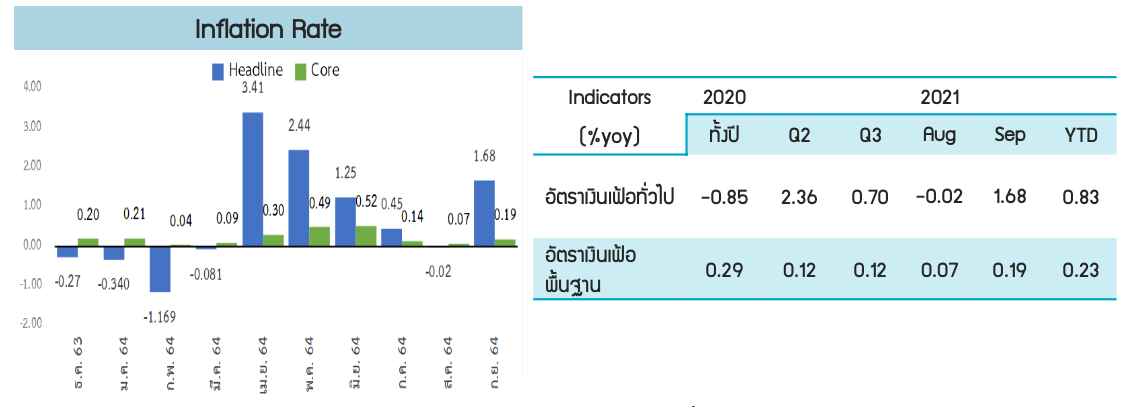
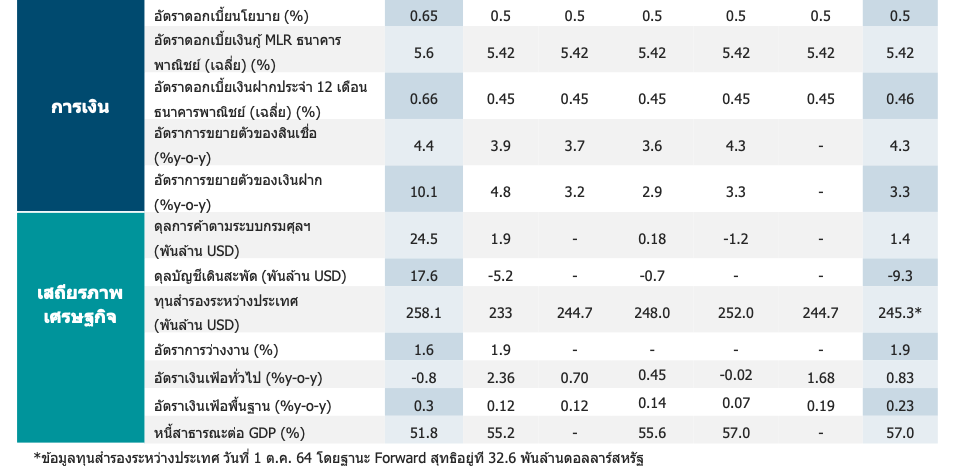
1. The general inflation rate for September 2021 grew by 1.68% year-on-year, while the core inflation rate increased by 0.19% year-on-year.
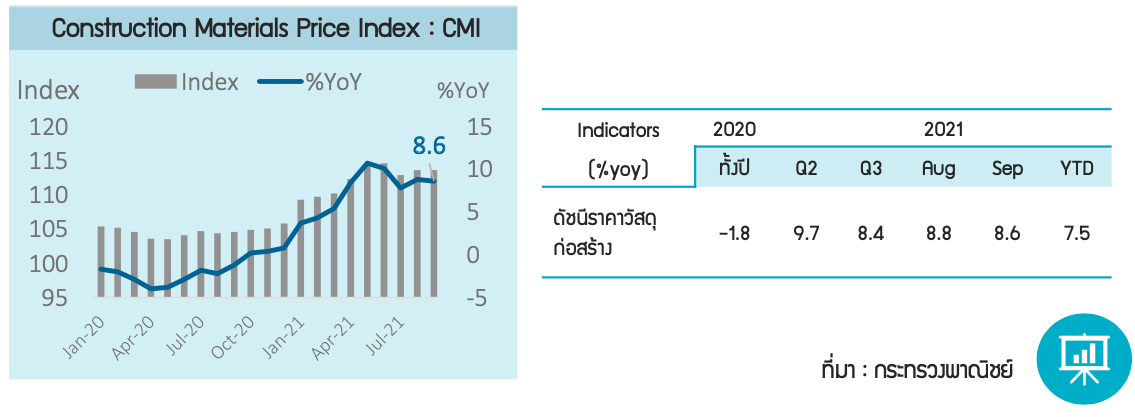
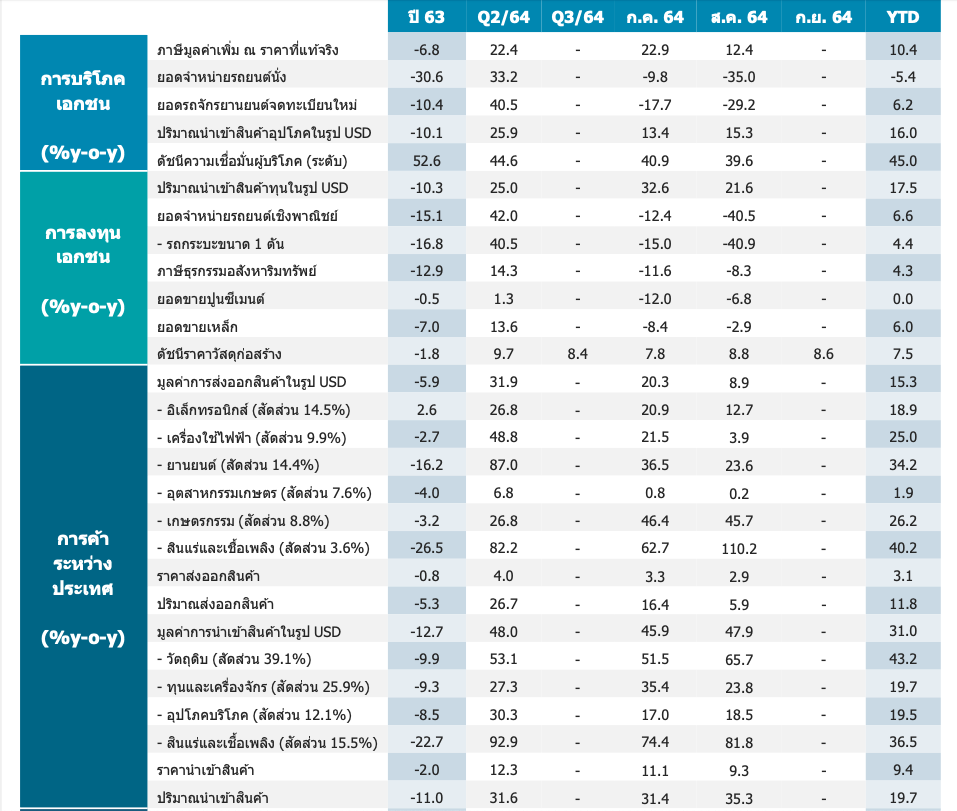
2. The construction material price index in September 2021 rose by 8.6% compared to the same period last year.
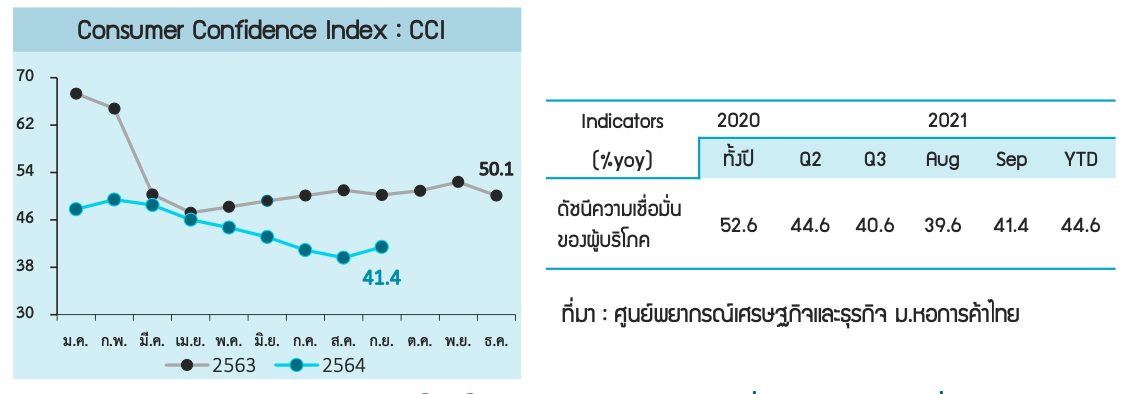
3. The consumer confidence index in September 2021 increased to 41.4 from 39.6 in the previous month.
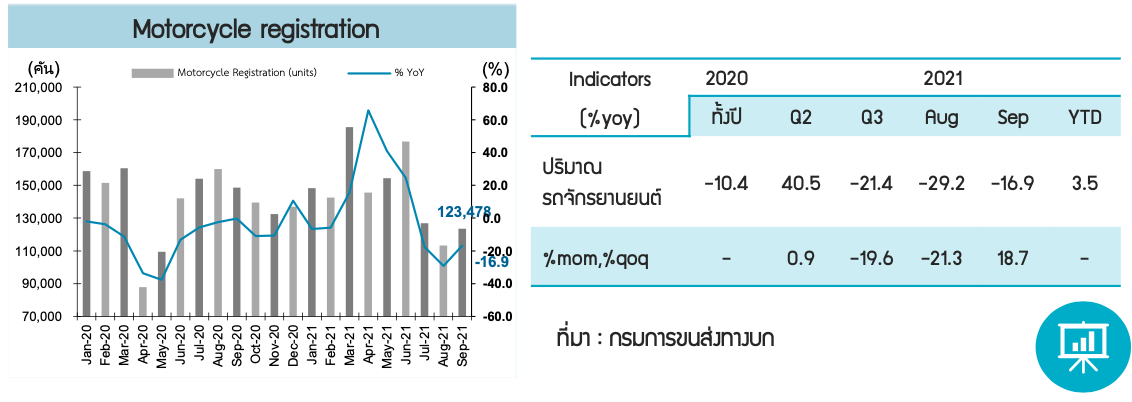
4. The number of newly registered motorcycles in September 2021 decreased by 16.9% compared to the same period last year.
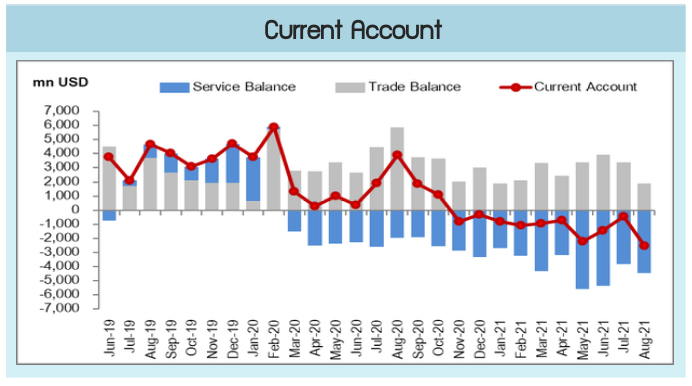
5. The current account balance for August 2021 recorded a deficit of -680.0 million USD.
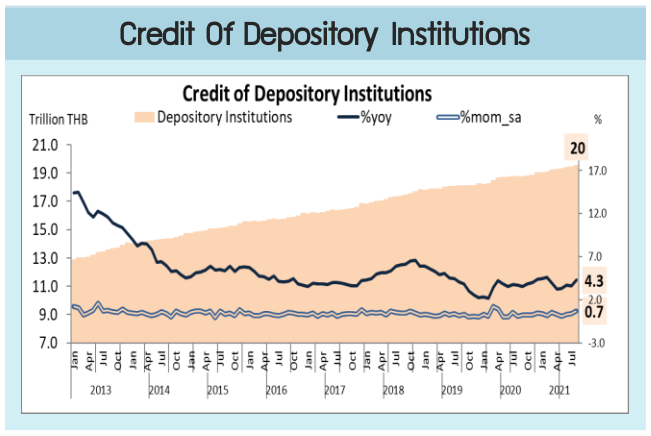
6. Financial institution loans in August 2021 grew by 4.3% year-on-year, while deposits in financial institutions increased by 3.3% year-on-year.
7. The latest household debt level in Thailand as of Q2 2021 stood at 89.3% of GDP.
Economic Indicators of Thailand
The general inflation rate for September 2021 grew by 1.68% year-on-year, rebounding after a contraction in the previous month. This was primarily due to the end of cost-of-living assistance measures related to utilities (electricity and water bills) and persistently high retail fuel prices, while most other goods remained stable.
However, prices for fresh food items showed significant volatility, although most remained lower than the previous year, particularly for jasmine rice, sticky rice, pork, fresh chicken, fresh vegetables, and fresh fruits. Eggs, on the other hand, remained significantly more expensive than last year, although their price trend has started to decline. Excluding fresh food and energy, the core inflation rate grew by 0.19%.
The construction material price index in September 2021 rose by 8.6% compared to the same period last year.
This marks the 12th consecutive month of growth, driven mainly by metals such as steel, aluminum, and copper, particularly in the steel and steel product categories, which continued to grow by 37.0% in line with high global steel prices. The electrical and plumbing equipment category increased by 4.1% due to rising raw material costs for steel, copper, and aluminum. Seasonal factors such as rainfall and flooding in many areas remain significant obstacles to construction at this time. However, the lifting of pandemic control measures in construction areas and the commencement of budget disbursement for 2022 are expected to support the construction sector's recovery in Q4.
Economic Indicators of Thailand
The consumer confidence index in September 2021 increased to 41.4 from 39.6 in the previous month, marking the first improvement in seven months since March 2021.
This improvement is attributed to the relaxation of lockdown measures in 29 high-control provinces, which encompass about 80% of Thailand's GDP. This has led to increased spending and tourism among the public and businesses. However, the flooding situation and rising fuel prices exceeding 30 baht per liter have had a negative psychological impact on consumer confidence, resulting in only a slight increase in consumer confidence, particularly regarding the current situation.
The number of newly registered motorcycles in September 2021 decreased by 16.9% compared to the same period last year, but when compared to the previous month, after adjusting for seasonal effects, it grew by 18.7%.
This marks the third consecutive month of decline, still impacted by consumer concerns regarding the COVID-19 outbreak, leading to cautious spending behavior. Additionally, stricter lending policies from financial institutions due to high household and agricultural debt levels have also contributed to this trend.
Financial Sector Indicators
The current account balance for August 2021 recorded a deficit of -680.0 million USD, a decrease from the previous month's deficit of -1,305.5 million USD.
The services, income, and transfer balance recorded a deficit of -4,431.8 million USD, which increased from the previous month, while the trade balance (according to the BOP system) decreased to a surplus of 1,895.5 million USD from the previous month, resulting in a total current account deficit of -2,536.3 million USD for 2021.
Loans in financial institutions as of August 2021 amounted to 19.6 trillion baht, representing a growth of 4.3% year-on-year, or an acceleration of 0.7% from the previous month (after adjusting for seasonal effects). When categorized by loan type, business loans grew at an accelerated rate of 4.4%, while consumer loans slowed to a growth rate of 4.2% year-on-year.
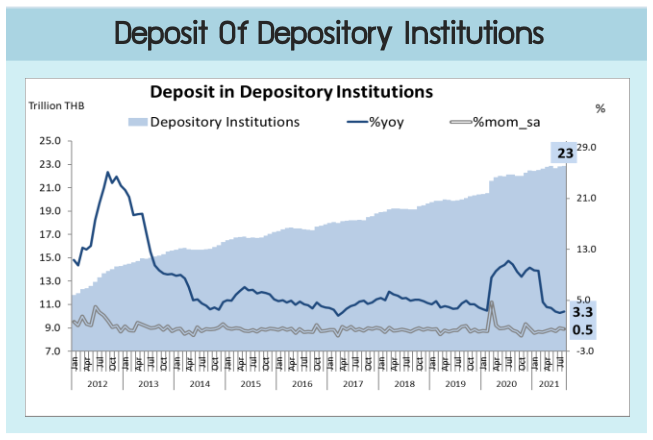
Deposits in financial institutions as of August 2021 amounted to 22.9 trillion baht, representing a growth rate of 3.3% year-on-year, or a growth rate of 0.5% from the previous month after seasonal adjustments. Deposits from commercial banks remained stable at 3.7%, while deposits from specialized financial institutions grew at an accelerated rate of 2.2% year-on-year.
Source: Bank of Thailand
Financial Sector Indicators
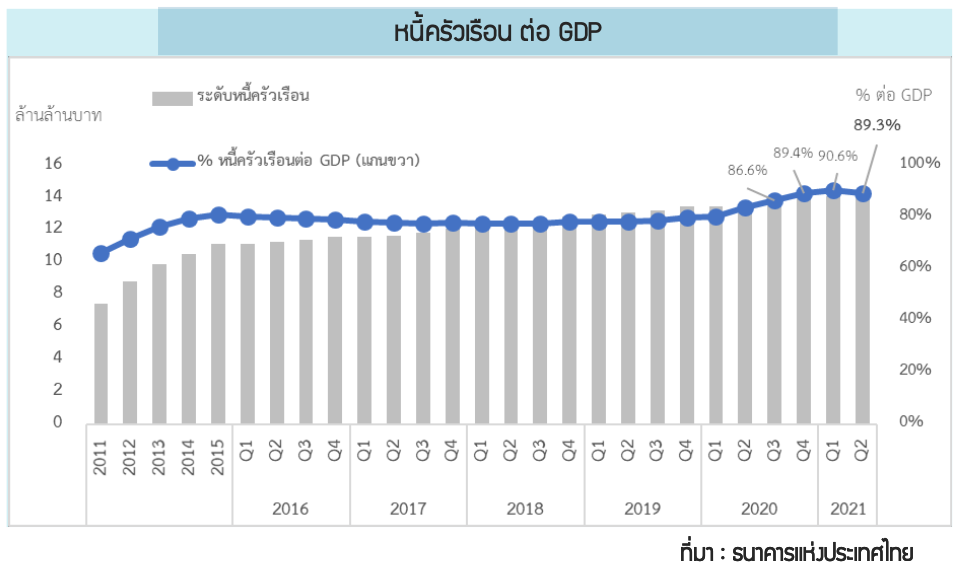
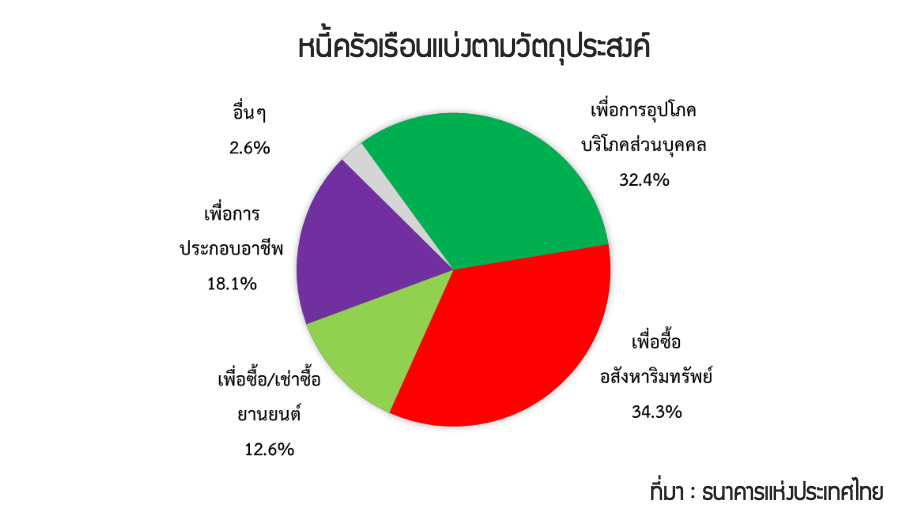
The latest household debt level in Thailand as of the end of Q2 2021 stood at 89.3% of GDP, equivalent to approximately 14.27 trillion baht.
Household debt in Q2 2021 decreased from the previous quarter's level of 90.6% of GDP, with household debt growing by 5.0% year-on-year, accelerating from 4.7% growth in Q1 2021. The decrease in the household debt-to-GDP ratio in Q2 2021 was due to the current GDP growth rate of 10.7% year-on-year in Q2 2021. However, the household debt situation should continue to be monitored due to the ongoing COVID-19 pandemic.
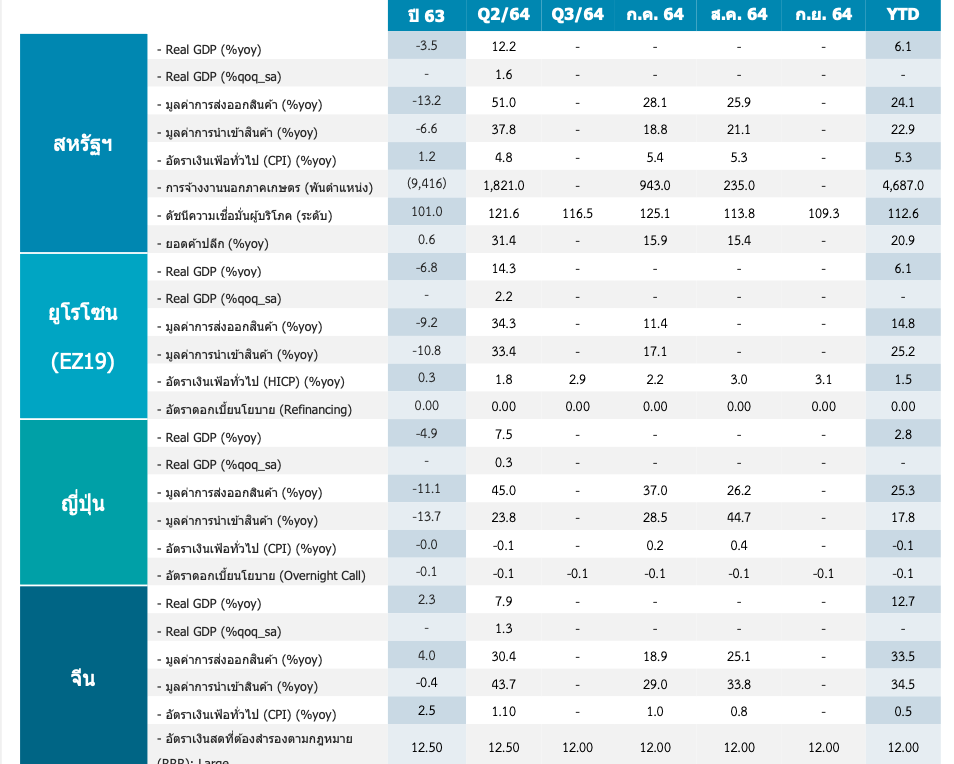
International Economic Indicators
United States
- The PMI index for the non-manufacturing sector (ISM) in September 2021 stood at 61.9 points, an increase from 61.7 points in the previous month, reflecting good expansion in the service sector amid challenges related to labor shortages, supply chain issues, and transportation disruptions.
- The number of first-time unemployment claims for the week of September 26 to October 2, 2021, decreased to 326,000, down from 364,000 the previous week and below market expectations of 348,000, indicating a recovery in the U.S. labor market following Hurricane Ida and a decline in the spread of the Delta variant of COVID-19.
China
- The PMI index for the non-manufacturing sector (Caixin) in September 2021 stood at 53.4 points, rebounding from 46.7 points in the previous month, which was the lowest level in 15 months. This month's index was supported by new order growth and increased employment following the easing of COVID-19 restrictions in eastern Jiangsu province.
European Union
- The PMI index for the services sector in September 2021 stood at 56.4 points, down from 59.0 points in the previous month. However, the index remains above 50 points, indicating continued expansion in the services sector.
- Retail sales in August 2021 grew by 0.0% year-on-year, slowing from 3.1% growth in July 2021 and below market expectations of 0.4% growth.
Japan
- The PMI index for the services sector in September 2021 stood at 47.8 points, up from 42.9 points in the previous month, driven by significant employment growth, while new orders slowed due to the pandemic and rising raw material and fuel prices.
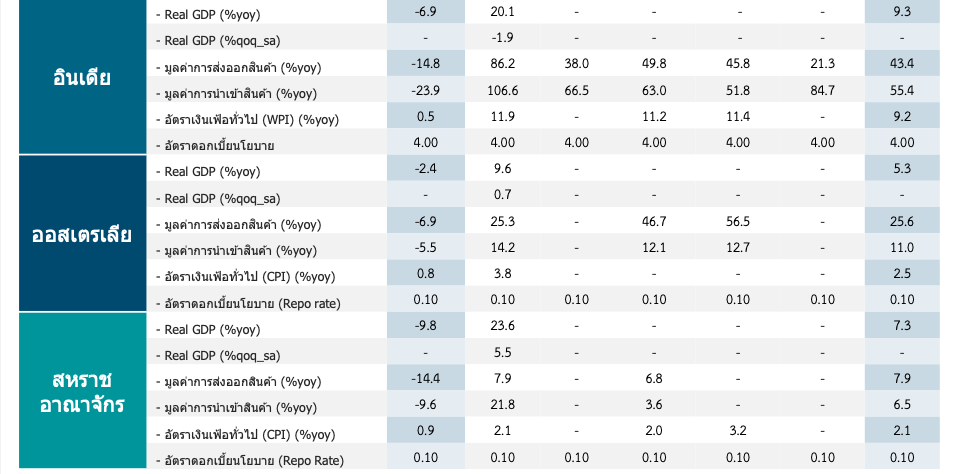
Australia
- The PMI index for the services sector in September 2021 stood at 45.5 points, up from 42.9 points in August 2021. However, the index remains below 50 points, indicating continued contraction in the services sector.
- The Reserve Bank of Australia decided to maintain the policy interest rate at 0.1% during its October 2021 meeting, stating that it will continue to pursue an accommodative monetary policy to support economic recovery.
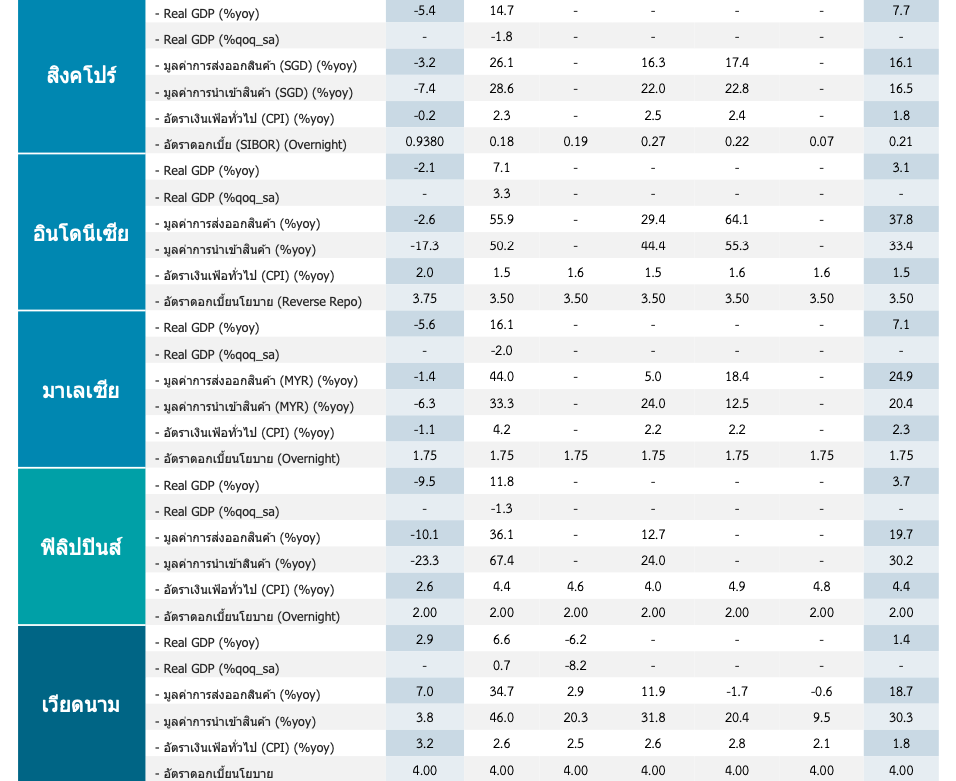
Singapore
- The PMI index for the manufacturing sector in September 2021 stood at 53.8 points, improving from 52.1 points in the previous month.
- Retail sales in August 2021 decreased by 2.8% year-on-year, slowing from 0.2% growth in the previous month due to significant declines in automotive sales.
Indonesia
- The consumer confidence index in September 2021 stood at 95.5 points, up from 77.3 points in the previous month, due to the easing of pandemic control measures.
Malaysia
- The unemployment rate in August 2021 stood at 4.6% of the total labor force, down from 4.8% in the previous month.
Philippines
- The inflation rate in September 2021 stood at 4.8% year-on-year, down from 4.9% in the previous month, primarily due to transportation costs.
- Industrial production in August 2021 grew by 523.3% year-on-year, down from 528.7% in the previous month, mainly due to pharmaceutical production.
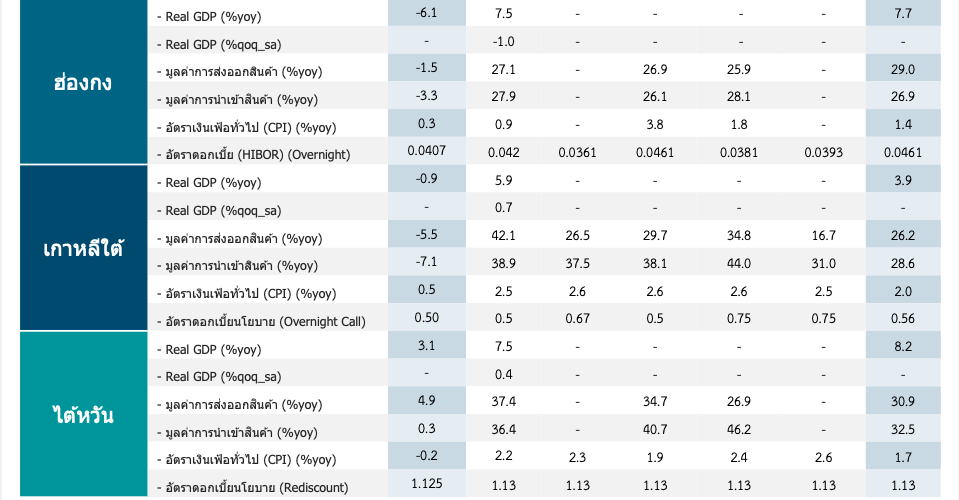
Taiwan
- The inflation rate in September 2021 stood at 2.63% year-on-year, up from 2.35% in the previous month, marking the highest level since February 2013, driven by significant increases in transportation and communication, clothing, housing, health, education, and entertainment prices.
South Korea
- The inflation rate in September 2021 stood at 2.5% year-on-year, down from 2.6% in the previous month, which is above the Bank of Korea's inflation target of 2.0%, primarily due to rising prices for fresh food, fuel, rent, and other services.
United Kingdom
- The PMI index for the services sector in September 2021 stood at 55.4 points, up from 55.0 points in August 2021, reflecting a strong recovery in the services sector in the UK.
Money Market and Exchange Rate Indicators
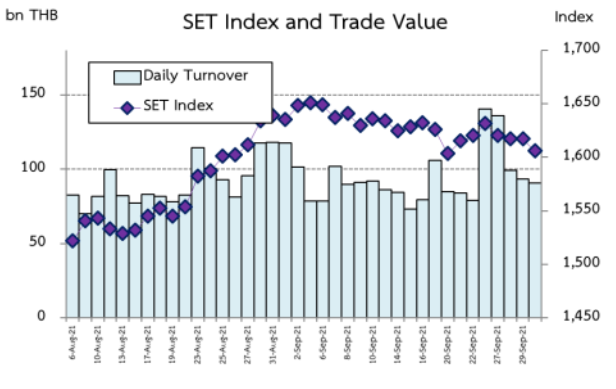
The SET index slightly increased from the previous week, contrary to other regional stock markets that declined. On October 7, 2021, the index closed at 1,633.72 points, with an average daily trading value of 91,568.11 million baht between October 4-7, 2021. Foreign investors and securities company accounts were net buyers, while domestic retail investors and domestic institutional investors were net sellers. During October 4-7, 2021, foreign investors purchased a net of 1,435.31 million baht.
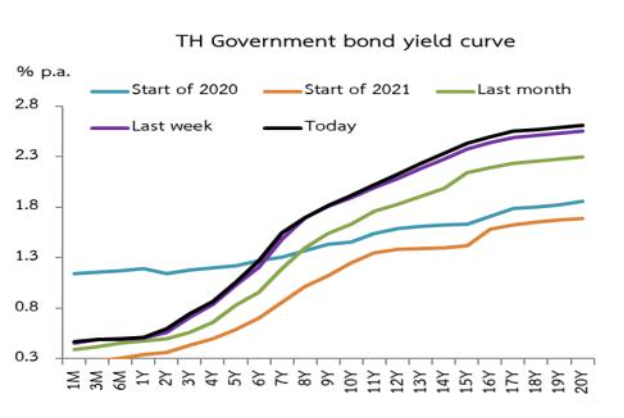
The overall yield on government bonds increased by 1 to 6 basis points. This week, there were no government bond auctions. Between October 4-7, 2021, foreign investor capital flowed out of the bond market, with a net outflow of -1,412.89 million baht. Since the beginning of the year until October 7, 2021, foreign investor capital has flowed into the bond market with a net inflow of 65,573.79 million baht.
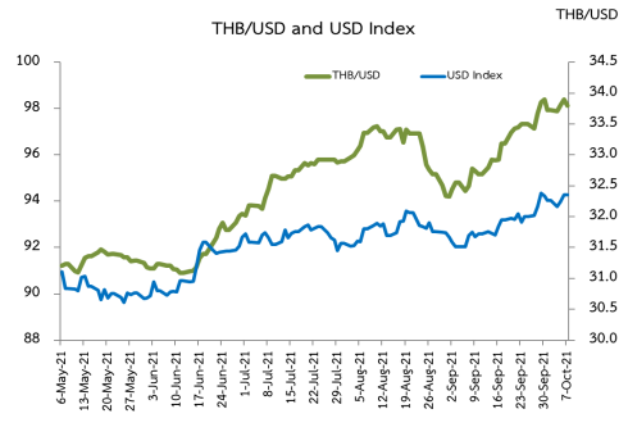
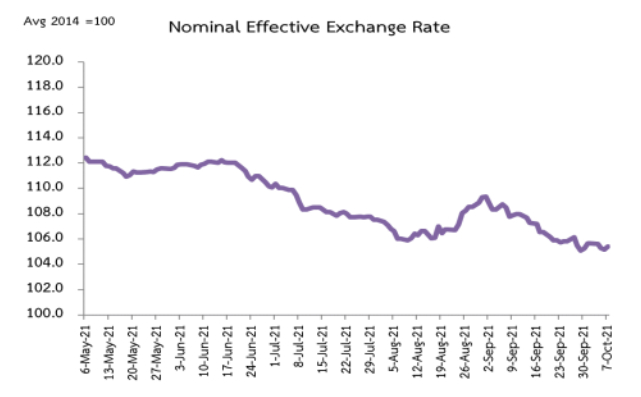
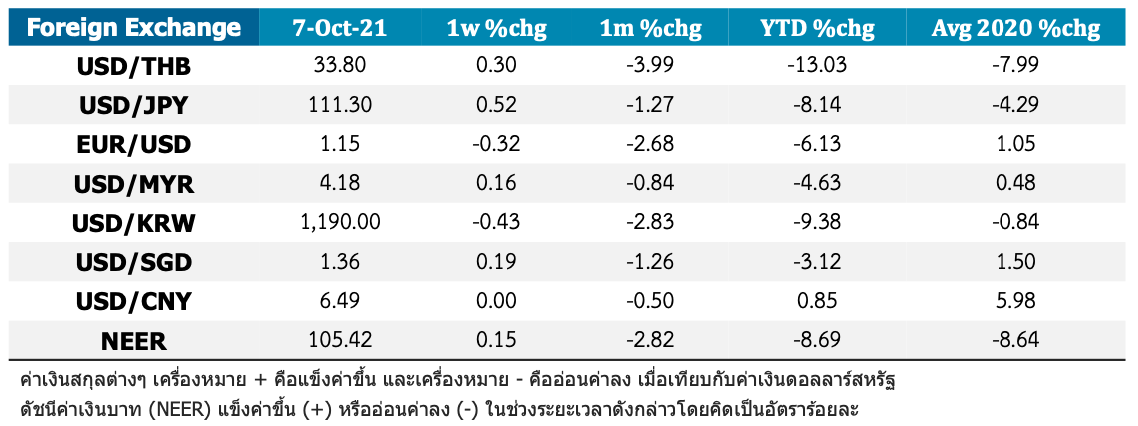
The Thai baht appreciated against the previous week, closing at 33.80 baht per USD on October 7, 2021, appreciating by 0.30% from the previous week. This aligns with the appreciation of the yen, ringgit, and Singapore dollar against the USD, while the euro and won depreciated against the USD. The Thai baht appreciated more than other major currencies in the region, resulting in a 0.15% increase in the nominal effective exchange rate (NEER) from the previous week.
Economic Indicators
Global Economic Indicators
Thank you for the information from the Macroeconomic Policy Bureau, Fiscal Policy Office, Ministry of Finance, 02-273-9020 Ext. 3259