Who Are You in the Real Estate Equation? 6 Financial Styles Predicting Your True Soulmate Home
In an era where buying a home is about purchasing a healing space that reflects one's identity, vision, and "blueprint" for living,
the crucial question to ponder is not just "What kind of home do we want?" but rather, "What type of home aligns with our financial lifestyle?"
Understanding your own financial behavior is not only beneficial for planning loans or manageable payments; it is also about discovering the hidden DNA of your desires.
For the general public, exploring oneself through these lifestyle groups can help you find your "ideal home" more effectively. For businesspeople, investors, and real estate developers, this information serves as a "compass" to better understand modern consumers, which is crucial for designing products and crafting precise marketing strategies.
Because when you understand how customers perceive money, you will immediately know what kind of "value" to deliver that resonates with them.
How Do 6 Groups of Home Buyers Reflect Their Dream Homes Through Their Financial Lifestyles?
According to the research titled “THE MOST POWERFUL BRAND IN REAL ESTATE 2025: BUILDING STRONGER BRANDS THROUGH WELLNESS INSIGHT” conducted by a team of experts from TerraBKK, which surveyed over 2,000 people nationwide (with 75% from Bangkok and its vicinity), and presented at the annual TerraHint Brand Series 2025 seminar under the theme "The Wellness Blueprint #LivingWellWithFormula," part of the research revealed a map of financial behaviors, identifying groups of people with different financial mindsets divided into 6 main categories as follows:
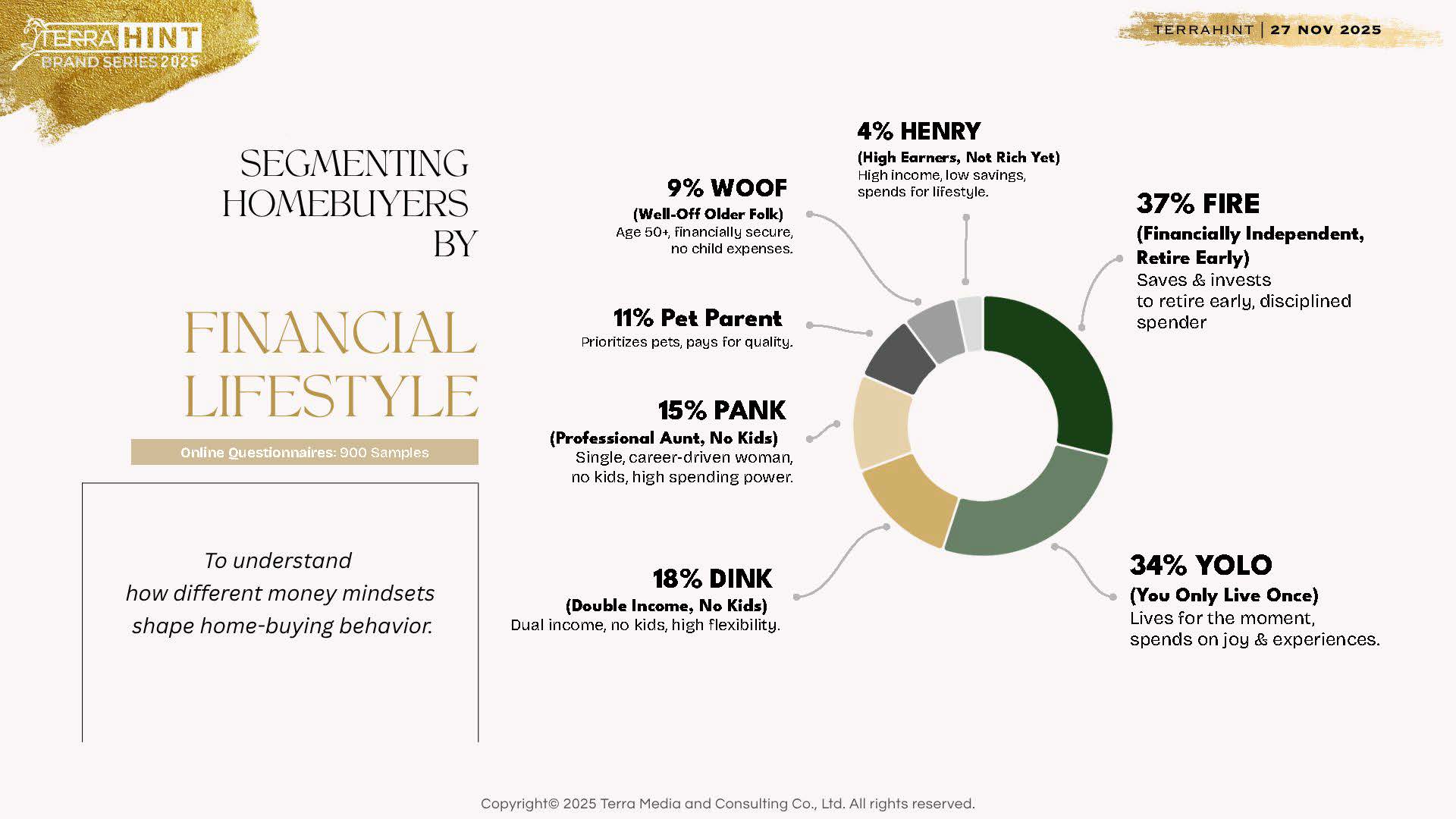
1. FIRE Group: The Committed Planners for Freedom (37%)
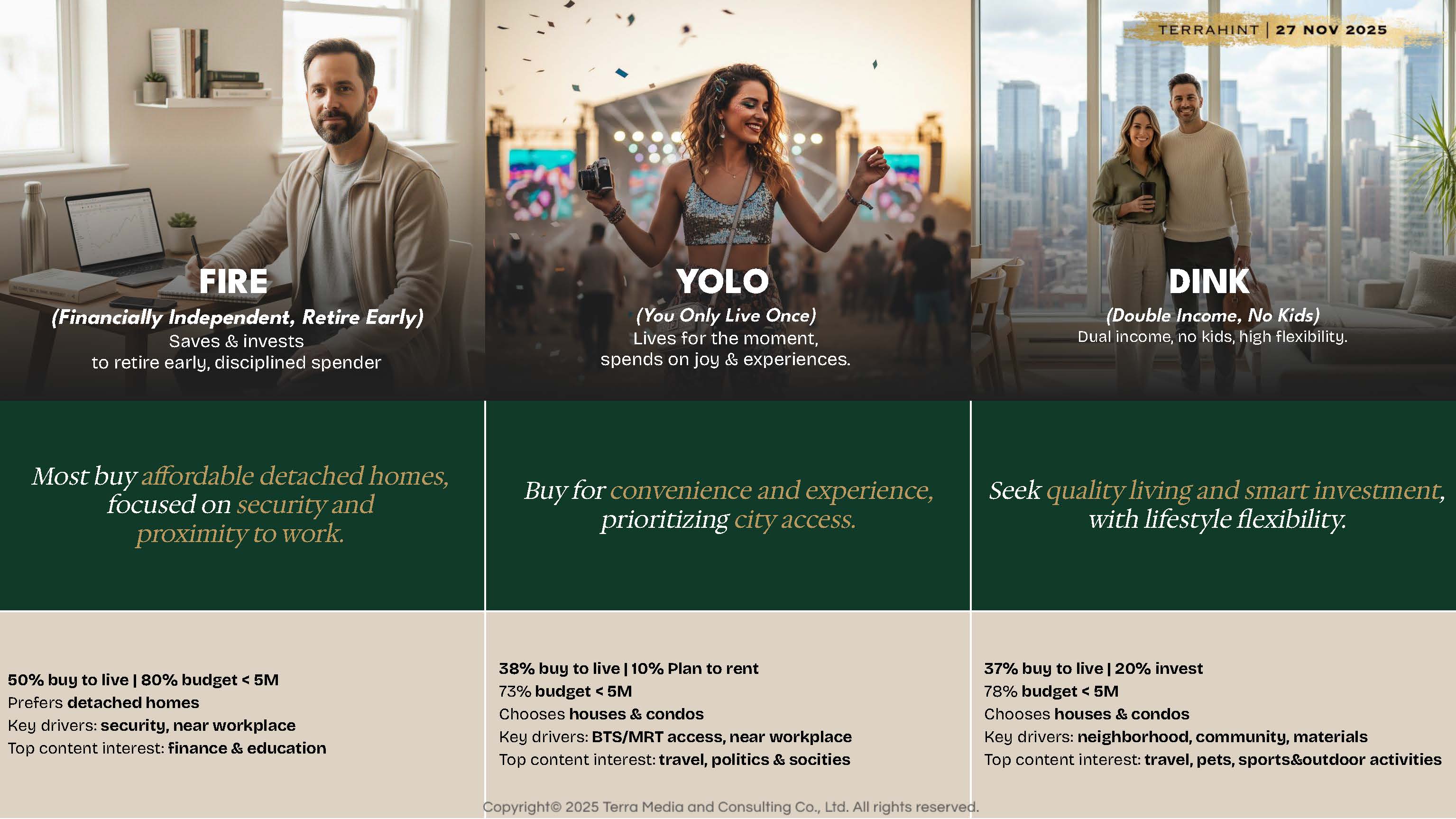
This is the largest group in the survey, standing for Financial Independence, Retire Early. They are highly disciplined financially, focusing on saving and investing for early retirement. The home-buying behavior of FIRE individuals emphasizes "value and reasonableness," mostly opting for single-family homes within an accessible budget (under 5 million THB), prioritizing safety and proximity to work to reduce commuting costs and time. The content they enjoy consuming revolves around finance and education.
2. YOLO Group: The Spendthrifts for Life Experiences (34%)
In contrast to the first group, the You Only Live Once (YOLO) group believes in living for the present. They are willing to spend for happiness and new experiences. Homes for YOLO individuals must offer "convenience and lifestyle." They prefer condos or houses near public transport to easily access the vibrancy of the city. Some in this group choose to "rent" instead of buying to maintain flexibility in relocating as needed. The content that attracts them most includes travel, social issues, and politics that reflect their identity in the modern world.
3. DINK Group: Dual-Income Couples Seeking Quality (18%)
The Double Income, No Kids (DINK) group consists of couples without children who have income from two sources, providing them with high financial flexibility. They view home buying as both "residence" and "investment" simultaneously. DINK individuals place great importance on the project's environment, neighborly community, and the quality of construction materials. They are interested in both single-family homes and condos that cater to leisure activities such as travel, outdoor activities, or even pet care.
4. PANK Group: The Generous Single Aunts (15%)
The Professional Aunt, No Kids (PANK) group consists of capable women who work well and have high purchasing power due to not having child-related expenses. This allows them a higher budget for home selection compared to other groups (with a clear proportion looking for homes in the 5-10 million THB range). PANK individuals often choose premium condos in prime locations that are easily accessible. The content that resonates with them includes Health & Wellness, Beauty, and Personal Care, as they are willing to pay for quality experiences.
5. Pet Parent Group: Loyal Servants for Their Four-Legged Children (11%)
This is a rapidly growing group. The Pet Parent (11%) group is primarily driven by the need for "space for pets." They are not just looking for a house but a kingdom where their dogs and cats can live comfortably. Over 69% prefer single-family homes with garden space and prioritize security systems. Most have a budget under 5 million THB and often follow content related to services that facilitate daily life for pets.
6. WOOF Group: The Established Older Generation Focused on Stability (9%)
Finally, the Well-Off Older Folk (WOOF) group consists of individuals aged 50 and above who have financial stability and no child-related expenses. This group is considered the "Heavy Spender" in the real estate market, with a higher proportion looking for homes priced between 5-10 million THB compared to others. WOOF individuals value what is known as Universal Design (design that accommodates all ages), with locations near hospitals and an emphasis on excellent after-sales service, as for them, a home is a place of rest that must be ready to care for them throughout their lives.
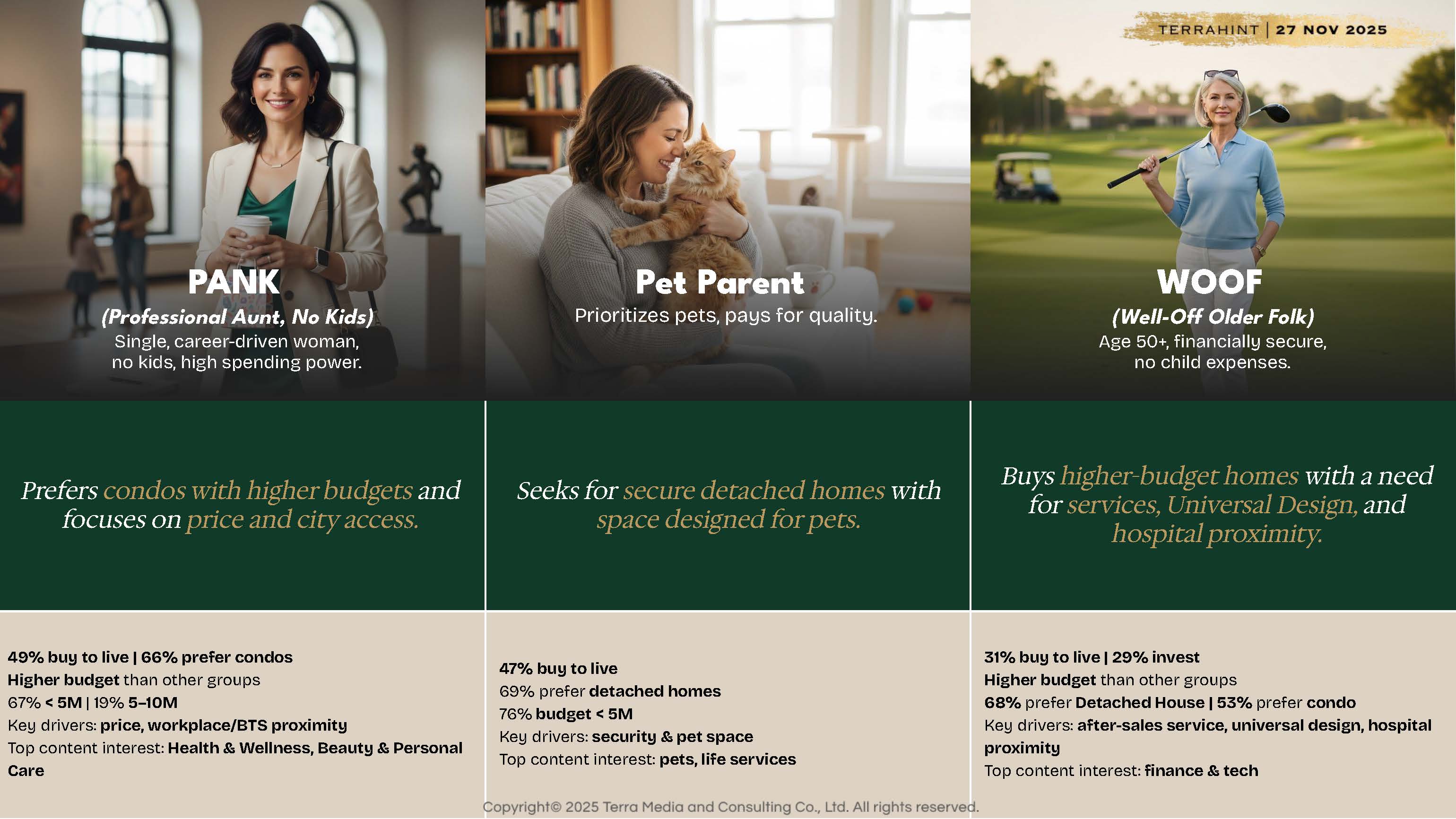
Understanding these 6 financial lifestyle types makes it clear that the "happiness" of living does not have a one-size-fits-all formula. Some find joy in seeing their bank account grow (FIRE), some in living in the heart of the city (YOLO), while others simply want space for their pets to run around (Pet Parent).
For real estate developers, designing homes today is not just about building bricks and mortar; it is about creating "solutions" that meet the hearts of each customer group as precisely as possible.
Want to know which group your project or business fits into? Let the experts from TerraBKK help you find the answers and plan precise strategies for you. Get in touch with our team at www.terrabkk.com/contact