Fiscal Policy Office Weekly Economic Report as of September 17, 2021
Fiscal Policy Office - FPO Weekly Economic Report as of September 17, 2021
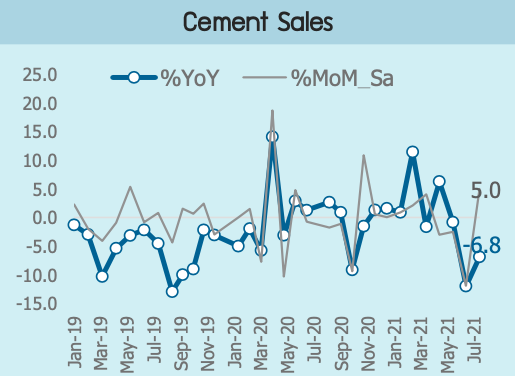
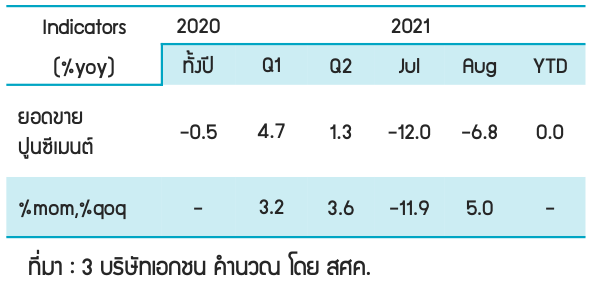
1. Domestic cement sales in August 2021 contracted by -6.8% compared to the same period last year.
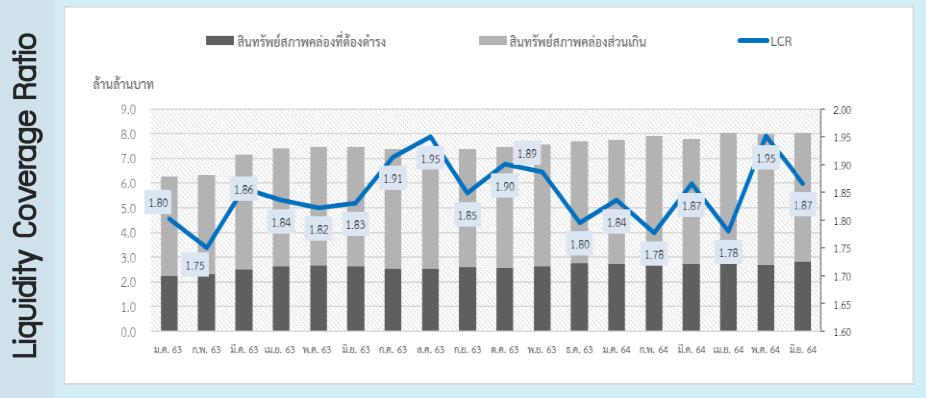
2. The liquidity asset ratio of commercial banks in July 2021 was 1.87 times the legally required liquidity assets.
Thai Economic Indicators
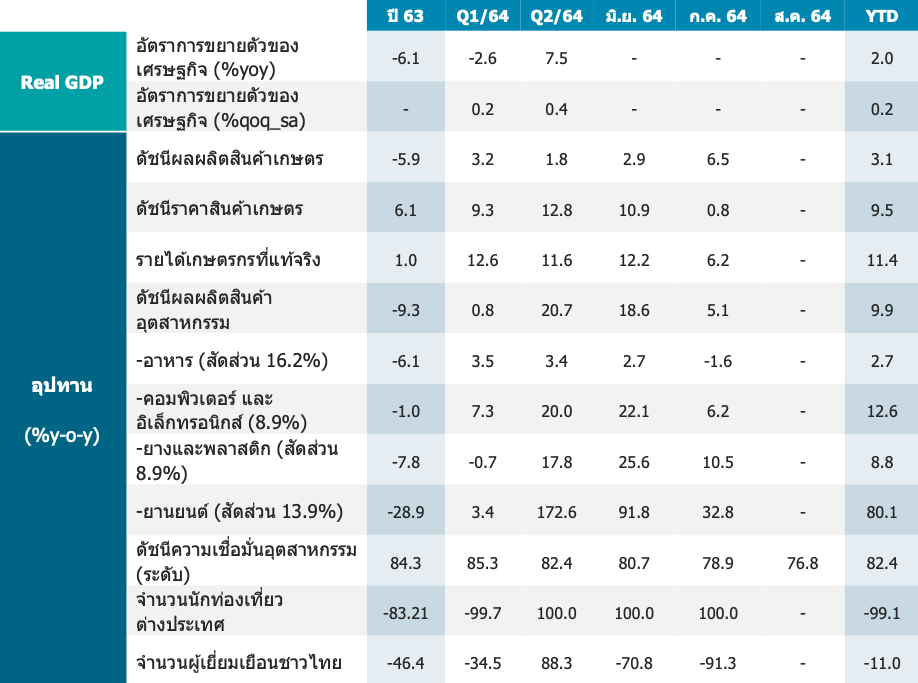
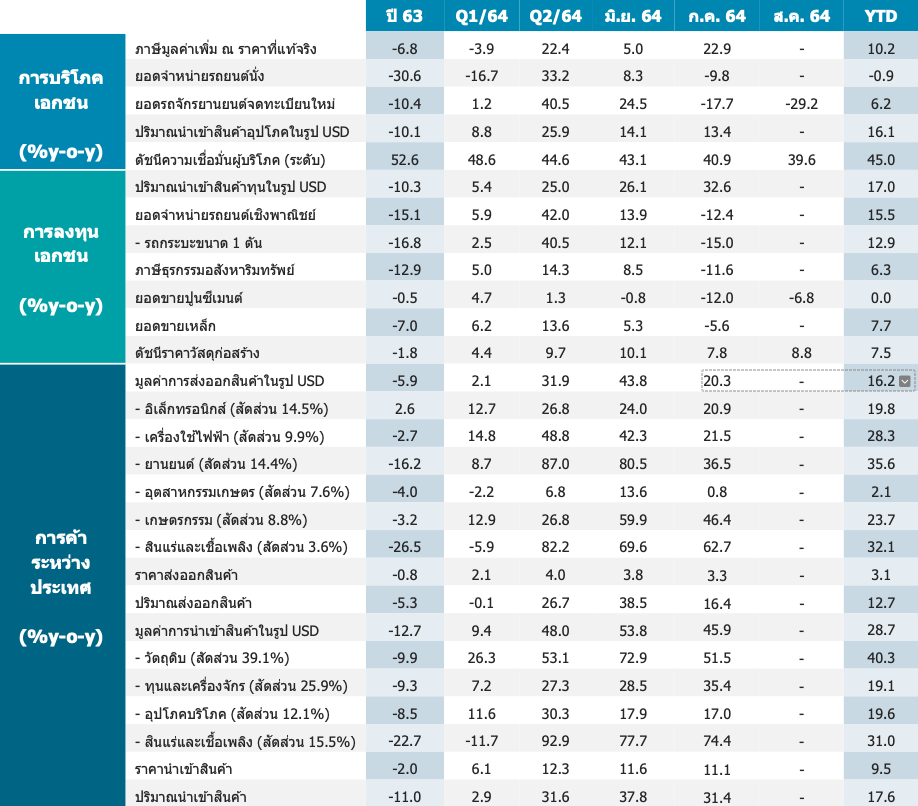
Domestic cement sales in August 2021 contracted by -6.8% compared to the same period last year, but when seasonally adjusted, it showed a growth of 5.0% compared to the previous month.
In August 2021, the economy continued to be affected by the severe new wave of COVID-19, reflected in the high number of infections and deaths. This led the government to implement measures to control the spread of the virus, particularly in construction areas in Bangkok and its vicinity, impacting construction activities and cement usage from the previous month. However, the gradual consideration of easing control measures, along with the preparation for the approval of the 2022 budget, is expected to help improve the construction sector.
The liquidity asset ratio of commercial banks in July 2021 was 1.87 times the legally required liquidity assets
The outstanding liquidity assets of the banking system in July 2021 stood at 5.2 trillion baht, slightly down from the previous month. The Bank of Thailand has adjusted the liquidity asset maintenance criteria from the previous requirement of at least 6% of deposits to at least 100% (or 1.0 times) of the estimated net cash outflow in a crisis (Liquidity Coverage Ratio: LCR) since January 2016.
Source: Bank of Thailand
International Economic Indicators
United States
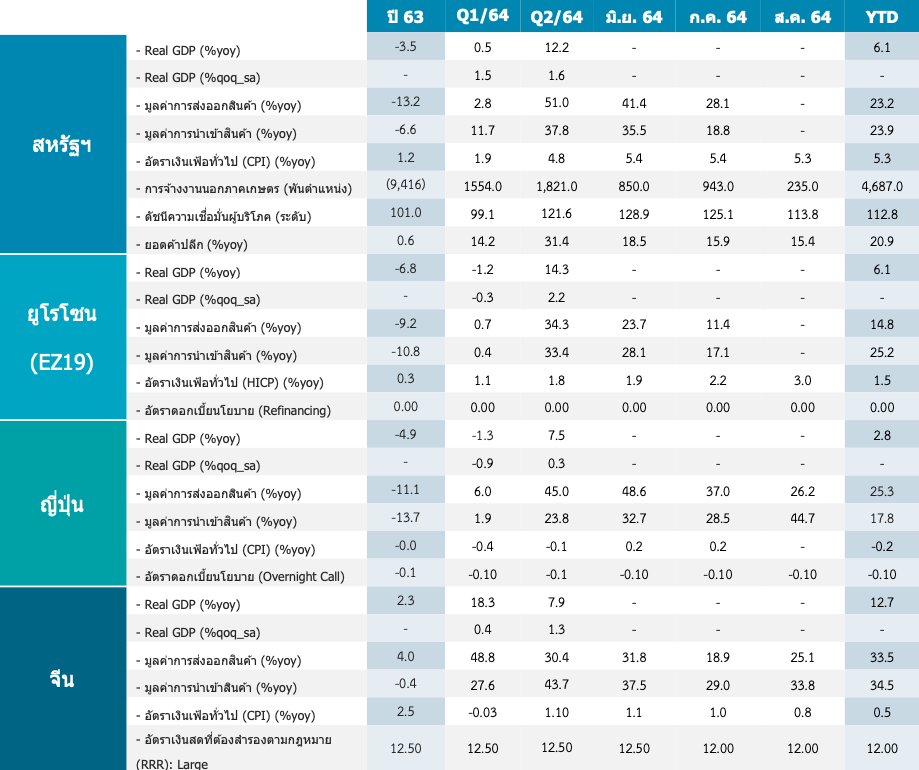
- The inflation rate in August 2021 was 5.3% year-on-year, down from the previous month’s 5.4% year-on-year, primarily due to a decrease in prices for used cars and trucks and transportation services.
- Industrial production in August 2021 grew by 5.7% year-on-year, slowing from the previous month’s growth of 6.6% year-on-year, marking the fourth consecutive month of slowdown, the lowest since April 2021.
- Retail sales in August 2021 remained unchanged from the previous month, which grew by 15.1% year-on-year, supported by spending before the school term opening in September 2021 in the U.S.
- The number of initial jobless claims for the week of September 5-11, 2021, slightly increased to 332,000, higher than the market's expectation of 330,000, and up from the previous week’s 312,000, due to Hurricane Ida causing heavy rainfall, landslides, and flooding. However, the increase in jobless claims remains close to pre-COVID-19 levels in the U.S.
China
- Industrial production in August 2021 grew by 5.3% year-on-year, slowing from the previous month’s growth of 6.4% year-on-year, due to ongoing impacts from the pandemic, semiconductor shortages, and pollution control measures.
- Retail sales in August 2021 grew by 2.0% year-on-year, slowing from the previous month’s growth of 8.5% year-on-year, the lowest level since September 2020, due to reduced consumption during the COVID-19 outbreak in some regions.
- The unemployment rate in August 2021 remained stable at 5.1% of the labor force. In the first eight months of this year, China created 9.38 million new jobs in urban areas, achieving 85.3% of the annual employment target of 11 million for 2021.
Japan
- Exports in August 2021 increased by 26.2% year-on-year, marking the sixth consecutive month of growth due to the recovery of global trade and low base effects from the previous year.
- Imports in August 2021 increased by 44.7% year-on-year, marking the seventh consecutive month of growth due to increased domestic demand.
- The trade balance in August 2021 recorded a deficit of 635.4 billion yen, marking the first deficit since May 2021.
Eurozone
- Industrial production in August 2021 grew by 7.7% year-on-year, slowing from June 2021’s growth of 10.1% year-on-year, but still exceeding market expectations of 6.3% growth.
Hong Kong
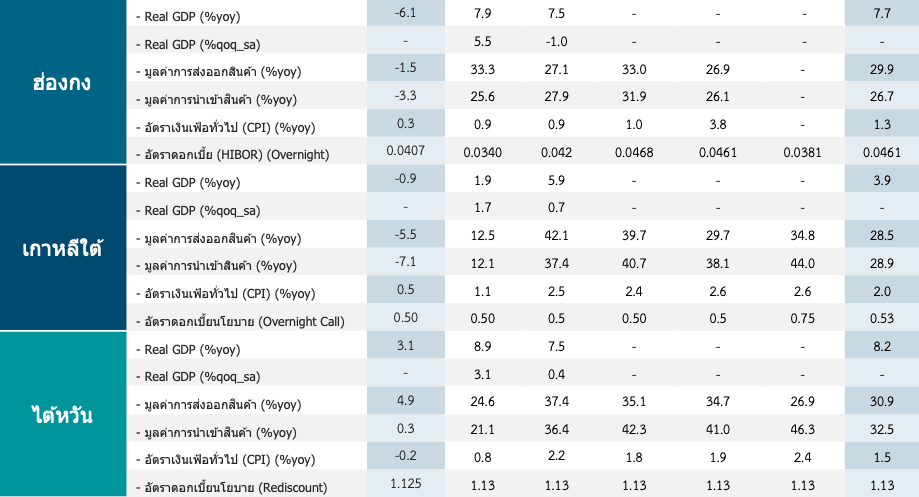
- Industrial production in Q2 2021 grew by 5.6% year-on-year, accelerating from the previous quarter’s growth of 2.6% year-on-year, the highest since Q4 2010, driven by increased production in food, beverages, tobacco, miscellaneous goods, and textiles and clothing.
- The unemployment rate in August 2021 was 4.7% of the labor force, down from the previous month’s 5.0%, the lowest level since March 2020, as the economy recovers from the COVID-19 pandemic.
Australia
- The unemployment rate in August 2021 decreased to 4.5% of the labor force, as the economy begins to recover from the COVID-19 pandemic.
Singapore
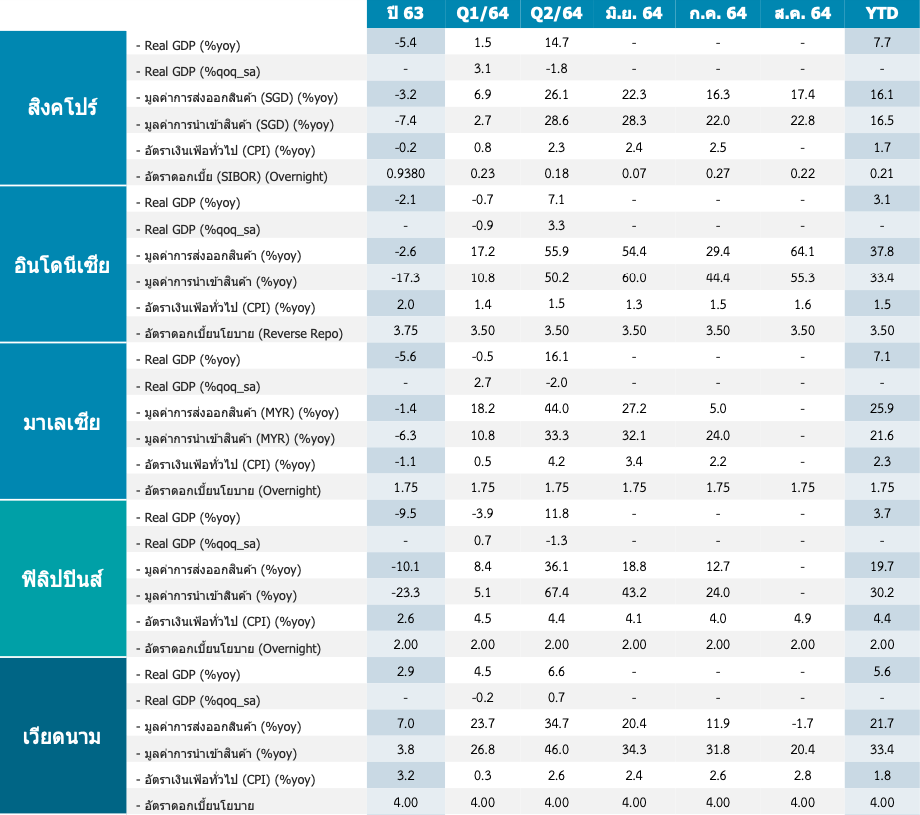
- Exports in August 2021 grew by 17.4% year-on-year, up from the previous month’s 16.3% year-on-year.
- Imports in August 2021 grew by 22.8% year-on-year, up from the previous month’s 22.0% year-on-year.
- The trade balance in August 2021 recorded a surplus of 7.25 billion Singapore dollars, up from the previous month’s surplus of 3.74 billion Singapore dollars.
- The unemployment rate in Q2 2021 was 2.7% of the labor force, down from the previous quarter’s 2.9% of the labor force.
Indonesia
- Exports in August 2021 grew by 64.1% year-on-year, up from the previous month’s 29.3% year-on-year.
- Imports in August 2021 grew by 55.3% year-on-year, up from the previous month’s 44.4% year-on-year.
- The trade balance in August 2021 recorded a surplus of 4.7 billion US dollars, up from the previous month’s surplus of 2.6 billion US dollars.
South Korea
- The unemployment rate in August 2021 was 2.8% of the labor force, down from the previous month’s 3.3%, marking the third consecutive month of decline and the lowest since data collection began in 1999, reflecting the recovery of the labor market amid a new wave of COVID-19.
United Kingdom
- The unemployment rate in August 2021 was 4.36% of the labor force, down from the previous month’s 4.7%.
- The inflation rate in August 2021 rose to 3.2% year-on-year, up from 2.0% year-on-year in July 2021.
Money Market and Exchange Rate Indicators
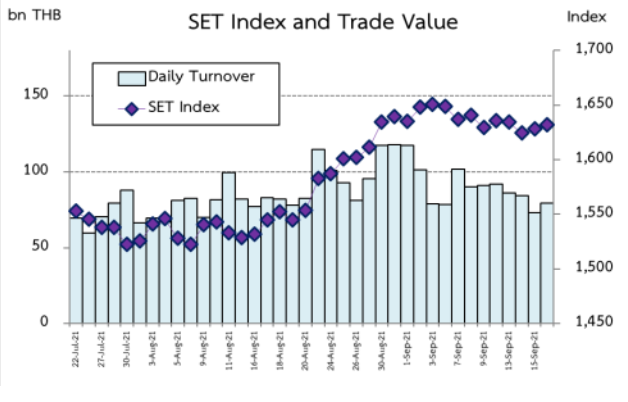
The SET index slightly decreased from the previous week, in line with other regional stock markets that also declined, such as HSI (Hong Kong), CSI300 (Shanghai), and STI (Singapore). On September 16, 2021, the index closed at 1,631.70 points, with an average daily trading value of 80,779.50 million baht between September 13-16, 2021. Foreign investors, domestic institutional investors, and securities company accounts were net buyers, while general domestic investors were net sellers. Between September 13-16, 2021, foreigners net bought securities worth 1,571.6 million baht.
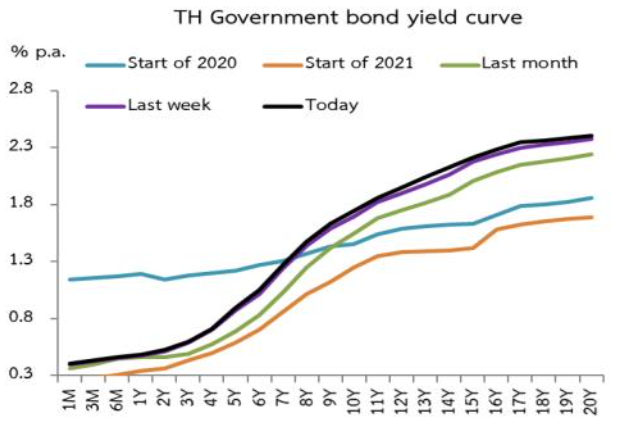
The yield on government bonds overall increased by 1 to 7 basis points. This week, investors participated in the auction of 15 and 30-year government bonds, with demand at 1.95 and 3.10 times the auction amount. Between September 13-16, 2021, foreign capital outflow from the bond market was -14,350.27 million baht, and from the beginning of the year until September 16, 2021, foreign capital inflow into the bond market was 99,012.20 million baht.
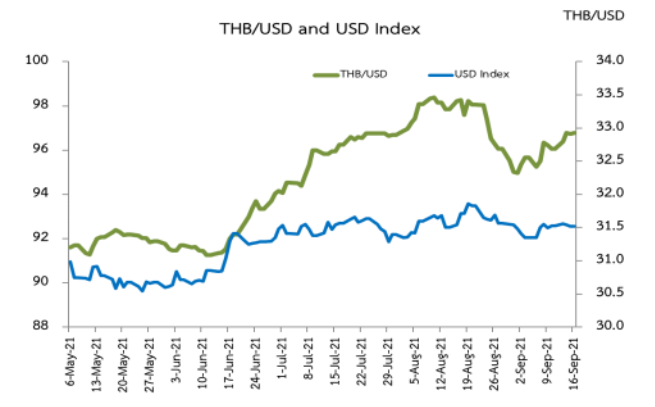
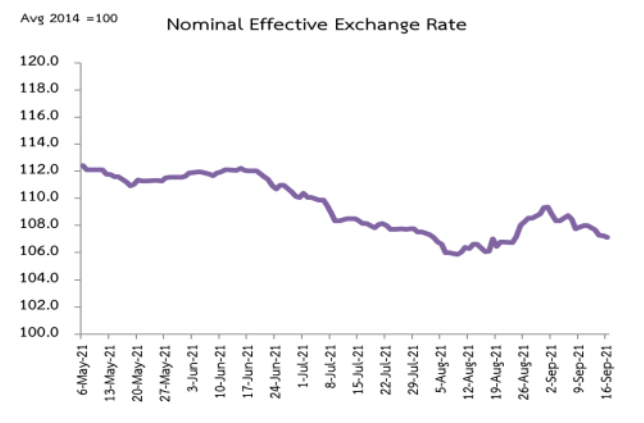
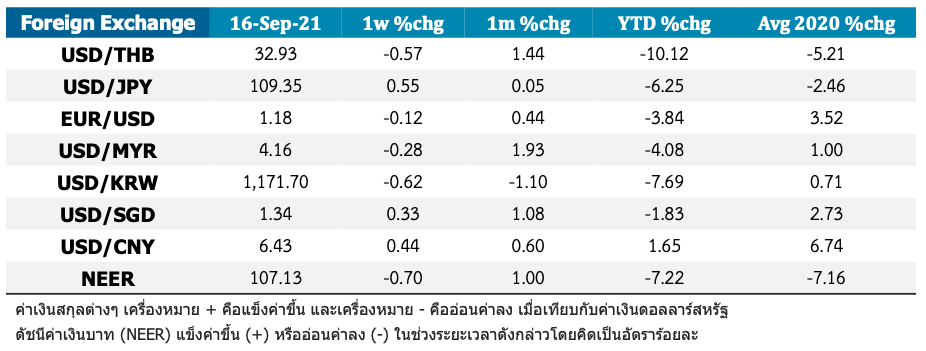
The Thai baht depreciated from the previous week, closing at 32.93 baht per US dollar on September 16, 2021, a decrease of -0.57% from the previous week, in line with the depreciation of the euro, ringgit, and won against the US dollar, while the yen, Singapore dollar, and yuan appreciated against the US dollar. The baht depreciated more than other major currencies in the region, resulting in the NEER index declining by -0.70% from the previous week.
Economic Indicators
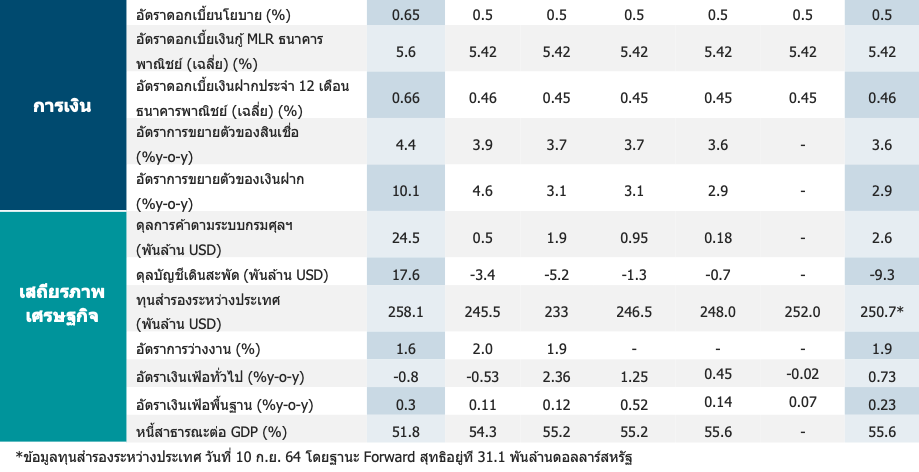
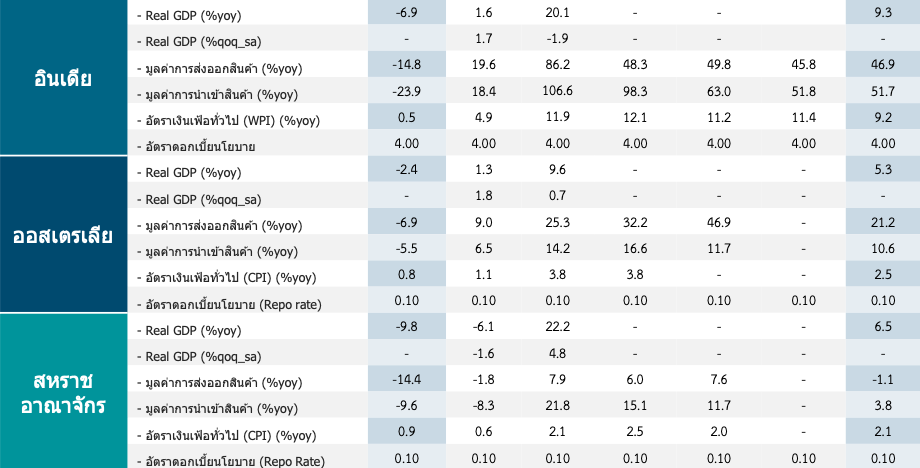
Global Economic Indicators
Thank you for the information from the Macroeconomic Policy Bureau, Fiscal Policy Office, Ministry of Finance, 02-273-9020 Ext. 3259