COVID-19 Shatters Thailand's Economic Dreams: Krungsri Research Cuts GDP Forecast to 0.6%
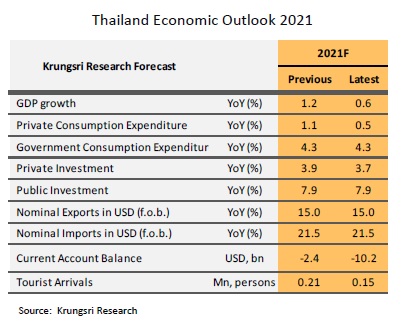
Krungsri Research has revised its GDP growth forecast for 2021 down to 0.6% from the previous estimate of 1.2% due to weakened domestic demand and tourism. The model indicates that the number of COVID-19 infections may exceed earlier predictions, with the death rate being a crucial factor in determining lockdown measures.
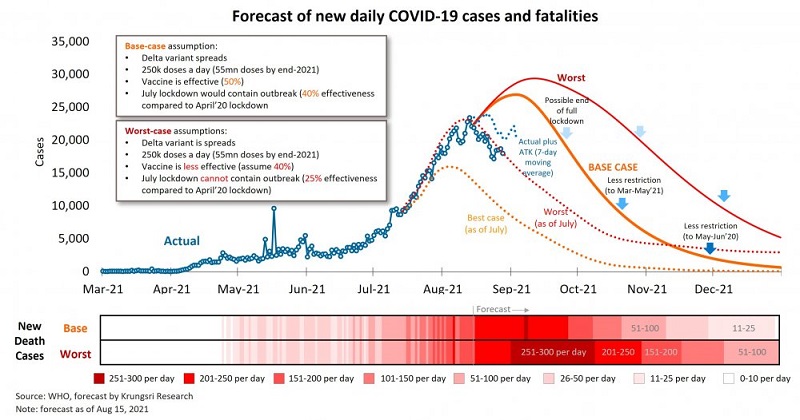
The number of COVID-19 cases may be higher than previously anticipated, particularly due to the dominant Delta variant. Krungsri's baseline model suggests that daily death rates are likely to peak in mid-September, and a decline in death rates will be a key factor in easing government lockdown measures by the end of September, even though non-pharmaceutical interventions (NPIs) will remain in place throughout this year.
These forecasts are based on the assumption that 250,000 vaccine doses will be administered daily, with a vaccine efficacy of 50%. The speed of vaccination, vaccine effectiveness, and the efficiency of lockdown measures are all critical variables that will determine how long the outbreak lasts. In a worst-case scenario, daily infection rates could remain high throughout the year due to ineffective lockdowns and vaccines, potentially leading to strict lockdown measures continuing until November.
The impact of a more severe outbreak than expected and its effects on the manufacturing sector have further depressed this year's GDP forecast. On August 27, the COVID-19 Situation Administration (CCSA) meeting approved the continuation of curfew measures in 29 maximum control provinces for another 14 days but relaxed restrictions to allow certain businesses and activities to reopen under specified conditions, such as restaurants and shopping malls (excluding certain departments like cinemas, water parks, and amusement parks). These changes will take effect from September 1, 2021.
Although some economic activities in the dark red zones have started to resume under specified conditions since early September, the worsening COVID-19 outbreak from the Delta variant has led to prolonged and expanded strict lockdowns. Additionally, the outbreak has spread to factories, causing labor shortages in certain industries.
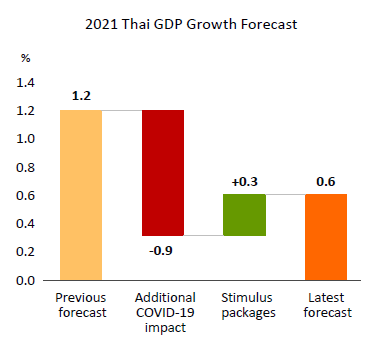
These factors are expected to impact the overall GDP by -2.9%. In previous estimates made in mid-July, the impact was projected at -2.0%. Therefore, the additional negative impact from the COVID-19 outbreak on the 2021 GDP forecast is now -0.9%. On the positive side, it is expected that an additional 50 billion baht from government economic stimulus measures this year will support GDP by +0.3%. Consequently, the net impact on GDP growth this year is expected to decrease from the previous forecast to -0.6%. Krungsri Research has thus revised its GDP growth forecast for Thailand this year down to 0.6% from the earlier estimate of 1.2%.
In July, exports grew better than expected, but the impact of the outbreak on the manufacturing sector poses higher risks. The export value in July was $22.7 billion, expanding by 20.3% YoY, although it slowed from the previous month, which saw the highest growth in 11 years. This figure was higher than Krungsri's forecast of 18.7%. Excluding oil, gold, and weapons, the export value for this month grew by 25.4%. Key exports continued to show growth across various categories, such as chemical products (+54.0%), agricultural products (+46.4%), plastic products (+43.4%), and vehicles and equipment (+36.1%). The electrical appliances category (+21.9%) and electronics (+20.9%) also saw growth. However, some agricultural exports, such as rice, have continued to decline due to price competition, while frozen and processed seafood has been affected by the domestic COVID-19 outbreak. The export markets have shown continuous growth in almost all areas.
Looking ahead, Thai exports are expected to receive support from several factors, including the gradual recovery of the global economy, the resumption of economic activities in developed countries, the easing of container shortages, and the depreciation of the baht. However, domestic pressures are increasing due to the severe outbreak and its spread into the manufacturing sector, leading to labor shortages and temporary closures in some factories, which may impact exports in certain sectors, particularly labor-intensive industries. Therefore, despite strong external factors and positive signals from the latest export figures, domestic negative factors may affect Thailand's export outlook for the remainder of the year. Krungsri Research maintains its export growth forecast for this year at 13.5%, compared to the 16.2% growth in the first seven months of this year (based on Ministry of Commerce data).