Monitoring the Economy in the Second Half of the Year: COVID-19, Debt, and Government Stimulus - Three Risks to Watch
The economic situation in the second half of 2020 remains concerning due to the ongoing impact of the COVID-19 pandemic, with many expecting a long recovery period for the economy.

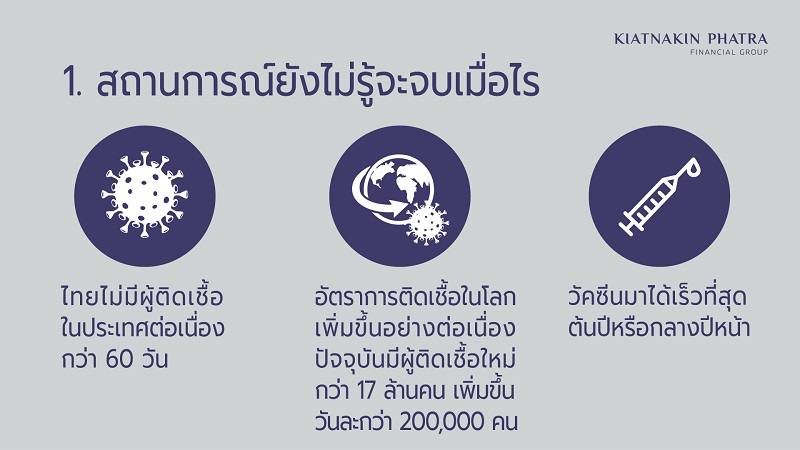
Dr. Pipat Leuangnaruemit, Assistant Managing Director, Chief Economist, and Head of Economic and Investment Analysis at Kiatnakin Phatra Financial Group stated, "In the second half of the year, we need to keep an eye on three issues: 1. The COVID-19 infection situation. Although Thailand has not reported new cases for over 60 days, the global infection rate continues to rise, with over 200,000 new cases daily. Currently, there are more than 17 million confirmed cases worldwide, and there is a risk that infections may increase in certain areas. Vaccine development is expected to be completed by early to mid-next year, so we cannot be certain when the situation will end. However, it can be anticipated that the global economy has likely passed its worst phase.
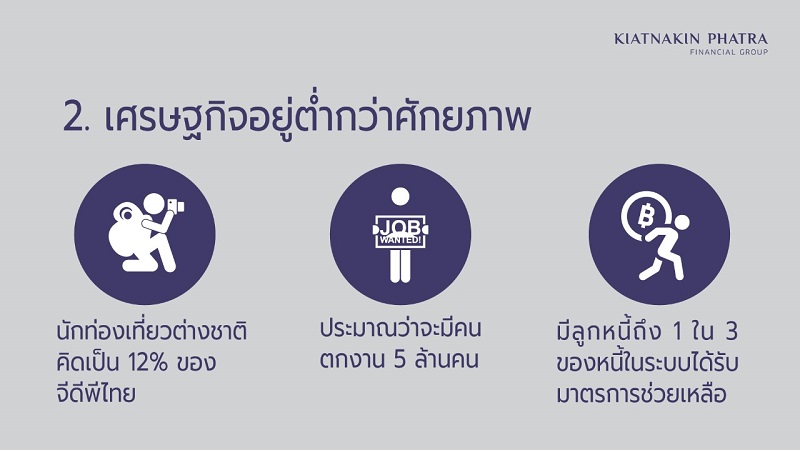
2. The Thai economy may continue to grow below its potential for some time. This is because the Thai economy heavily relies on foreign tourism, with spending from international tourists accounting for 12% of GDP. Lockdown measures both domestically and internationally will inevitably impact businesses and the economy, especially in areas dependent on tourism revenue. It is estimated that unemployment could reach as high as 5 million, affecting the ability of both businesses and households to repay debts, which could become a significant issue for both debtors and creditors. Currently, there are 12.8 million accounts with financial institutions, representing a debt value of over 6.9 trillion baht, or one-third of the total system debt that has received assistance through debt restructuring.
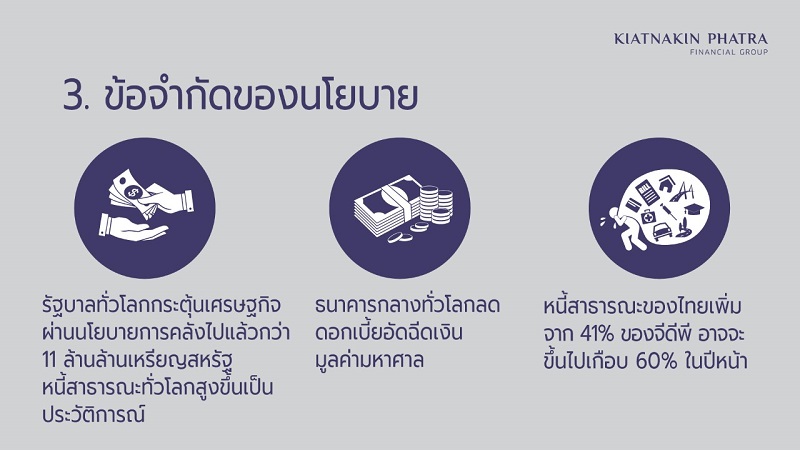
And 3. Government stimulus. Although past assistance from central banks and governments has helped stabilize the global economy and financial markets, governments worldwide have injected over $11 trillion. Meanwhile, Thailand's public debt-to-GDP ratio may rise from 41% in 2019 to 60% next year.
This could limit future policy implementation. Additionally, two other risk factors to be cautious of include the escalating tensions between the U.S. and China, and the upcoming U.S. elections, which may lead to policy uncertainties that could impact Thailand's economic policies, such as the decision to join the CPTPP (Comprehensive and Progressive Agreement for Trans-Pacific Partnership).