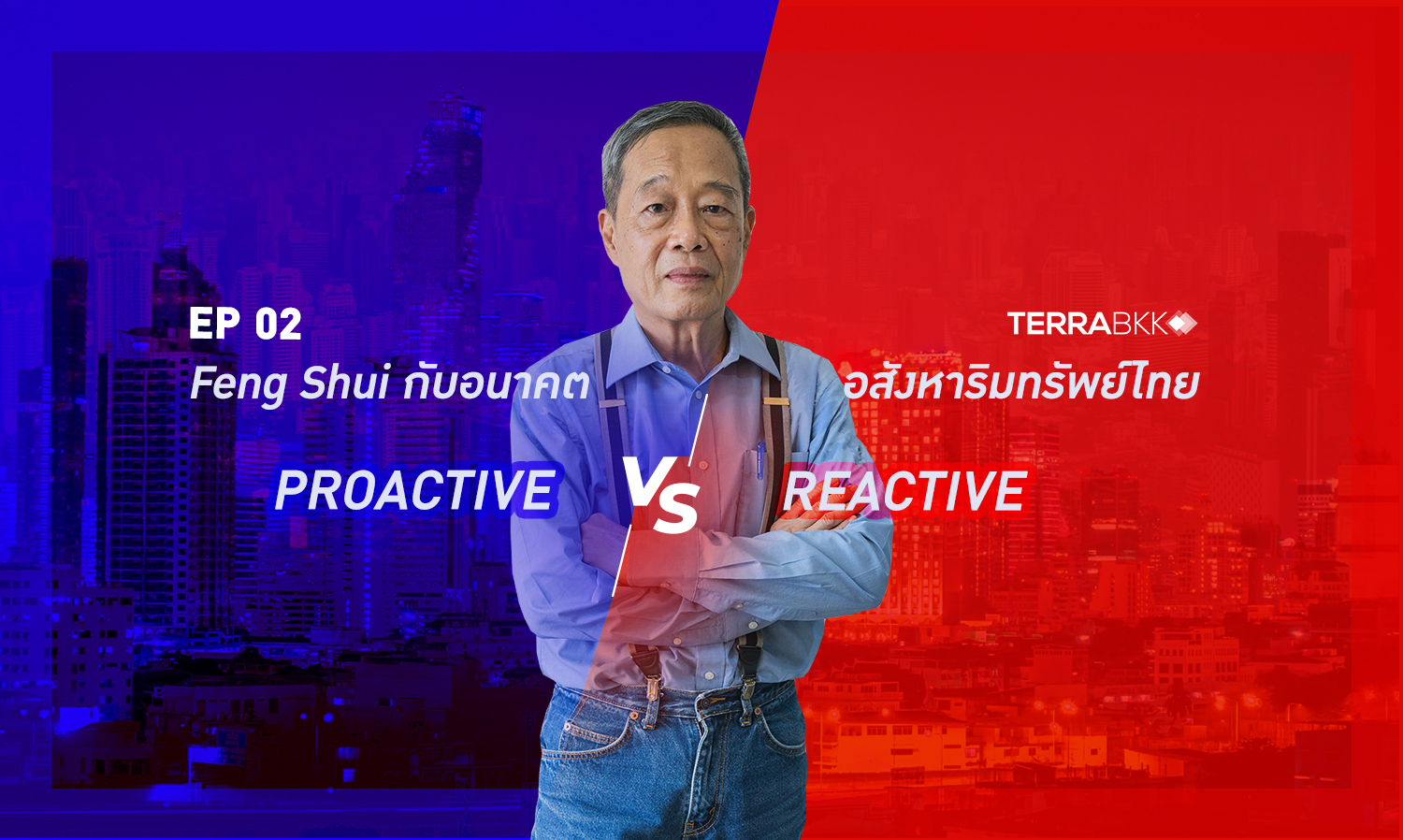
EP02: Feng Shui and the Future of Thai Real Estate (Part 2: Reactive or Proactive)
Following EP 01, the outlook from those in the real estate industry as we approach the end of the 8th era of the star seems rather bleak, especially when looking ahead to the economic problems that will continue to linger due to the effects of Covid-19.
What should operators or executives do?
The author offers you two options.
Option One - Reactive
This means doing nothing and waiting for events to unfold before reacting and addressing the issues as they arise. In China, there is a saying, "When the water rises, build a dam to resist it."
Seeing all events as disastrous may be an overreaction. The real estate business today is quite resilient. Past crises, such as the currency devaluation in 1997 and the subprime crisis in 2008, have been overcome. So why wouldn't we be able to get through the Covid-19 crisis as well?
After all, real estate is one of the four essential factors for living. Even if it declines, it likely won't be for long.
The idea that a downturn could last for four years seems overly pessimistic from industry insiders; it may not last that long.
Option Two - Proactive
This involves preparing for situations before they occur, not waiting for adverse events to escalate. It is about preventing problems from having an overwhelming impact that cannot be resolved. Operators or executives should focus on:
- Stay Calm
Like a cargo ship captain who sees a massive storm on the radar before it arrives, while the crew is still unaware of the impending disaster, the captain must remain composed.
Do not panic; maintain your composure so that thoughts and ideas can flow freely, preparing to face the approaching storm.
- Analyze
Look comprehensively at the possibilities that may arise. The main tool is financial data. Assess how long the company can sustain itself with reduced income.
The recommended principle is Scenario Planning, or planning for potential situations.
Plan A is the best-case scenario. For the captain facing a storm, it is to navigate the ship through the storm to the destination with minimal loss. This storm is severe, so unnecessary burdens must be reduced, leaks plugged, and clutter eliminated.
This represents the situation where the company can survive on reduced income compared to last year, by what percentage?
Plan B is the most likely scenario. The captain can still reach the destination, but some damage may occur to the ship and crew.
This reminds me of the Huawei president who advised employees to prepare for tough times that may come, such as salary cuts to half. Employees must tighten their belts and endure, but if they get through it and financial conditions return to normal, the company will compensate for the cuts made to employee income.
Plan C is the worst-case scenario. The captain cannot navigate the ship through the storm. Before the ship sinks, they must abandon the larger vessel for a smaller one to save themselves and the crew.
At that point, the company may need to sell some assets and compensate laid-off employees. The company could even face bankruptcy or closure.
Even now, Covid-19 has not peaked. Asia is beginning to control the outbreak, but Europe is starting to face issues with the spread of the disease. Economists are already analyzing that after Covid-19, there may be more bankruptcies than infections.
However, the transition from Plan A to Plan B to Plan C is not an overnight occurrence; it takes time. Therefore, choosing to be Proactive is about preparing for potential situations to maintain composure and avoid stress that could lead to hasty decisions, resulting in regret and losses later on.
Summary
Every problem can be viewed from two sides, like a coin with two faces. The decision on how to manage the economic situation after Covid-19 depends on the operators or executives and their perspectives on this matter.
As for the principles proposed today, there are different strategies:
Reactive is a defensive approach.
While Proactive is an offensive approach to find opportunities.
You must decide how to confront the Covid-19 challenge ahead.
(Stay tuned for the next EPISODE, which is the conclusion...)