“Retail Must Be Flexible: 6 Strategic Factors Driving the Success of Shopping Malls Despite Industry Pressures”
In 2025, Thailand's real estate market is facing a "perfect storm": weak consumer spending due to stubborn inflation and high household debt, an oversupplied property landscape, and new uncertainties from domestic political tensions, border conflicts, and rising U.S. trade tariffs. All types of properties are affected. However, shopping malls across Bangkok and its suburbs not only withstand these pressures but continue to expand. What factors keep this sector strong?
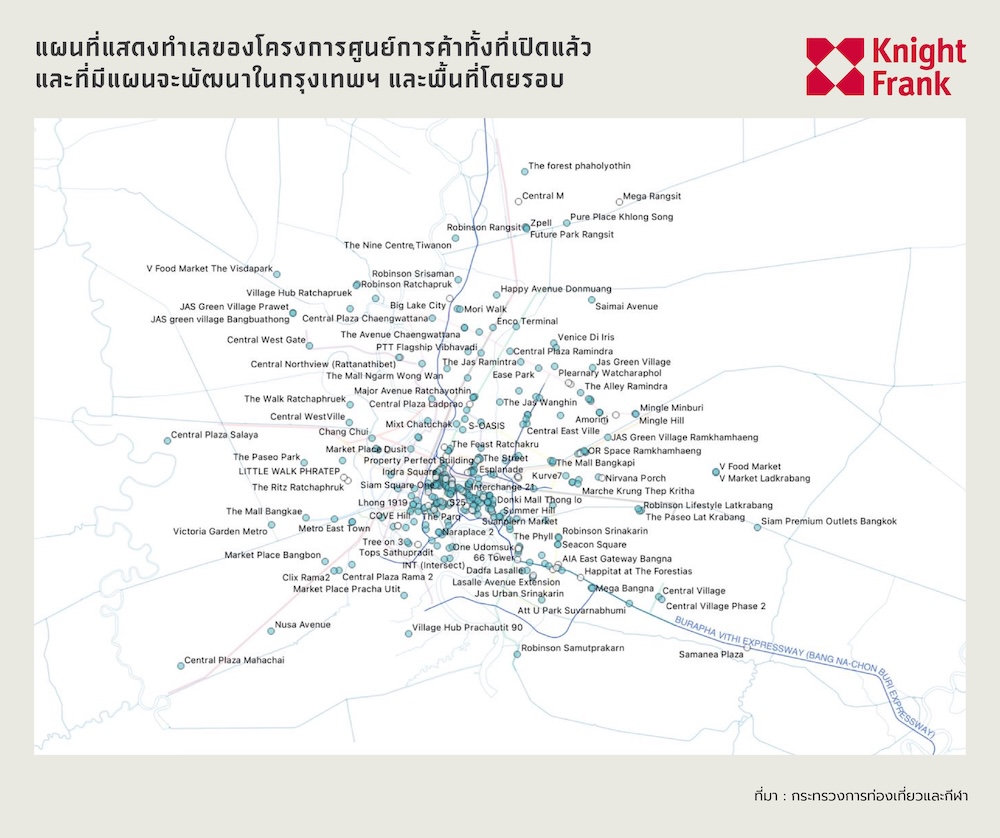
As of mid-2025, the retail space stock in Bangkok's shopping malls totals approximately 8 million square meters. Focusing on the city center and inner suburban areas, which are the focus of our study, the total area of shopping malls reached 3.2 million square meters in this quarter, an increase of 18,000 square meters from the previous quarter. This increase is attributed to the launch of two new community mall projects: King Square Complex on Rama 3 Road and Town Hall in the Phrom Phong area.
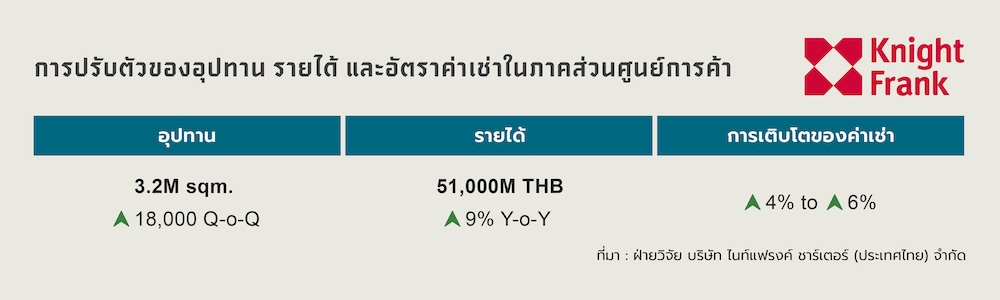
Overall, despite broad market pressures, shopping malls with suitable locations and strategic planning can still expand their space and attract both tenants and consumers, demonstrating their unique ability to cope with challenging real estate environments.
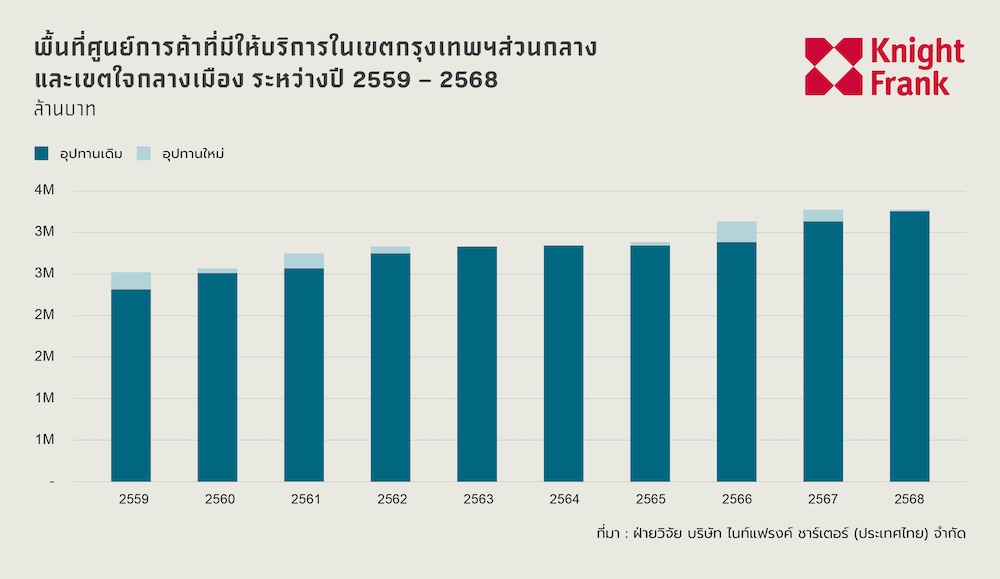
In 2024, the revenue and profit of the shopping mall sector grew by approximately 9% from the previous year, and in 2025, revenue is expected to grow similarly to the previous year.
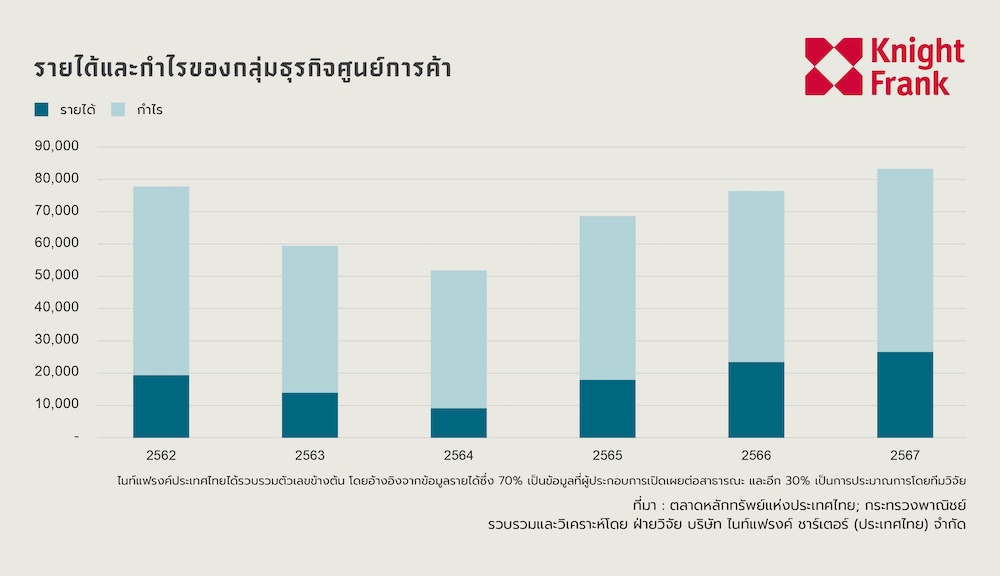
Future projects entering the market are mostly mixed-use developments in the form of townships, such as Dusit Central Park on Rama 4 Road, Cloud 111 on Sukhumvit Road, Bangkok Mall at the corner of Bangna-Trad Road, and The Forestias on Bangna-Trad Road.
Analysis of Key Factors Supporting the Strong Growth of Thai Shopping Malls
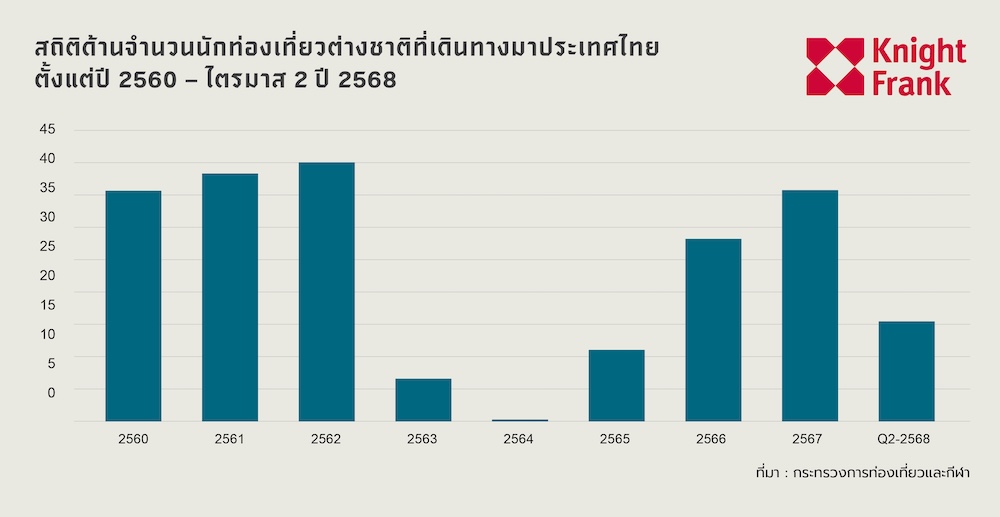
- The Recovery of Foreign Tourists Reflects the Resilience and Adaptability of Thailand's Tourism Industry Despite being severely impacted during the COVID-19 pandemic, with the number of tourists dropping from 39.9 million in 2019 to just 0.43 million in 2021, the tourism sector has rebounded strongly. In 2024, Thailand welcomed 35.5 million tourists, generating over 1.8 trillion baht in revenue. Visa exemption measures have been a key factor driving this recovery.
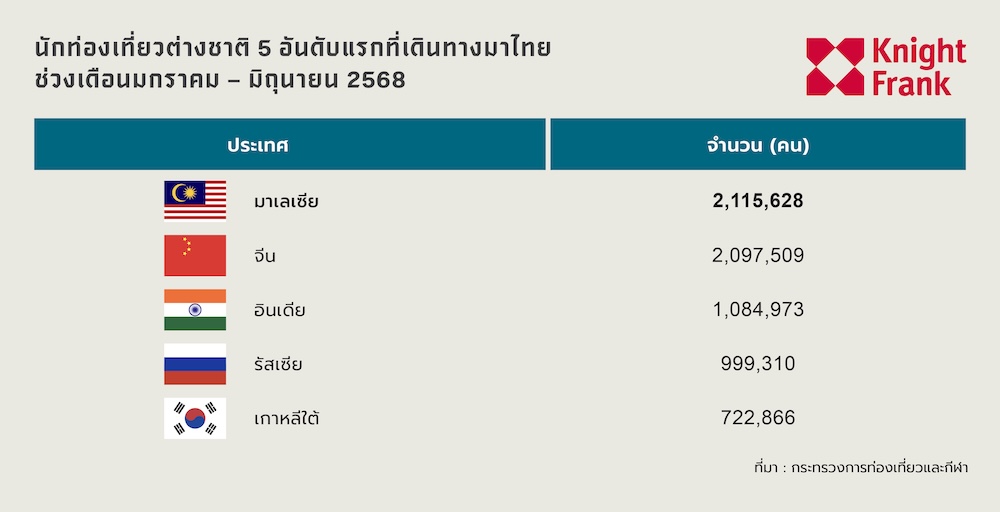
However, challenges remain. Concerns about the safety of Chinese tourists and intensified competition from neighboring countries have slowed growth in some markets. Future success will depend on the ability to balance open country policies with regulatory measures, continuous investment in infrastructure development, and responsiveness to changing tourist demands. If managed effectively, strategic visa measures and international cooperation will be crucial for sustainable long-term growth, allowing Thailand's tourism industry not only to return to pre-pandemic levels but also to thrive amid increasing regional competition.
- Shopping Mall Adaptation Strategies: Transitioning to an Integrated Mixed-Use Ecosystem
Evolution of Strategic Master Plans
Large shopping malls in Thailand are undergoing significant changes in their development philosophy, whether through new constructions or major renovations due to lease expirations. These malls are being redesigned with the concept of “Retail-led Mixed-Use Development.” This strategic approach is not just about architectural redesign but about creating a self-sustaining commercial ecosystem where each component can mutually enhance success.
The retail-led mixed-use development model operates on the principle of “mutual value creation.” Instead of viewing retail space as a separate function, developers are integrating complementary land uses to generate multiple revenue streams while enhancing the customer experience. This integrated approach has transformed traditional shopping malls into “lifestyle destinations” that cater to diverse consumer needs throughout the day and week, resulting in higher property utilization and significantly improved financial performance.
Examples of Leading Integrated Development Projects
The Central Group's portfolio is a clear example of this evolution.
- Central Park Silom is a complex integration of urban land use, where premium retail space coexists with Grade A office buildings and luxury residences. The project design turns office workers into natural customers for shops during lunch breaks and after work, while residents provide consistent foot traffic to services and restaurants.
- Central Northville (formerly Central Rattanathibet) showcases the potential for transforming existing assets. Major renovations have turned the previously deteriorating shopping mall into a modern mixed-use destination.
Expansion into Regional Areas and Integration of Hotel Businesses
The Central Group's regional strategy also reflects the strategic value of integrating hotel businesses by adding Go Hotel into shopping malls, creating mutually beneficial relationships. Hotel guests become primary customers for dining, entertainment, and shopping, while retail areas enhance the appeal of hotels for business travelers and tourists seeking convenient access to services and amenities.
Office buildings in these mixed-use projects generate stable rental income while also serving as a customer base for food courts, business services, and convenience stores. Residential areas, whether condominiums or hotels, create a regular customer base that supports specialized services, daily shops, and restaurants that may not survive in purely commercial areas.
The Hypermarket Revolution and Strategic Partnerships
This transformation also extends to hypermarket operators who are redefining their roles in the retail landscape. CP Axtra has made strategic improvements that reflect a deep understanding of changing consumer behaviors and intensified competition.
- Lotus Hang Dong is an example of creative space utilization, creating a comprehensive retail ecosystem under one roof. The integration of IKEA enhances its appeal as a “destination” that attracts customers from a wider surrounding area, while Makro caters to local business customers and bulk buyers. This combination optimizes space utilization and creates beneficial cross-selling opportunities for all retailers.
- Lotus Saraburi has expanded with a mall-like rental zone, representing a development towards a mixed-use retail-entertainment “destination.” These new zones accommodate niche retailers that complement the core products and services of the hypermarket while creating a more diverse and engaging shopping experience.
Using Data to Optimize and Increase Revenue
These strategic adaptations are based on market analysis and complex financial modeling. Developers carefully study demographic trends, spending behaviors, competition, and economic indicators to find the right mix of tenants, space allocation, and pricing strategies. The goal is not only to lease space but to create an environment conducive to tenant success.
- Integrating Medical, Health, and Beauty Services to Revitalize Upper Levels of Shopping Malls
Over the years, upper levels of shopping malls have often struggled with low foot traffic, relying on large attractions such as cinemas, indoor water parks (like Harbor Land), playgrounds, conference rooms, and banks to draw visitors upstairs. Today, a new wave of tenants, from beauty clinics and health centers to anti-aging spas, is transforming the use of these spaces.
Thailand's outstanding response to COVID-19 has elevated its reputation as a global medical tourism hub. Competitive pricing and high standards of care attract patients from around the world. Shopping mall developers are capitalizing on this trend by converting previously underutilized upper levels into vibrant “health and beauty destinations.” Today, visitors can find luxurious treatment rooms, serene waiting lounges, and health cafes that rejuvenate.
This transformation creates multiple benefits, including:
- Consistent daytime foot traffic from medical appointment visitors.
- Longer service durations as visitors explore additional shops and restaurants.
- Increased overall revenue for shopping malls by entering the growing health and beauty market.
By integrating retail with leading medical and beauty services, shopping malls in Thailand are creating healthier and more attractive destinations, encouraging customers to return for both shopping and health care.
- The Evolution of Omni-Channel Marketing in Thai Shopping Malls
The retail landscape in Thailand is undergoing a digital transformation that transcends traditional boundaries between online and offline commerce. With mobile technology reaching consumers like never before and e-commerce disruptions threatening traditional shopping malls, mall operators face survival challenges. However, rather than retreating, Thailand's large shopping malls have demonstrated remarkable adaptability by leveraging technology to create seamless and integrated experiences, turning threats into competitive advantages.
Advanced Customer Analytics and Personalization
Leading shopping malls have adopted sophisticated customer data analytics technology at every stage of the consumer journey, including CRM systems, big data analytics, predictive and automated marketing, digital signage, augmented reality (AR), mobile applications, chatbots, and comprehensive omni-channel platforms that encompass payment systems and tenants' back-end systems. The goal is to gain deep insights into customers and create a seamless shopping experience across all channels.
Comprehensive Digital Marketing Ecosystem
Mall operators utilize consumer listening tools, email, SMS, push notifications, campaign analytics, and seamless connections between physical and online stores to create a continuous shopping experience. Advanced keyword search tools filter popular product and service searches, while targeted social media marketing reaches consumers across different age groups and nationalities, allowing for precise advertising of products and services in terms of timing and location.
Membership Integration for Value
Utilizing membership systems has become a core marketing tool, exemplified by the CENTRAL APP, which integrates promotions, products, and services with a unified payment system. These platforms support various e-wallets, such as Prompt Pay, Rabbit Card, Line Pay, True Money Wallet, WeChat Pay, and Alipay, along with LINE Official accounts that enhance customer engagement.
Strategic Responses to E-Commerce Limitations
Thai shopping malls have smartly positioned themselves by addressing the weaknesses of e-commerce. Year-round events—both domestic and international collaborations—drive joint spending. Large shopping malls continuously organize seasonal events, while food and beverage outlets are strategically placed on every floor to attract consumers. Brands threatened by e-commerce are revitalized through seasonal promotions and strong membership programs.
Developing Independent Platforms
Rather than surrendering to e-commerce platforms, large shopping malls have chosen not to participate in external applications but to invest in developing their own digital platforms. This independent strategy allows them to maintain control over customer relationships while still providing a similar level of digital convenience.
This transformation reflects the overall evolution of retail in Thailand, where currently 95% of consumers use smartphones for shopping, and 60% prefer using e-commerce platform apps. By employing an omni-channel strategy that combines the advantages of physical space with digital capabilities, Thai shopping malls can successfully cope with e-commerce disruptions and create a blended experience that neither pure e-commerce nor traditional retail can offer on their own.
- Tenants as Partners
Modern large shopping malls view tenants as strategic partners, recognizing the high level of professionalism of these brands. Many tenants enter through well-known international franchises, while others grow from local networks, and some even cultivate homegrown brands.
When high-quality brands are supported by expert consultants, advanced technology, and accurate data, they can precisely select locations that align with their target demographics, and conversely, they can afford to pay rent back to the shopping mall to nurture new brands and support long-term growth. Shopping malls employ flexible rental models; in the early stages when brands are not yet well-known, rent may be a percentage of gross profit (GP), and as the brand strengthens, leases can shift to fixed rent agreements.
Additionally, shopping malls implement coordinated marketing strategies, organizing seasonal promotions in collaboration with all tenant brands. This collaborative approach ensures that the shopping mall and tenants have a unified marketing direction, driving mutual success.
- Strong Real Estate Investment Trusts (REITs)
In Thailand's commercial real estate sector, transferring assets into Real Estate Investment Trusts (REITs) has become a widely accepted strategy among developers and real estate investors. This model offers two main benefits: unlocking capital from existing shopping mall properties and providing a transparent investment channel that is professionally managed, generating stable long-term income for investors.
Large shopping malls benefit from the REIT structure in several key dimensions. Firstly, transferring assets into a REIT requires adherence to strict governance standards, including independent valuation, regular financial disclosures, and oversight by a trustee board. These measures enhance transparency and credibility in operations, instilling confidence in investors, both from institutional funds and large investors seeking stable returns.
Secondly, REITs serve as a mechanism that allows shopping mall operators to recycle capital efficiently. Raising funds from mature assets through REIT issuance enables developers to reinvest the proceeds into new projects, building renovations, or technology upgrades without affecting shareholder proportions. Such capital recycling allows shopping malls to continue expanding, improving tenant mixes, modernizing infrastructure, and responding to changing consumer trends.
Thirdly, REITs provide predictable cash flow to investors. Rental income from a diversified portfolio of shopping malls is collected and allocated as dividends, typically on a quarterly basis. Regulations require that at least 90% of taxable net profits be distributed as dividends. This high payout mechanism, combined with professional asset management, helps create consistent returns and reduce volatility, promoting financial stability for shopping malls.
Ultimately, Thailand's REIT market is strengthened by regulatory support and policies conducive to growth, including tax benefits for REIT structures, clear guidelines from the Securities and Exchange Commission (SEC), and listing requirements from the Stock Exchange of Thailand. All of these have created an environment that enables shopping mall REITs to grow steadily. Major operators like Central Group and LH Shopping Centers have adopted this structure to expand their businesses, develop large mixed-use projects, and ensure long-term sustainability.
With a robust REIT framework and expert management, shopping malls in Thailand have a solid financial engine supporting strategic growth, continuous development, and long-term value creation.