
In 2024, China Achieves 5% Economic Growth Target, While 2025 Forecasts Slower Growth Amid New Trade War
- China's economy in the fourth quarter of 2024 accelerated growth due to economic stimulus measures implemented in late December 2024, allowing the economy to meet the government's target of 5% for the entire year. Contributing factors include:
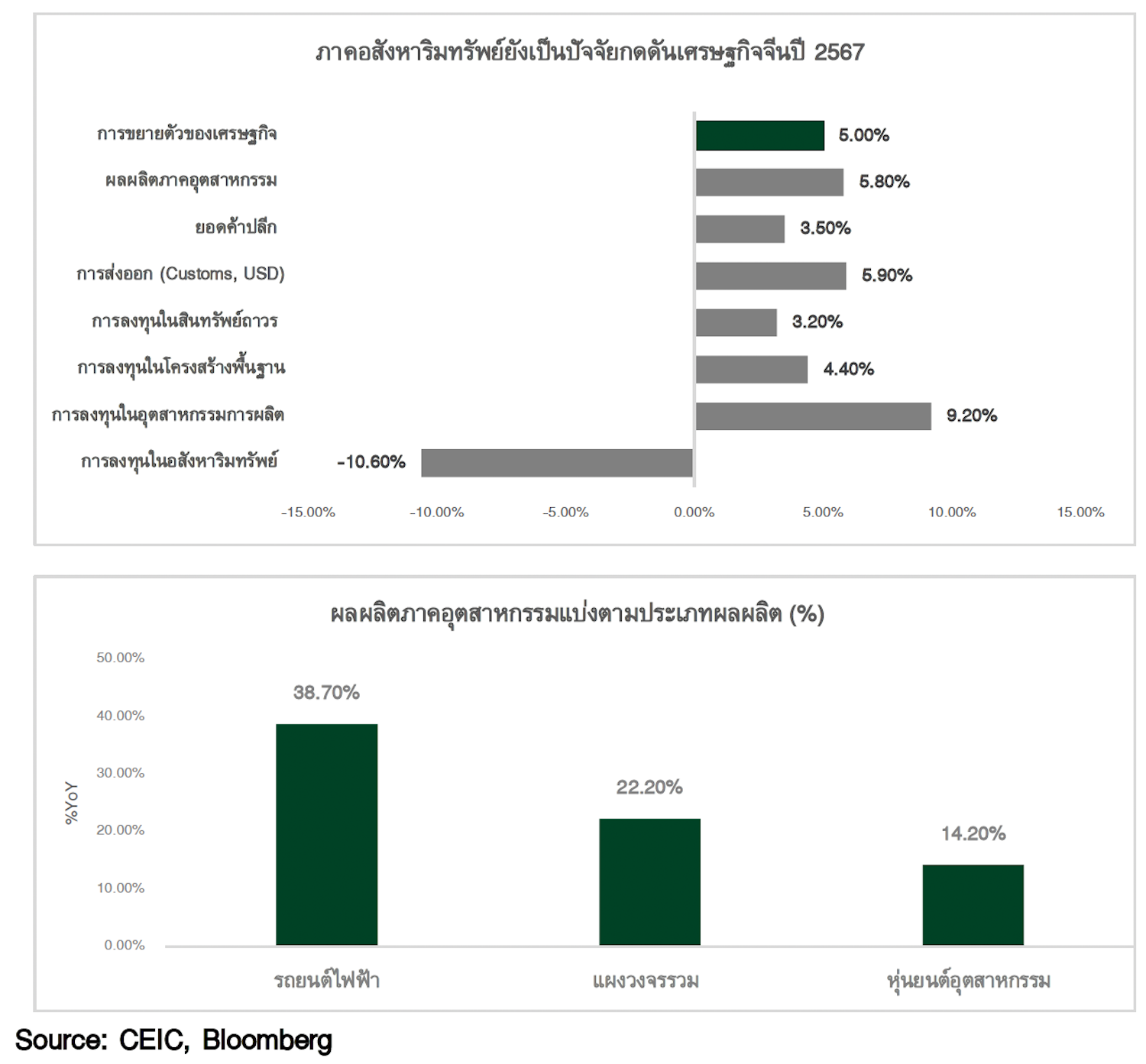
- Strong growth in industrial production, particularly in sectors related to new production capacities such as electric vehicles and industrial robots.
- Increased investment in the manufacturing sector, especially in technology service-related industries.
- Exports accelerated compared to the previous year, particularly to major markets like the United States in the second half of 2024, driven by concerns over a new trade war.
- However, in 2024, China's economy showed signs of uneven recovery, with the manufacturing sector remaining a key support factor, while domestic consumption growth faced pressure from low consumer confidence. Despite consumption stimulus measures such as trade-in programs and electronic coupon distribution in Shanghai, the real estate sector continued to exert downward pressure on the Chinese economy in 2024.
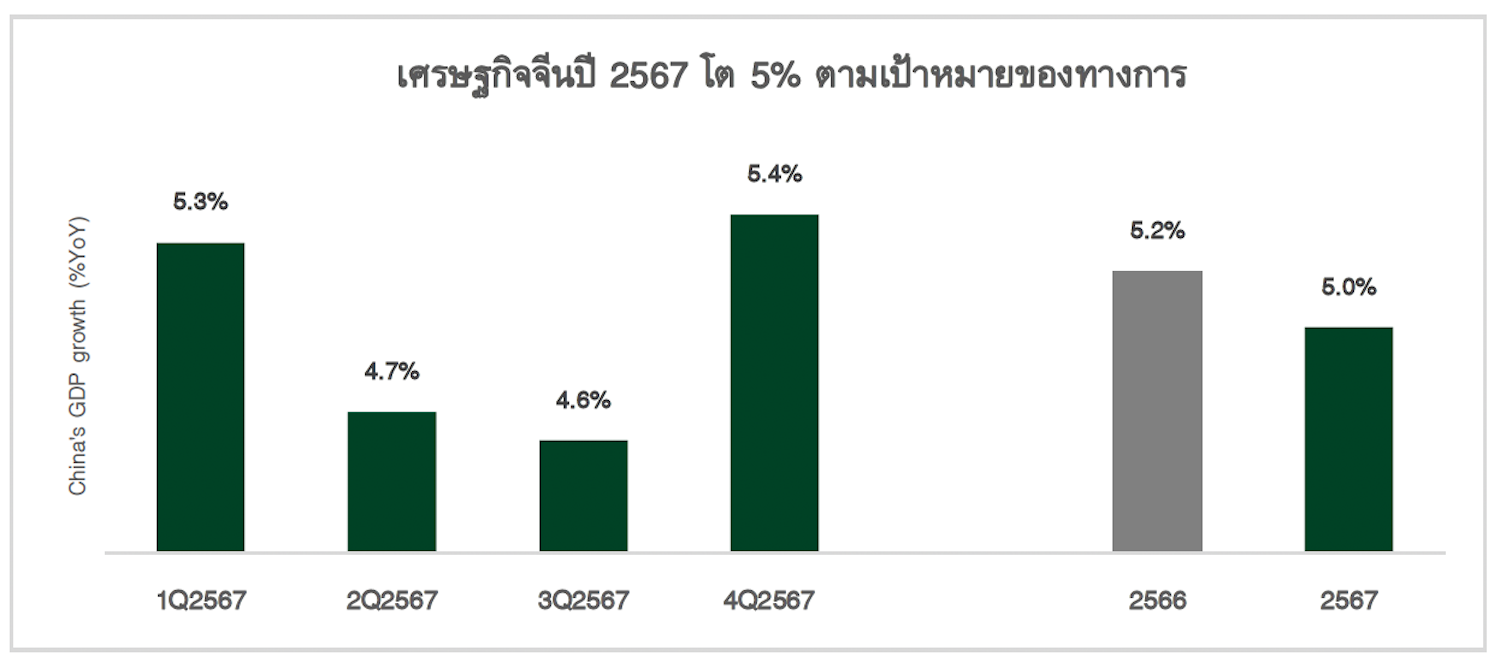
- In 2025, amid the risks of a new trade war, Chinese authorities will focus on stimulating domestic consumption and investment through significant monetary and fiscal easing measures. However, persistent domestic issues, particularly in the real estate sector, will continue to pressure the Chinese economy. Kasikorn Research Center predicts that in 2025, China's economy is likely to grow at a slower rate of 4.6%, with details as follows:
- The net impact of U.S. import tax measures will still allow Chinese exports to grow in 2025, but at a slower rate. After the trade war in 2018, China's export structure has become less dependent on the U.S., with the share of exports from China to the U.S. dropping from about 20% in 2018 to around 15% in 2026, while exports to the U.S. as a percentage of GDP decreased from 3.8% in 2018 to about 3.0% in 2026.
- The recovery of the troubled real estate sector is expected to take at least another year. Housing prices and sales are anticipated to continue declining, but at a slower rate than the previous year, due to the effects of real estate support measures gradually introduced by the Chinese government since 2024, which are expected to continue into 2025.
- The risk of deflation is increasing. Demand is likely to slow down due to persistently low consumer confidence, while price levels are pressured by excess production capacity amid the risks of a new trade war.
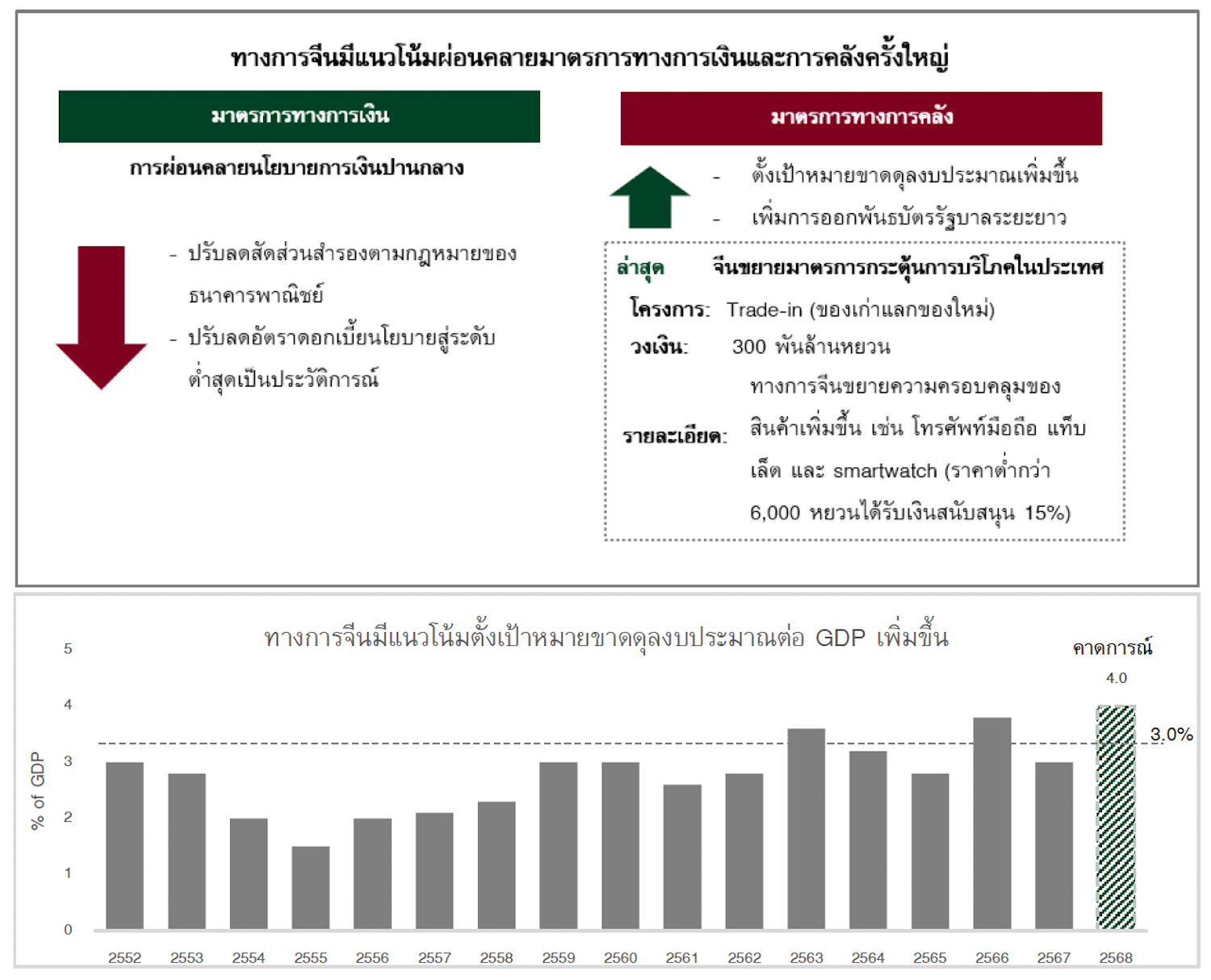
- 4.Economic stimulus measures will help support China's economy in 2025, but the scale of these measures is expected to be insufficient to restore business and household confidence.
- Fiscal measures: The budget deficit target for 2025 is expected to exceed levels during the COVID-19 pandemic, and the Chinese government will increase long-term bond issuance and implement measures to stimulate domestic demand.
- Monetary measures: Monetary policy is expected to be more accommodative than in 2024. However, the weakening yuan may limit China's monetary policy effectiveness in 2025, as the yuan has already depreciated by 2.6% following the results of the U.S. presidential election.
|
This research report is prepared by Kasikorn Research Center Co., Ltd. (KResearch) for general dissemination, based on publicly available information or information deemed reliable at the time of preparation, which may change over time. KResearch does not guarantee the accuracy, reliability, suitability, completeness, or timeliness of the information and does not intend to solicit, suggest, or advise any decisions. Therefore, you should study the information carefully and exercise caution before making any decisions. KResearch will not be liable for any damages arising from the use of this information. Any information contained in this research report is the property of KResearch and/or third parties (as applicable). The use of such information (in whole or in part) must acknowledge the ownership rights of KResearch and/or third parties (as applicable) or the source of that information. You may not reproduce, modify, adapt, alter, forward, publish, or engage in any similar activities for commercial purposes without prior written permission from KResearch and/or third parties (as applicable). |
Source: CEIC, Bloomberg
- Details of the measures and economic growth targets set by the Chinese authorities will be discussed in the two sessions of the Chinese legislature in March 2025.