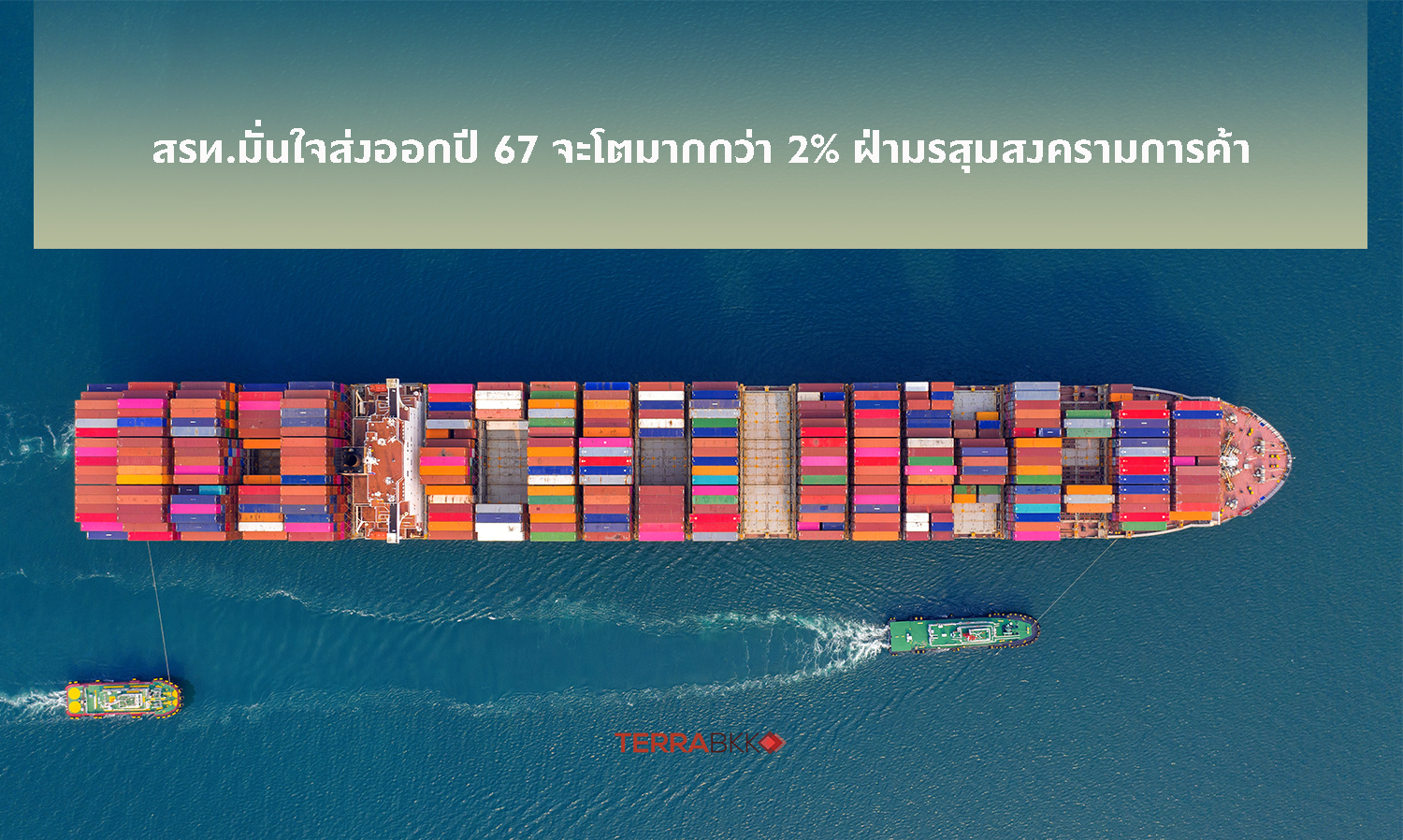
Thai Export Council Confident of Over 2% Growth in 2024 Amid Trade War Turmoil
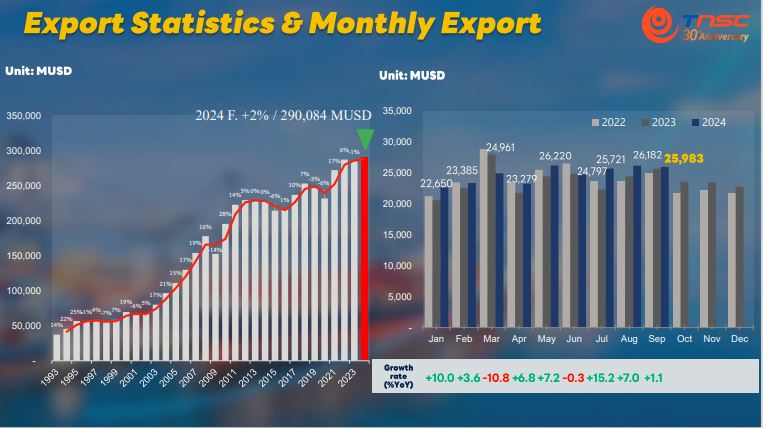
Dr. Chaiyan Charoensuk, President of the Thai National Shippers' Council (TNSC) <\/span><\/strong>stated that Thailand's international trade situation in September 2024 compared to the same month last year (YoY) showed that exports were valued at $25,983.2 million, growing by 1.1%, with a value of 889,074 million baht, contracting by 0.8%. (Excluding gold, oil, and military equipment, exports in September grew by 3.1%). Meanwhile, imports were valued at $25,589.0 million, growing by 9.9%, with a value of 886,336 million baht, growing by 7.8%. This resulted in Thailand's trade balance in September 2024 showing a surplus of $394.2 million and a surplus of 2,738 million baht.<\/p>
Overall, Thailand's international trade from January to September 2024 compared to the same period last year (YoY) showed that total exports were valued at $223,176.0 million, growing by 3.9%, with a value of 7,957,895 million baht, growing by 8.6%. (Excluding gold, oil, and military equipment, exports from January to September grew by 4.2%). Meanwhile, imports were valued at $229,132.8 million, growing by 5.5%, with a value of 8,264,589 million baht, growing by 10.2%. This resulted in Thailand's trade balance from January to September 2024 showing a deficit of $5,956.8 million or a deficit of 306,694 million baht.<\/p>
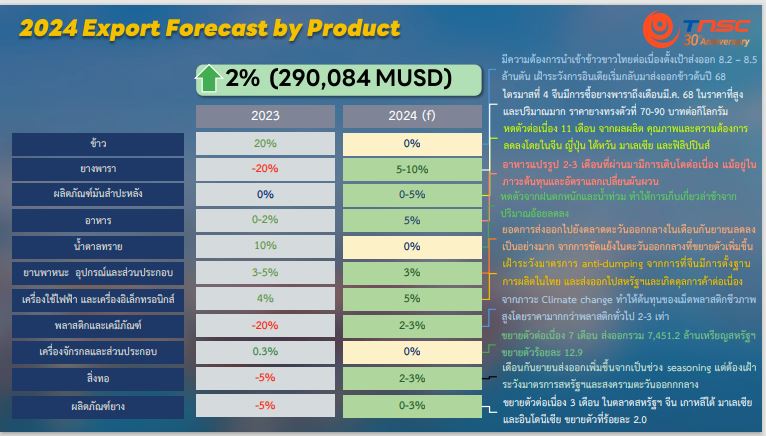
The TNSC forecasts that exports in 2024 will grow by no less than 2% (as of November 2024), with key risk factors to monitor continuously including: 1) Geopolitical issues 1.1) Concerns regarding the U.S. presidential election and trade protectionist policies, tariffs, and the U.S. trade balance with its trading partners, not just China. 1.2) The ongoing situation of the war in the Middle East. 2) The Manufacturing PMI index remains sluggish in key markets. 3) Factors affecting production costs 3.1) The Thai baht remains volatile, although it has slightly weakened due to the recent policy interest rate cut by the Monetary Policy Committee. 3.2) The situation of shipping freight rates has begun to ease and decrease from previous periods, but several signals may need to be monitored again towards the end of the year. 3.3) Oil prices continue to decline as oil-producing countries postpone plans to increase production from the previously scheduled December date due to concerns about slowing demand in several key markets. However, the protracted war in the Middle East continues to create volatility in prices. 4) Trade measures to monitor, such as 4.1) The lifting of India's rice export ban affecting Thai rice exporters. 4.2) The EUDR postponing enforcement until 2026, impacting prices and deliveries for rubber exporters.<\/p>
The Thai National Shippers' Council has made important recommendations as follows: 1) Monitor shipping freight rates due to various factors, such as the conflict in the Middle East and uncertainties regarding wage negotiations at U.S. East Coast ports, which continue to influence the maritime transport market and shipping companies' attempts to raise freight rates in November. 2) Monitor exchange rate volatility and prepare risk management tools for fluctuating exchange rates, while maintaining financial stability to avoid rapid appreciation. 3) Accelerate trade promotion activities in potential countries, including free trade negotiations and agreements for trade cooperation.<\/p>
<\/p> 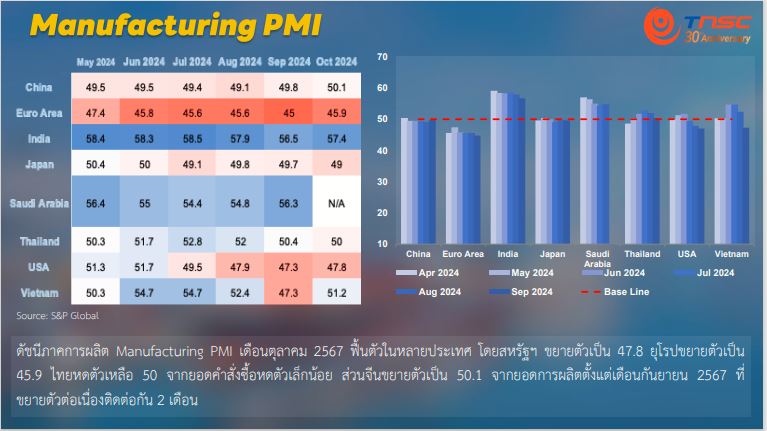 <\/p>
<\/p>
 <\/p>
<\/p>
 <\/p>
<\/p>
 <\/p>
<\/p>
 <\/p>
<\/p>