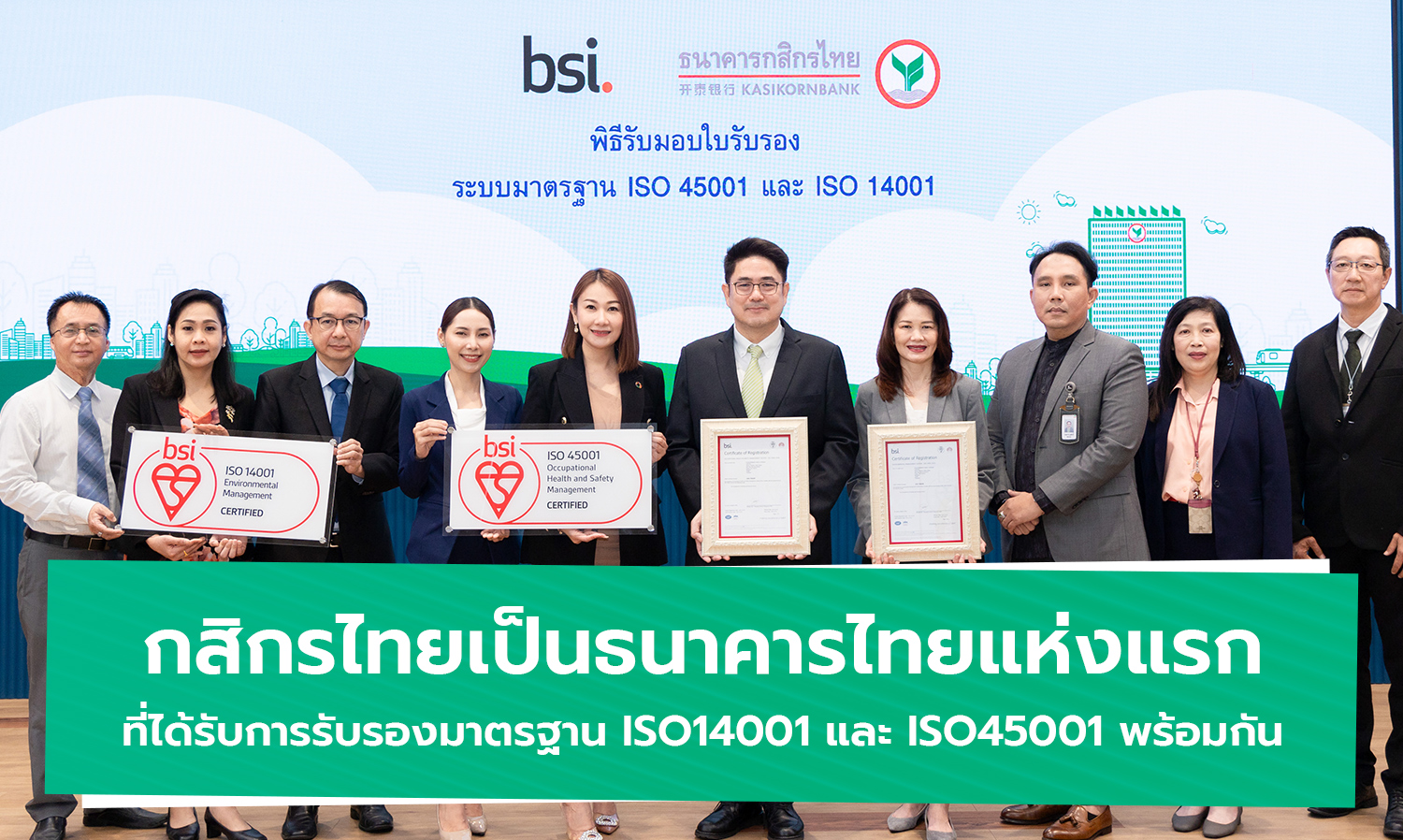
Kasikornbank is the First Thai Bank to Achieve ISO 14001 and ISO 45001 Certifications Simultaneously
Kasikornbank is the first bank in Thailand to receive international ISO certification for both the ISO 14001:2015 Environmental Management System and the ISO 45001:2018 Occupational Health and Safety Management System for its headquarters. This reinforces the bank's commitment to environmental care, efficient resource use, and the promotion of safety and health in the workplace, all under the principles of a sustainable bank.
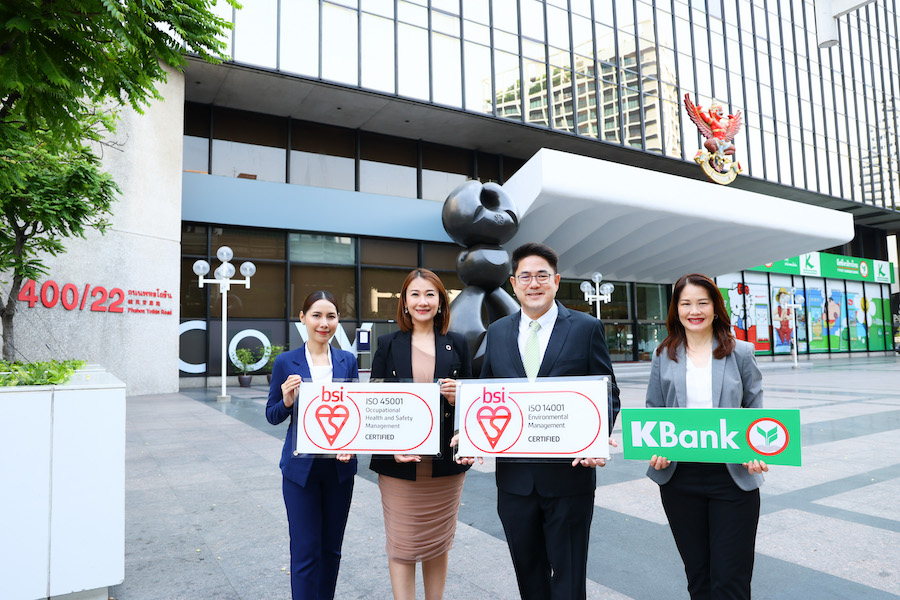
Dr. Pipatpong Posayanont, Managing Director of Kasikornbank, stated that the bank's commitment to operating under the principles of a Bank of Sustainability focuses on balanced growth in environmental, social, and governance (ESG) aspects. This includes the management of the bank's operations, infrastructure, and buildings, which are the starting points for creating positive environmental impacts aligned with the bank's Net Zero greenhouse gas emissions goal, while ensuring safety and promoting good health for employees with international standards. This makes the bank a place that effectively supports the needs of employees, customers, and other stakeholders in an environmentally sustainable manner, while enhancing long-term safety and health.

Dr. Pipatpong Posayanont, Managing Director of Kasikornbank
In line with this commitment, the bank has elevated its business management practices alongside partners and stakeholders, continuously undergoing assessments. Recently, Kasikornbank received certification for the ISO 14001:2015 Environmental Management System and the ISO 45001:2018 Occupational Health and Safety Management System for its headquarters, making it the first bank in Thailand to achieve both ISO certifications simultaneously. This reflects the implementation of sustainability policies into real practices under the scope of “The Management of Banking and Financial Services.” The bank's operations that align with these standards include:
Environmental management under ISO 14001:2015, such as establishing and implementing concrete environmental policies, increasing the use of clean energy by gradually installing solar panels on bank premises, systematically sorting waste within buildings, and efficiently managing wastewater to optimize resource use and minimize pollution, in line with the bank's goal of achieving Net Zero.
Occupational health and safety management under ISO 45001:2018, including fire prevention, risk assessment, and control measures, while raising employee awareness and understanding of processes, promoting participation in enhancing the bank's occupational health and safety management system. This knowledge can be applied in both work and daily life to ensure safety, reduce losses, and protect employee health under the goal of Zero Accidents and Illnesses.
Dr. Pipatpong concluded by stating that the two international ISO standards achieved are significant milestones that reflect the bank's operations based on a balance of environmental, social, and governance (ESG) principles. By creating an environmentally friendly space while prioritizing safety and promoting good health, these practices, which have begun at the bank's headquarters, can serve as a model for improving operations in other dimensions of the bank in the future.