TCMA Showcases the PPP-Saraburi Sandbox Innovation Ecosystem Model at COP28
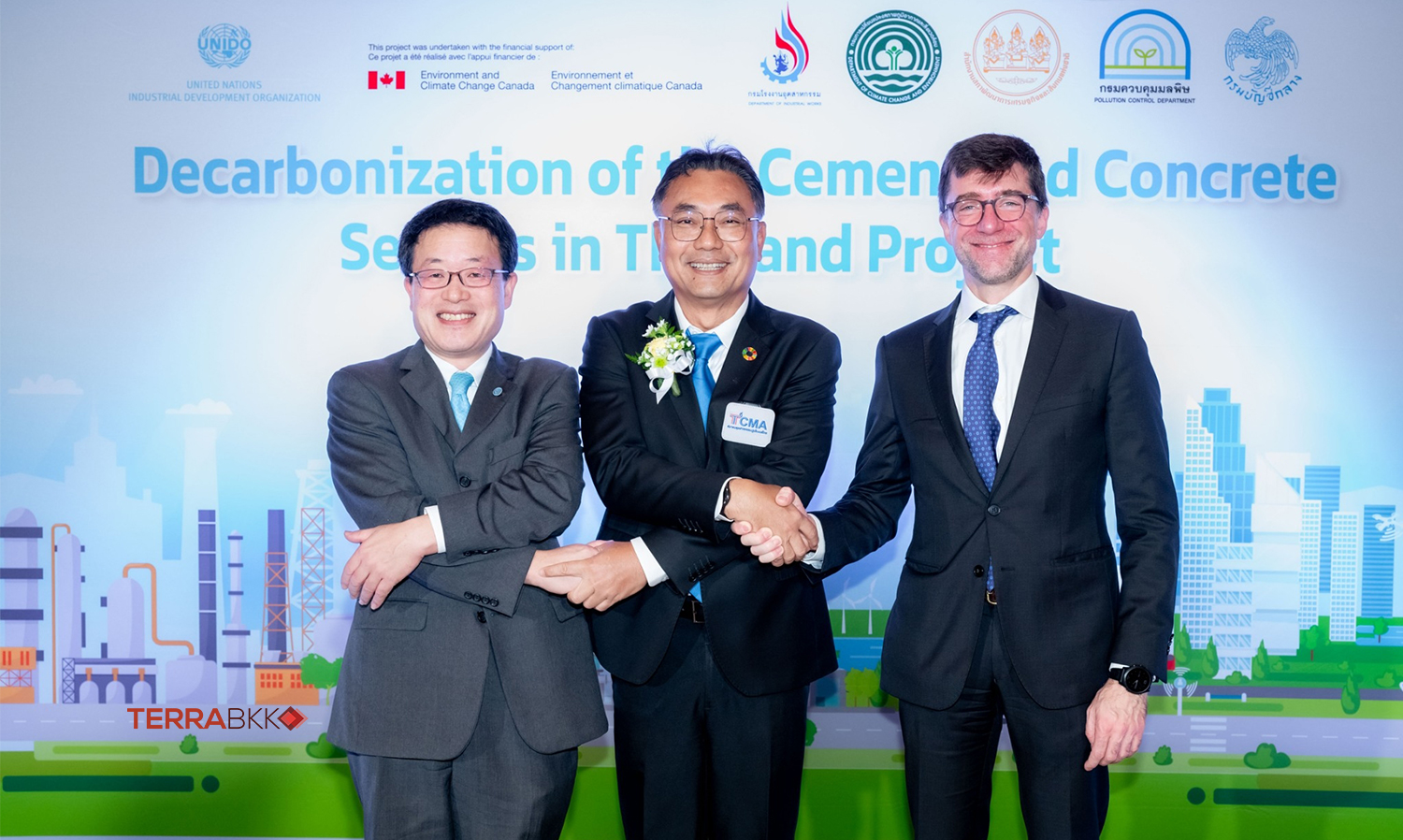
The Thai Cement Manufacturers Association (TCMA)<\/span> <\/span>participated in the 28th Conference of the Parties to the United Nations Framework Convention on Climate Change (COP28) in Dubai, United Arab Emirates, announcing its success in supporting carbon reduction goals and implementing the 2050 Net Zero Cement and Concrete Roadmap.<\/span> This initiative aims to transition towards a sustainable operational model through the Public-Private-People Partnership (PPP) Saraburi Sandbox, promoting participation from all sectors at every level, gaining recognition from the Thai government and global cement and concrete organizations, aligning with other leading countries at COP28.<\/span><\/strong><\/p>
TCMA Collaborates with Government and GCCA at COP28<\/strong><\/span><\/p>
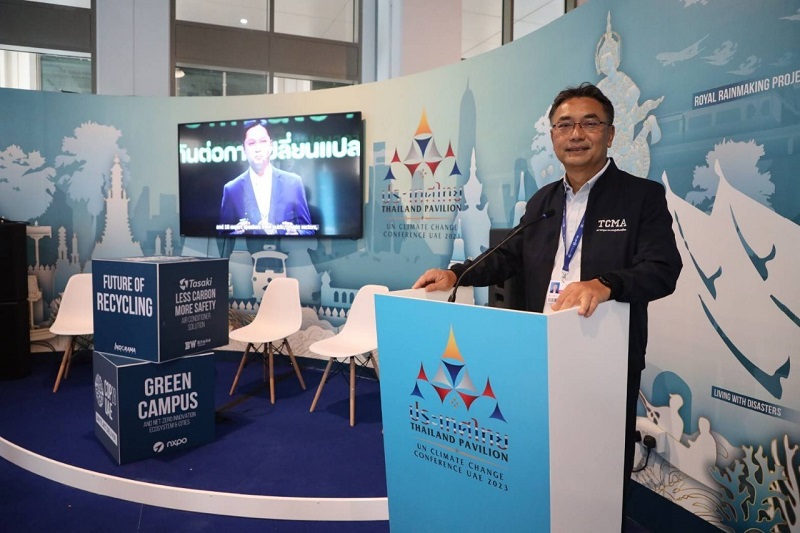
Dr. Chana Poomi, President of the Thai Cement Manufacturers Association (TCMA)<\/strong><\/span>, revealed that TCMA is one of the Thai private sectors presenting advancements in the Thailand Innovation Zone and GCCA Pavilion at COP28 in Dubai. Member countries reviewed the global situation and operations (Global Stocktake) to achieve the main goal of the Paris Agreement to limit the increase in the average global temperature to no more than 1.5 degrees Celsius by the end of this century.<\/span><\/p>
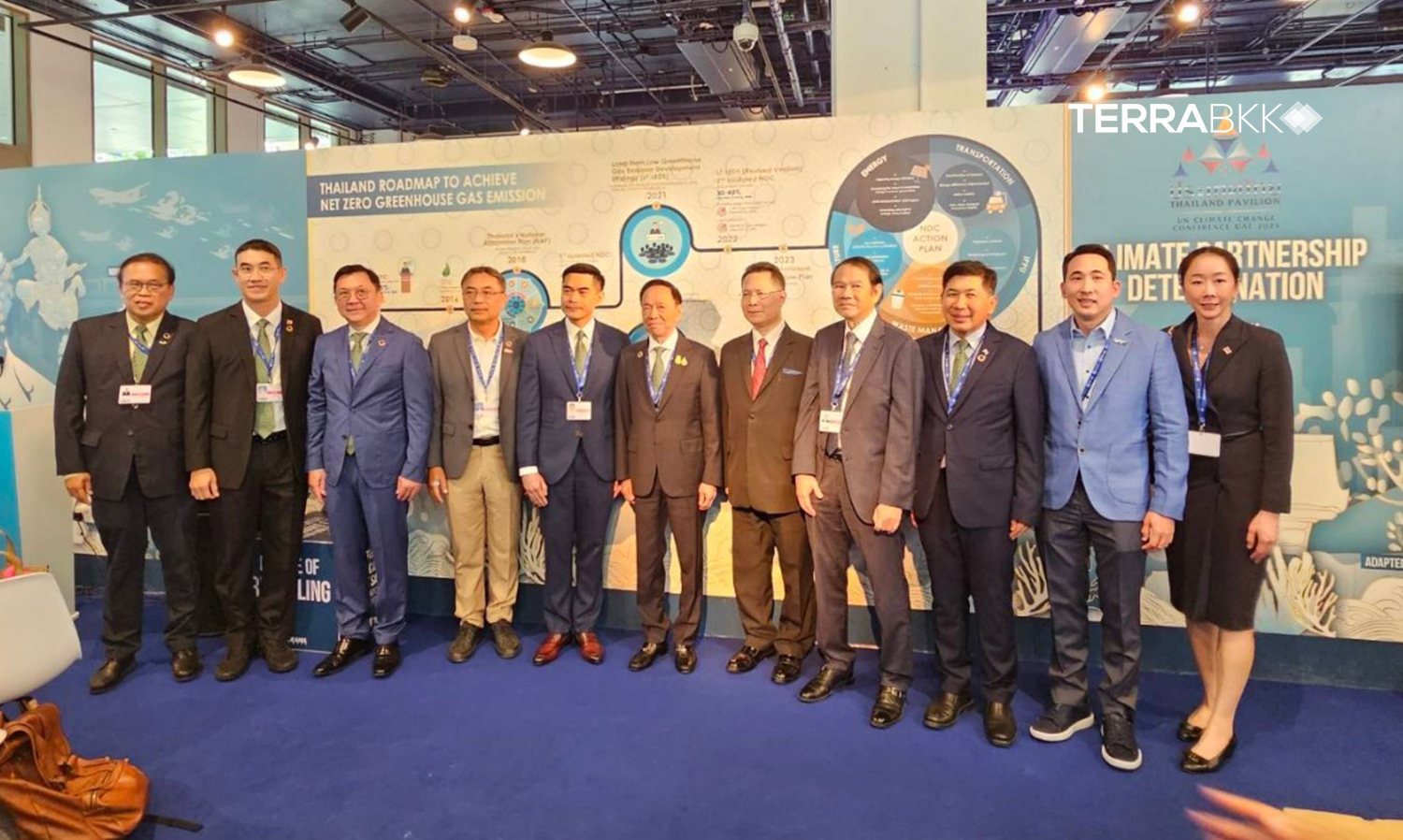
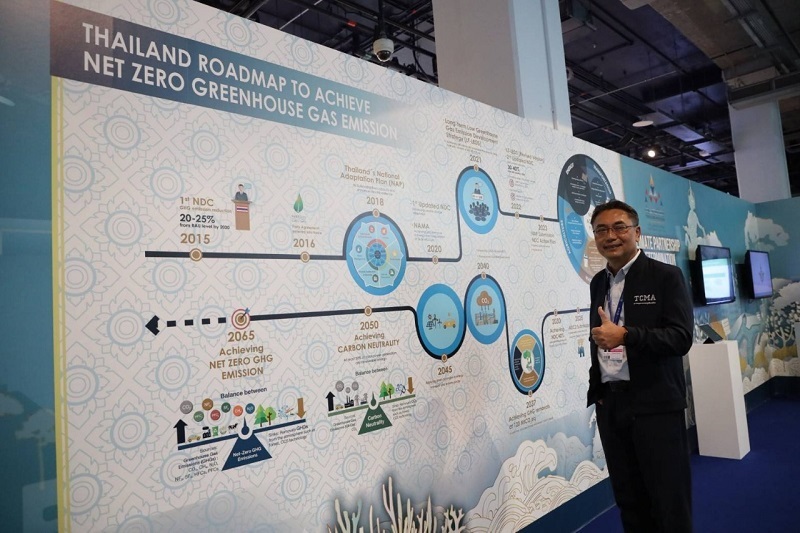
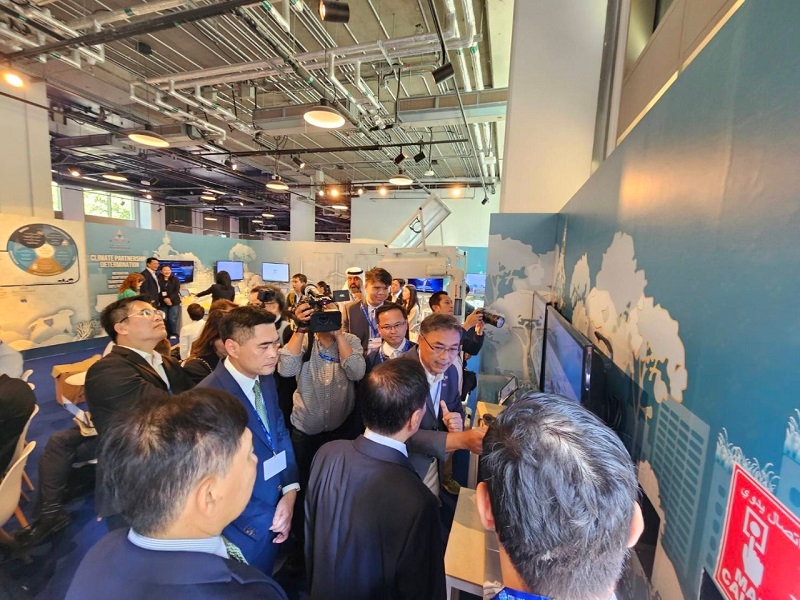
“In participating in COP28, TCMA, along with the Department of Climate Change, the national coordinating agency for climate change, and the National Science, Research and Innovation Policy Council (NSTDA), the national coordinating body for climate change technology development and transfer, showcased the cement industry's progress in collaboration with various agencies towards continuous carbon reduction under the 2050 Net Zero Cement and Concrete Roadmap. This roadmap is being implemented in the Thailand Innovation Zone exhibition booth, along with discussions under the concept of ‘Climate Partnership Determination’. Additionally, TCMA collaborated with the Global Cement and Concrete Association (GCCA) to present advancements in ‘Decarbonization Action’ and share experiences with member countries globally.”<\/span><\/p>
Showcasing the Area-Based Innovation Ecosystem Model: PPP-Saraburi Sandbox<\/strong><\/span><\/p>
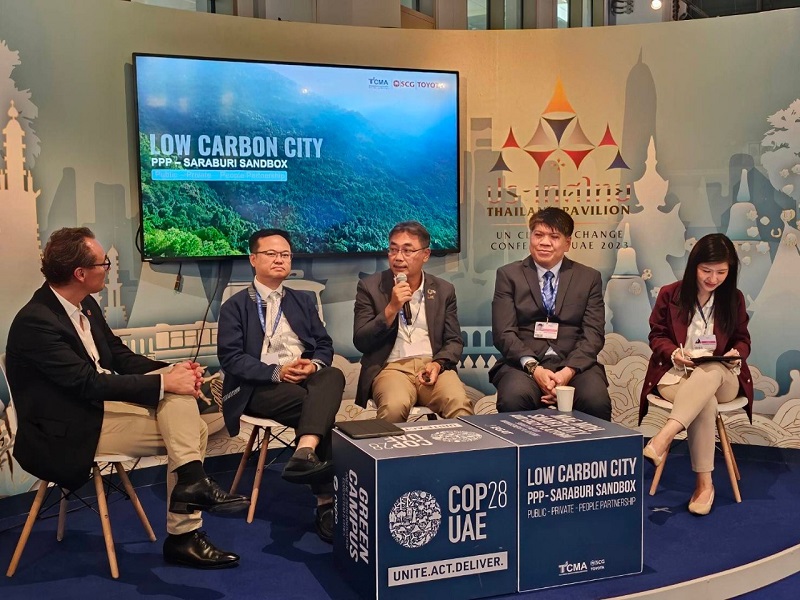
TCMA is implementing the 2050 Net Zero Cement and Concrete Roadmap to achieve the Net Zero 2050 goal, developing a detailed operational plan and fostering an integrated area-based innovation ecosystem in Saraburi under the Public-Private-People Partnership (PPP)-Saraburi Sandbox: A Low Carbon City, making Saraburi the first model low-carbon city in Thailand.<\/span><\/p>
Dr. Chana stated, “The PPP-Saraburi Sandbox is a development model for area-based collaboration using the 3C approach: Communication-Collaboration-Conclusion step-by-step, and 3P: Public-Private-People Partnership, led by the Governor of Saraburi. This integrates cooperation and oversight, promoting participation from all sectors at every level, including government, private sector, and civil society, linking related industries through pilot projects that align with Thailand's NDC, the country's greenhouse gas reduction plan. This covers policy/law/regulation, climate funding, technology, and governance dimensions. This operational method will clarify and measure greenhouse gas reduction projects, receiving significant praise and interest from both the government and GCCA members attending COP28.”<\/span><\/p>
Projects under the PPP-Saraburi Sandbox Cover the Transition to Clean Energy (Accelerating Energy Transition)<\/strong><\/span>, such as providing areas for floating solar power generation and hydrogen power systems, developing smart grid systems, and promoting energy crops like Napier grass.<\/span><\/p>
Elevating to a green industry (Fostering Green Industry & Green Product) by studying carbon capture technology and promoting the use of low-carbon cement or hydraulic cement, as well as developing cement produced from new innovations that help reduce greenhouse gas emissions.<\/span><\/p>
Managing waste materials (Turning Waste to Value) by using waste materials as substitute raw materials or as alternative fuels under the circular economy concept (Circular Economy: CE).<\/span><\/p>
Promoting low-carbon agriculture (Promoting Green Agriculture) by cultivating energy crops following the BCG model, such as wet-dry rice farming, which reduces water usage and greenhouse gas emissions.<\/span><\/p>
Increasing green spaces (Increasing Green Space) by supporting the planting of 38 community forests across the province, which helps absorb carbon, leading to carbon credit trading and generating income for communities.<\/span><\/p>
 <\/p>
<\/p>
 <\/p>
<\/p>
 <\/p>
<\/p>
 <\/p>
<\/p>
 <\/p>
<\/p>