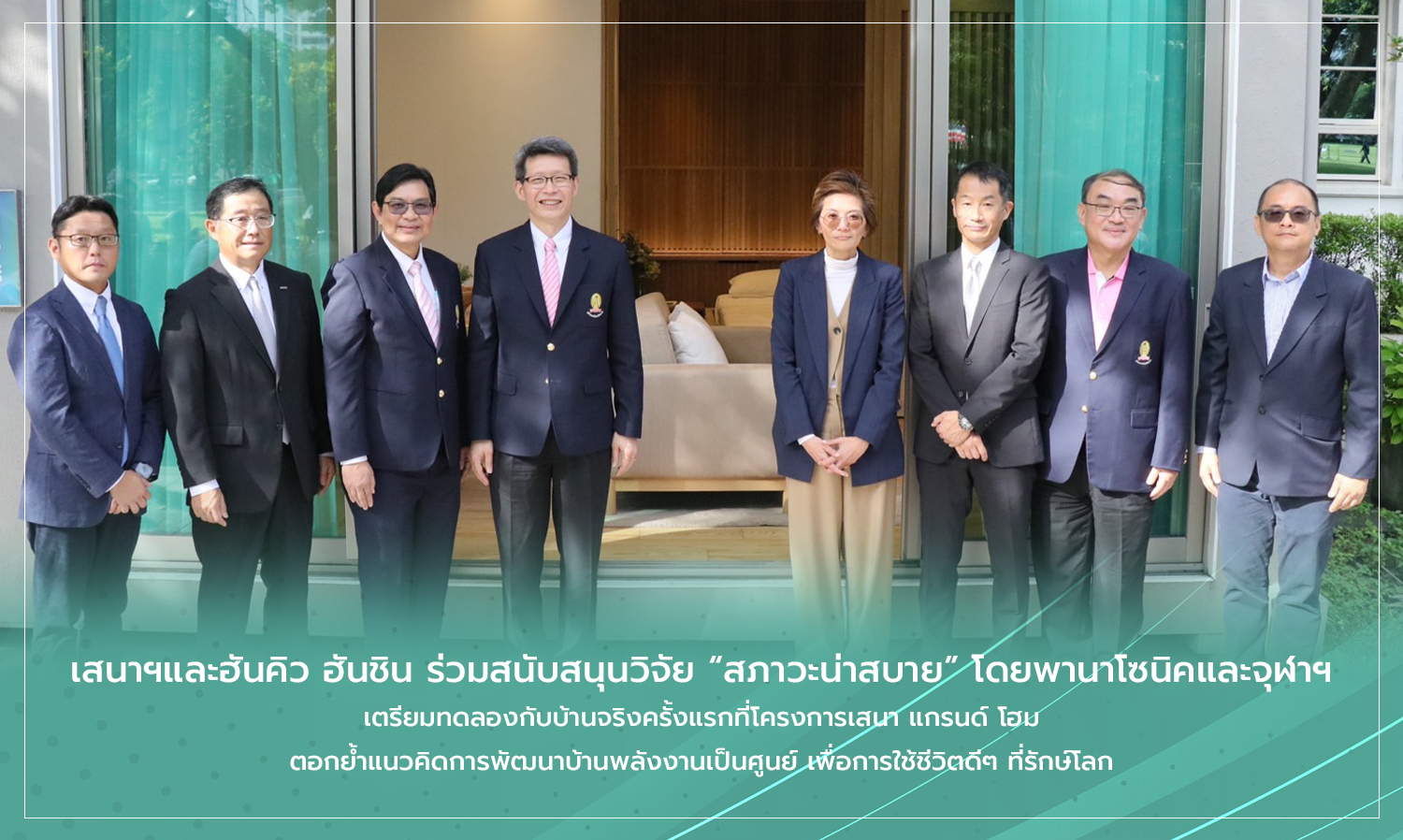
Sena and Hankyu Hanshin Support Research on Comfortable Living Conditions by Panasonic and Chulalongkorn University, Preparing for First Real-Home Experiment at Sena Grand Home, Reinforcing the Zero Energy Home Concept for a Sustainable Lifestyle
Sena Development, with its DNA Made From Her extends its meticulous attention to the concept of Sustainable way with the idea of "Side by Side... Creating Sustainable Lives" in collaboration with Hankyu Hanshin Properties Corp. They have signed a partnership to support the implementation of the "Comfortable Living Conditions" research by Panasonic and Chulalongkorn University, which will be tested in a real residential home for the first time in Thailand at the Sena Grand Home Bangna Km. 29. This aims to discover comfortable living conditions specifically for Thai people, aligning with the development of the zero energy home concept that is committed to providing residences that meet the needs of comfortable living while promoting an eco-friendly lifestyle.
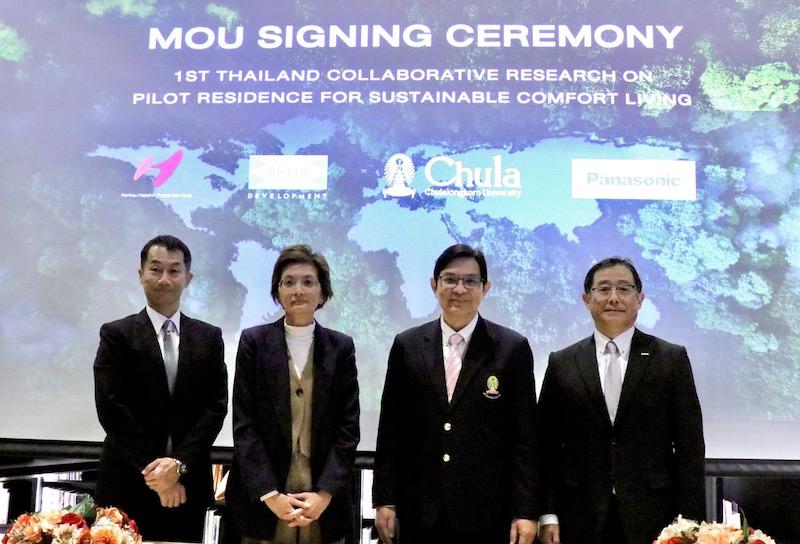
Recently, Sena Development Public Company Limited and Hankyu Hanshin Properties Corp. signed a partnership to support the Sena Grand Home Bangna Km. 29 project for the "Comfortable Living Conditions" innovation research, a collaboration between Panasonic and Chulalongkorn University. This supports the concept of building energy-efficient homes and enhances the quality of life for residents, while also advancing and improving the zero energy home concept, which is a key approach in Sena's housing development projects.
Assoc. Prof. Dr. Kesara Thanyalakphak, Managing Director of Sena Development Public Company Limited stated about this collaboration that Sena Development places great importance on creating and delivering residences to homeowners with the DNA Made From Her, developed with meticulous attention, towards the idea of "Side by Side... Creating Sustainable Lives." The team is continuously seeking innovations and developing projects to create homes that meet the needs of comfortable living while ensuring sustainability, benefiting both homeowners and minimizing environmental impact. This is evident from the promotion of renewable energy, as Sena is the first real estate developer to install solar panels in every home in its projects.
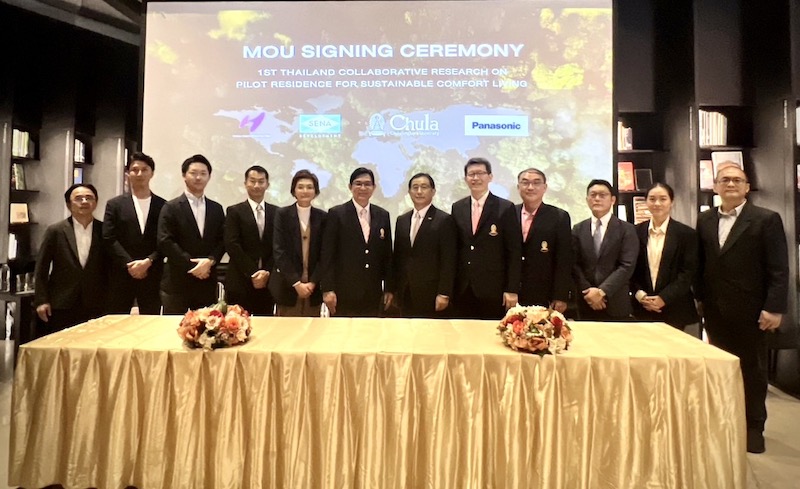
Through this continuous innovation and development, Sena Development has partnered with Hankyu Hanshin Properties Corp., which shares a similar vision for sustainable housing development. They have begun to adopt the Zero Energy House concept from Hankyu Hanshin, recognized in Japan, and adapt it into a model of "zero energy homes" suitable for Thai people.
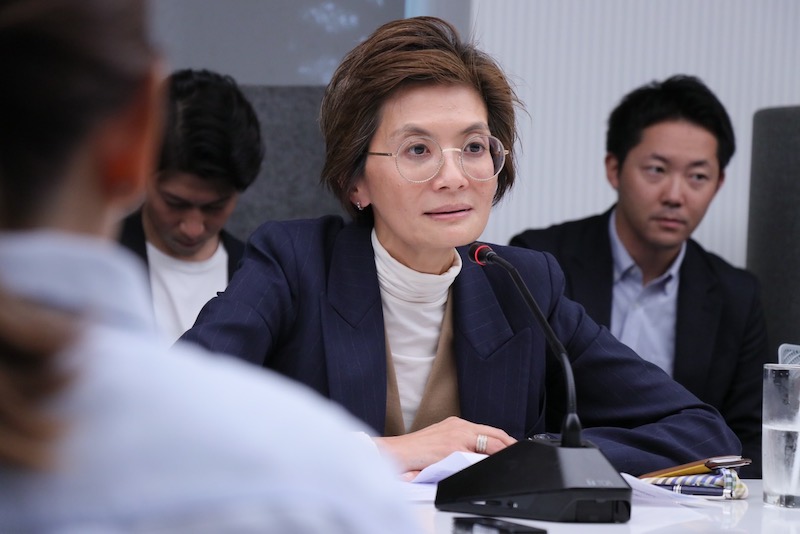
To provide homeowners with comfortable living, save money, conserve energy, and be environmentally friendly simultaneously, "Recently, we, Sena and Hankyu Hanshin, have been informed about the innovation trial for comfortable living conditions initiated by Panasonic in collaboration with Chulalongkorn University. We are interested in this as it aligns with our vision for sustainable living, leading to our collaboration in supporting this trial. The research conducted in a model home will be tested in our actual homes to obtain results that closely match real-life living, which can then be developed into effective technologies for sustainable living. We would like to thank Panasonic and Chulalongkorn University for recognizing our commitment and direction to create a sustainable quality of life for our customers, allowing us to be part of this innovative development and potentially leading to further collaborations in the future," Dr. Kesara stated.
Mr. Mitsuhiro Nakazawa, General Manager of Hankyu Hanshin Properties Corp, as a partner of Sena Development, stated that today we are under circumstances that require serious consideration of measures to combat global warming. Hankyu Hanshin, as a developer, is acutely aware of the necessity to face environmental challenges in developing eco-friendly housing. In Japan, Hankyu Hanshin has accelerated the installation of Zero Energy Houses (ZEH) for residences and continues to implement proactive measures to combat global warming.
“We believe that the most important aspect of eco-friendly housing is developing residences based on understanding, caring for, and ensuring the comfort of our customers' lives. The study of "Comfortable Living Conditions" through model homes by Panasonic and Chulalongkorn University demonstrates the intention to explore solutions and innovations that provide comfort for residents, as well as to assess the efficiency of engineering systems, aligning with our housing development concepts. We expect that this collaboration in supporting research will meet both energy-saving and comfort needs for a better quality of life for residents.”
Mr. Hidekatsu Ito, Managing Director of Panasonic Solutions (Thailand) Co., Ltd. stated that for over 60 years, Panasonic has been involved in Thailand as a manufacturer and distributor of electrical appliances, committed to offering quality products that enhance consumers' quality of life. At the same time, we have been researching and developing new technologies in various areas worldwide, focusing on creating a sustainable society, which led to our research collaboration with Chulalongkorn University on sustainable and energy-efficient housing technologies in Thailand, including exploring technologies that meet new needs such as "comfortable living conditions" specifically for Thai people.
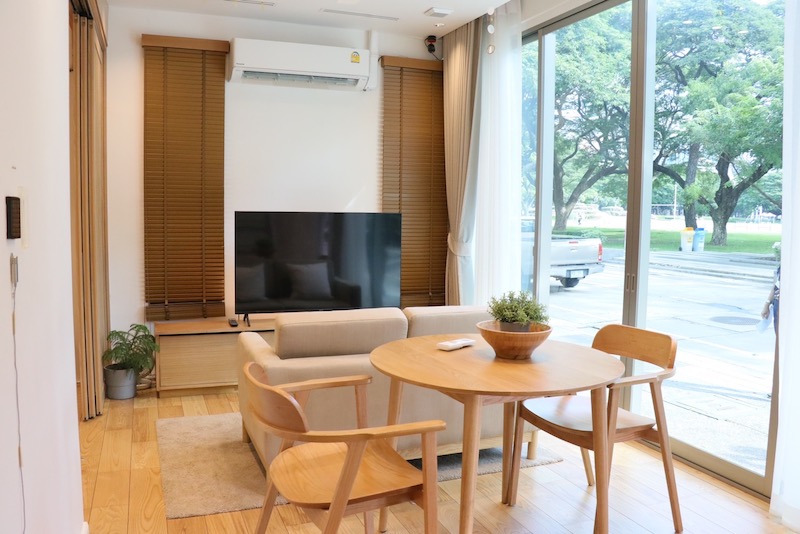
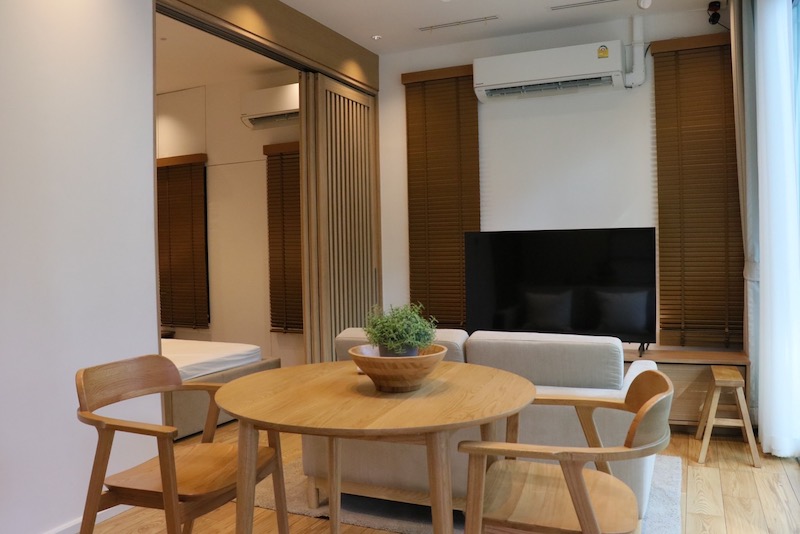
We have initiated research through experiments in the ZEN Model, located in front of the Faculty of Architecture at Chulalongkorn University, to explore energy-efficient air conditioning systems and create comfortable living conditions at home. To expand the results of the model home experiments, we are conducting collaborative research among four organizations, with Sena Development providing real homes for testing the system's efficiency, hoping that this system will become one of the sustainable living approaches for Thai people under comfortable conditions (Comfort Zone), stress-free (Stress-free), pollution-free (Carbon-free), and energy-efficient (Energy Efficiency), leading to future housing technologies suitable for the context of Thailand.
Asst. Prof. Sarayut Sapsuk Dean of the Faculty of Architecture, Chulalongkorn University added that this collaboration in conducting research with Panasonic in Thailand brings together Chulalongkorn's expertise from both the Faculty of Architecture and the Faculty of Engineering, combined with Panasonic's technological knowledge, which will drive the research forward and contribute to developing solutions and innovations for the housing industry in Thailand in the future. Currently, this collaboration has developed into a model housing project using BIM (Building Information Modelling) and Digital Twin technologies to assist in designing and constructing modular homes named the ZEN Model, covering an area of 36 square meters within Chulalongkorn University, simulating a comfortable living environment and collecting data from sample groups to test living in the experimental home, which will expand to testing single-family homes in Sena Development's projects to achieve results that are closer to reality and can elevate the living standards of people at all levels in the humid tropics of Southeast Asia, supported by academic data.