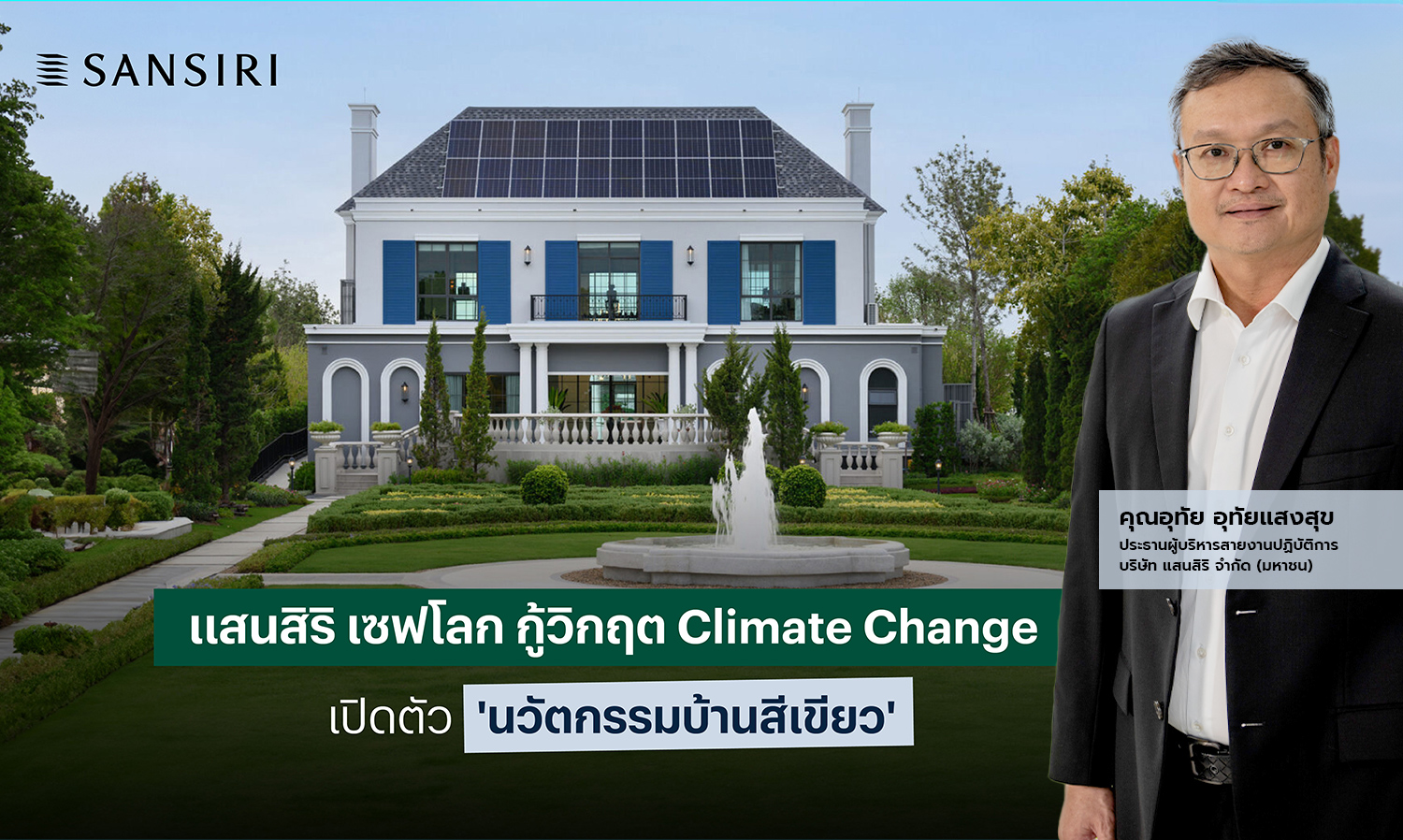
Sansiri Ready to Launch Green Home Innovations Starting with Setthasiri 11 Project of 1,500 Units
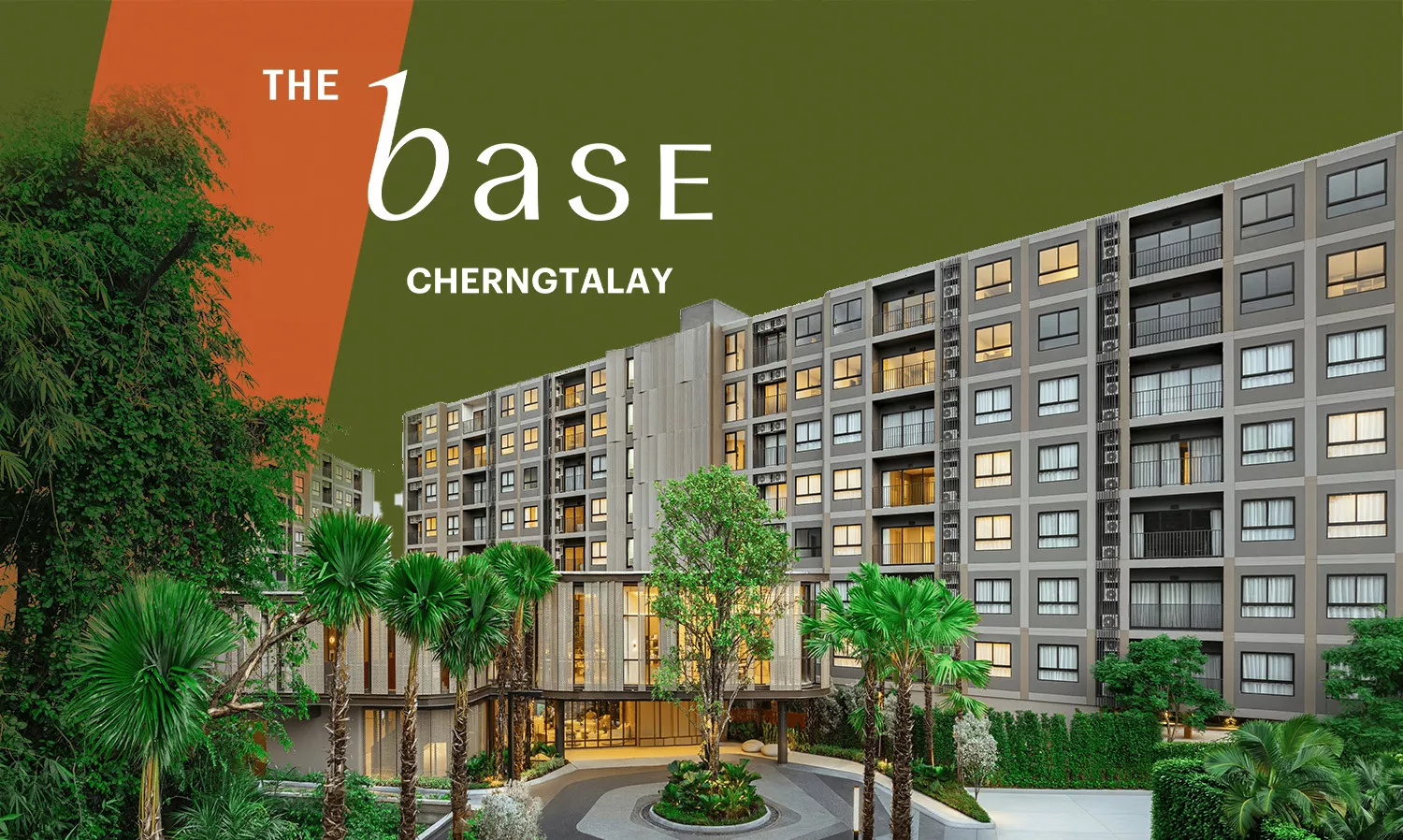
Sansiri recognizes its responsibility towards society in the use of natural resources and energy, aiming to reduce waste emissions to mitigate the impacts of climate change. Under this Net-Zero mission, one of the key initiatives is the commitment to deliver every new project with Green Living Designed Home innovations. This begins from the design and construction phases all the way to delivering homes powered by clean energy. It is exciting to announce that this year, we are ready to deliver green homes to residents in the new Setthasiri 11 project, comprising approximately 1,500 units, ensuring a high quality of life for residents while significantly saving energy. Each household can reduce energy consumption by up to 18% annually. We also aim to expand this initiative to all new The Base condominium projects in 2024, where the common areas will implement the Green Living Designed Home principles, targeting an initial energy reduction of about 6%.
The concept of Green Living Designed Home consists of three operational mechanisms known as the 3 Green Concepts, starting with
1. Green Procurement: This involves selecting Green Products and partners who prioritize sustainable production processes, with plans to reduce energy and water usage both in production and long-term use. We use environmentally friendly materials and aim to minimize resource consumption and promote recycling, with a goal to procure low-carbon materials certified by relevant institutions. Currently, Sansiri has already used over 53% Green Products in home construction and encourages over 200 partners to produce more environmentally friendly materials.
2. Green Construction: This involves eco-friendly construction processes, such as using new construction materials like Fiber Fence, which has a production process that reduces carbon emissions, is lightweight (three times lighter than steel), easy to transport and cut, spark-free, and much more durable. We also utilize Fully Precast innovations, a modern home construction option using precast concrete walls from Sansiri's factory, replacing traditional lightweight block and plaster methods, reducing construction time by three months and construction waste by up to 15%, significantly lowering dust and greenhouse gas emissions on construction sites.
3. Green Architecture & Design: This innovation focuses on sustainable living design, creating a health-friendly environment for residents. Examples include Cool Living Designed Home, an energy-saving innovation, Zero Waste Design aimed at minimizing waste, and Universal Design that ensures accessibility for all residents. We integrate concepts that prioritize the quality of life for residents, ensuring clean, fresh air free from pathogens, while delivering homes filled with innovations for the environment, energy savings, and optimal living conditions for residents.
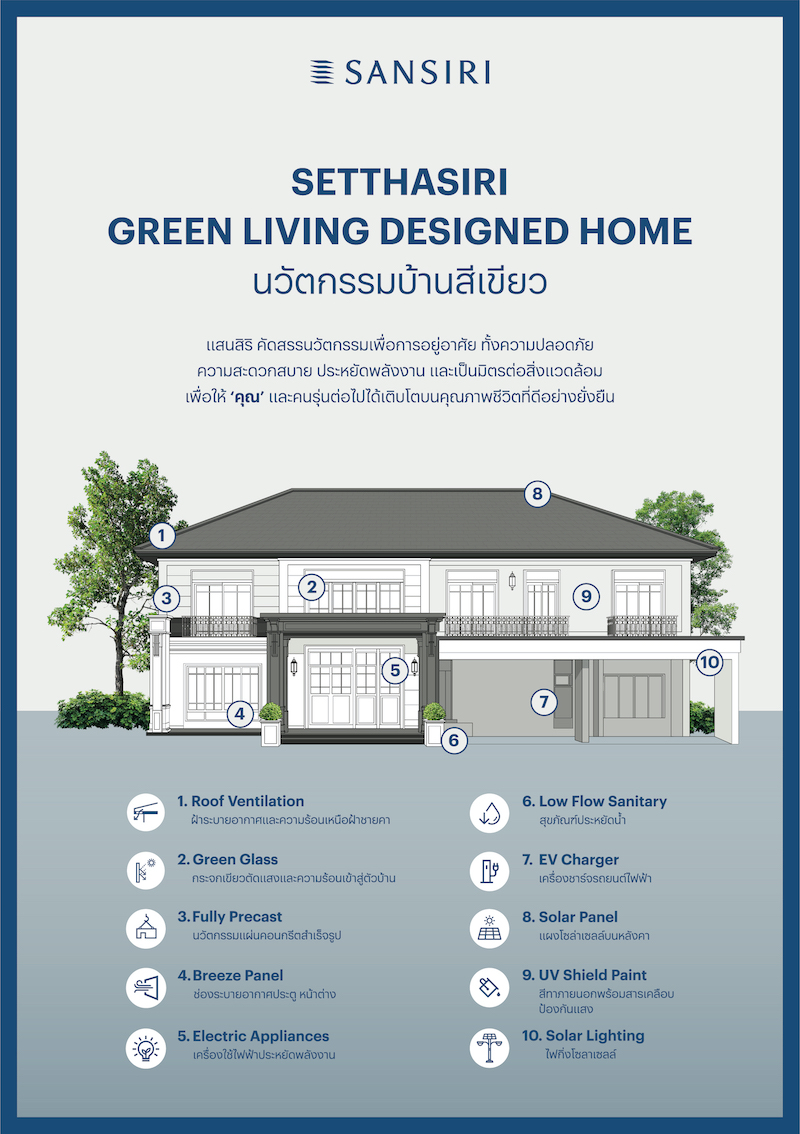
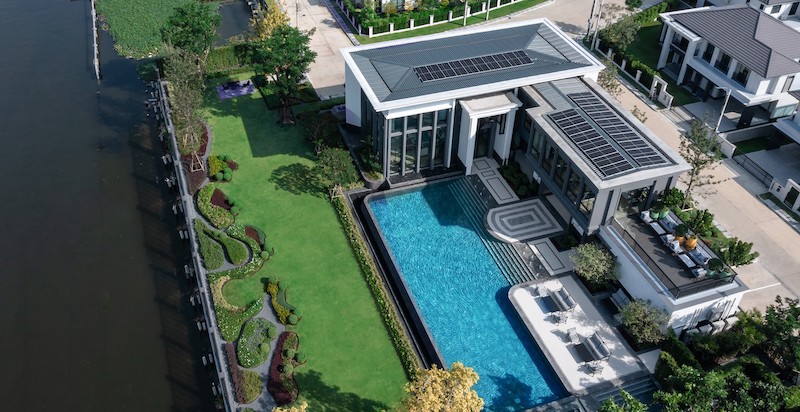
Through the selection of innovations for living that prioritize safety, convenience, energy savings, and environmental friendliness under the 3 Green Concepts framework, Sansiri has developed the Green Living Home with essential components such as Roof Ventilation to prevent heat accumulation on rooftops, Green Glass that reflects heat, Breeze Panels for better air circulation, installation of Solar Panels on rooftops, and Solar Batteries at clubhouses for energy storage in common areas. We also provide Solar Lighting for project roads and common areas, EV Chargers for electric vehicles, energy-efficient Home Appliances, and UV Shield Paint that reflects sunlight heat, keeping indoor temperatures comfortable. This supports Sansiri residents and future generations in thriving within a sustainable quality of life.
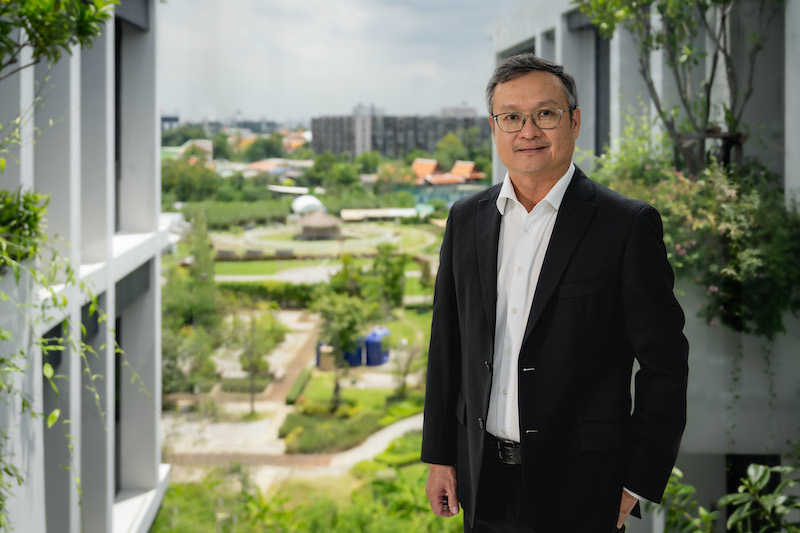
“Although the real estate sector is not a significant contributor to direct greenhouse gas emissions, the global situation regarding the Climate Change crisis that Thailand and the world are currently facing has become an urgent issue that all sectors must collaborate to address. The trend of adopting environmentally friendly energy and materials is gaining more attention from businesses, which not only helps reduce the impacts of global warming but also provides sustainable solutions,” said Mr. Uthai.

For the Sansiri Net-Zero operational plan in 2023, it reflects the overall success of the set goals, such as the development of the Low Energy Community Model, with the Burasiri project in Bangkok Kritha serving as a model project that began developing homes with Green Materials and installing Solar Panels in every house, Solar Lights in common areas, and EV Chargers at clubhouses and homes. We are also increasing the planting of trees and shrubs in common areas, developed by a dedicated team known as the “R&D team for Net-Zero.” Additionally, every Sansiri project must utilize clean energy, with plans to install Solar Panels in 100% of new project common areas and in every new home. Garden lighting will be 100% solar-powered, resulting in a total of 1,800 homes with Solar Panels this year and another 1,500 homes next year. We also promote the use of electric vehicles, aiming to install EV Chargers in every new Sansiri project across all segments by 2025, with an expectation of having 1,050 homes equipped with EV Chargers by the end of this year and another 750 homes next year.
According to the Bank of Thailand, climate change is intensifying and affecting people on a broad scale like never before, with extreme weather events such as storms and temperature extremes being direct results of human-induced climate change. Therefore, we must reduce greenhouse gas emissions to prevent exacerbating the crisis. For Thailand, considering only the adaptation measures for climate change, the International Monetary Fund (IMF) estimates that approximately 0.4 - 0.7% of GDP per year, or about 70 billion baht, will be needed. Meanwhile, the data on sustainable bond issuance in Thailand still primarily focuses on projects aimed at reducing greenhouse gas emissions, with only certain types of projects supporting adaptation to climate change, such as water management and natural resource management projects.