SCB FM Predicts Thai Baht to Weaken in the Next 3 Months, Advises Clients to Hedge Against Currency Fluctuations
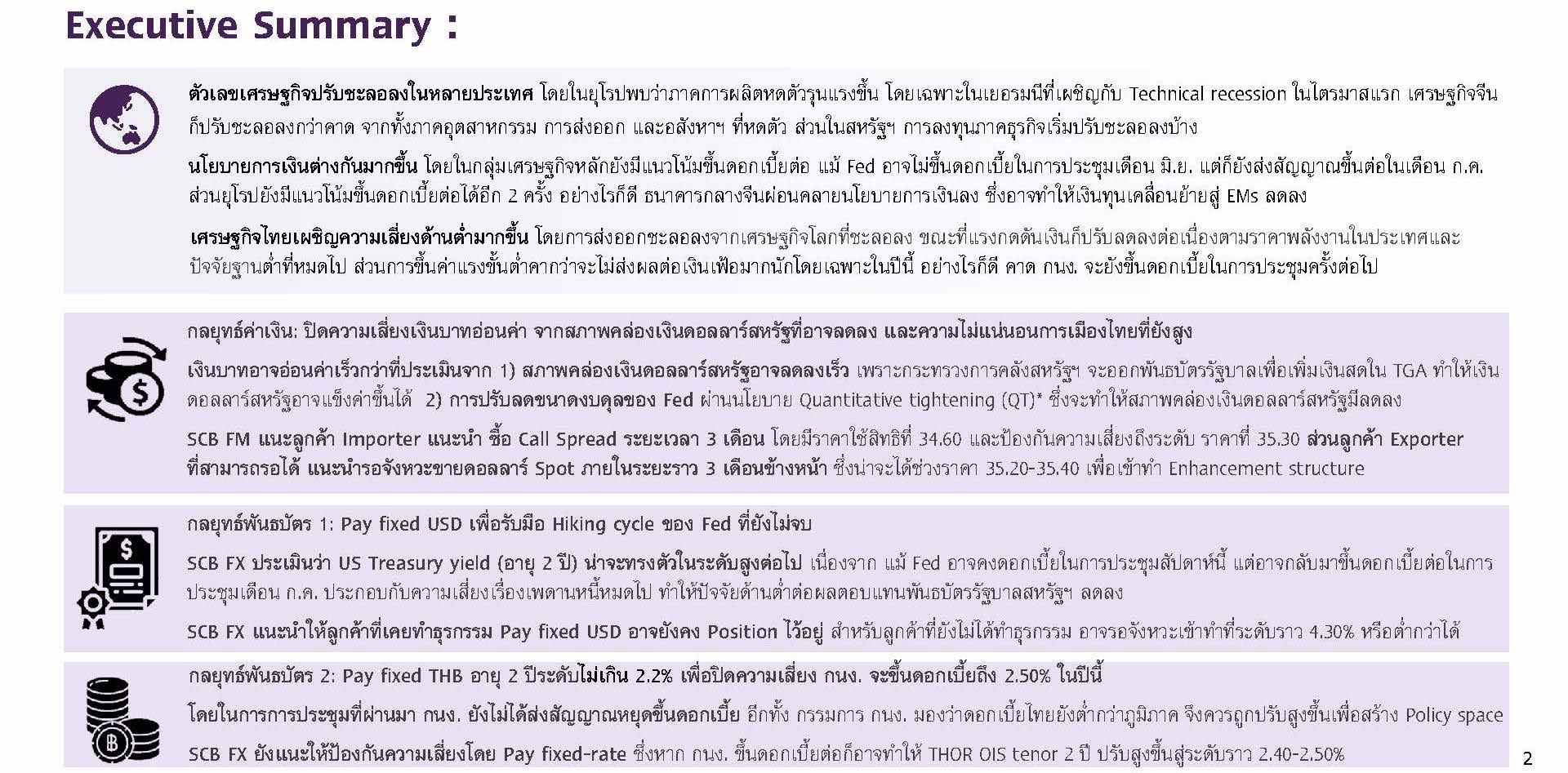
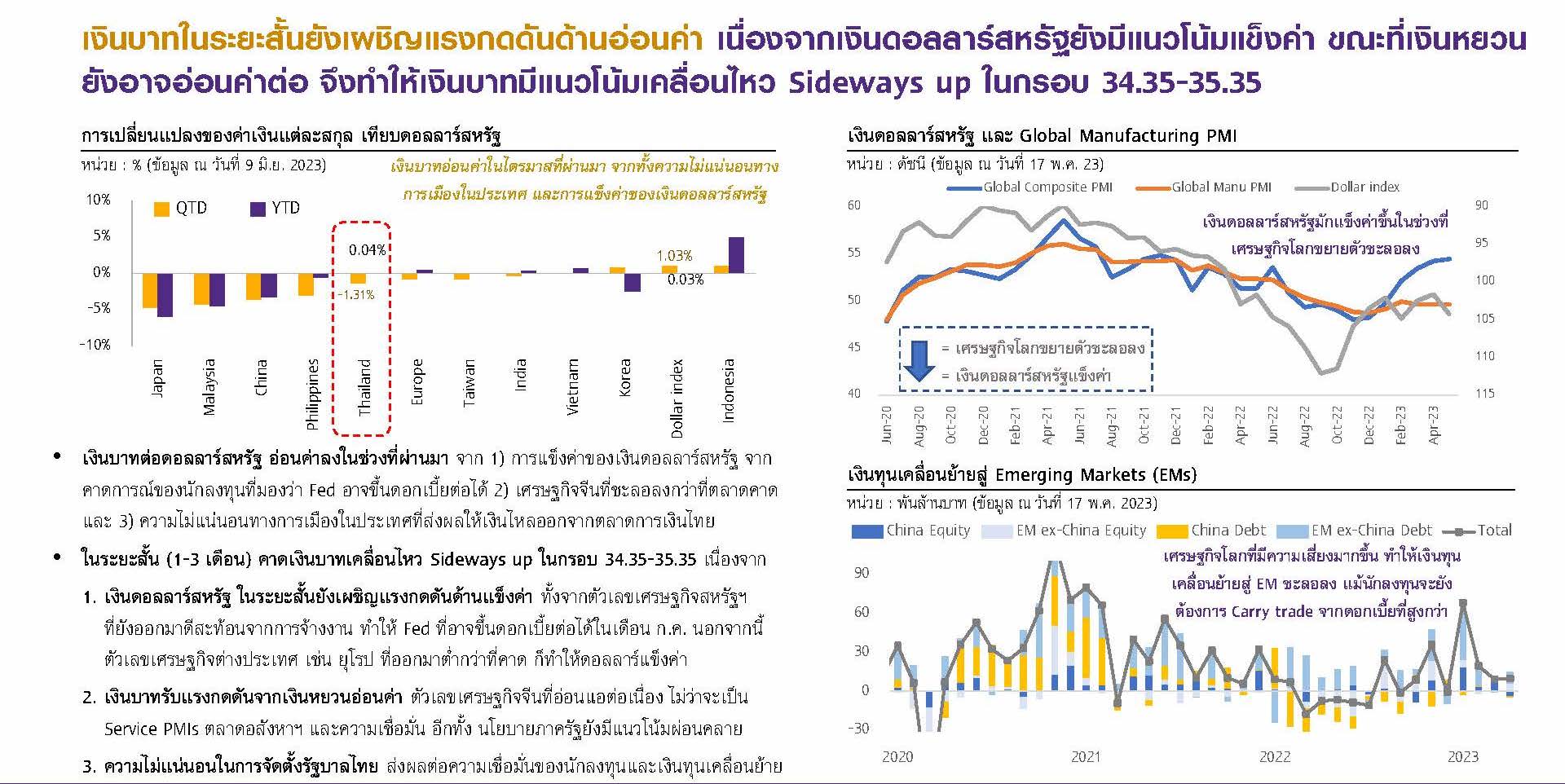
SCB FM, the Financial Markets Division of Siam Commercial Bank, forecasts that the Thai baht against the US dollar will remain highly volatile and may weaken further due to two main factors: 1) Diverging global monetary policies, as the US Federal Reserve (Fed) and the European Central Bank (ECB) are likely to continue raising interest rates, while the People's Bank of China (PBOC) is easing its monetary policy; and 2) Ongoing political uncertainties in Thailand regarding government formation and future public policies, which will affect investor confidence. SCB FM estimates that the Thai baht will move within the range of 34.35-35.35 against the US dollar in the next 1 to 3 months, thus advising clients to hedge against the risk of a weakening baht, particularly importers who may consider purchasing a Call Spread.

Mr. Patrick Pouliot, Assistant Managing Director and Head of Financial Markets at Siam Commercial Bank, revealed that the Thai baht weakened against the US dollar in the last quarter due to several factors, including the strengthening of the US dollar as investors adjusted their outlook on the Fed's potential interest rate hikes, the slower-than-expected Chinese economic growth leading to a depreciation of the yuan (which is closely related to the baht), and political uncertainties in Thailand causing capital outflows from both the stock and government bond markets. Consequently, the baht depreciated by approximately 1.30% in the second quarter of this year. However, compared to other currencies in the region, the baht's depreciation was less significant, resulting in a 1.20% appreciation of the Nominal Effective Exchange Rate (NEER).
The high volatility in exchange rates has led to an increase in clients engaging in foreign exchange hedging transactions with the bank in the last quarter. The bank estimates that the volume of FX forward transactions in the second quarter of this year is likely to increase by about 10% from the previous quarter, with some transactions coming from the gold trading sector, which saw increased activity during periods of high gold price volatility, as well as dividend payouts from large corporations, which typically occur in the second quarter of the year.
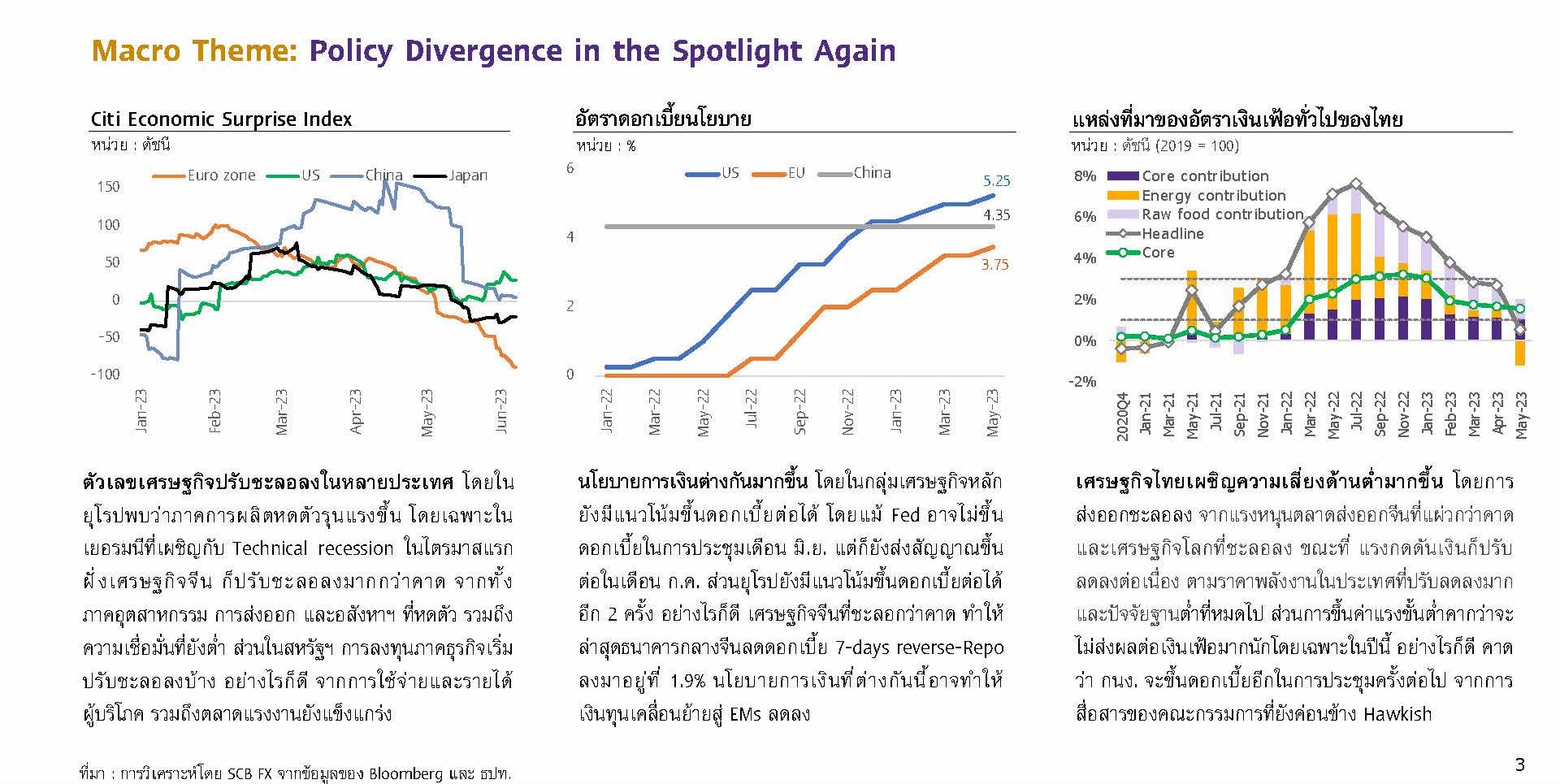
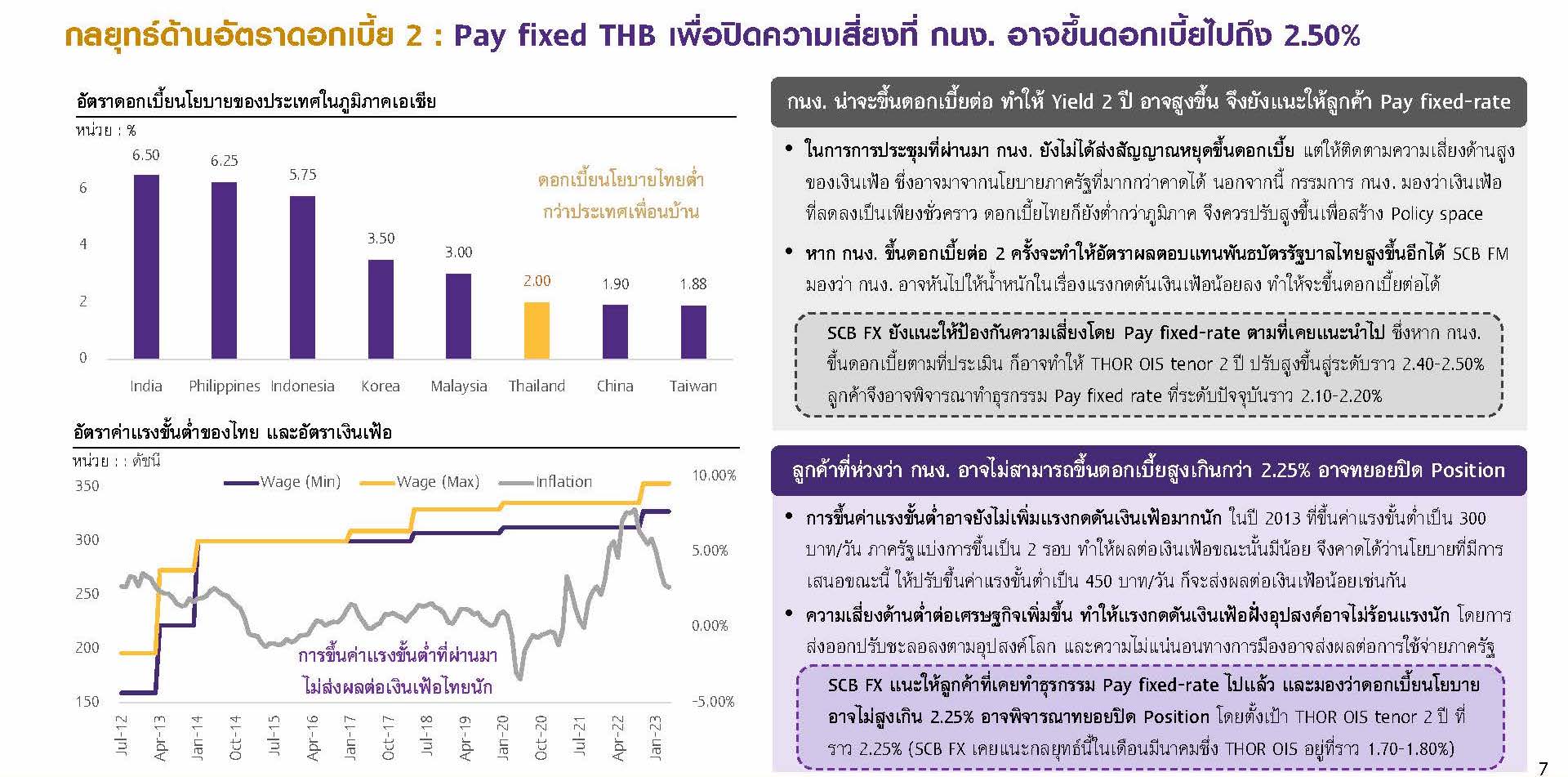
Mr. Patrick further stated that in the near future, global monetary policies will diverge even more. Although the Fed may not raise interest rates in the June meeting, there is a possibility of a rate hike in July due to slow core inflation reduction. In Europe, the ECB is expected to raise rates two more times this year. Meanwhile, the PBOC recently lowered the 7-day reverse repo rate from 2.0% to 1.90%, leading to a greater divergence between the monetary policies of developed and developing countries. This may result in reduced capital flows to emerging markets (EMs) and put pressure on the baht to weaken against the US dollar. Additionally, political uncertainties in Thailand regarding government formation and future public policies will impact investor confidence and the direction of the baht. SCB FM estimates that the Thai baht will move within the range of 34.35-35.35 against the US dollar in the next 1 to 3 months.
Therefore, it is recommended that clients hedge against the risk of a weakening baht. Importers may consider purchasing a 3-month Call Spread with a strike price of 34.60, providing protection up to a price level of 35.30. For exporters who can wait, SCB FM suggests waiting for the right moment to sell US dollars in the spot market within the next 3 months, which is expected to be in the price range of 35.20-35.40 for subsequent FX Forward transactions.


By: Patrick Pouliot
Assistant Managing Director, Head of Financial Markets
Wholesale Banking Division
Siam Commercial Bank Public Company Limited
Line: @scbfx