Joint Private Sector Committee Maintains Thailand's GDP Growth Forecast at 3 - 3.5%, Urges Government to Review Ft Rate to Alleviate Burden on Citizens and Businesses
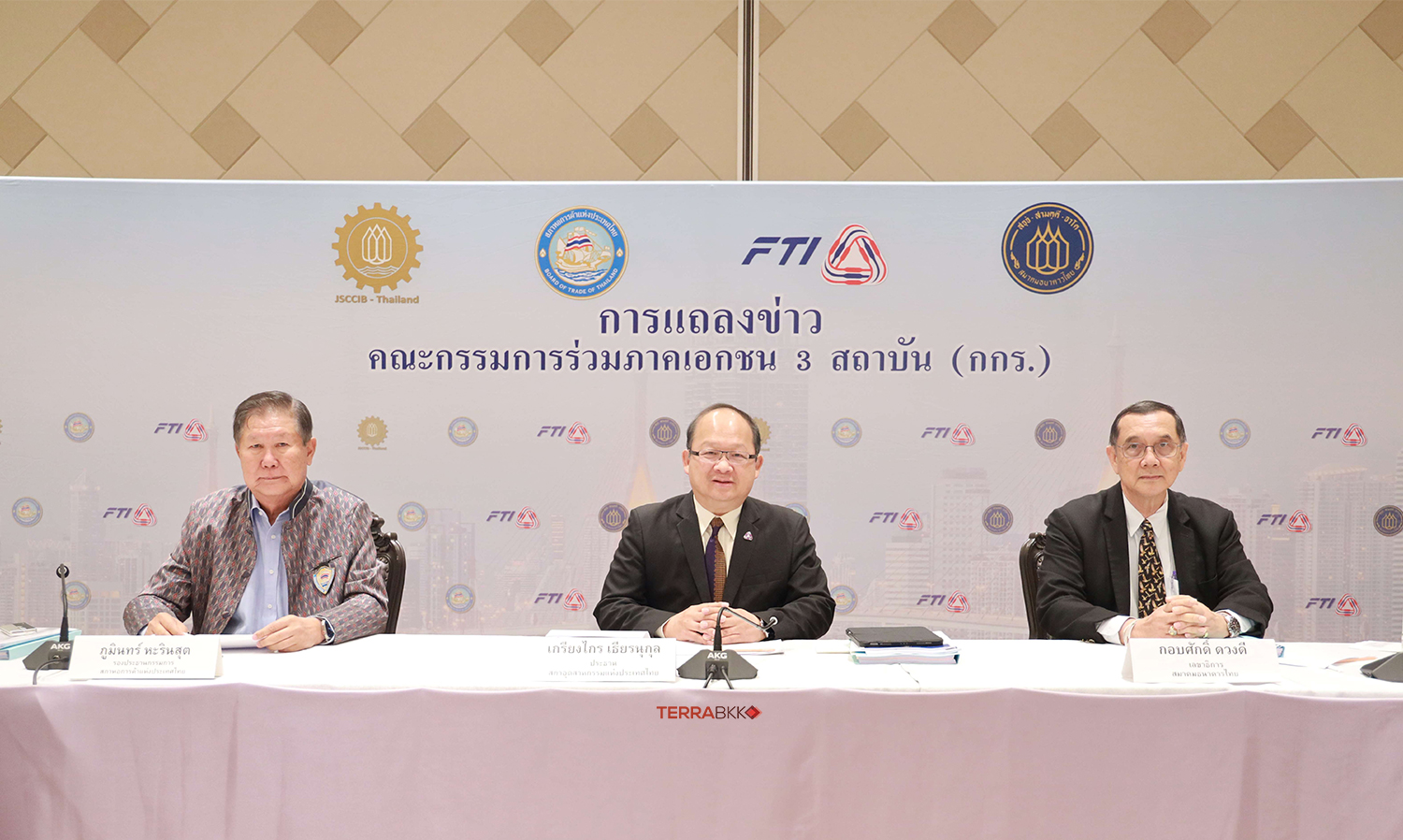
Mr. Kriangkrai Theeranukul, President of the Federation of Thai Industries revealed after a meeting of the Joint Private Sector Committee of three institutions (JPS) that the committee believes the Thai economy is likely to expand due to tourism revenue and domestic demand. Tourism has improved significantly and is a key factor for growth, with 6.5 million foreign tourists arriving in the first three months, and it is expected that the total number of foreign tourists for the year could reach 27 to 30 million.
Domestic demand is also showing signs of recovery due to employment in the service sector and stable agricultural income, which has improved the income base for citizens. The JPS estimates that the Thai economy will grow by approximately 3.0% to 3.5% in 2023, in line with previous assessments, and expects export value to potentially contract by -1.0% to 0.0%. The general inflation rate is projected to be between 2.7% and 3.2%.
However, the JPS expressed concerns about the export direction, which is affected by the slowing global economy due to the financial crisis occurring in the United States and Europe. This has led to volatility in financial markets and increased the likelihood of a further slowdown in the global economy. Although authorities in the U.S. and Switzerland have quickly intervened to assist troubled financial institutions to prevent a repeat of the 2008 financial crisis, it is anticipated that these events have already negatively impacted the global economy.
Meanwhile, the Chinese economy shows signs of recovery, but the benefits remain limited domestically. Domestic demand in China has shown clear signs of recovery following the reopening of the country at the beginning of the year. However, the manufacturing and export sectors in China are still experiencing a slowdown, with the PMI index for the industrial sector worsening in March. Both production and export trends are similar to other countries in the region. Therefore, the outlook for Thai exports remains sluggish, and it is expected that the value of exports will contract this year, which will affect the competitiveness of exporters. It is suggested that efforts should be made to find new potential markets, such as the Gulf Cooperation Council (GCC) and Central Asian countries, to compensate for the ongoing slowdown in major markets.
Regarding electricity prices, after the 15th/2023 meeting of the Energy Regulatory Commission (ERC) on March 22, 2023, a decision was made to acknowledge the results of the Ft rate consultation and to consider the case study for adjusting the retail Ft rate for billing from May to August 2023. The committee approved a uniform Ft rate for households and other electricity users at 98.27 satang per unit, resulting in an average electricity cost of 4.77 baht per unit. The JPS believes that the National Energy Policy Committee (NEPC) should reconsider the Ft rate for the second period to alleviate the burden on households and businesses for the following reasons:
Given the global energy price situation, which is continuously declining, accelerating the repayment of electricity debts to the Electricity Generating Authority of Thailand (EGAT) from the originally planned three years (according to the first period of 2023) to two years (according to the second period of 2023) may be too rapid and could impact the burden on citizens and business operation costs. Therefore, the JPS proposes maintaining the debt repayment period to EGAT at three years as per the first period of 2023.
Additionally, it is recommended to adjust the method of estimating the cost of natural gas and LNG prices used to calculate electricity costs by using prices that reflect the LNG import plan for May-August 2023 instead of using data from January 2023, which had higher prices, to mitigate the impact of electricity prices across all sectors.
Furthermore, the government is urged to expedite the establishment of the Energy Regulatory Committee to allow the private sector to participate in providing input on energy policy and various energy assistance measures to effectively mitigate impacts on all sectors, including citizens, businesses, industries, services, and small entrepreneurs, and to enhance the country's competitiveness.
Regarding the Act on Prevention and Suppression of Technology-related Crimes B.E. 2023, this act is an important tool for more effective financial threat management. It was published in the Royal Gazette on March 16, 2023, and has been in effect since March 17, 2023. The Thai Bankers' Association has established guidelines for banks to operate in a unified direction and coordinate closely with all relevant agencies. This initiative aims to expedite tracking the flow of money and freezing the assets of victims within the system, reducing the number of suspects and shell accounts in the banking sector, which will decrease the likelihood of financial threats occurring.