Summary Highlights of the Seminar "Real Estate: Key Economic Indicators for 2023" by the Thai Real Estate Association
Key highlights from the annual seminar 2023 "Real Estate: Key Economic Indicators for 2023" organized by the Thai Real Estate Association, featuring speakers from the Housing Business Association and the Thai Condominium Association, along with esteemed experts discussing various topics. The President of the Thai Real Estate Association emphasized that the government should address underlying issues to reduce the problems associated with illegal real estate purchases, particularly attracting foreign buyers, especially from China, who wish to legally purchase single-family homes. This could also help mitigate the issue of gray capital entering the market illegally, thereby increasing foreign investment in Thai real estate.
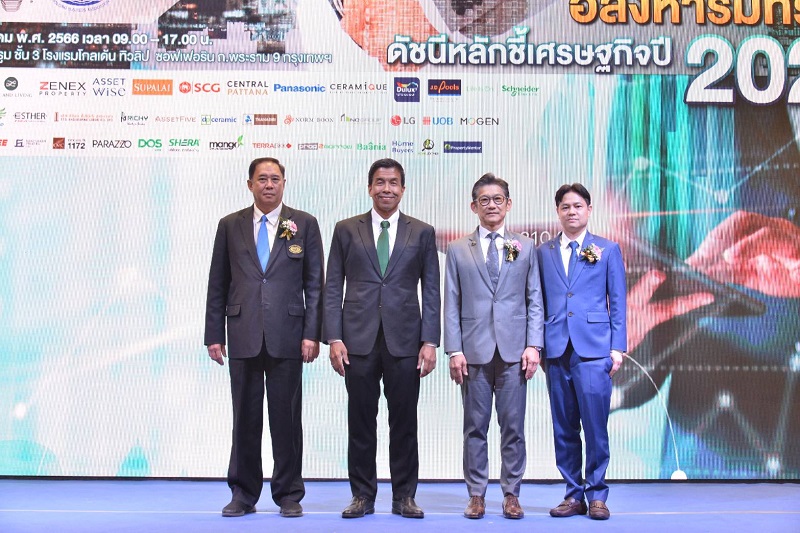
“How Urban Planning and Government Agencies Can Support the Real Estate Business”
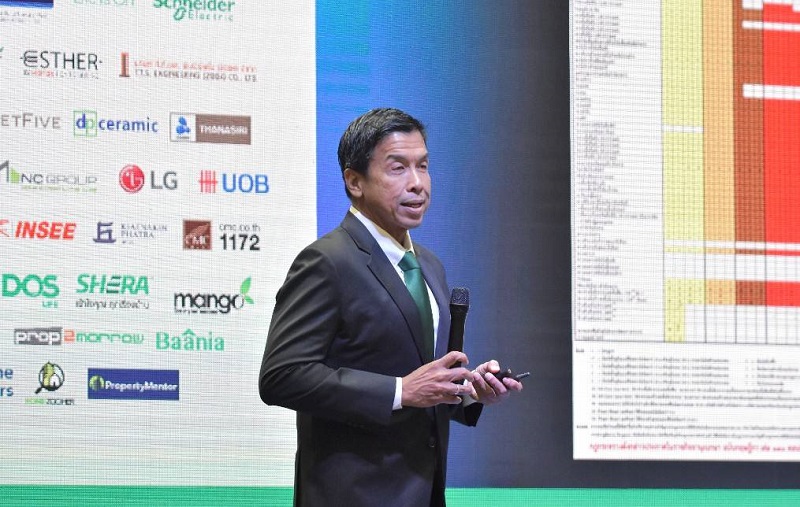
Dr. Chadchart Sittipunt, Governor of Bangkok delivered a keynote speech on “How Urban Planning and Government Agencies Can Support the Real Estate Business,” stating that future urban planning must be improved and clearly directed. The approach should involve creating a shared understanding, with the urban planning committee collaborating with developers and stakeholders to design development criteria that align with demand while preparing infrastructure.
In the past, urban planning did not specify what could be built in certain areas but rather set maximum heights, which has led to urban planning dictating land prices based on developers' attempts to maximize allowable construction. Consequently, land prices, especially along the subway lines, have risen, making it difficult for working-age individuals to afford housing in the city, forcing them to purchase townhouses on the outskirts. This has resulted in the central urban areas being predominantly occupied by older residents.
However, utilizing specific urban planning for land allocation will have a greater impact. We should revisit measures to promote and develop land use or FAR Bonus to incentivize the private sector and create benefits for the city and its citizens. Particularly, increasing the Floor Area Ratio (FAR) is essential. After the FAR Bonus was implemented 16 years ago, 284 projects utilized this right, mostly for flood prevention areas.
Dr. Vichai Viratkapan, Inspector of Banks and Acting Director of the Real Estate Information Center at the Government Housing Bank stated that real estate and tourism play a crucial role in driving Thailand's economy. In the past year, there were 11,561 units of condominiums transferred to foreign buyers, a 41% increase, with a total transfer value of 59.261 billion baht, up 49.2%. Chinese buyers remain the largest group purchasing real estate in Thailand, followed by Myanmar nationals, who purchased around 2 billion baht worth of properties.

“Trends in the Real Estate Market and Strategies to Drive Thailand's Economy” from the Perspectives of Three Real Estate Association Presidents
Mr. Misak Choonrakchoti, President of the Thai Real Estate Association stated that the overall real estate market this year will change due to a declining birth rate and an aging population, leading to new projects catering to the elderly. Meanwhile, younger generations, particularly Gen Y, are facing high debt levels, which limits their purchasing power for real estate.
We need to address the underlying issues to reduce illegal real estate purchases and attract foreign buyers, especially Chinese nationals, to legally purchase single-family homes. This will help mitigate the problems associated with gray capital entering the market illegally, thereby increasing foreign investment.
Mr. Wasan Kheangsiri, President of the Housing Business Association noted that in 2022, the single-family home market accelerated due to relaxed LTV measures and low-interest rates. For 2023, it is anticipated that the single-family home market will stabilize or slightly slow down, but there are positive factors that may support growth in the latter half of the year. However, challenges remain, particularly with the high rate of loan rejections from commercial banks, which exceeds 30%. If banks tighten their lending criteria, it could impact the purchasing power of certain customer segments. Additionally, the luxury high-end market must be cautious of the risk of oversupply, as there is still a significant amount of inventory in the market.
Mr. Pirapong Jarunek, President of the Thai Condominium Association expressed optimism about the real estate market this year, driven by tourism and service sectors that are creating more jobs and income for Thais, boosting consumer confidence and purchasing power for real estate. The condominium market is expected to recover by about 30% from 2022, translating to approximately 65,000 units sold, with a transfer value of around 190 billion baht.
It is anticipated that condominiums priced between 1-3 million baht will be the stars of the year due to limited supply and ongoing demand, particularly in urban areas and tourist cities. For condominiums priced at 200,000 baht per square meter, it may take 2-3 years to see demand from Hong Kong and China, as buyers look to relocate. We may also see new launches in 2024. Currently, there is a steady return of foreign tenants seeking long-term rentals.
Furthermore, it is essential for the new government to leverage Thailand's soft power, particularly in real estate, which many foreigners are interested in. This could stimulate foreign purchasing power, including relaxing visa regulations for foreigners purchasing condominiums in Thailand, such as granting a 5-year visa for a 5 million baht condominium purchase or a 10-year visa for a 10 million baht purchase. If implemented, this could significantly boost the economy and increase capital flow within the system.
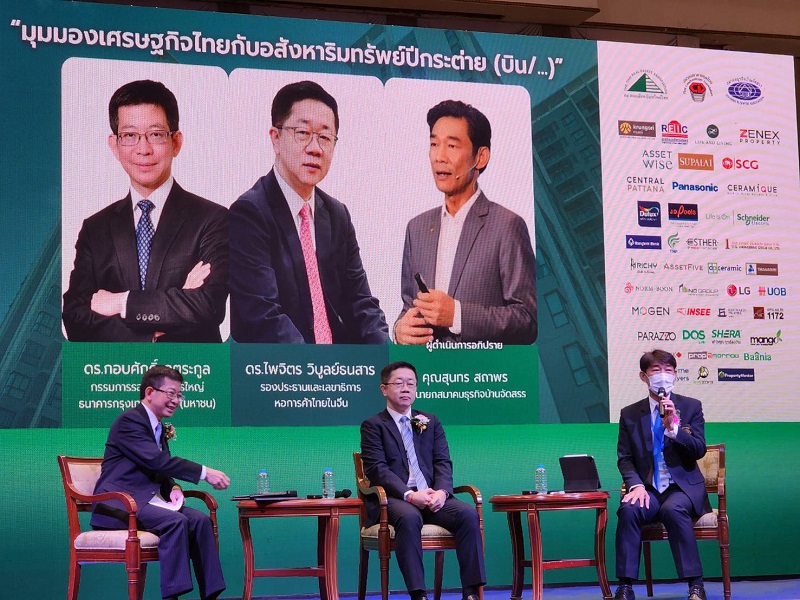
Dr. Kob Sakk Phutrakul, Executive Vice President of Bangkok Bank Public Company Limited commented that this year is marked by unprecedented economic volatility. Although the overall economy appeared strong in the first two months, the collapse of two U.S. banks raised concerns, making 2023 a daunting year, with a potential crisis lasting at least three years from late 2022. This year, the U.S. is expected to enter a recession to combat inflation and reset everything, with a new economic stimulus anticipated in 2025. Meanwhile, a broad economic downturn is likely.
Exports, a key driver of Thailand's economy, which peaked in June 2022, have now decreased by 13.1%. This decline is a direct impact of current events. While Thailand benefits from tourism, the overall outlook remains challenging. This year, we must brace for export challenges; if inflation issues persist, we may face worse problems than anticipated.
Therefore, a crucial goal for 2023 is for Thailand to position itself as a hub for investment, attracting capital from China and the U.S. that seeks to relocate to Thailand, supported by the BOI. In 2022, BOI approvals reached a 10-year high, with a 30% increase in investment, with China remaining the top investor returning to establish bases in Thailand.
Dr. Paijit Wiboonthanasarn, Vice President and Secretary-General of the Thai Chamber of Commerce in China stated that China's economy currently accounts for 18% of global GDP. He personally anticipates a growth rate of around 7-8% this year. Following China's reopening to tourists, it is expected that over 70 million tourists will visit China this year. Additionally, Chinese travelers are showing a preference for shorter trips within Asia, prompting Thailand to enhance its tourism offerings for convenience.
Moreover, China is committed to growth centered around its citizens, leading to new economic dimensions. Labor is returning to the country, and China is focusing on developing new industries and innovations, allocating 7% of its budget for fundamental research and development, while Thailand allocates only 0.5% for similar purposes.
In 2023, we will see China emphasizing internal growth, with increased domestic tourism. Therefore, Thailand must find ways to expand its products and services into the Chinese market through upcoming trade shows in China to support Thai exports this year.
Ms. Namfon Boonyawat, Deputy Governor for Policy and Planning at the Tourism Authority of Thailand (TAT) mentioned that the trend of Chinese buyers purchasing real estate in Thailand is a significant draw for foreign tourists. Thailand's tourism sector must quickly adapt to meet the needs of Chinese tourists, as some Chinese individuals are transitioning from regular tourists to business operators bringing Chinese tourists to Thailand. This shift will directly impact Thai tour businesses and related sectors, causing a slowdown in expected revenue circulation.
Mr. Boon Yongsakul, Chairman of Boat Development Co., Ltd. and former President of the Phuket Real Estate Association stated that Phuket is experiencing an increase in foreign tourists, particularly Russians, who are settling down, leading to high occupancy rates of 95-97% in large hotels due to monthly rental sales. We are also seeing new luxury and super-luxury hotels opening across the islands.
However, Phuket needs to accelerate infrastructure development, particularly road networks around the island, as well as improve water supply, waste management, and solar energy businesses, as the current water supply is insufficient for usage.