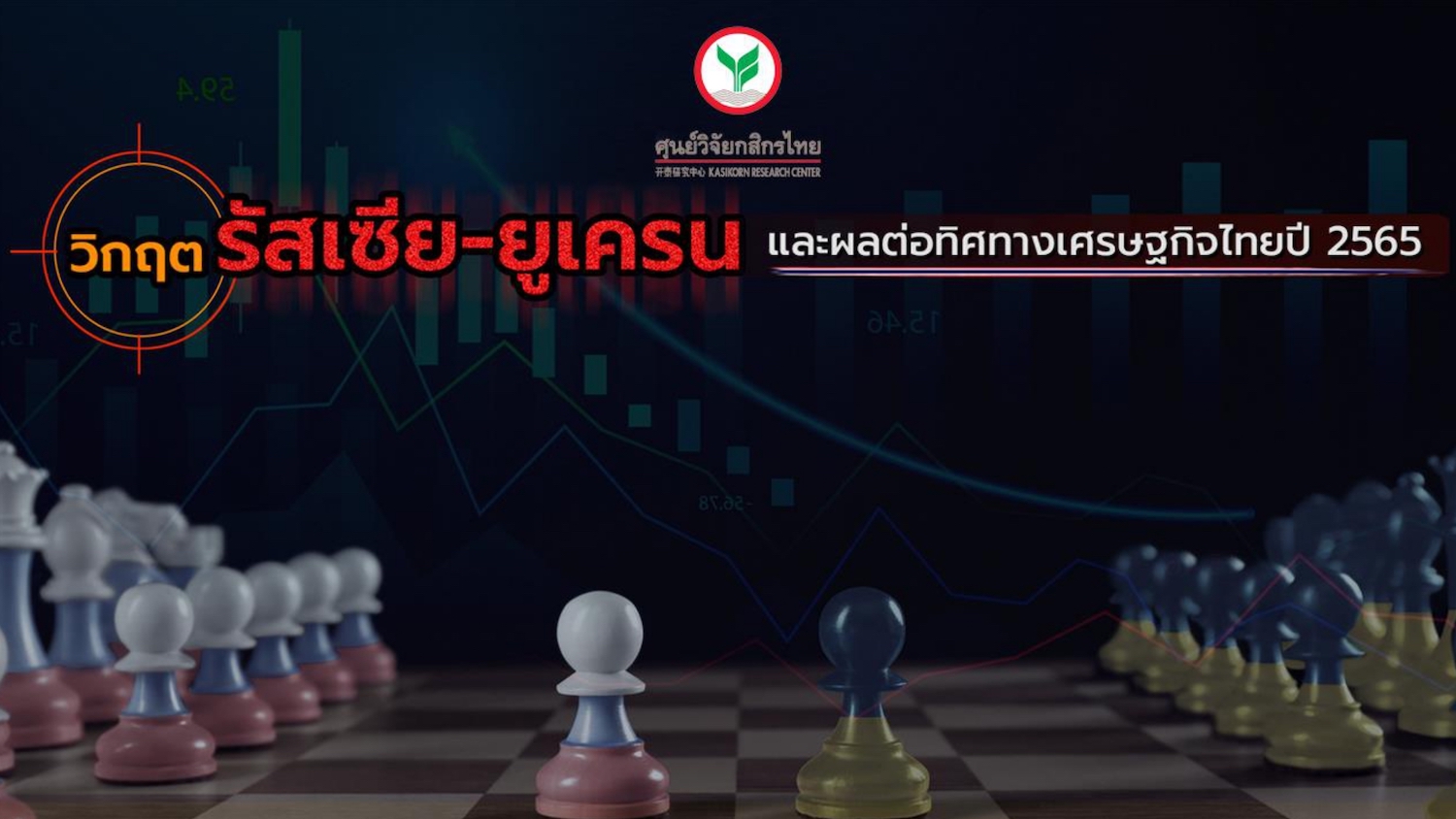
Kasikorn Research Center Cuts GDP Forecast to 2.5% Due to Russia-Ukraine Crisis Driving Up Oil and Food Prices

In addition to the challenges posed by the new COVID-19 variant, the Russia-Ukraine crisis has further impacted Thailand's economic recovery path through rising energy prices and commodity prices, including both industrial metals and agricultural products used as raw materials in production.

Ms. Nattaporn Treeratnasilkul, Deputy Managing Director of Kasikorn Research Center, stated that under the current circumstances, the center has assessed the impact in two scenarios. The baseline scenario assumes that the fighting between Russia and Ukraine remains confined to certain areas of Ukraine, with no joint agreement reached this year, and that Western countries and the U.S. will maintain economic sanctions against Russia throughout the year. This is expected to result in an average Dubai crude oil price of $105 per barrel and a GDP growth of 2.5%. In the optimistic scenario, GDP is projected to grow by 2.9%, based on the assumption that Russia and Ukraine can find a resolution sooner than expected, possibly by the third quarter of this year, which could lead to a decrease in crude oil prices in the second half of the year, resulting in an average oil price of $90 for the year 2022.
The aforementioned impacts will primarily be transmitted through increased inflation, which is expected to accelerate to 4.5% in the baseline scenario. This is amidst government measures to cap the retail price of diesel at 30 baht per liter until the end of April 2022, which may lead to diesel prices exceeding 30 baht per liter later in the year if global crude oil prices rise. The inflation risk may also increase the likelihood of the Federal Reserve needing to raise interest rates more than previously indicated, potentially reaching 1.75-2.00% by the end of 2022, which would also put pressure on Thailand's policy interest rates.

Regarding the impact on Thai businesses, Ms. Kevalin Wangpichayasuk, Deputy Managing Director, noted that the Russia-Ukraine factor is expected to increase production costs in the industrial sector by approximately 80 billion baht. The impact will vary across businesses depending on their raw material usage and adaptability, while some of the burden will also fall on consumers. Additionally, tourism has been affected by a decrease in the number of Russian and European tourists. Although the total number of foreign tourists visiting Thailand in 2022 may reach 4 million, spending is expected to drop by about 50 billion baht compared to a scenario without war. Furthermore, other service sectors are also impacted, not only by rising costs but also by the higher cost of living for consumers, which in turn pressures business sales. Overall, the growth projections for sectors such as automotive, electronics, retail, and restaurants are expected to be lower than in a scenario without war.

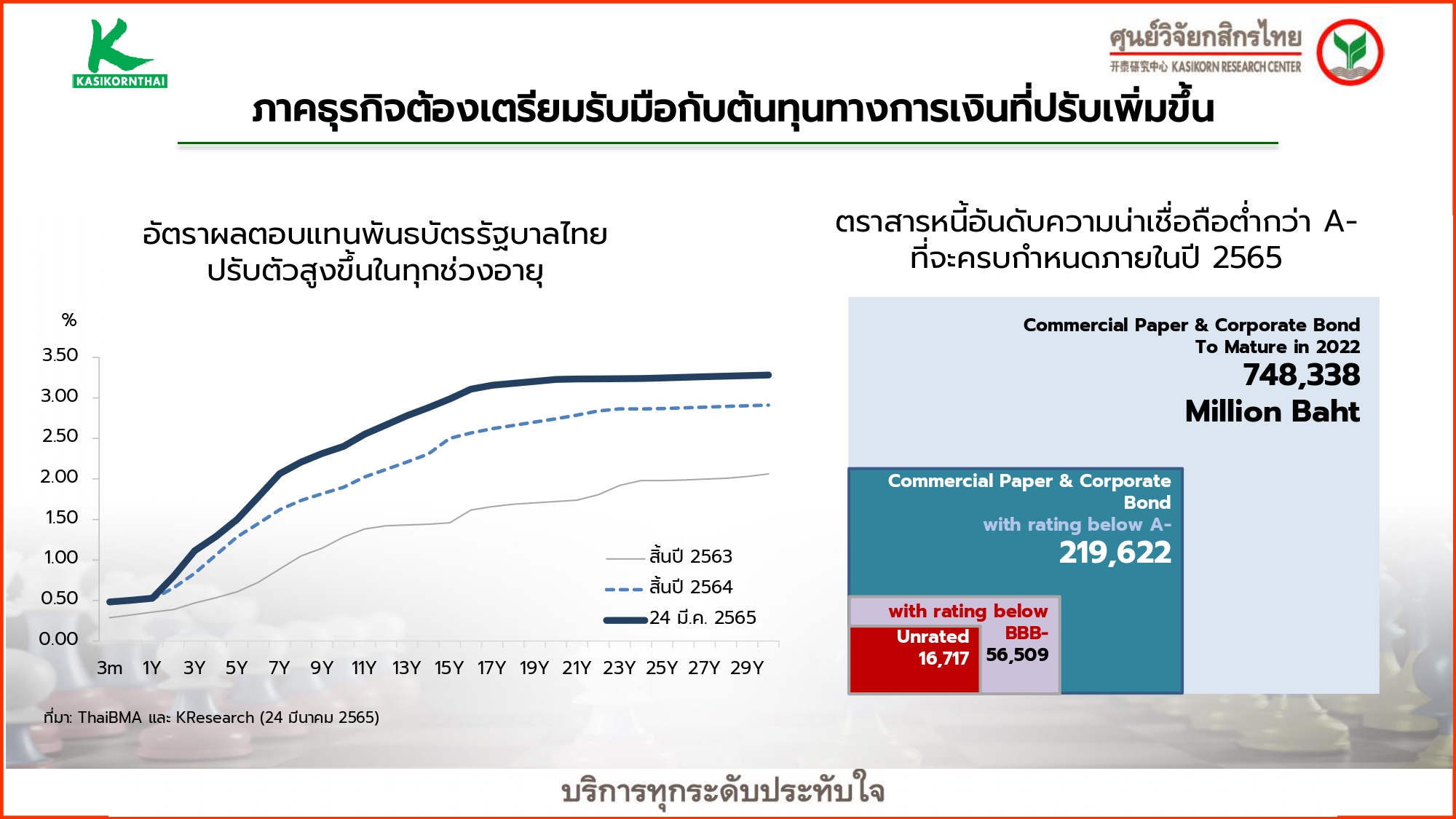
Ms. Thanyalak Watcharachaisurapol, Deputy Managing Director, further stated that while the financial sanctions imposed by major powers on Russia have limited direct impacts based on trade volumes between Russia-Ukraine and Thailand, the focus will be on the ongoing unstable situation, which will cause continued volatility in financial markets and an upward trend in fundraising costs due to the persistent uncertainty and the Fed's interest rate hikes. By 2022, there will be over 700 billion baht in private sector bonds maturing. Additionally, clients in sectors significantly affected will likely require additional support in terms of revolving credit lines for those who can still maintain their orders, as well as addressing debt restructuring and debt quality issues. Overall, business loans in sectors significantly impacted by rising oil and food raw material costs are expected to account for about 4-5% of the total loan portfolio, while the overall credit growth for Thailand's commercial banking system is projected at 4.5% in the baseline scenario.