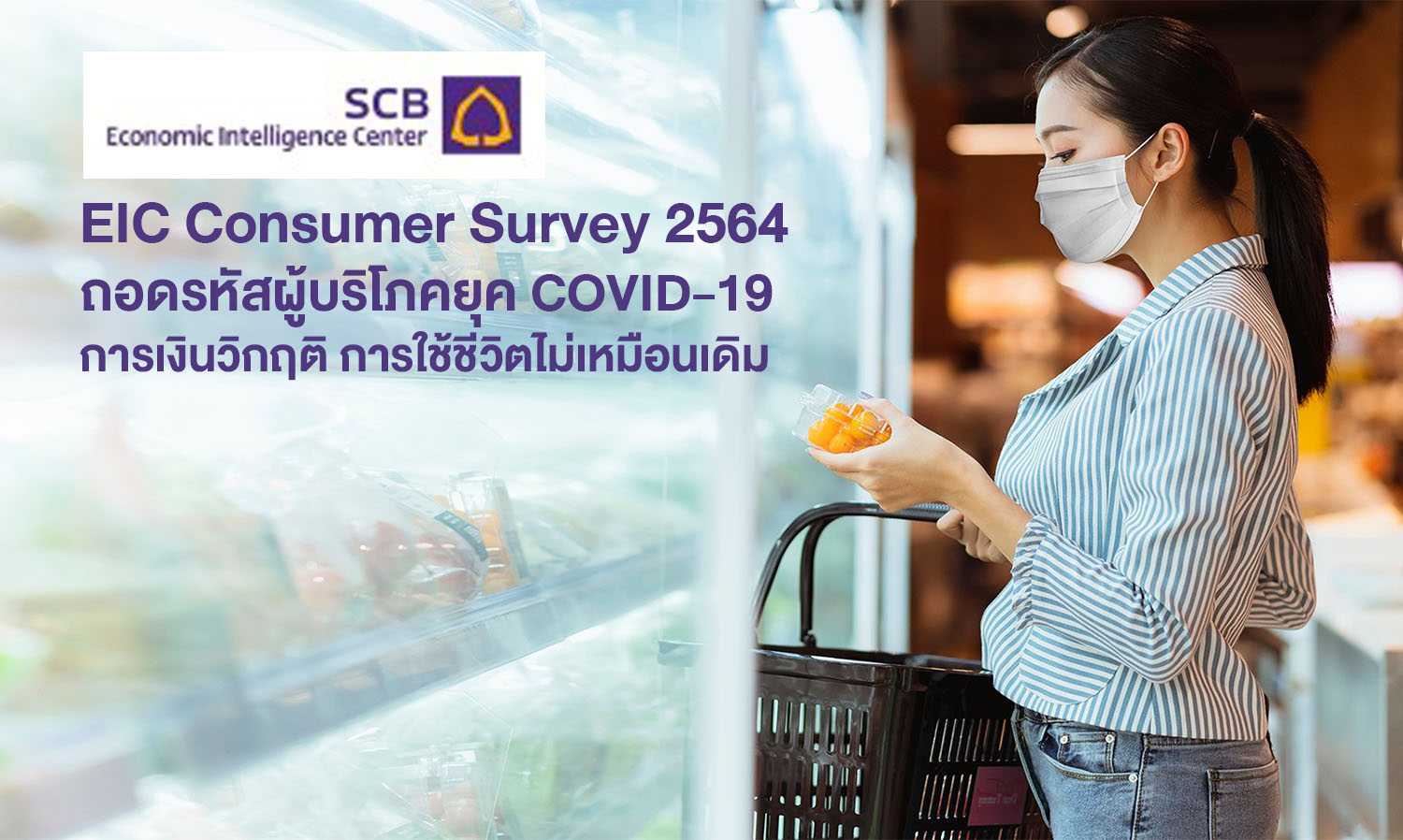
EIC Consumer Survey 2021: Decoding Consumer Behavior in the COVID-19 Era, Financial Crisis, and a Changed Lifestyle
The EIC conducted a survey of 3,205 Thai consumers from August 27 to September 27, 2021, regarding economic changes and behaviors during COVID-19 and trends following the crisis. The survey results can be summarized into three key points as follows:
Point One: “The COVID-19 crisis has significantly impacted the income of many Thai consumers, leading to three major economic issues over the past year: insufficient income for expenses, debt burdens, and financial liquidity problems. These issues are particularly severe among low-income groups.”
- The COVID-19 pandemic has caused nearly half, or 48%, of respondents to experience a decrease in income compared to the pre-COVID-19 period, with 30% of consumers reporting a decline of more than 10%. In contrast, only 24% of consumers saw an increase in income during the same period, primarily among higher-earning employees in the private sector.
- The stagnant income situation has led to economic issues in spending, debt management, and liquidity. The survey found that 63% of respondents are facing issues with insufficient income for expenses. Additionally, over half (56%) of respondents with debt are struggling to make payments, and 52% of all respondents have financial liquidity of less than six months. Notably, 31% of all respondents are facing all three issues simultaneously.
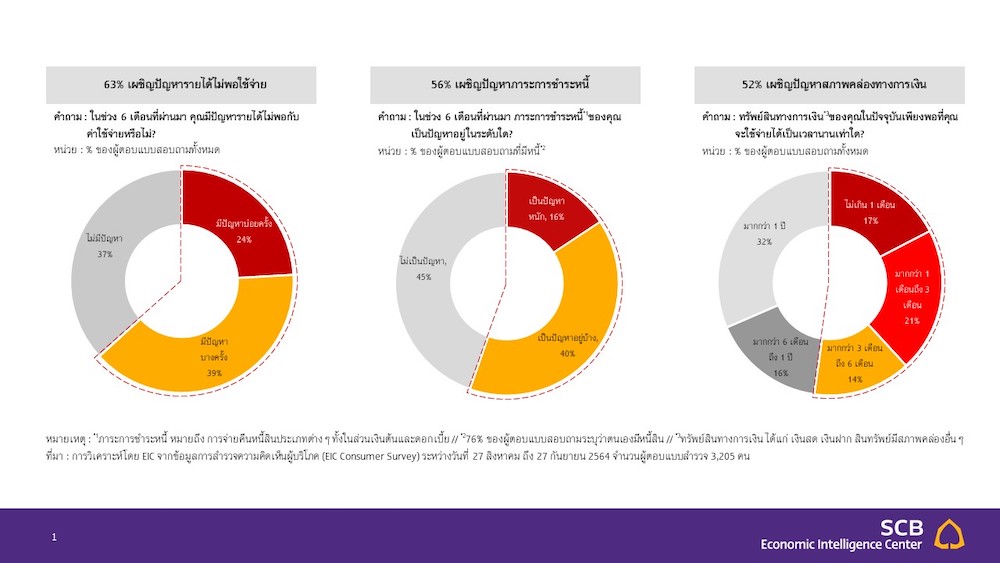
- When examining by income level, the EIC found that low-income consumers, or those earning less than 15,000 baht per month, represent the highest proportion of individuals facing economic issues across all mentioned categories. The proportion of individuals with problems decreases as income levels rise, reflecting that the COVID-19 crisis has severely impacted low-income individuals, highlighting the structural inequality issues in Thai society. Among low-income individuals, 63% reported a decrease in income over the past year, the highest compared to higher-income groups. Similarly, the proportions of low-income individuals facing insufficient income for expenses (87%), debt burdens (78%), and liquidity issues (71%), as well as those facing all three problems (49%), all reflect the greater impact on low-income individuals compared to higher-income groups.
Point Two: “Most consumers believe their income will recover to pre-COVID-19 levels starting next year, but they remain cautious about future spending plans. However, spending on certain domestic services is expected to benefit from pent-up demand, particularly among higher-income groups.”
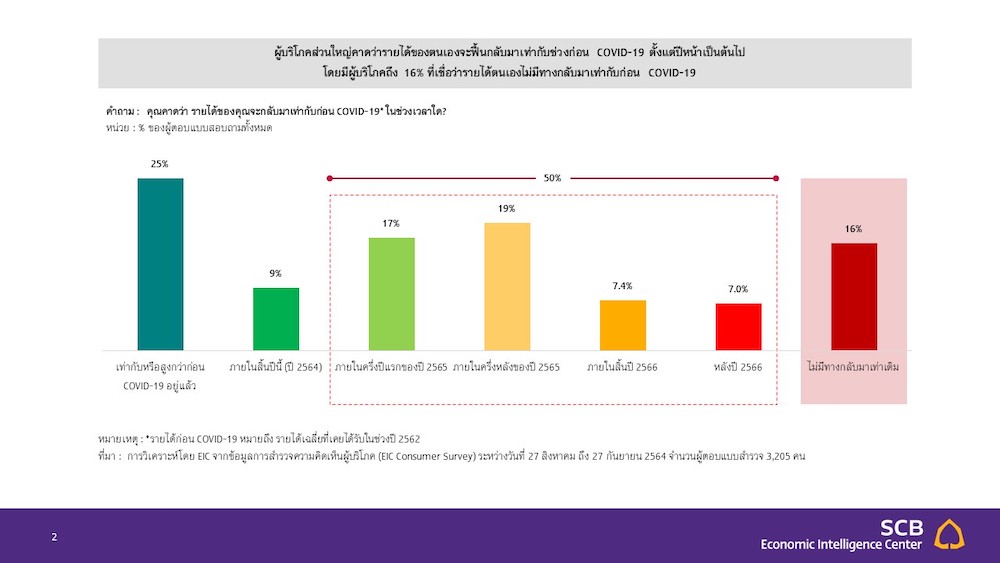
- Looking ahead, half of consumers expect their income to return to pre-COVID-19 levels starting next year, while 16% believe their income will never return to those levels, primarily among low-income individuals and those working in tourism and retail sectors, reflecting the severe impact on these businesses and their challenging recovery prospects.
- The expectation of a slow income recovery pressures future spending plans, with about 72% of consumers indicating they will not increase spending even as the COVID-19 situation improves. Approximately 43% of consumers plan to further reduce their current spending, primarily among those who believe their income will not increase soon.
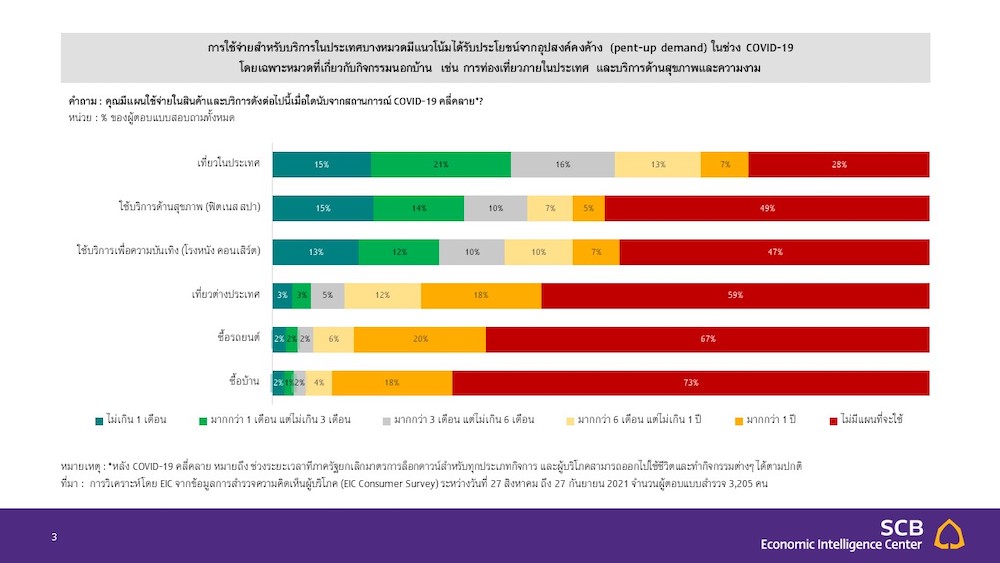
- However, certain spending categories are expected to recover well due to pent-up demand. Most consumers are likely to return to spending on outdoor activities after the situation improves, such as domestic travel and health and beauty services, particularly among higher-income individuals (earning over 100,000 baht per month), who are more inclined to spend in these categories within the next six months due to pent-up demand from the lockdown period and the upcoming tourism season, along with government spending stimulus measures.
- Conversely, for high-value items such as homes and cars, only a small percentage (5-6%) of consumers plan to spend in the next six months, reflecting the impact of stagnant income and confidence levels. Similarly, plans for international travel remain limited among Thai consumers due to income conditions and travel confidence issues.
Point Three: “During COVID-19, Thai consumers have changed their behaviors regarding technology use and spending more time at home, which are likely to become the New Normal.”
- Over the past year, consumers have adjusted their behaviors due to the impacts of the COVID-19 crisis, particularly in technology use and home activities. 41% of consumers reported increased online shopping or shopping for the first time compared to the pre-COVID-19 period, while only 17% increased their overall spending during the same time, reflecting a shift towards online shopping as offline spending faced limitations.
- Moreover, the majority of consumers (57%) have increased their time spent on home activities, such as gardening and cooking, or have engaged in these activities for the first time, as the COVID-19 crisis forced consumers to adapt to working from home and spending more time at home. This behavioral change has led to increased home improvement and decoration purchases, as well as online shopping for home-related products.
- Looking beyond COVID-19, the behaviors consumers have adopted during this period are likely to continue or become the New Normal, even if they decrease somewhat from their peak during COVID-19. For instance, over 86% of consumers indicated they will continue online shopping even after the COVID-19 situation improves, likely due to the convenience of the service. Other behaviors likely to become the New Normal include spending time on home activities, with 91% of consumers stating they will continue these activities, as well as home improvement (67%) and food delivery services (67%). This trend is expected to be supported by the long-term work-from-home policies adopted by many organizations, leading to increased time spent at home. However, these behaviors may decline somewhat as the situation improves, as they could be replaced by outdoor alternatives, with approximately 25-30% of consumers indicating they will continue online shopping and home activities, but at reduced levels compared to during COVID-19, likely due to the availability of offline alternatives such as shopping malls and restaurants reopening.
In summary, the findings from the EIC consumer survey indicate the significant impact of the COVID-19 crisis on Thai consumers, which will continue to affect their confidence in income recovery and overall spending trends in the future, particularly for low-income groups. However, businesses targeting consumers can still find opportunities in spending categories that will accelerate due to pent-up demand among those with purchasing power, as well as in the changing consumer behaviors towards online shopping and spending time at home, which are likely to persist even as the COVID-19 situation begins to improve (for the full analysis, visit https://www.scbeic.com/th/detail/product/7954).
By: Economic Intelligence Center
Siam Commercial Bank Public Company Limited
EIC Online: www.scbeic.com
Line: @scbeic