Cement Industry Joins Forces with Partners to Reduce Greenhouse Gas Emissions
The Cement Industry is collaborating with partners from the government, professional sectors, industry, and academia to advance the reduction of greenhouse gas emissions according to the Thailand NDC Roadmap, while promoting hydraulic cement as a means to combat global warming.
Global and Thai Trends Focus on Greenhouse Gas Reduction Goals
Currently, many countries are becoming increasingly aware of climate change issues, establishing clear guidelines and targets for reducing greenhouse gas emissions in line with the Paris Agreement, which aims to limit the global temperature rise to no more than 1.5 degrees Celsius, thereby reducing the risks of global warming and mitigating the impacts of climate change. For instance, the United States has rejoined the Paris Agreement and aims to cut greenhouse gas emissions by at least 50% by 2030.
China has pledged to achieve a Net Zero Target by 2060, the European Union has enacted the EU Green Deal aiming for Carbon Neutrality by 2050, and South Korea has announced its Green New Deal policy targeting Net Zero by 2050, among others.

Dr. Raveewan Puridech, Secretary-General of the Office of Natural Resources and Environmental Policy and Planning, stated, "The Cabinet has approved climate change as a key national policy and has assigned the Ministry of Natural Resources and Environment, through the Office of Natural Resources and Environmental Policy and Planning, to develop a master plan to address climate change from 2015 to 2030, including the Thailand NDC Roadmap, to provide a framework for relevant agencies to achieve their targets."
In various sectors, such as industrial processes and product usage, the 'clinker substitution measures' have been established as a primary action due to their high potential for reducing greenhouse gas emissions through the adoption of technology alongside research and development, resulting in the creation of cement products that lower CO2 emissions.
Collaborating with Partners to Achieve Goals
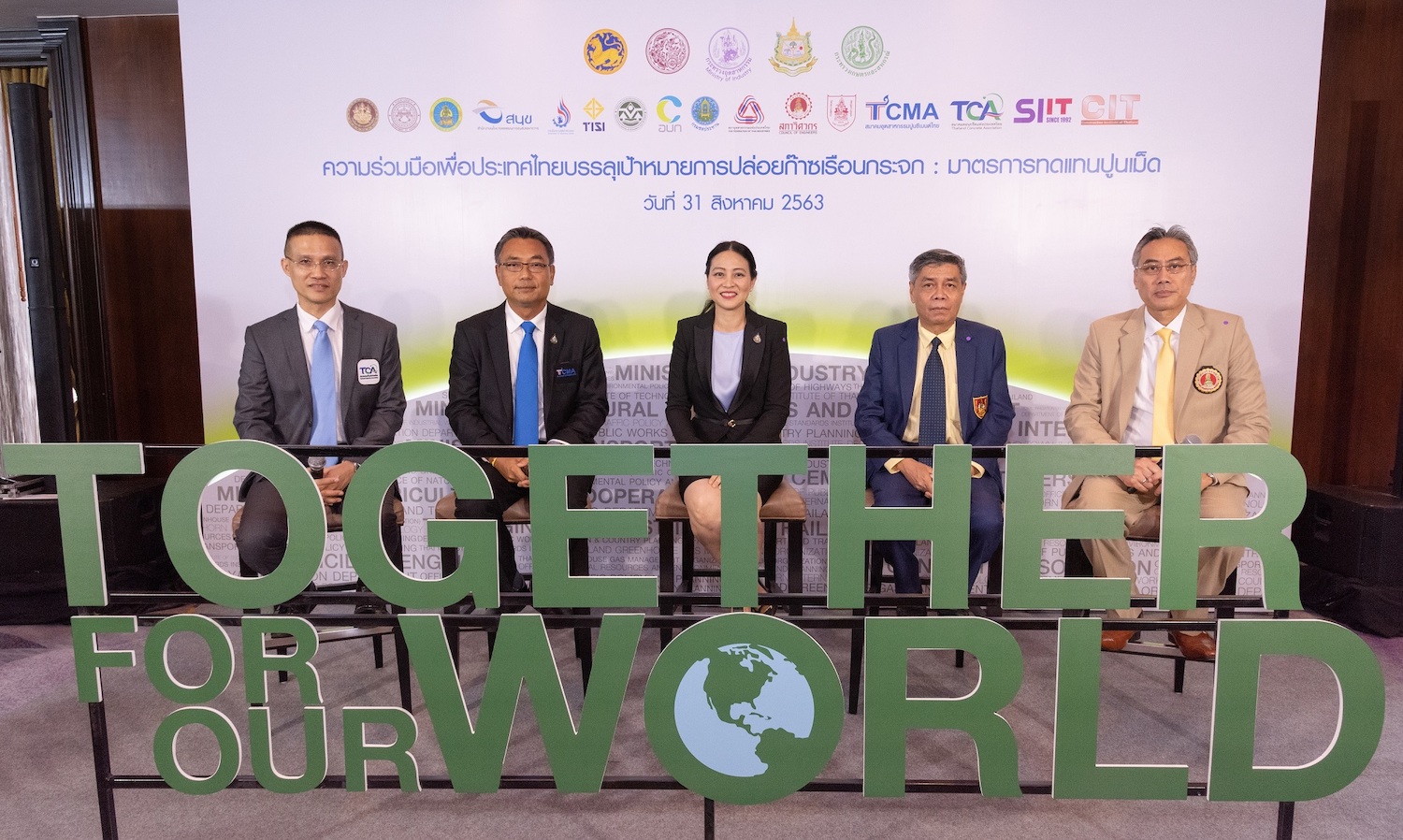
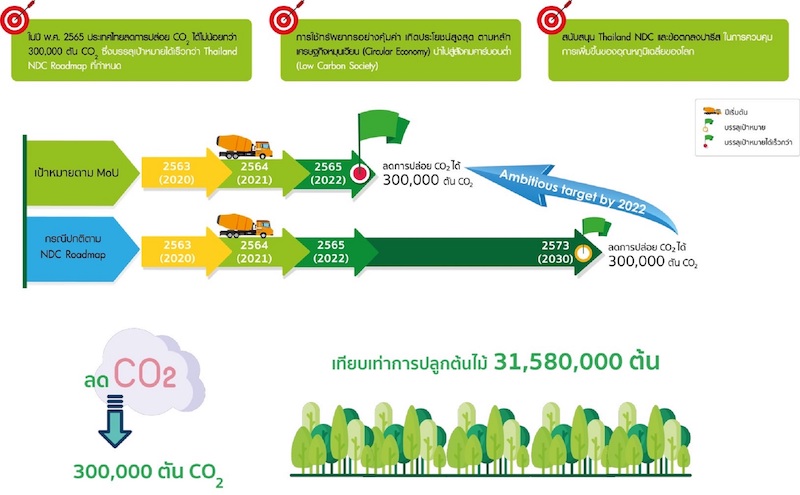
The cooperation of all sectors is crucial for achieving the country's greenhouse gas reduction targets. The Thai Cement Manufacturers Association (TCMA), in collaboration with the Engineering Institute of Thailand under the Royal Patronage, the Council of Engineers, and the Concrete Association of Thailand, has joined forces with 16 partners from the government, professional sectors, industry, and academia to drive the Thailand NDC Roadmap, aiming to reduce greenhouse gas emissions from clinker substitution measures by at least 300,000 tons of CO2 by 2022. This is under a memorandum of understanding on integrating cooperation in climate change management to help Thailand meet its greenhouse gas reduction targets, supported by the Ministry of Natural Resources and Environment, the Ministry of Industry, the Ministry of Transport, the Ministry of Interior, and the Ministry of Agriculture and Cooperatives, covering everything from research and development, technology adoption in production, improving product standards and related regulations, to knowledge dissemination, promotion of usage, and reporting and verification.
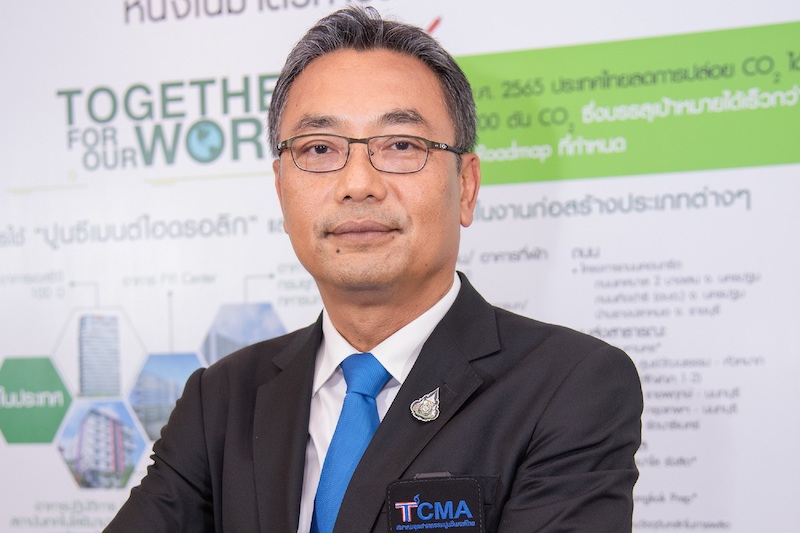
Mr. Chana Poomi, President of the Thai Cement Manufacturers Association (TCMA), emphasized, "TCMA is ready to continue driving forward with all sectors to achieve the target of 300,000 tons of CO2 by 2022. The cement industry prioritizes reducing greenhouse gas emissions throughout the production process, engaging in research and development, and adopting technology. Currently, 'hydraulic cement' certified under Thai standard 2594 is recognized as a Made in Thailand product and is environmentally friendly. Using hydraulic cement instead of Portland cement can significantly reduce greenhouse gas emissions. For instance, 10,000 tons of hydraulic cement can reduce greenhouse gas emissions by 520 tons of CO2, equivalent to planting over 61,000 trees. Therefore, increasing the use of hydraulic cement will further contribute to reducing greenhouse gas emissions."