
Fiscal Policy Office Weekly Economic Indicators Report as of August 27, 2021
Fiscal Policy Office - Weekly Economic Indicators Report as of August 27, 2021:
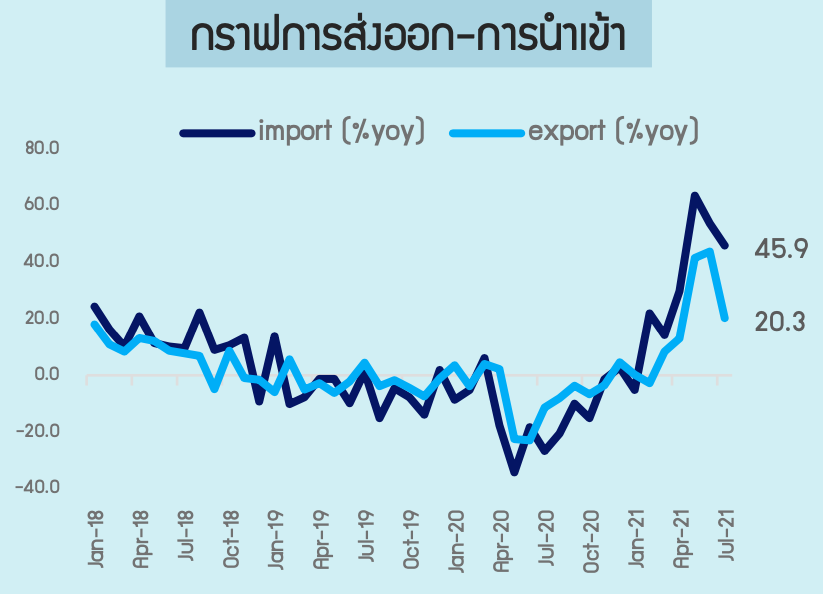
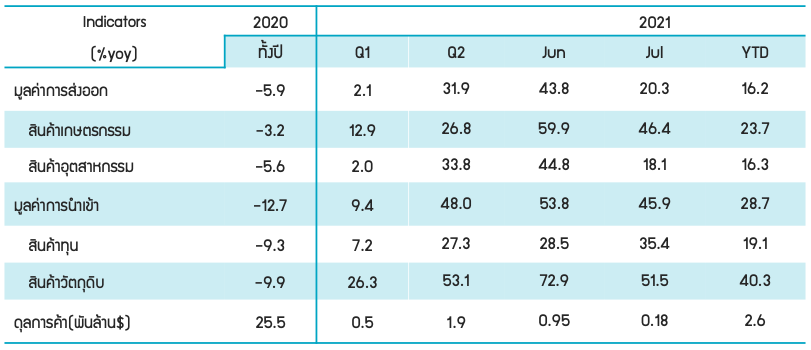
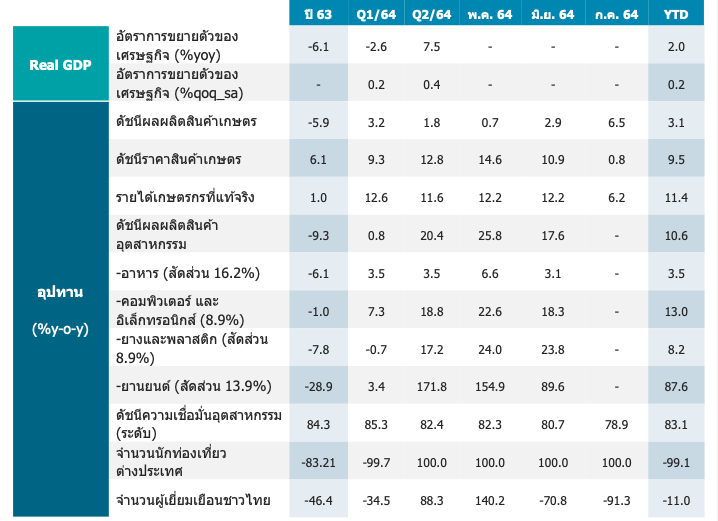
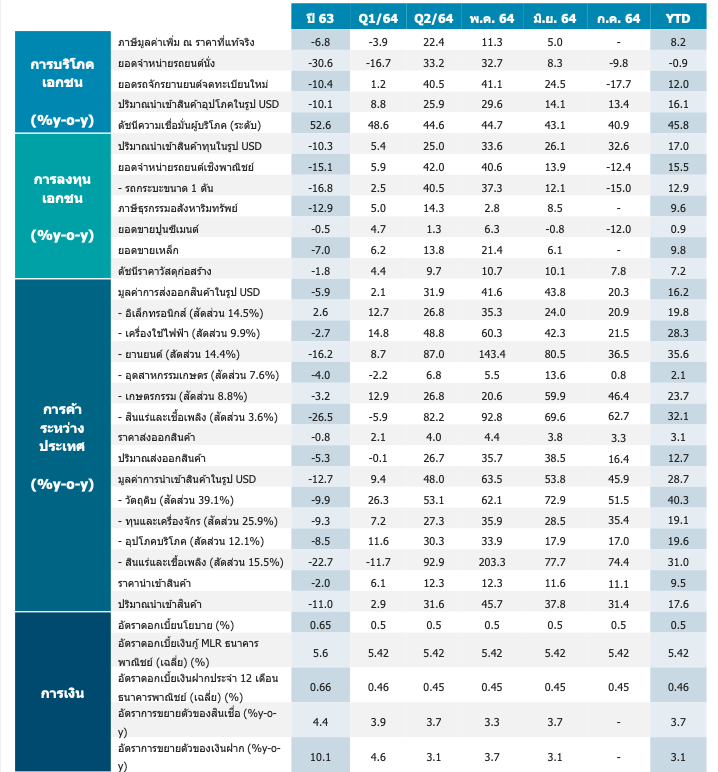
1. The value of exports in July 2021 grew by 20.3% compared to the same period last year, while the value of imports grew by 45.9% compared to the same period last year.
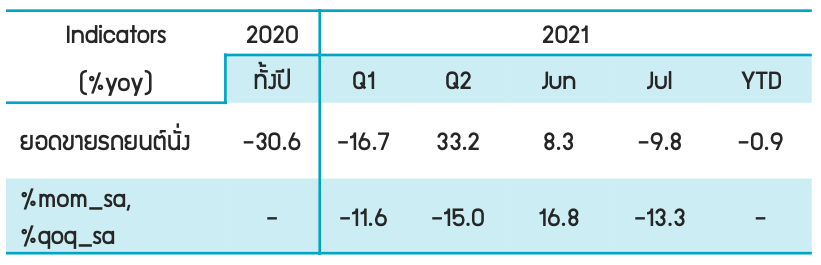
2. The sales volume of passenger cars in July 2021 decreased by 9.8% compared to the same period last year.
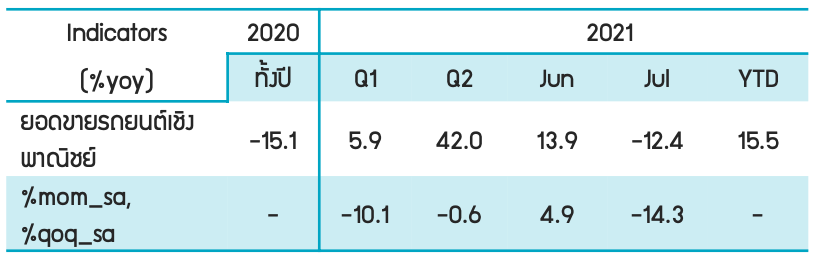
3. The sales volume of commercial vehicles in July 2021 decreased by 12.4% compared to the same period last year.
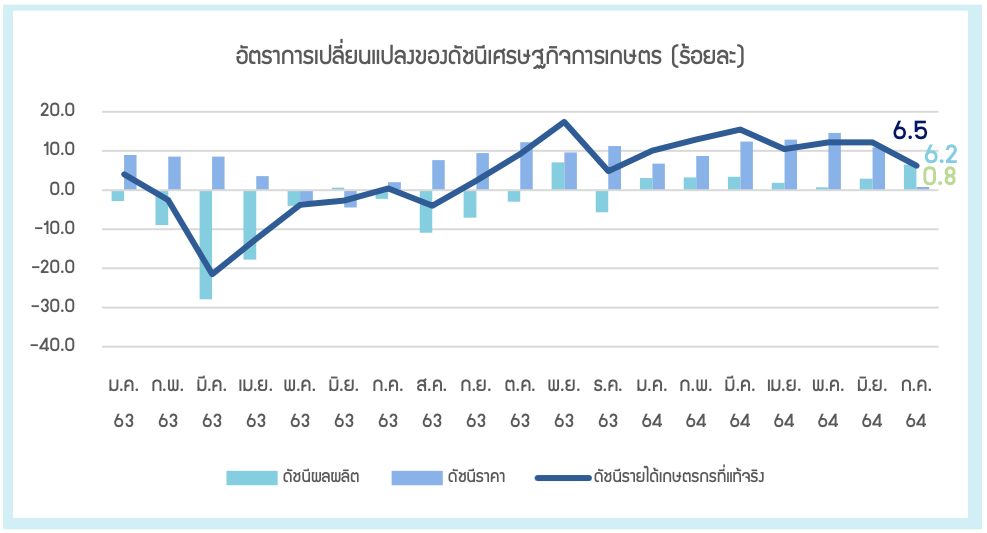
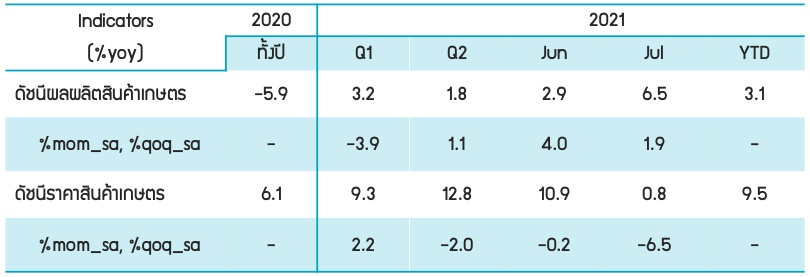
4. The agricultural product output index in July 2021 grew by 6.5% compared to the same period last year, while the agricultural product price index grew by 0.8% compared to the same period last year.
Thai Economic Indicators
The value of exports in July 2021 was $22,651 million, representing a growth of 20.3% compared to the same period last year. This marks the fifth consecutive month of growth. Key products supporting exports during this month included automobiles and components (39%), computers (19%), rubber products (16%), plastic pellets (58%), chemicals (54%), refined oil (71%), electrical circuit boards (26%), vegetables and fruits (80%), rubber (121%), cassava products (62%), pet food (17%), and wheat products and other processed foods (8.4%). When considering major trading partners, growth was observed in nearly all key markets, especially the United States, China, Japan, the European Union, ASEAN, and India. The average export growth over the first seven months of 2021 was 16.2% year-on-year.
The value of imports in July 2021 was $22,467 million, showing a significant growth of 45.9% compared to the same period last year. This growth was driven by key import categories such as crude oil, chemicals, machinery and components, steel, electrical machinery and components, and other metal ores. The average import growth over the first seven months of 2021 was 28.7% year-on-year. The trade balance in July 2021 remained in surplus at $184 million, resulting in a cumulative trade surplus of $2,623 million for the first seven months of 2021.
The sales volume of passenger cars in July 2021 was 16,689 units, a decrease of 9.8% compared to the same period last year, and a seasonally adjusted decrease of 13.3% compared to the previous month. This decline was partly due to the severe and widespread COVID-19 outbreak in the country, which made consumers cautious about spending during this period. Additionally, financial institutions have become stricter in granting loans due to the ongoing rise in household debt. Furthermore, the semiconductor shortage continues to impact the automotive manufacturing sector.
The sales volume of commercial vehicles in July 2021 was 35,753 units, a decrease of 12.4% compared to the same period last year, and a seasonally adjusted decrease of 14.3% compared to the previous month. The sales of one-ton pickup trucks decreased by 15.0% compared to the same period last year.
Sales of commercial vehicles in the country have contracted for the first time in five months, primarily due to the new wave of COVID-19 outbreaks that are severe and slow to resolve compared to previous outbreaks, leading consumers to be more cautious with their spending. Financial institutions have also tightened their loan approval processes, along with issues related to semiconductor shortages and automotive parts due to the COVID-19 outbreaks in both the country and partner countries producing automotive parts. These factors are expected to continue to pressure commercial vehicle sales in the near future. However, the easing of government pandemic control measures expected to begin in September 2021 may help restore consumer confidence in spending.
The agricultural product output index in July 2021 grew by 6.5% compared to the same period last year, or a growth of 1.9% compared to the previous month after seasonal adjustment. When considering the agricultural product categories in July 2021, the output of agricultural products grew in the major crop and livestock categories by 10.8% and 2.0%, respectively, while the output in the fisheries category decreased by 16.0%. Key agricultural products with increased output included paddy, rubber, cassava, fruit trees, and pigs, while significant products with decreased output included animal feed corn and white shrimp.
The agricultural product price index in July 2021 grew by 0.8% compared to the same period last year, or a decrease of 6.5% compared to the previous month after seasonal adjustment. When considering the price categories of agricultural products in July 2021, the agricultural product price index grew in the major crop category by 1.7%, while prices in the livestock and fisheries categories decreased by 0.9% and 7.0%, respectively. Key agricultural products with increased prices included rubber, cassava, palm oil, and chicken eggs, while products with decreased prices included paddy, fruit trees, and white shrimp.
International Economic Indicators
United States
Existing home sales in July 2021 grew by 2.0% from the previous month (seasonally adjusted), accelerating from the previous month’s growth of 1.6% (seasonally adjusted) due to increased sales of single-family homes in the Midwest, South, and West regions. Year-on-year, existing home sales in July 2021 continued to grow, but at a slower rate than the previous month’s growth of 1.5% compared to the same period last year.
The median price of existing homes in July 2021 decreased by 0.8% from the previous month (seasonally adjusted), while the previous month saw a growth of 3.5% from the previous month (seasonally adjusted). However, year-on-year, the median price of existing homes in July 2021 continued to grow, but at a slower rate than the previous month’s growth of 17.8% compared to the same period last year. New home sales in July 2021 grew for the first time in four months by 1.0% from the previous month (seasonally adjusted) after a decline of 2.6% in the previous month (seasonally adjusted), with increased sales in the South and West regions. However, year-on-year, new home sales in July 2021 saw a sharper decline of 27.2% compared to the same period last year.
The number of first-time unemployment claims for the week of August 15-21, 2021, was 353,000, an increase from the previous week’s 349,000 after a continuous decline for four weeks. This level remains higher than the pre-pandemic average of 200,000 weekly claims in the U.S. The U.S. labor market continues to face labor shortages and the spread of the Delta variant of COVID-19. However, the situation in September 2021 will be closely monitored as the unemployment benefits program is set to end and a new school year begins, which is expected to support labor market growth in the U.S.
Japan
The Manufacturing PMI in August 2021 decreased to 52.4 points from 53.0 points in July 2021 due to a slowdown in production and new orders.
The Services PMI in August 2021 decreased to 43.5 points from 47.4 points in July 2021 due to restrictions imposed to control the spread of COVID-19.
Eurozone
The preliminary Manufacturing PMI in August 2021 was at 61.5 points, down from 62.8 points in the previous month. However, the index remains above 50 points, indicating continued expansion in the manufacturing sector.
The preliminary Services PMI in August 2021 was at 59.7 points, slightly down from 59.8 points in the previous month, but still above 50 points, indicating continued expansion in the services sector.
The preliminary Consumer Confidence Index in August 2021 was at -5.3 points, down from -4.4 points in July 2021, as households are concerned about the rising number of COVID-19 cases.
Singapore
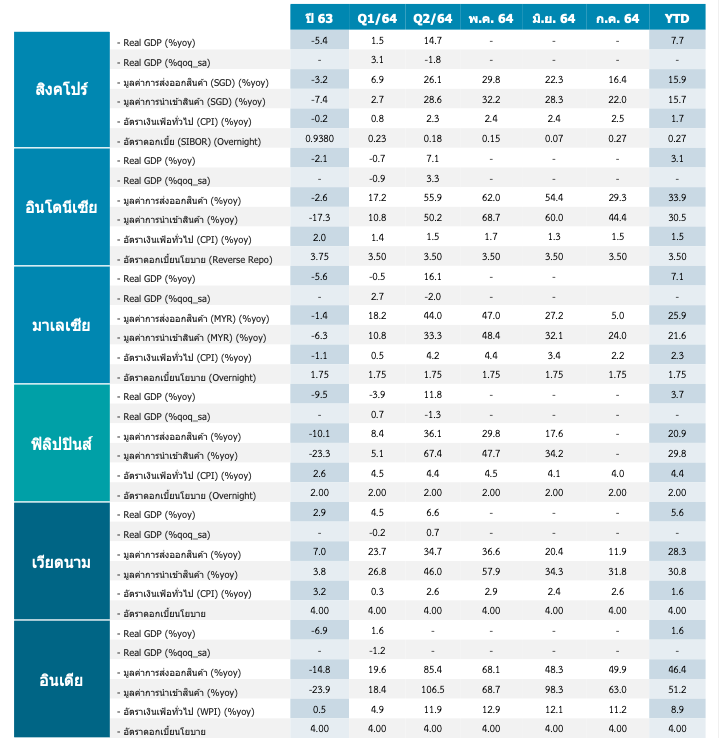
Industrial production in July 2021 grew by 16.3% compared to the same period last year, down from 28.0% growth in the previous month due to significant machinery production.
Inflation in July 2021 grew by 2.5% compared to the same period last year, up from 2.4% in the previous month, primarily due to food prices.
Malaysia
The value of exports in July 2021 grew by 5.0% compared to the same period last year, down from 27.2% growth in the previous month.
The value of imports in July 2021 grew by 24.0% compared to the same period last year, down from 32.1% growth in the previous month.
The trade balance in July 2021 was in surplus at 13.7 billion Malaysian Ringgit, down from a surplus of 22.2 billion Malaysian Ringgit in the previous month.
Inflation in July 2021 grew by 2.2% compared to the same period last year, down from 3.4% in the previous month, primarily due to transportation costs.
Hong Kong
The value of exports in July 2021 grew by 26.9% compared to the same period last year, slowing down from 33.0% growth in the previous month, with increased exports in the categories of electrical equipment, tools, and office machinery and automation equipment.
The value of imports in July 2021 grew by 26.1% compared to the same period last year, slowing down from 31.9% growth in the previous month, resulting in a trade deficit of -34.9 billion Hong Kong dollars in July 2021, down from a deficit of -40.5 billion Hong Kong dollars in the previous month.
Australia
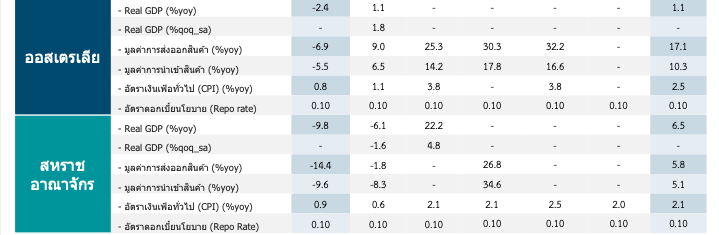
The Manufacturing PMI in August 2021 decreased to 51.7 points from 56.9 points in July 2021 due to a decline in production and new orders.
The Services PMI in August 2021 decreased to 43.3 points from 44.2 points in July 2021 due to the expansion of COVID-19 control measures.
South Korea
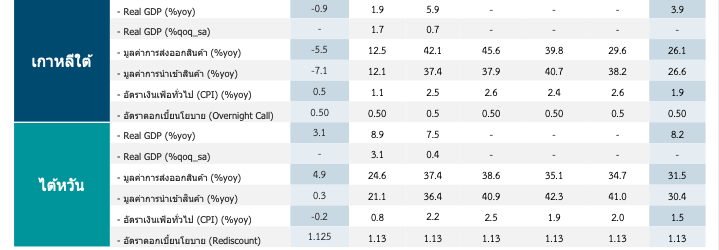
The Bank of Korea raised the policy interest rate to 0.75% per annum from the previous 0.5% per annum to curb rising domestic demand.
The Consumer Confidence Index in July 2021 was at 102.5 points, down from 103.2 points in the previous month and the lowest level since May 2021, as citizens are concerned about the current economic situation and confidence in the future economic outlook has decreased.
Taiwan
The unemployment rate in July 2021 was at 4.36% of the total labor force, down from 4.7% in the previous month, with the number of employed persons and the labor force participation rate increasing from the previous month.
Industrial production in July 2021 grew by 13.93% compared to the same period last year, slowing down from 18.00% growth in the previous month, and is the lowest level in five months due to reduced production in the mining, manufacturing, and water supply industries.
Retail sales in July 2021 decreased by 10.3% compared to the same period last year, a slower decline than the previous month’s decrease of 13.3% compared to the same period last year, with retail sales increasing in the categories of fuel, electronics, information and communication equipment, and household appliances.
United Kingdom
The Manufacturing PMI in August 2021 slightly decreased to 50.1 points from 60.4 points in July 2021 due to a slowdown in factory activity growth.
The Services PMI in August 2021 decreased to 55.5 points from 59.6 points in July 2021.
Money Market and Exchange Rate Indicators
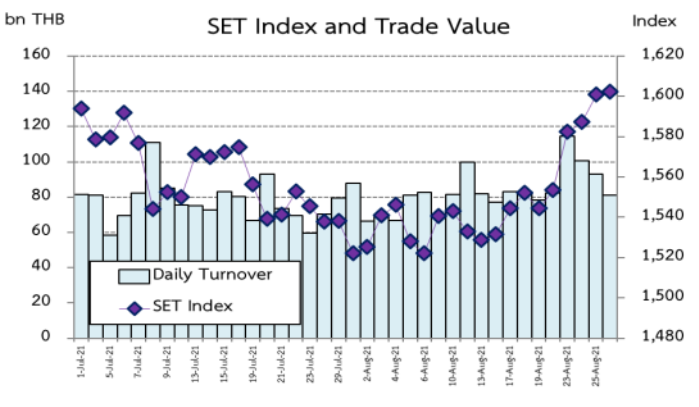
The SET index slightly increased from the previous week, in line with other regional stock markets that also rose from the previous week, such as Nikkei225 (Japan), DJIA (USA), and KLCI (Malaysia). On August 26, 2021, the index closed at 1,601.91 points, with an average trading value between August 23-26, 2021, of 97,365.29 million baht per day. Foreign investors, domestic institutional investors, and securities company accounts were net buyers, while general domestic investors were net sellers. During August 23-26, 2021, foreigners net bought securities worth 7,402.84 million baht.
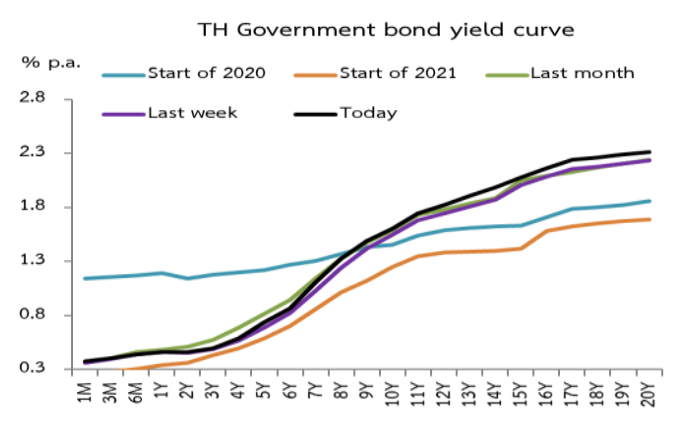
The overall yield on government bonds increased by 1 to 11 basis points. This week, investors participated in the auction of 30-year government bonds, which attracted 2.71 times the auction amount. During August 23-26, 2021, foreign capital inflow into the bond market was net 25,186.42 million baht, and since the beginning of the year until August 26, 2021, foreign capital inflow into the bond market was net 104,369.37 million baht.
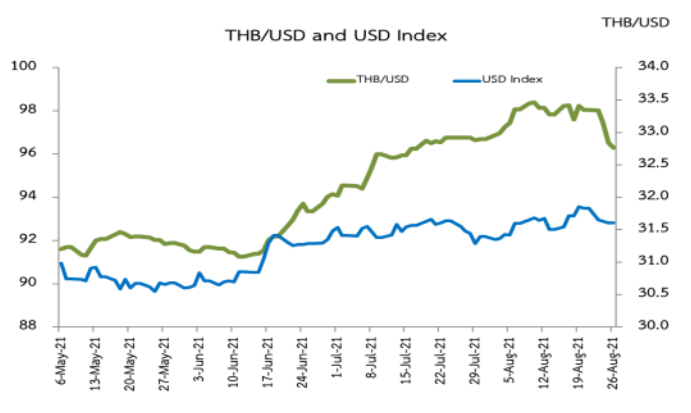
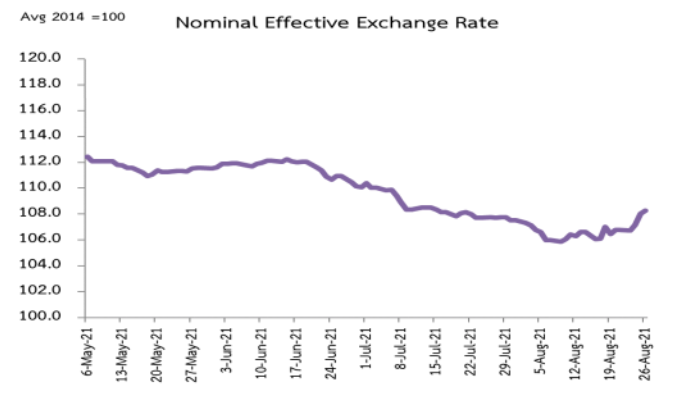
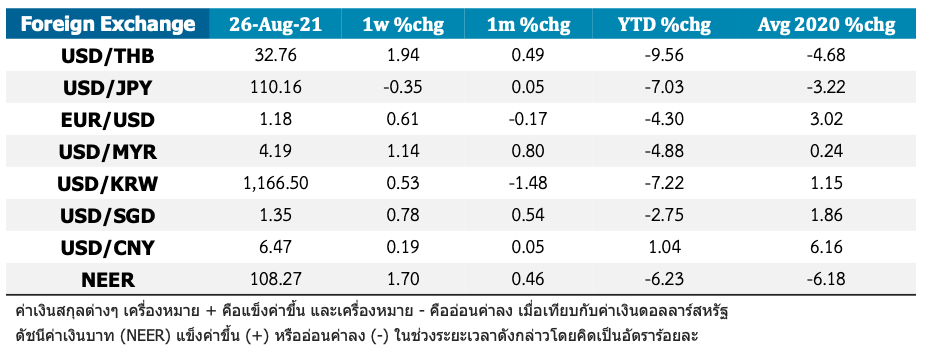
The Thai baht appreciated against the previous week, closing at 32.76 baht per US dollar on August 26, 2021, appreciating by 1.94% from the previous week. This aligns with the appreciation of the euro, ringgit, won, Singapore dollar, and yuan against the US dollar, while the yen depreciated against the US dollar compared to the previous week. The baht appreciated more than other major currencies in the region, resulting in the NEER index appreciating by 1.70% from the previous week.
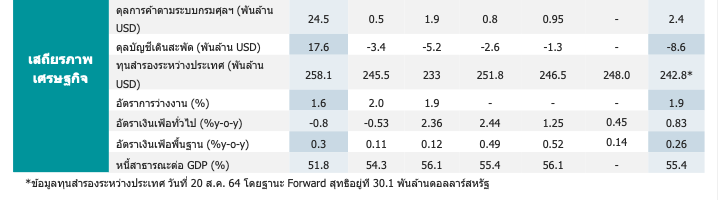
Economic Indicators
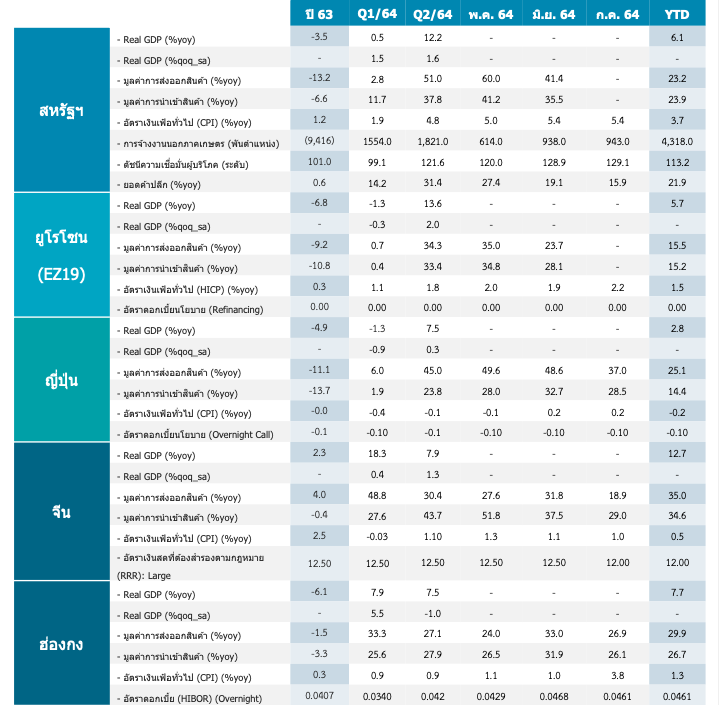
Global Economic Indicators
Thank you for the information from: Macroeconomic Policy Bureau, Fiscal Policy Office, Ministry of Finance, 02-273-9020 Ext. 3259