KR-ECI Index in July Drops Below Last Year's Lockdown Levels (April 2020); Over Half of Households Affected by Lockdown with Decreased Employment Income
KR Household Economic Condition Index (KR-ECI): The KR-ECI index in July has dropped below the levels seen during last year's lockdown (April 2020), with over half of households affected by the lockdown experiencing reduced employment income.
The household economic and living condition index has been declining continuously since the outbreak began in April, falling below last year's levels during the nationwide lockdown in April 2020.
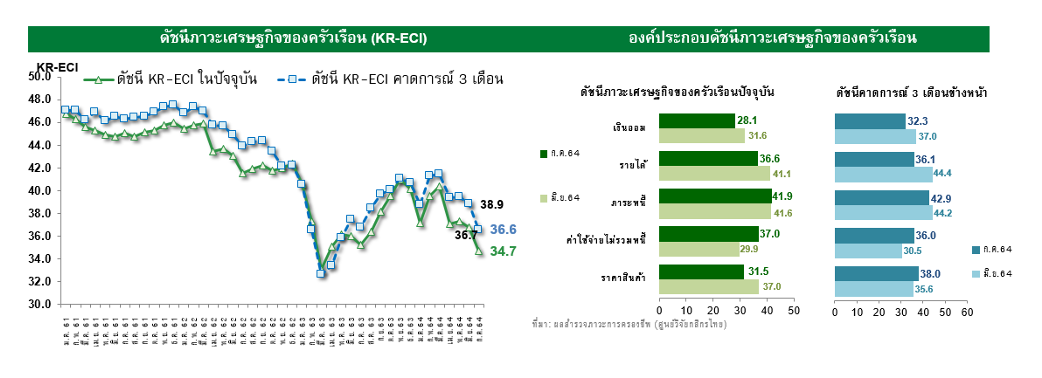
• Since the beginning of April, when the third wave of COVID-19 emerged, the household economic and living condition index (KR-ECI) has been on a downward trend, reaching 34.7 in July 2021, which is lower than the 35.1 recorded in April 2020 (during the nationwide lockdown). Meanwhile, the three-month forecast index stands at 36.6, down from 38.9 the previous month, indicating that households remain concerned about the economic situation and their living conditions, particularly regarding employment and income.
• The Kasikorn Research Center conducted an additional survey on the impact of the lockdown in 10 highly controlled provinces, revealing that more than half of households were affected by the lockdown, experiencing reduced employment income. Some households were unable to access government assistance measures (such as the co-payment scheme and the 'more use, more gain' program), and some programs did not meet their needs. These factors further impact the purchasing power of the population (the survey was conducted at the end of July).
• In the near future, the economic and living conditions of households will continue to face high uncertainty. In August, the control measures for the outbreak became stricter and more widespread. Therefore, comprehensive economic relief measures that are accessible to those affected remain essential. Recently, additional relief measures for nine occupational groups in 13 provinces have been introduced, which may help sustain livelihoods to some extent. However, accelerating the management of the situation to reduce daily infection rates, including proactive testing and vaccine distribution, remains crucial.
Source: Household Living Condition Survey (Kasikorn Research Center)
In July 2021, the COVID-19 outbreak situation remains concerning, with daily infection rates at high levels and continuously setting new records. The death rate is also high. Recently, the Delta variant, which spreads easily, has become the dominant strain in the country, leading to increased severity of the outbreak and the implementation of stricter control measures since early July 2021, starting with the closure of worker camps and lockdowns (closing high-risk businesses and restricting travel in 10 provinces for 14 days). By the end of July 2021, these measures were extended to cover 13 provinces. This situation has led to a decline in economic activities, and the uncertainty surrounding the high number of infections continues to pressure the household economic and living condition index (KR-ECI), which has dropped to 34.7, lower than the 35.1 recorded during the nationwide lockdown in April 2020. The index for household economic and living conditions over the next three months has also decreased to 36.6 from 38.9 in June, reflecting ongoing household concerns about the economy and living conditions. Notably, households are increasingly worried about the price levels of goods, with the index dropping to 31.5 in July from 37.0 in June, aligning with the inflation rate in Thailand, which rose to 0.45% in July. Excluding the effects of government measures to alleviate utility costs, the inflation rate would have increased to 1.8%. Contributing factors to inflation, aside from oil prices, include rising fresh food prices due to increased demand during the lockdown. Meanwhile, household purchasing power continues to be pressured by the financial vulnerabilities accumulated from last year's outbreak, which have not yet recovered, as reflected in household debt levels at 90.5% of GDP in the first quarter of 2021. Additionally, households are increasingly concerned about income and employment.
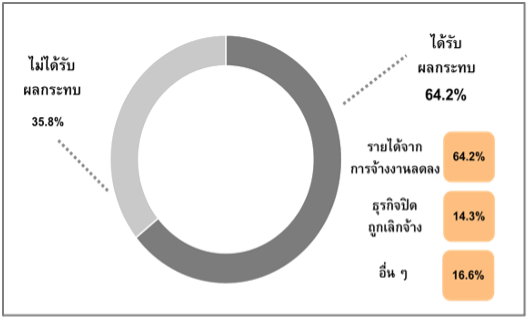
The Kasikorn Research Center conducted further surveys regarding the impacts of the lockdown in 10 high-risk provinces, finding that 64.2% were affected by the lockdown, with the majority (64.2%) experiencing reduced employment income. Some (14.3%) reported business closures and layoffs, exacerbating the already fragile labor market. Recently, in the second quarter of 2021, the unemployment rate remained high at 730,000 people.
The recovery trajectory of the labor market remains highly uncertain, especially for workers in the tourism sector. Although in July 2021, the Phuket Sandbox project was launched to welcome foreign tourists without quarantine, the worsening outbreak situation both domestically and internationally resulted in only 14,055 foreign tourists arriving in Phuket in July 2021, with an average spending of 5,400 baht per person per day (excluding airfare). This number is still lower than the government's previous estimates (with expectations of 100,000 tourists in the third quarter). Currently, stricter outbreak control measures have been implemented in Phuket, which will affect activities and the ability of various venues to operate fully.
Have you been affected by the heightened COVID-19 outbreak control measures? In what ways?
Source: Household Living Condition Survey (Kasikorn Research Center)
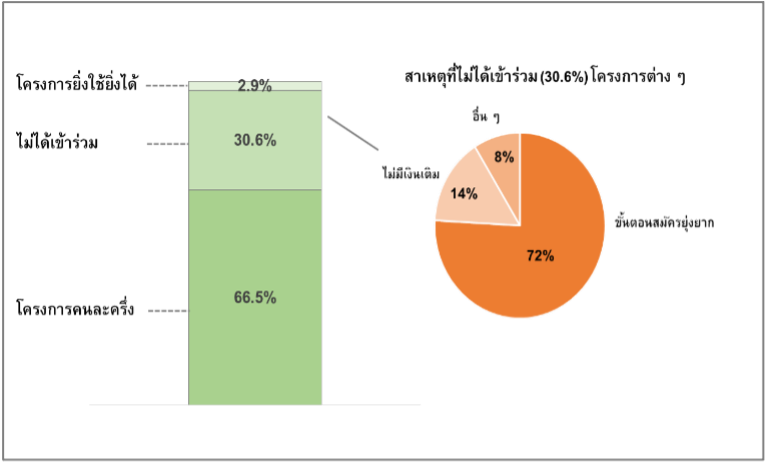
Which government economic stimulus program have you participated in during the second half of the year (for those without welfare cards)?
Source: Household Living Condition Survey (Kasikorn Research Center)
Government economic relief measures are essential to support households' livelihoods. During the survey period, the government had two programs: the third phase of the co-payment scheme and the 'more use, more gain' program. The Kasikorn Research Center found that 30.6% of households did not participate in either program due to the perceived complexity of the application process. Additionally, only 2.9% participated in the 'more use, more gain' program, which aims to stimulate the economy through savers. Both programs were launched before the outbreak situation worsened and strict control measures were implemented as seen today. If the outbreak situation had not been so severe, these programs might have encouraged more public participation. However, the government has recently introduced relief measures for nine occupational groups in 13 lockdown areas, which may help alleviate some of the impacts.
The household economic and living condition index continues to face high uncertainty. The prolonged outbreak situation and stricter control measures will further pressure the labor market and household purchasing power. Therefore, the government should implement targeted and easily accessible relief measures to mitigate the impacts while efficiently procuring, distributing, and administering vaccines. Additionally, it is crucial to accelerate the management of the situation, such as through proactive testing, as every passing moment represents a loss for the public and the country.
In summary, the current household economic and living condition index (KR-ECI) as of July 2021 and the three-month forecast indicate ongoing household concerns regarding income and employment. With lockdown measures in 13 high-risk provinces in August, the impacts will likely increase. The government should implement targeted and easily accessible relief measures while accelerating efforts to control the situation, including vaccine distribution, to alleviate the outbreak.
Thank you for the information from the Kasikorn Research Center - K Research