US Raises Steel and Aluminum Tariffs by 25% on All Countries: How Will It Affect Thailand? (Kasikorn Research Center)

Why Did the US Raise Steel and Aluminum Import Tariffs?
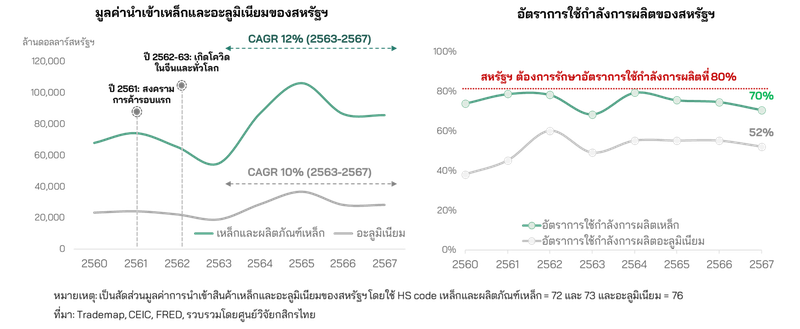
The US raised tariffs on steel and aluminum imports to reduce imports and support domestic manufacturers, as the capacity utilization rate fell below 80%.

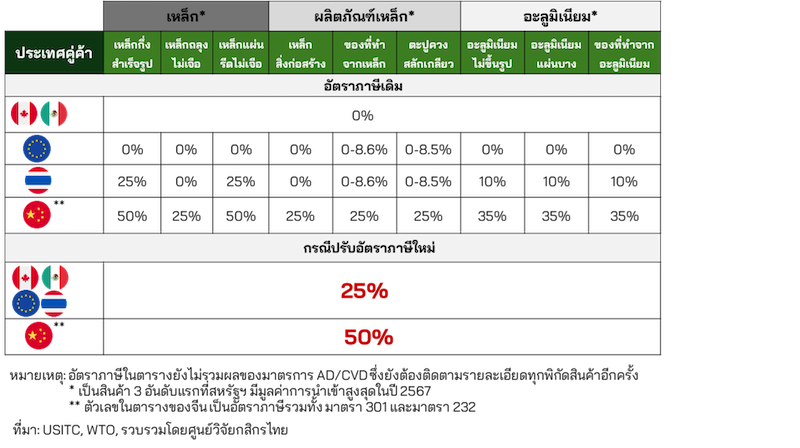
Trump announced a 25% tariff on steel and aluminum imports from all countries, including the cancellation of exemptions and quotas, effective March 12, 2025. This adjustment modifies the “Section 232” tax collection conditions for national security, which previously imposed 25% and 10% tariffs on certain steel and aluminum imports from all countries. However, some countries, such as Canada, Mexico, South Korea, the European Union, the UK, and Japan, were later exempted or given quotas.

Figure 1: US Steel and Aluminum Imports Increase, Resulting in a Decrease in Capacity Utilization Rate

The US's blanket tariff increase on imports from all countries is a result of rising steel and aluminum imports from around the world in recent years (Figure 1), which has impacted domestic producers. This is reflected in the average annual growth of US steel and aluminum imports at 12% and 10% (CAGR 2020-2024), leading to a continuous decline in capacity utilization rates for US manufacturers, averaging 70% and 52%, respectively.

Who Will Be Affected by the US Steel and Aluminum Tariff Increase?

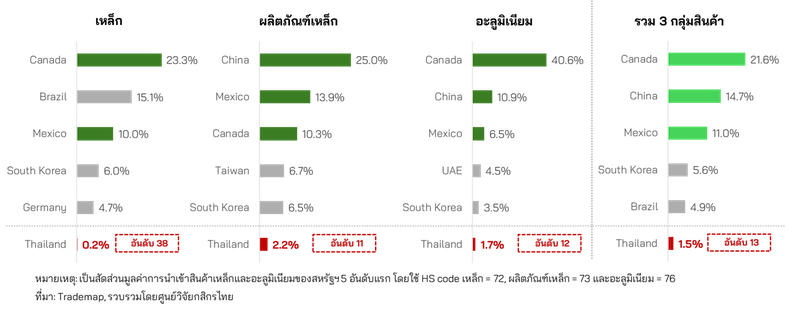
The tariff increase will primarily impact major trading partners like Canada, Mexico, and China, while Thailand will be less affected due to its imports accounting for less than 2%.

This round of tariff increases will reduce US demand for steel and aluminum imports and shift towards domestically produced goods. Thus, the majority of the impact is likely to fall on major trading partners, particularly Canada, Mexico, and China, from which the US imports over 48%, while Thailand may not be significantly affected as it accounts for only 1.5% of US imports (Figure 2).

Figure 2: Major Sources of US Steel and Aluminum Imports in 2024
Additionally, Canada and Mexico were previously exempt from steel and aluminum import tariffs (Section 232) since Trump's first term and have a free trade agreement (USMCA). Therefore, the 25% tariff increase will raise the prices of steel and aluminum products in the US from these countries compared to Thailand and others (Figure 3). However, further details need to be monitored, including product classifications, countries that the US will exempt/enforce measures against, and the positions of various countries.

Figure 3: Original-New Tariff Rates Expected to Be Imposed by the US on Major Trading Partners and Thailand

How Will the US Tariff Increase Affect Thailand?

The Kasikorn Research Center believes that Thai steel and aluminum products may face more direct impacts than steel, as the US is a significant export market.
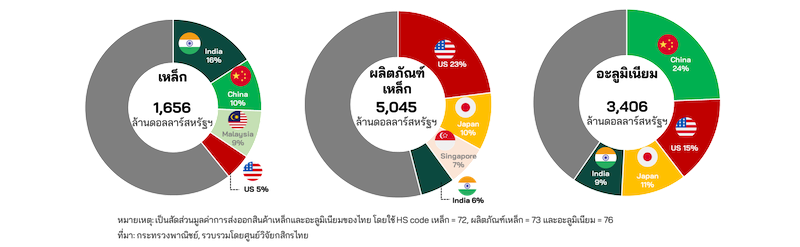
The impact of the US's steel and aluminum import tariff increase varies by product. The details are as follows (Figure 4):

• Steel will face limited impact, as Thailand exports only 5% of its total steel exports to the US. Moreover, most steel products exported to the US, such as various rolled steel and steel bars/wires, have already been subject to a 25% import tariff since Trump's first term, resulting in minimal additional impact compared to other products.

• Steel products will be more affected than steel itself, as the US is Thailand's number one export market for steel products, accounting for 23% of total steel product exports. Additionally, products that Thailand exports significantly, such as steel pipes and construction steel, have never been subject to a 25% import tariff. Furthermore, there are other downstream steel products that the US will expand the scope of.

• Aluminum will be affected, as the US is Thailand's second-largest export market for aluminum, accounting for 15% of total aluminum exports. Currently, Thailand is subject to a 10% import tariff, which will increase to 25%, raising the export prices of Thai aluminum. Notably, the main aluminum products exported to the US include aluminum foil and thin aluminum sheets.

Figure 4: Thailand's Steel and Aluminum Product Export Markets in 2024
Moreover, the indirect impacts from increased competition are expected to intensify in both domestic and export markets, which will affect Thailand's manufacturing sector.

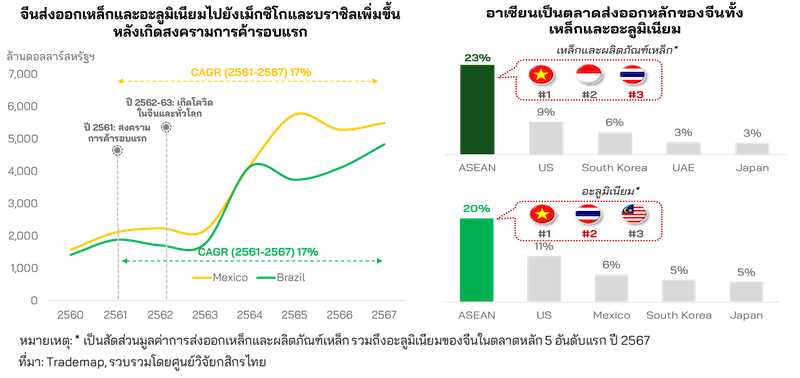
As US demand for steel and aluminum imports decreases, exporters will need to seek alternative markets, leading to an increase in steel and aluminum imports in Thailand and other global markets, particularly from China, which still has excess production capacity. This includes some products that China previously exported to the US through Mexico and Brazil, which will now need to find new markets (Figure 5).

ASEAN is a significant export market for Chinese steel and aluminum, with market shares of 23% and 20%, respectively. The indirect effects of this round of US tariff increases will likely lead to increased Chinese investment or exports to Thailand and ASEAN, putting pressure on Thailand's manufacturing sector, which may risk losing market share in both domestic and key export markets like the CLMV countries.

Figure 5: The US Tariff Increase May Lead to Increased Chinese Product Exports to ASEAN
How Are Supply Chain Operators Affected?
Thai steel and aluminum manufacturers continue to struggle due to intense competition with imported products, but downstream businesses may benefit from increased market options.


Figure 6: Steel and Aluminum Industry Supply Chain
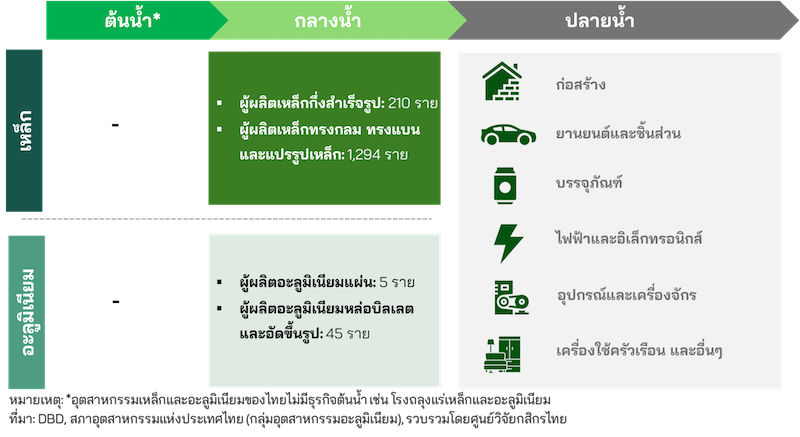
Thai steel and aluminum manufacturers are at risk of ongoing competitive challenges from imported products that may seek to replace the US market, as reflected in the declining capacity utilization rates in Thailand, particularly for steel, which currently stands at only 44%, contrasting with the continuously increasing share of imported steel (Figure 7).

Figure 7: Thailand's Steel Capacity Utilization Rate Continues to Decline Due to Pressure from Imported Steel

While the price impact may lead to short-term increases in steel and aluminum prices due to tariff costs, it is expected that competition with imported products will lead to a downward trend in prices. The Kasikorn Research Center estimates that in 2025, the average prices of steel and aluminum in Thailand may shrink by 4% and 3%, respectively, compared to the previous year. However, prices for individual products may depend on various factors, such as demand and production volumes, as well as raw material prices.

Figure 8: Steel and Aluminum Usage Proportions in Various Industries
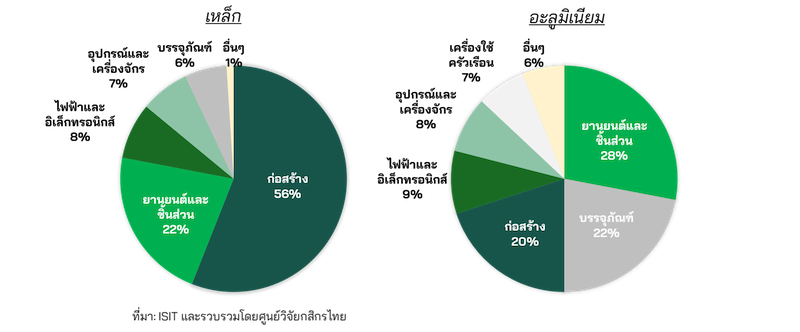
Nonetheless, some downstream businesses may benefit from seeking new markets to replace the US market, such as construction, automotive, electrical and electronic appliances, and packaging.

The anticipated decrease in prices due to competition and increased product volumes in the market will provide businesses that heavily utilize steel and aluminum (Figure 8) with more options in the market, especially high-quality products from Japan and South Korea, which are Thailand's main import markets, such as stainless steel sheets, silicon steel, round bars, and special-grade aluminum.