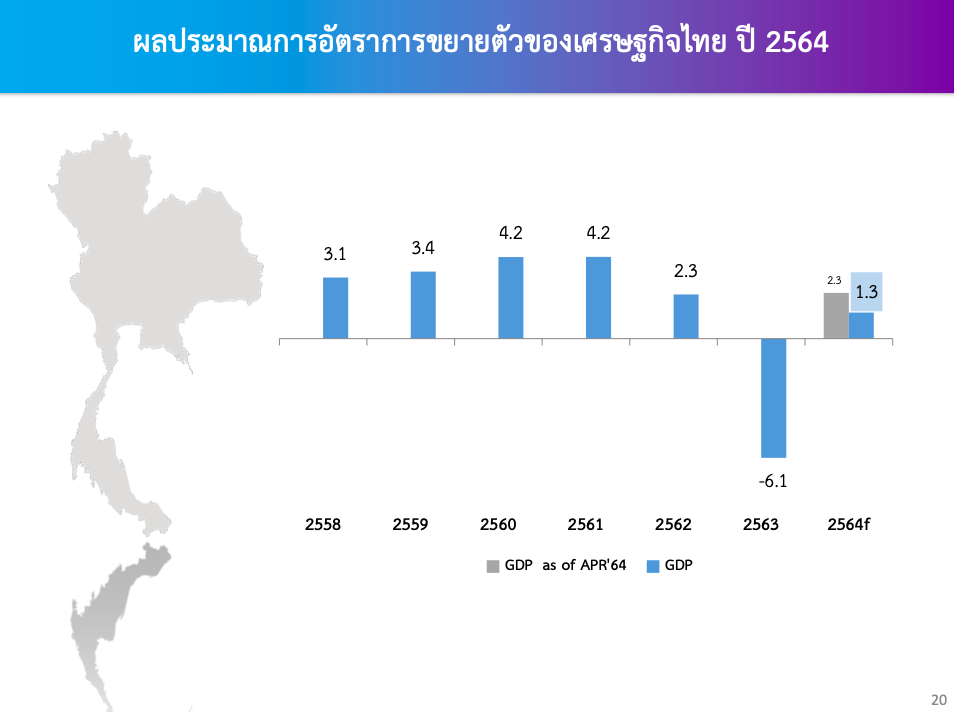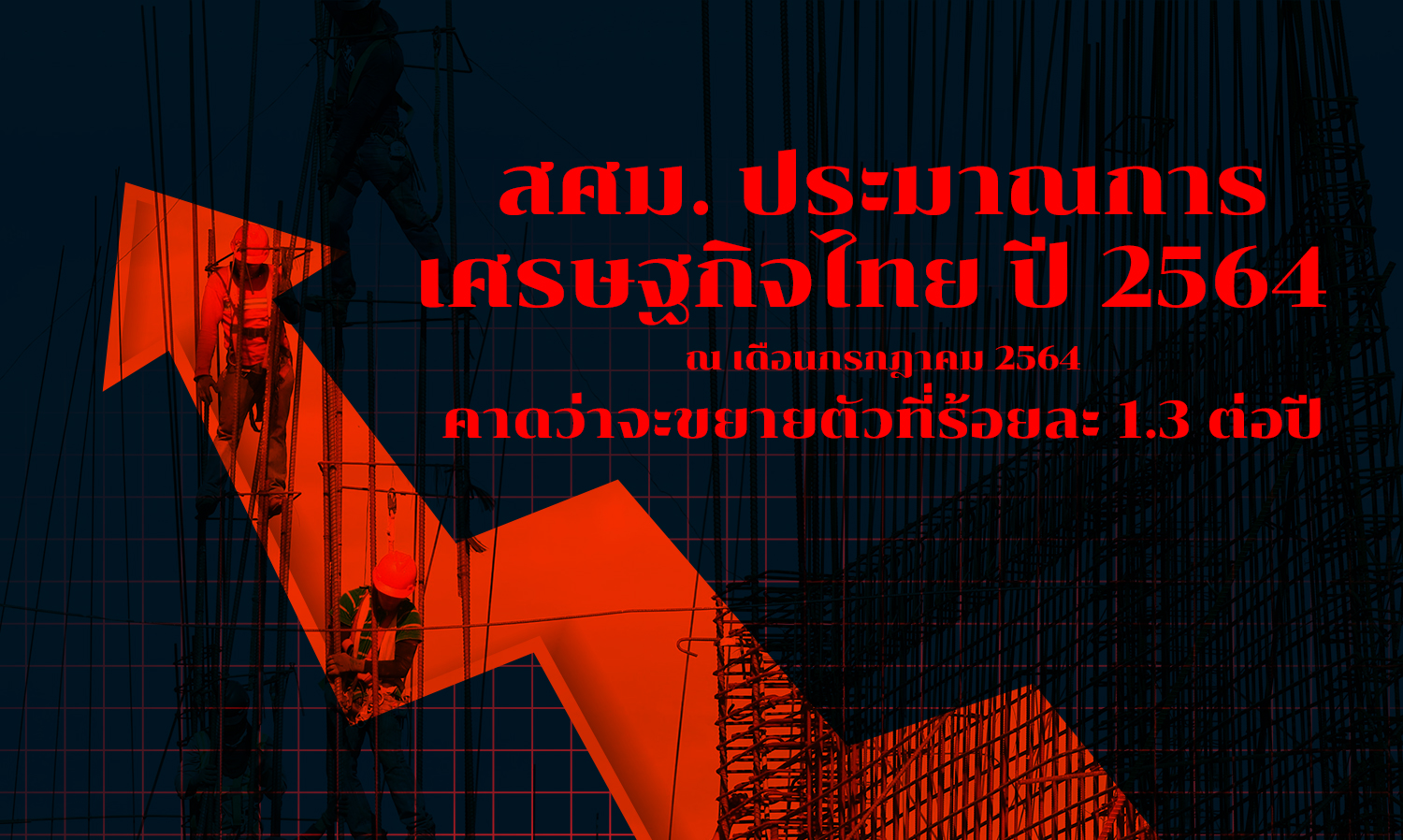
Economic Forecast for Thailand in 2021 as of July 2021: Projected Growth of 1.3% per Year
The Office of Macroeconomic Policy, Ministry of Finance, reports that the Thai economy in 2021 is expected to grow by 1.3% per year due to the impact of a new wave of COVID-19 that began in late Q2 2021. However, exports are expected to improve in line with global economic growth and trade volumes. The Thai economy is projected to accelerate to a growth rate of 4.0% to 5.0% in 2022, driven by a recovery in tourism and continuous export growth.
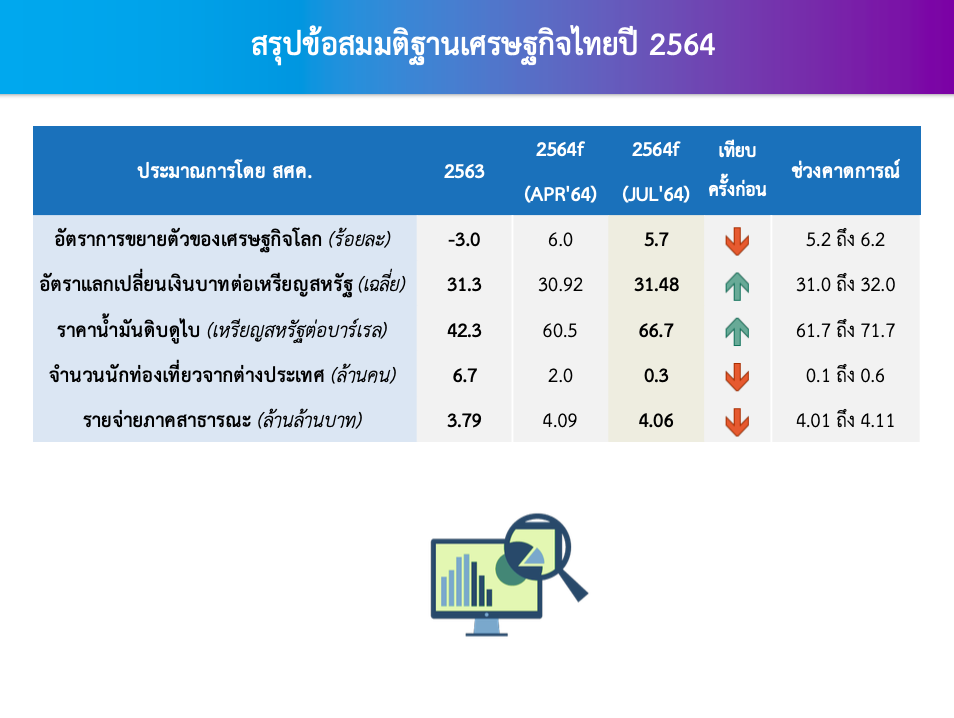
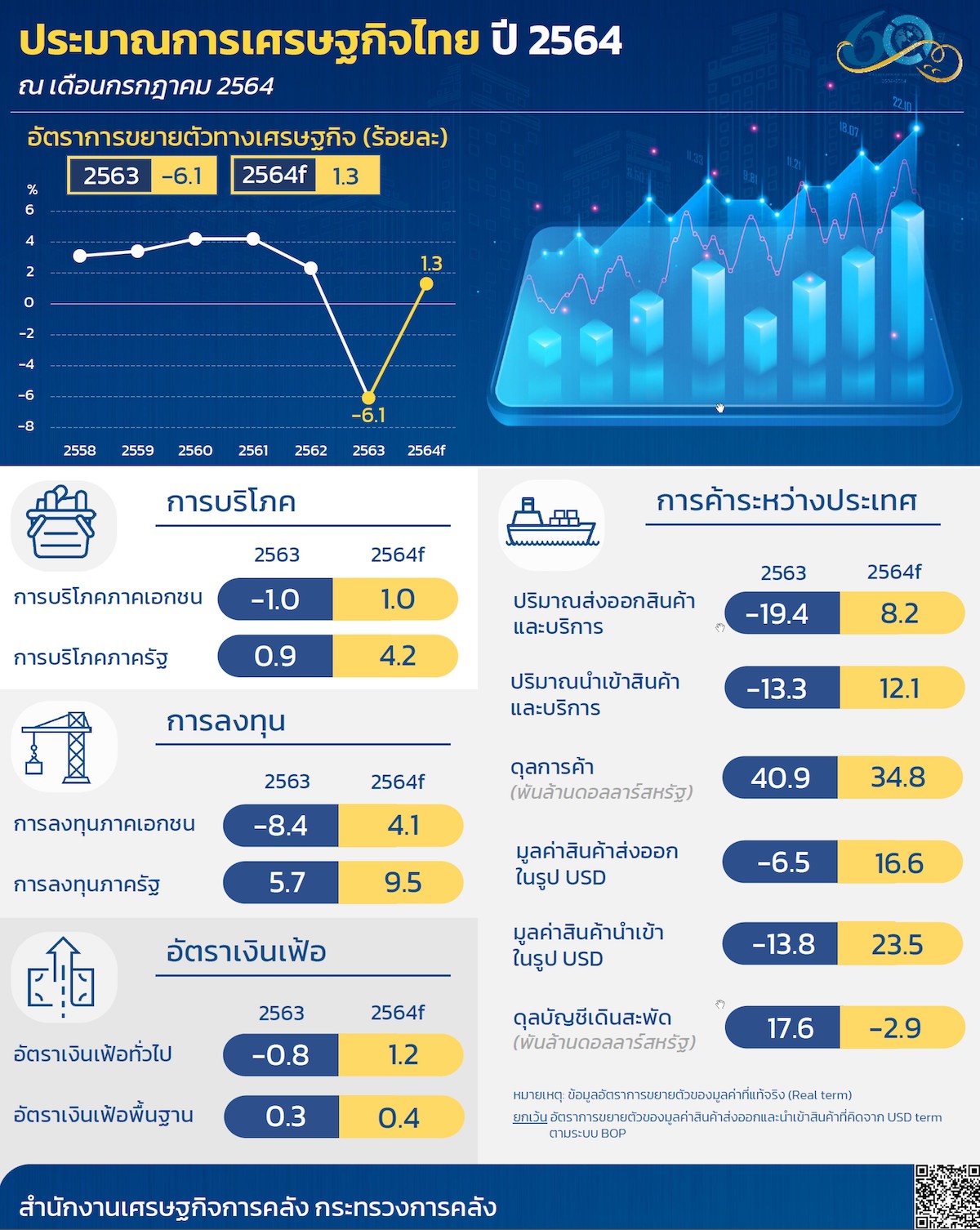
Ms. Kulaya Tantitemit, Director of the Ministry of Finance's Economic Office, as spokesperson for the Ministry of Finance, announced the economic forecast for Thailand in 2021, stating that the Thai economy is expected to grow by 1.3% per year (with a forecast range of 0.8% to 1.8%) compared to the previous estimate of 2.3% per year in April 2021. This adjustment is due to the impact of the new wave of COVID-19, which has affected economic activities, international travel, and the number of foreign tourists visiting Thailand. Nevertheless, exports have shown signs of improvement, with a growth rate of 14.5% in the first five months of 2021, leading to an expected export growth of 16.6% for the entire year (with a forecast range of 16.1% to 17.1%), an increase from the previous estimate of 11.0% per year.
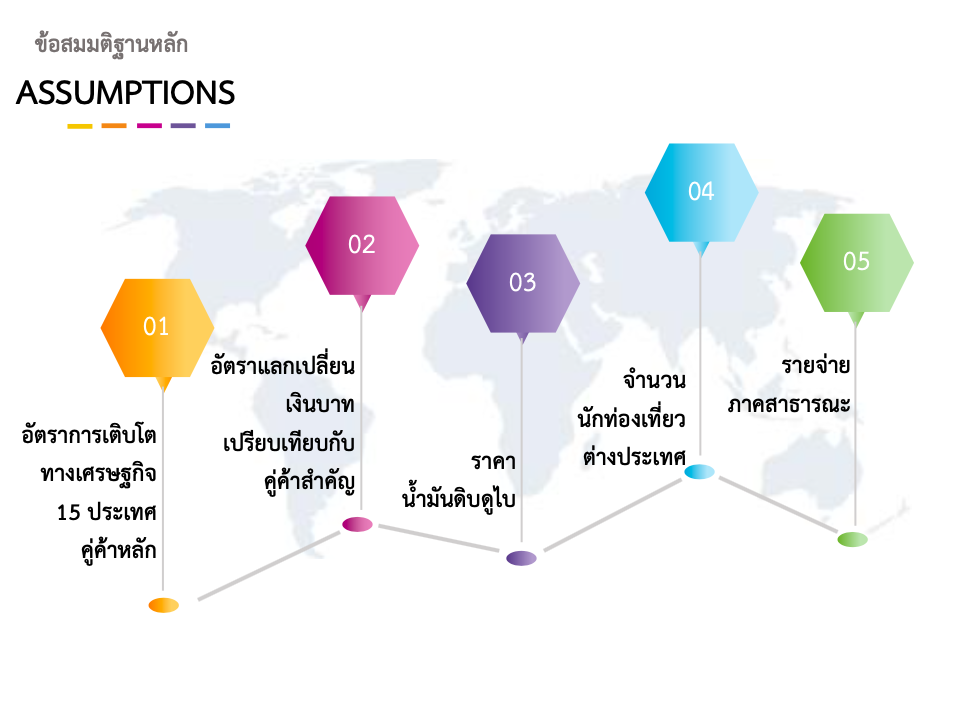
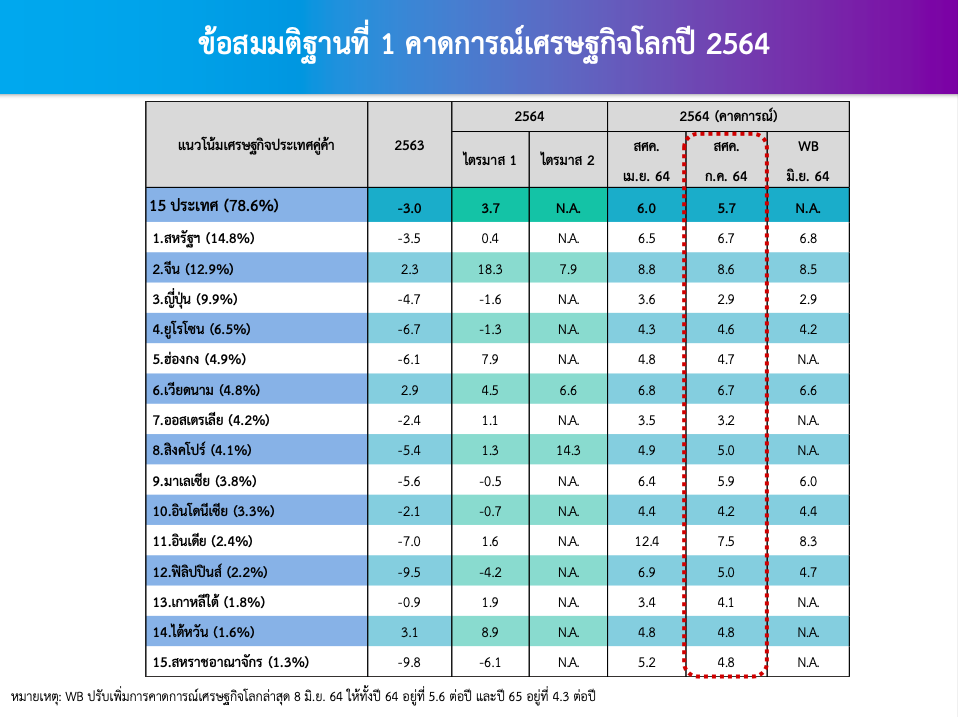
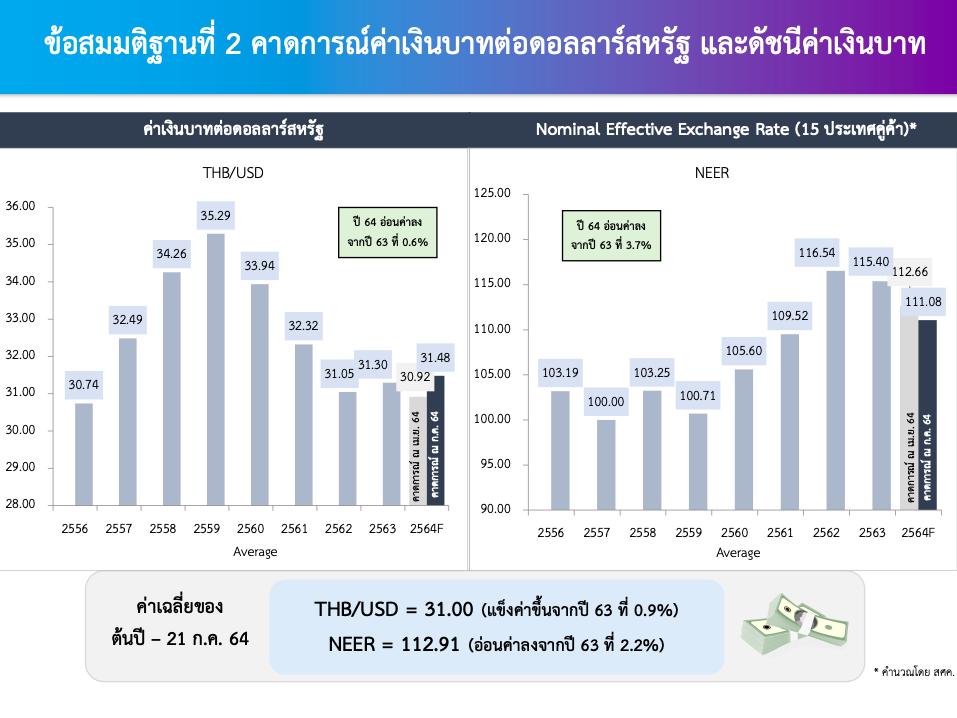
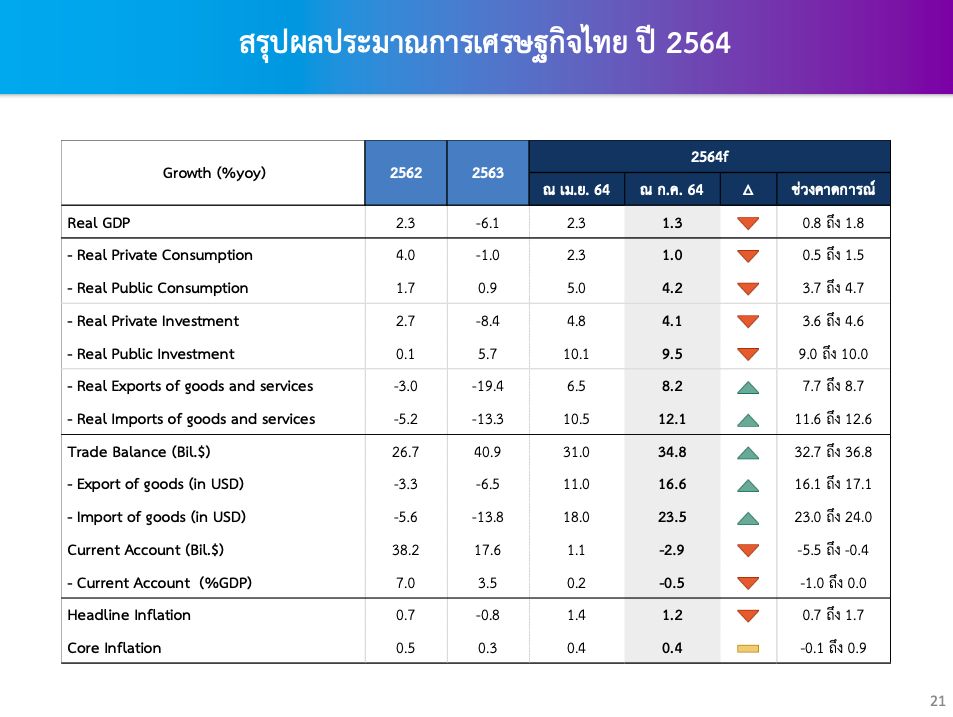
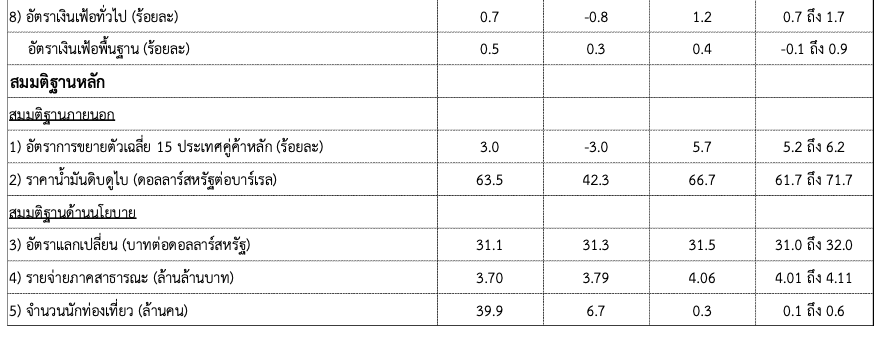
Summary Table of Assumptions and Economic Forecast for Thailand in 2021
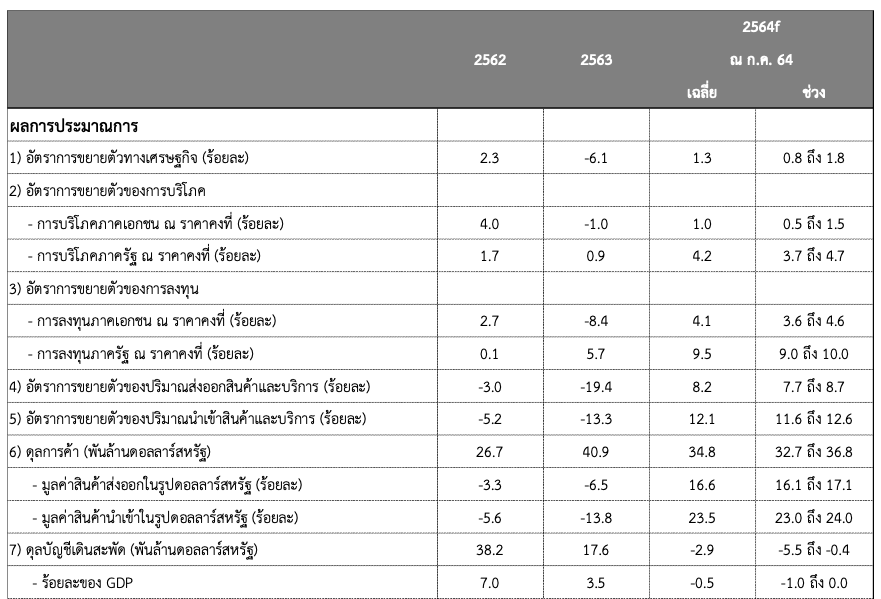
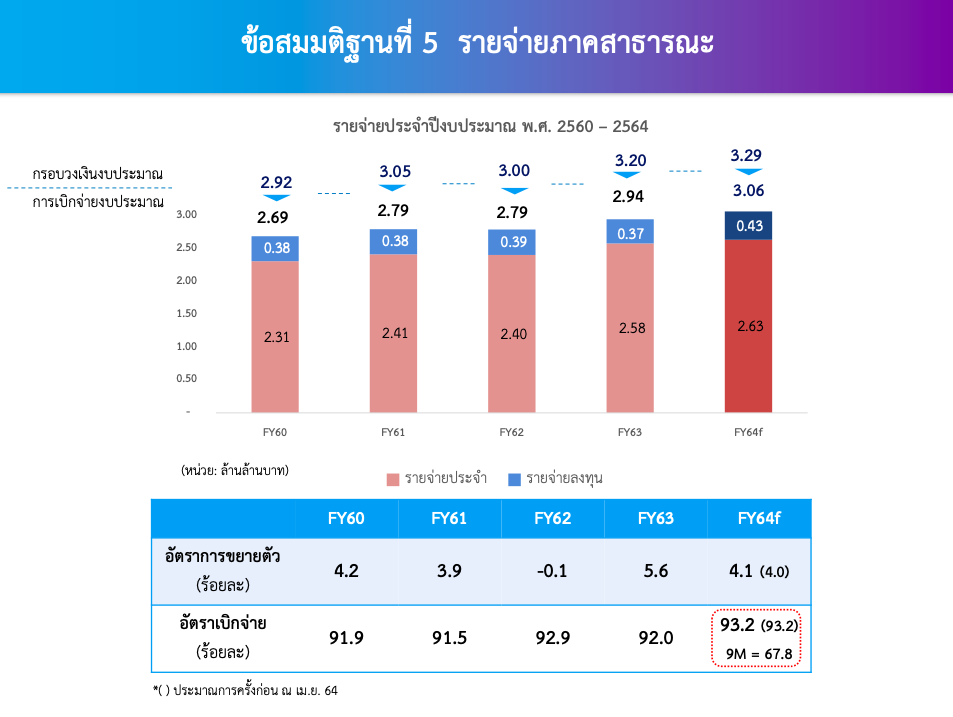
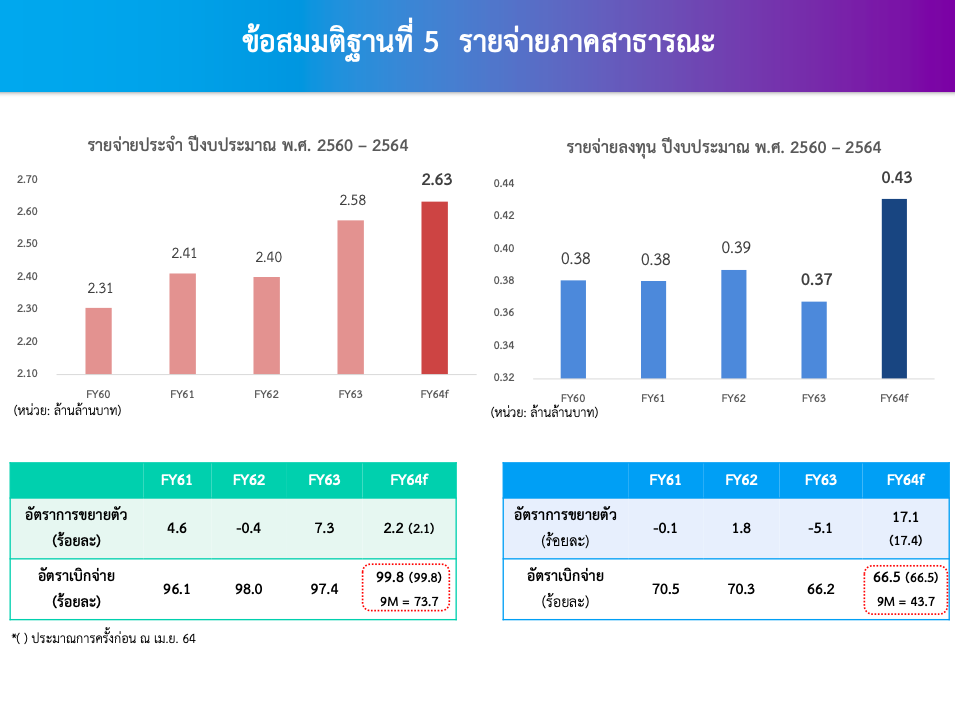
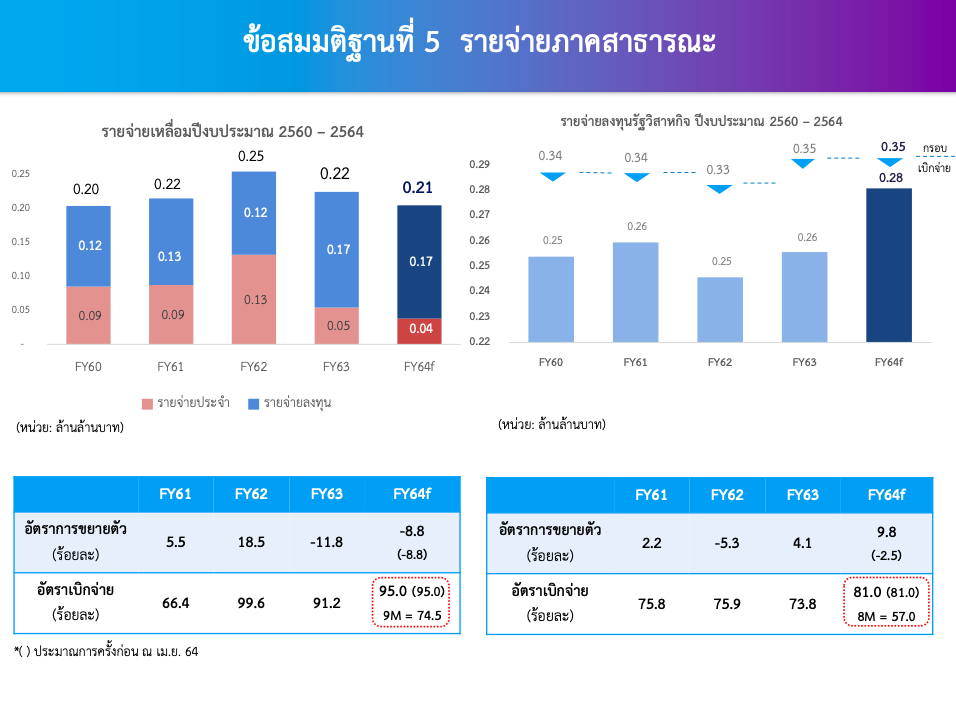
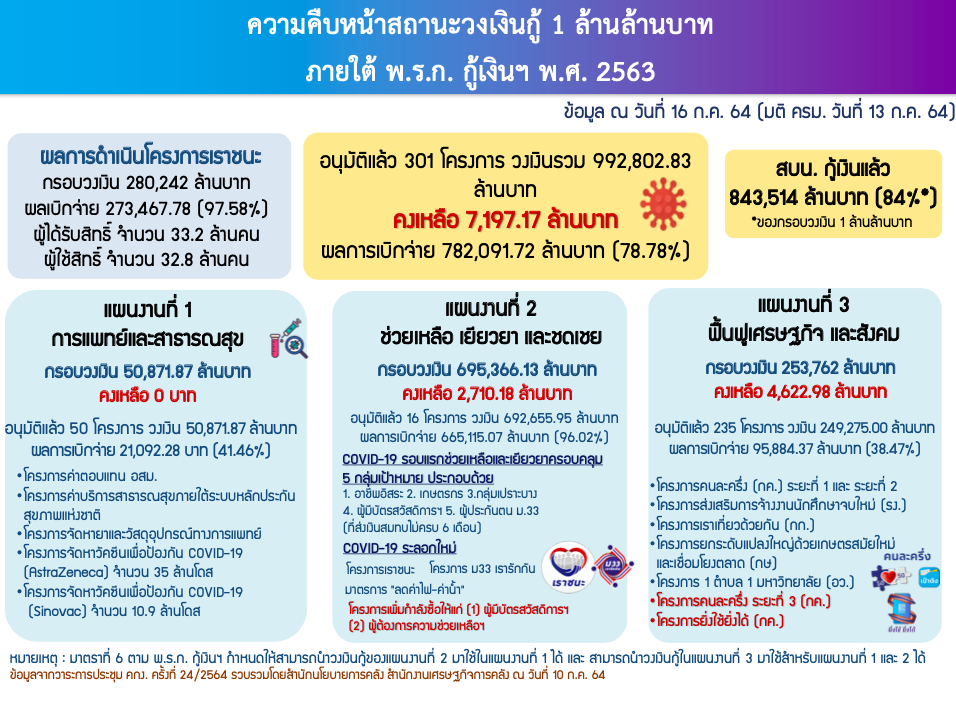
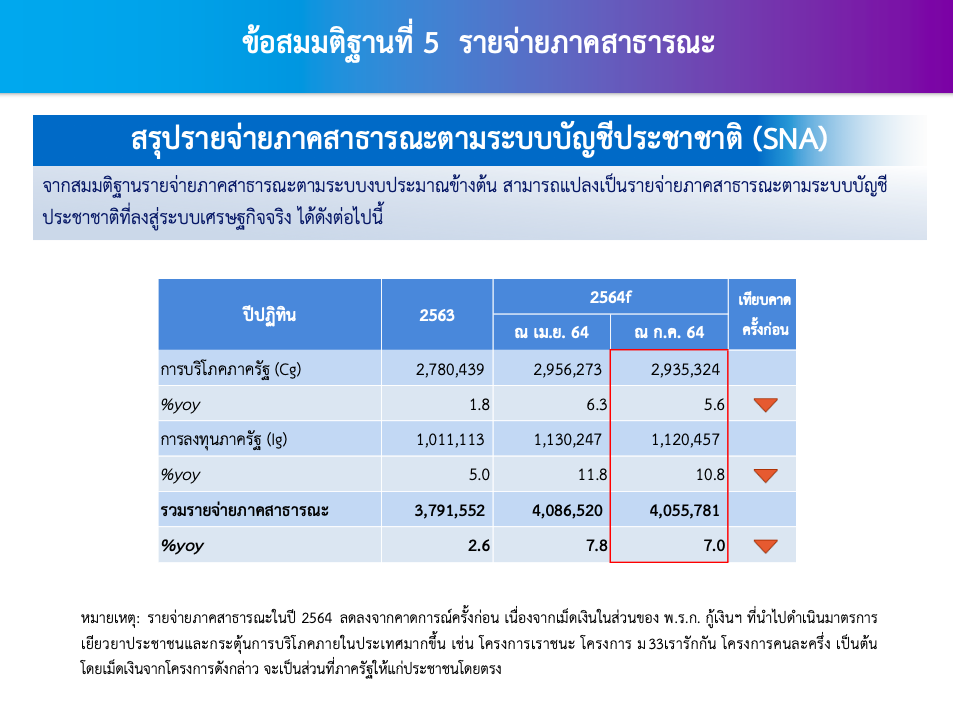
Additionally, the government plays a crucial role in supporting the Thai economy through continuous fiscal measures, such as the 'Half-Half' project Phase 3, the 'Use More, Get More' project, and the project to increase purchasing power for holders of the state welfare card Phase 3, as well as measures to assist those in need. Financial measures through state-owned financial institutions, along with the use of loan funds from the Royal Decree granting the Ministry of Finance the power to borrow money to address issues, provide relief, and revive the economy and society affected by the COVID-19 pandemic in 2020, and the additional Royal Decree granting the Ministry of Finance the power to borrow money to address economic and social issues from the COVID-19 pandemic in 2021, with a budget of 500 billion baht (additional borrowing decree), will help stimulate consumption, alleviate the impact on businesses, and maintain higher employment levels. It is expected that public consumption and public investment will grow by 4.2% per year (with a forecast range of 3.7% to 4.7%) and 9.5% per year (with a forecast range of 9.0% to 10.0%), respectively, which will positively impact private consumption and investment.
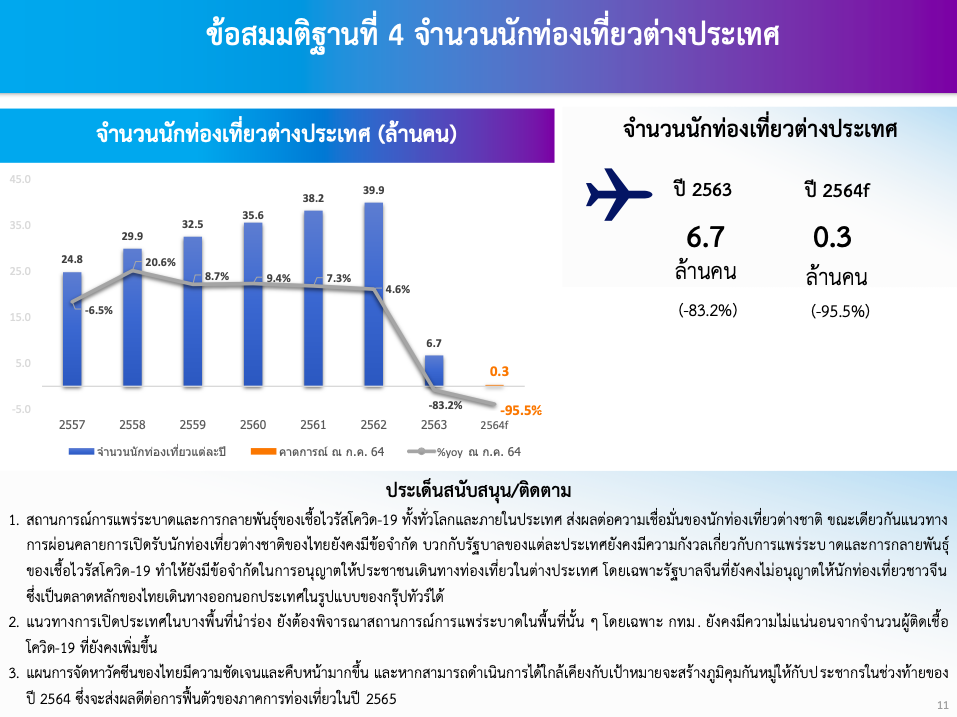
Private sector growth is expected to be 1.0% per year (with a forecast range of 0.5% to 1.5%) and 4.1% per year (with a forecast range of 3.6% to 4.6%), respectively. In terms of domestic stability, the general inflation rate in 2021 is expected to be 1.2% per year (with a forecast range of 0.7% to 1.7%), a decrease from the previous estimate of 1.4% per year, due to government measures to reduce the burden of basic public utility costs for citizens and businesses nationwide. Meanwhile, external economic stability is expected to see a current account deficit of -2.9 billion USD, or -0.5% of GDP (with a forecast range of -1.0% to 0.0% of GDP), primarily due to a deficit in the services balance. For the Thai economy in 2022, the Ministry of Finance expects growth to accelerate to a range of 4.0% to 5.0%, supported by a recovery in the tourism sector as the pandemic situation improves and international travel increases. It is anticipated that 12 million foreign tourists will visit Thailand, while exports are expected to continue to grow, which will be a key factor in the recovery of the business sector, employment, and domestic consumption, leading to a strong recovery in domestic spending.
The spokesperson for the Ministry of Finance concluded by stating that the economic forecast for Thailand must consider closely monitored risk factors, including:
1) Uncertainty regarding the COVID-19 pandemic situation
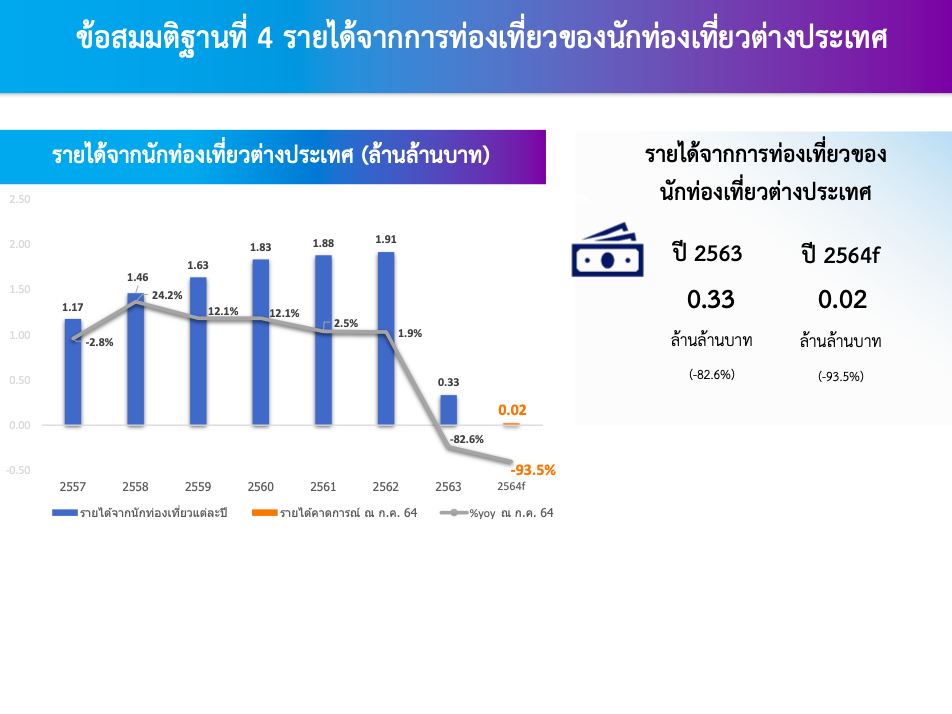
2) Restrictions on the entry of foreign tourists
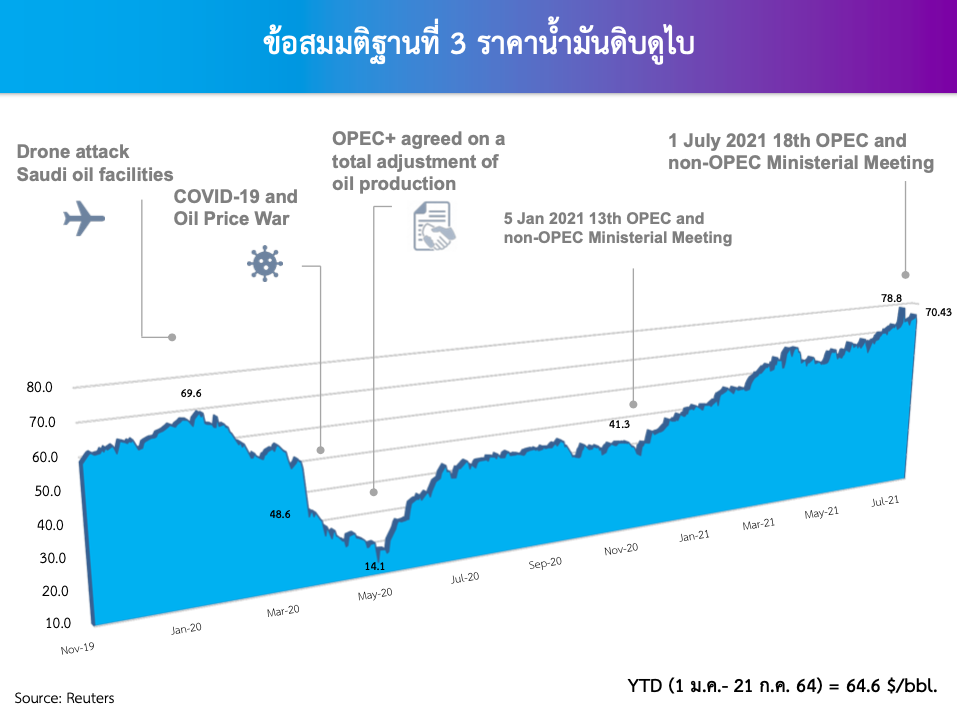
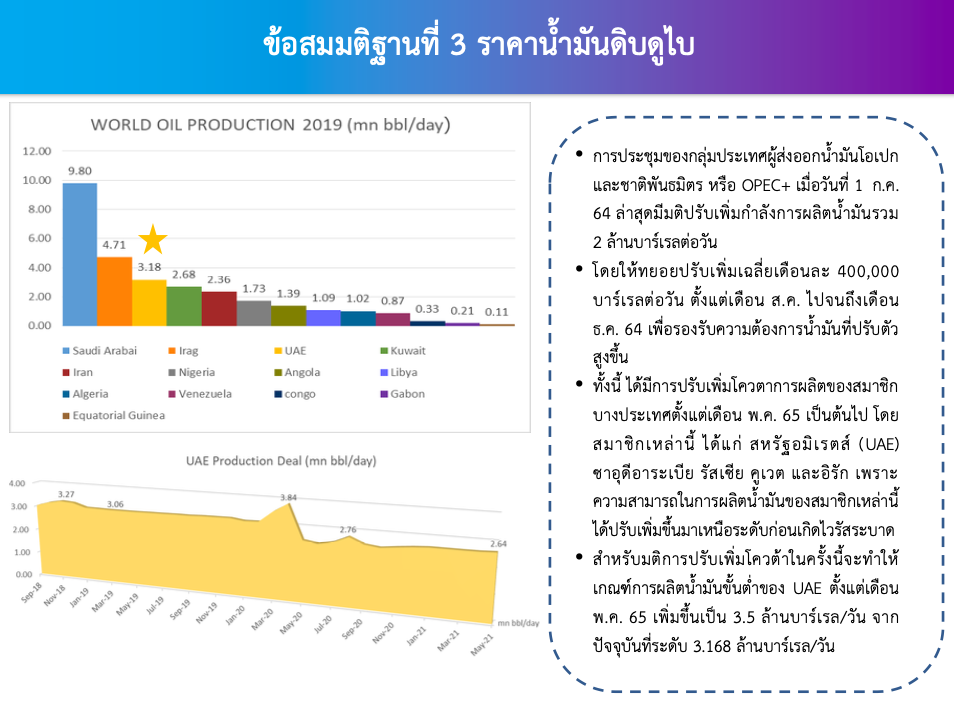
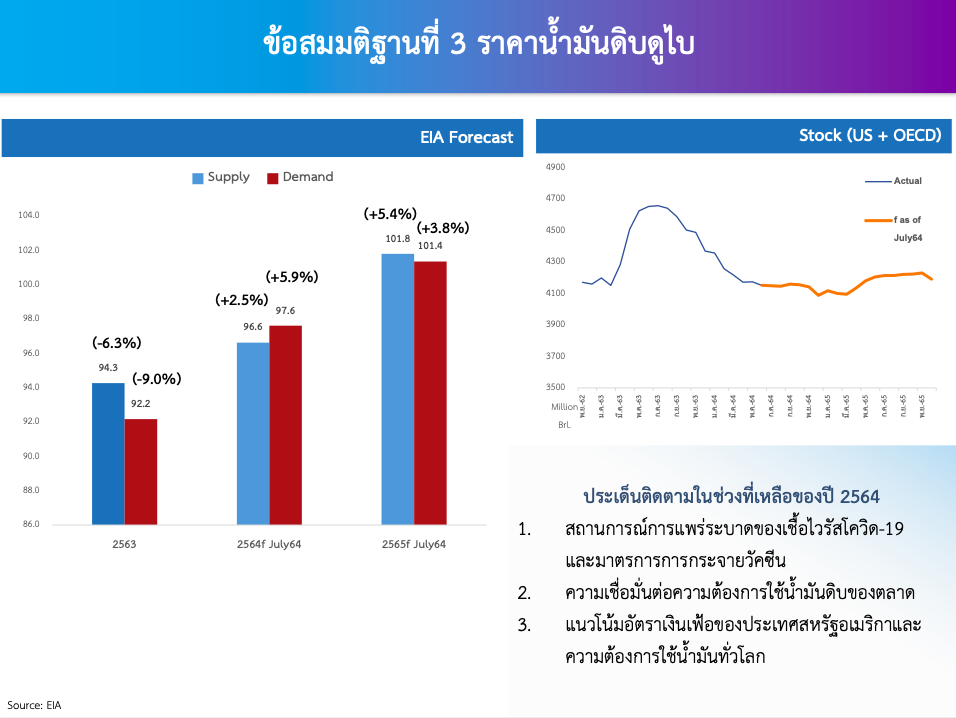
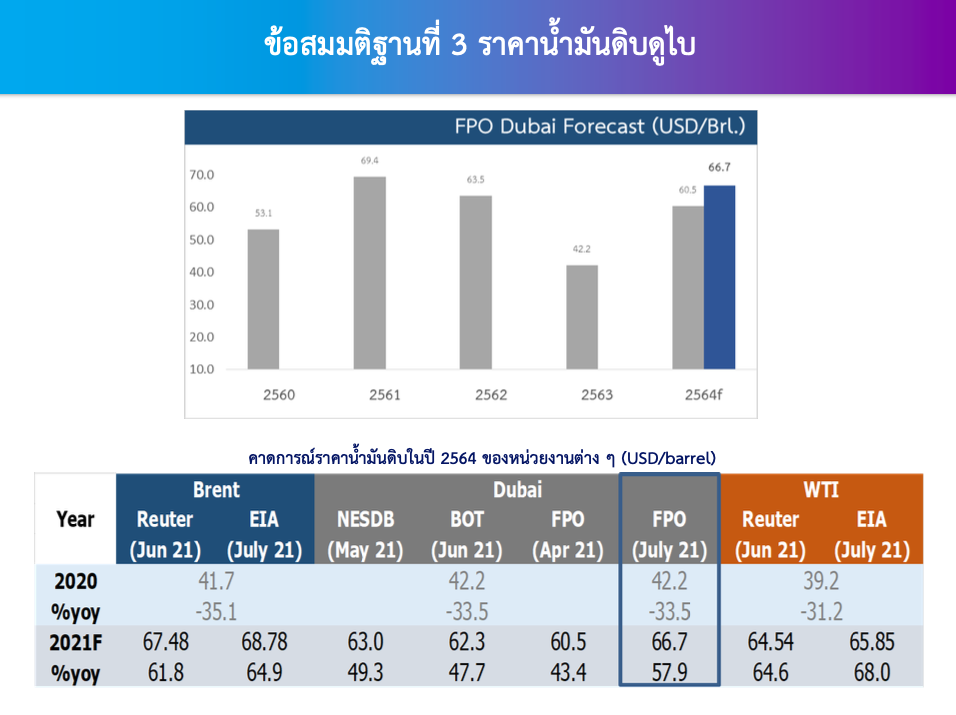
3) Uncertainty in the global oil market, particularly if geopolitical conflicts in various countries escalate, along with changes in energy policies
4) The direction of global monetary policy, which is likely to tighten, affecting international capital flows.
Nevertheless, Thailand maintains a stable and sound fiscal position, allowing the Ministry of Finance to be prepared to implement additional fiscal measures in line with changing economic conditions. The driving force from public spending and investment, combined with economic restructuring policies focused on infrastructure investment, will contribute to the sustainable recovery of the Thai economy in the future.
Information provided by: The Office of Macroeconomic Policy, Ministry of Finance, Tel. 0-2273-9020 ext. 3223 3273
Supporting Documents for the Economic Forecast of Thailand in 2021 as of July 2021