COVID-19 Impact on Southern Real Estate: Over 16,000 Units Left for Sale
The current COVID-19 pandemic has significantly affected the contraction of the overall real estate market, particularly in the residential sector across four strategic southern provinces: Phuket, Surat Thani, Songkhla, and Nakhon Si Thammarat. These areas have been heavily impacted by a downturn in tourism, leading to a loss of income for many and a consequent decline in purchasing power. This has resulted in a low absorption rate, with only 1,813 new residential units sold in the second half of 2020, amounting to a value of 6.664 billion baht.
The Real Estate Information Center conducted a survey of residential projects for sale in the southern region, including Phuket, Songkhla, Surat Thani, and Nakhon Si Thammarat, based on data from the second half of 2020. The survey focused on housing projects and condominiums with at least six units available for sale. The findings revealed that there were a total of 339 projects with 17,765 units available for sale in the second half of 2020, valued at 77.296 billion baht.
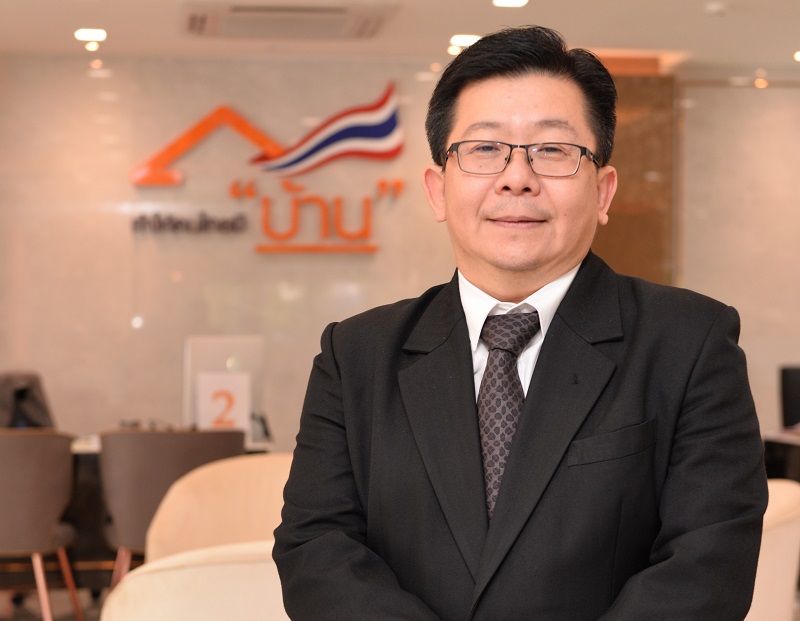
Dr. Wichai Wiratthakhan, the bank inspector and acting director of the Real Estate Information Center stated that the overall residential units for sale in the southern region decreased in nearly every province in the second half of 2020. Surat Thani experienced the most significant decline at -8.8%, followed by Nakhon Si Thammarat at -3.8%, and Phuket at -2.2%. Meanwhile, Songkhla was the only province to see an increase in available residential units, rising by 11.2% compared to the same period in 2019. In the second half of 2020, only 1,813 new residential units were sold, valued at 6.664 billion baht.
Furthermore, the number of unsold units and new sales remain critical issues to monitor. In the second half of 2020, the southern region had 15,952 unsold units, valued at 70.632 billion baht, comprising 9,798 single-family homes valued at 40.753 billion baht and 6,154 condominiums valued at 29.879 billion baht. When categorized by construction status, it was found that 45.5% were under construction, 34.4% were not yet built, and 20.0% were completed. In terms of housing types, 42.6% of single-family homes were under construction, while 35.8% were not yet built, and 21.6% were completed. For condominiums, 50.2% were under construction, 32.3% were not yet built, and 17.5% were completed.
Looking ahead, the housing market in the southern region is projected to have 16,738 units awaiting sale in the first half of 2021, valued at 76.070 billion baht, increasing to 16,941 units valued at 76.697 billion baht in the second half of 2021. The absorption rate for single-family homes is expected to decrease to 1.1% in the first half of 2021 and rise to 1.2% in the second half. The absorption rate for condominiums is projected to decrease to 1.4% in the first half of 2021 and to 1.5% in the second half.
Regarding the launch of new projects, it is estimated that there will be a slight increase, with approximately 2,308 new units expected to launch in the first half of 2021 and another 2,711 units in the second half. The number of property transfers in the first half of 2021 is expected to be around 8,663 units, valued at 22.400 billion baht, increasing to 9,893 units valued at 25.125 billion baht in the second half of 2021.

Mr. Patthanant Pisuthwimon, President of the Phuket Real Estate Association stated that the overall real estate situation in Phuket is very poor. If sales reach 10%, it would be considered good, as there are currently many townhouses left for sale due to a lack of income. Financial institutions are tightening their lending policies, leading to competition for customers who can secure loans from banks. Some developers are employing strategies to attract potential customers by offering better terms and prices, as well as superior locations compared to competitors, intensifying their campaigns. Currently, there are aggressive campaigns such as "Live Free for 2 Years" to relieve buyers from the burden of monthly payments during the first 1-2 years.
In contrast, the high-end market priced at 8 million baht and above is performing relatively well, as buyers with purchasing power see this as the last chance to secure good deals before the economy and market recover following the Phuket Sandbox opening.
However, the Phuket Sandbox project still raises concerns, particularly as Thailand is still viewed as a high-risk country, leading to uncertainty about how many foreign tourists will come once the project opens. Additionally, airlines are not yet ready to resume flights immediately, and agents cannot guarantee how many tourists will arrive. If the worst-case scenario occurs, with fewer tourists from other countries and a decline in Thai tourists, Phuket will suffer even more, as its main tourist markets are China, India, and Russia, which are still unable to fly in. However, we hope this opening serves as a test model, as if we do not open, we will miss the opportunity to recover. We must control the spread in these three months and achieve herd immunity. We believe that by the fourth quarter, the number of tourists will increase.
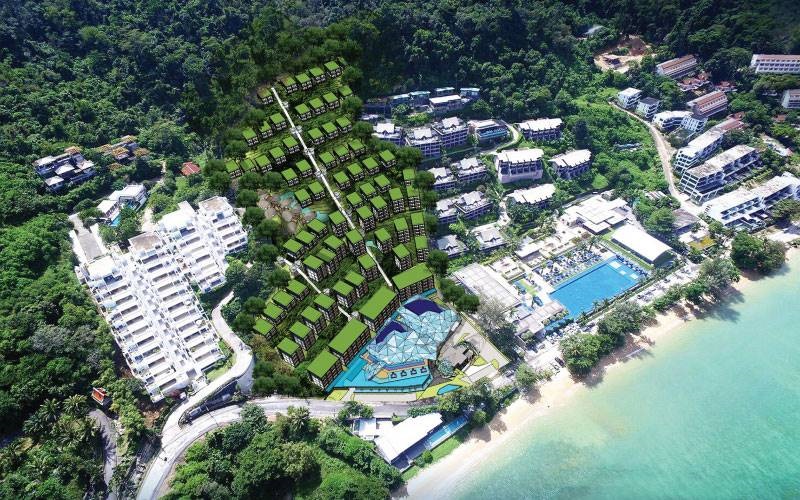
Ms. Kamolpath Sawangkit, Managing Director of DD Property Co., Ltd. in Thailand stated that the "Phuket Sandbox" project is a pilot initiative that will allow Thailand to welcome foreign tourists again, representing another hope for the recovery of the tourism and real estate sectors. If the opening of the "Phuket Sandbox" positively impacts foreign customers, it is crucial for real estate operators to prepare and create opportunities to reach international clients.
As for the opportunity for foreign customers to return to purchase real estate in Thailand, it is observed that Chinese customers still show interest in properties in Thailand, as reflected in the transfer statistics from 2020, where Chinese customers accounted for over 60%, followed by Russia, Germany, and the UK.
Properties with high values, averaging around 3 million baht, do not deter Chinese investors from negotiating purchases. Most can communicate online throughout the buying process, from booking to project visits, signing contracts, and transferring ownership. The reason Chinese investors find it easy to purchase, especially among investors, is that they view real estate investment similarly to buying stocks, which does not require active management. However, they need continuous updates on market movements and clear information regarding returns, including how many years it will take to achieve profits exceeding the purchase price.