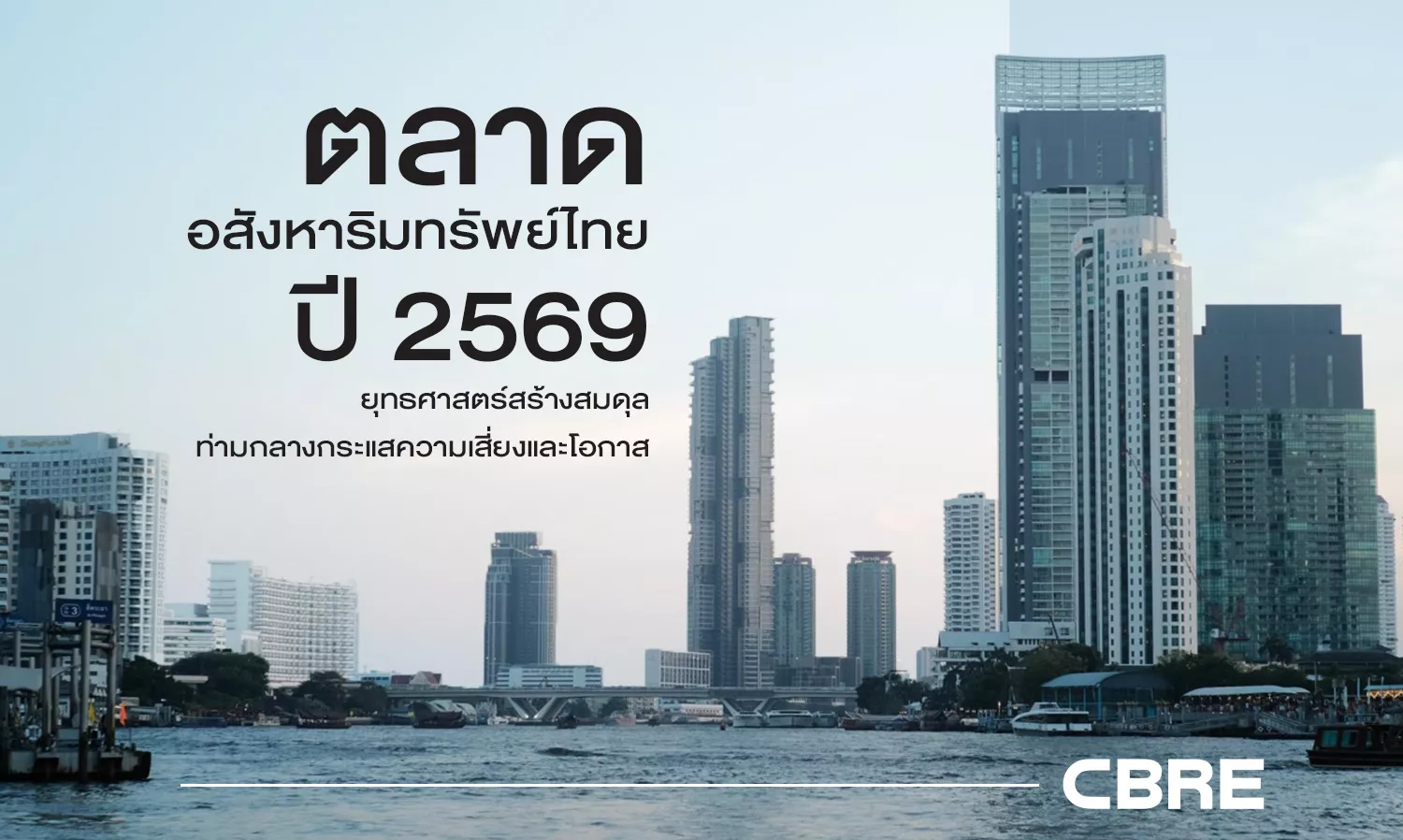
Thai Real Estate Market 2026: Strategies for Balance Amidst Risks and Opportunities
CBRE Thailand, a leading global real estate consulting firm, has revealed the market direction for 2026, indicating that it will be a year where project developers and investors face the challenge of "maintaining a balance between risk and return" amidst a highly uncertain economic environment. However, amidst these challenges, there are still opportunities for those willing to adapt through innovative design and enhancing existing assets to increase their value.
Ms. Chotika Thangsiriprapa, Head of Project Development Consulting and Market Research at CBRE Thailand, commented that the retail sector is the clearest example. "Bangkok has high-quality retail spaces distributed in various formats, from large shopping malls in the city center to community malls in residential areas," she noted. "Project developers continue to invest, both in creating new projects and renovating existing ones, to maintain a balance between market expansion and managing existing asset portfolios to keep up with the ever-changing behaviors and lifestyles of consumers. Meanwhile, international brands continue to establish a presence in Thailand, adding vibrancy and attracting tourists, who are the main purchasing power in the city center."

The hotel market in Bangkok is also facing fierce competition. The continuous opening of new hotels with diverse brands and concepts has made existing hotels accelerate asset enhancement to maintain their competitive edge. Even though last year's foreign tourist numbers did not reach 33 million, Thailand still has high potential to attract medical, wellness, and general leisure tourists if the situation and confidence stabilize.
Ms. Chotika added, "Currently, we see a trend of high-income tourists combining work and leisure (Bleisure) increasing. In Southeast Asia, only a few countries can cater to this group as well as Thailand. While the government continues to focus on overall tourist numbers, hotel operators see the necessity of balancing between niche customers and are trying to diversify market segments and revenue sources beyond just room sales. Therefore, hotel owners and managers are no longer solely focused on occupancy rates or average daily rates (ADR) but are prioritizing asset enhancement, introducing new services to create diverse revenue streams, and managing operational costs efficiently."
In the condominium market, balancing risk and return has been a continuous effort by operators for several years, and it is expected that this trend will continue in 2026. Particularly in the second half of 2025, it became evident that projects in central Bangkok are focusing on "quality over quantity." Projects that had previously delayed their launches will begin to officially debut, with many positioned in the super-luxury segment striving to create unique selling points.
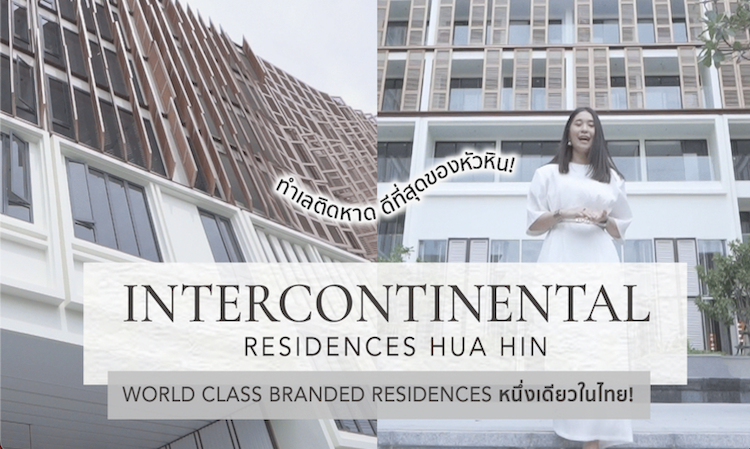
Ms. Rungrat Veerapakarn, Managing Director of CBRE Thailand, commented, "Residential project developers continue to innovate design and present new innovations to deliver high-quality projects that meet the needs of both Thai and foreign buyers. Many projects in the city center focus on enhancing prices by bringing in global hotel brands to manage (Branded Residence) or emphasizing distinctive design. Additionally, we will see more super-luxury projects developing units of no more than 100 to emphasize privacy and superior privileges, along with comprehensive amenities and service standards."

Meanwhile, the midtown and suburban markets continue to face pressure from high loan rejection rates, leading developers to limit project launches to locations with clear supporting factors, such as proximity to transportation hubs, universities, or hospitals. These areas benefit from demand for both actual living and rental, attracting financially capable investors.
Overall, the CBRE Research Department predicts that the overall condominium launch volume in 2026 will be higher than in 2025, a year that was relatively sluggish and heavily impacted by the earthquake in Myanmar in March 2025.
The CBRE Research Department observes that the rising inventory of unsold single-family homes has prompted developers to carefully assess whether there is sufficient demand to support new project launches, as buyer confidence has remained low throughout the past year due to various uncertainties, directly affecting purchasing decisions and sales. CBRE expects developers to remain cautious in launching new projects while waiting for signs of market recovery.
In the office market, activity will continue, with new office leasing volumes reaching record highs. Tenants benefit from a favorable market environment, leading to a trend of moving into new buildings following the "Flight-to-Quality" trend, where higher-quality buildings are preferred.
Currently, the occupancy rates in A+ grade office buildings are also trending upward, allowing owners of these buildings to raise rental prices and widening the rental gap between premium buildings and standard buildings. Amidst a still-weak market, many building owners have accelerated their asset enhancement plans, and once renovations of these older buildings are completed, tenants will have a wider array of choices when deciding whether to relocate or renew their leases. "With the limited number of new office buildings entering the market over the next four years, well-renovated existing offices in prime locations offering attractive rental rates will become very appealing options for companies looking for new office locations," Ms. Rungrat added.
In the industrial sector, it has been the best-performing group in recent years, driven by continuous demand for land in industrial estates (SILP), particularly foreign investment in target industries (S-Curve), resulting in strong land sales growth.
Ms. Chotika noted, "Developers of industrial estates in the Eastern Economic Corridor (EEC) have accelerated the expansion of existing areas and the development of new projects. However, most recent demand has come from the data center business, shifting the focus of operators from land acquisition to managing electricity and water supply systems to meet demand instead."
In the logistics market, developers continue to pursue speculative development, especially in high-demand locations, while major market developers focus more on delivering pre-leased projects or build-to-suit projects.
CBRE predicts that 2026 will be another significant year for the industrial land market, supported by high demand and ongoing government support policies.
"Amidst numerous large-scale real estate projects scheduled for completion in 2026, real estate developers in Bangkok continue to adhere to strategies for managing the balance between risk and return, applying experiences from past market volatility as a benchmark for decision-making and driving future operational plans," Ms. Chotika concluded.