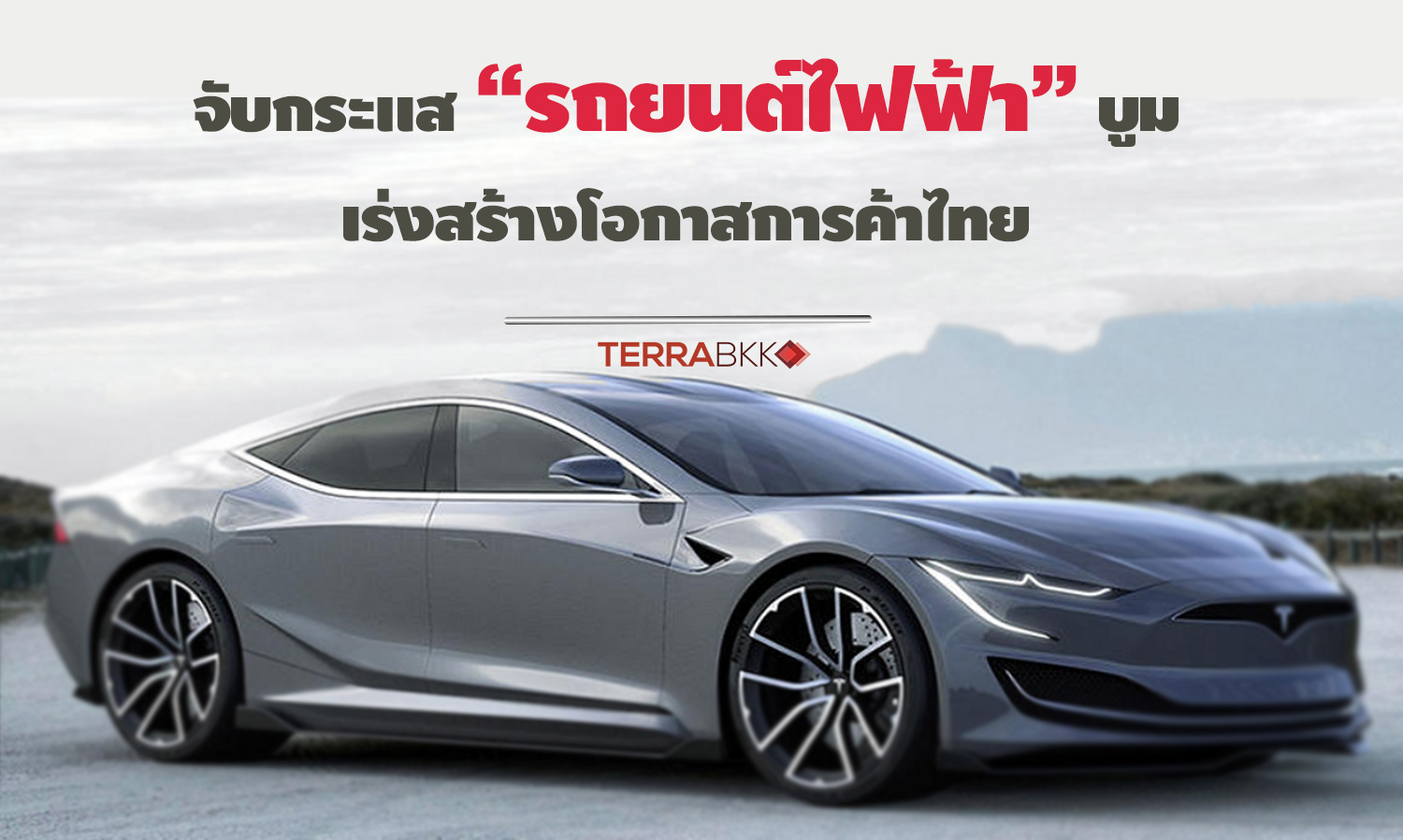
Riding the Global Electric Vehicle Boom: Accelerating Trade Opportunities for Thailand
“China” is another country that has succeeded in the electric vehicle market, both domestically and globally. In the past, China faced severe pollution issues from industrial activities and emissions from vehicles on the roads, stemming from rapid economic and industrial growth, which significantly impacted the environment. Many major cities in China have particulate matter levels exceeding World Health Organization standards.
This has compelled China to seriously control air quality while utilizing technology to innovate solutions to combat the dust crisis. The emissions from vehicles are a major problem that needs urgent attention. Developing electric vehicles and transitioning to solar and wind energy as alternatives to coal and oil is the best solution.
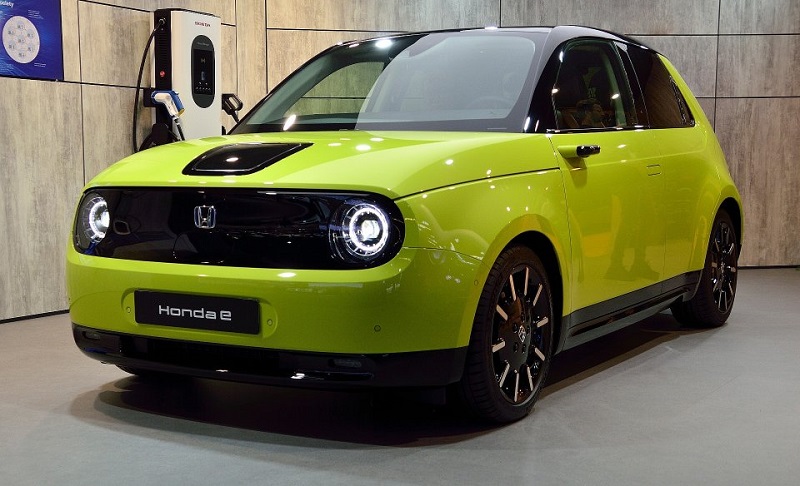
Restoring Clean Air with Electric Vehicles
"New Energy Vehicles (NEV)" is a key policy that China aims to make a core product to drive and elevate its economy. China targets that by 2025, 30% of vehicles in the country will be electric, and by 2035, 100% of vehicles must be electric.
The success of creating an electric vehicle ecosystem in China is attributed to three factors: 1. Development of national infrastructure to support electric vehicle usage, 2. Government and private sector policies promoting electric vehicle adoption, and 3. Pushing technology and manufacturing innovations to establish an electric vehicle ecosystem.
Through funding support for projects like building charging stations and producing batteries for electric vehicles, from 2012 to the present, China has invested billions in lithium-ion battery production projects for electric vehicles, surpassing South Korea and Japan to become the world's largest producer and seller of lithium-ion batteries since 2013. Additionally, China held the number one position in the lithium-ion battery market with 61% of global sales in 2018. Seven Chinese companies are among the top 12 global lithium-ion battery manufacturers. China continues to develop to support the full-scale expansion of the electric vehicle market, including plans to create over 12,000 charging stations and distribute over 4.8 million charging piles to enhance convenience.
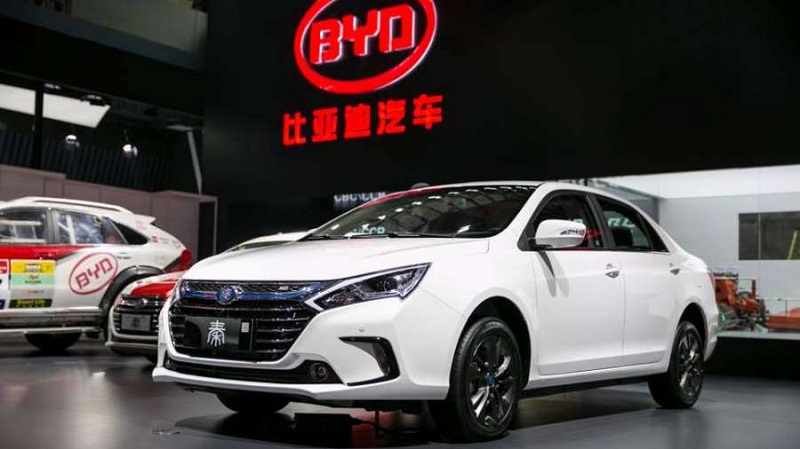
Global Electric Vehicle Sales Increased by 43% in 2020
Signs indicate that electric vehicles are gaining wider acceptance. In 2020, global electric vehicle sales increased by 43%, driven by a significant drop in battery prices. Analysts believe that if battery prices continue to decline, sales may keep rising in 2023 and 2025. Norway's tax measures, which make electric vehicles cheaper than gasoline cars, resulted in a 54% increase in sales.
An Israeli Battery Company Develops Fast-Charging Batteries in 5 Minutes / 480 km Range on a Single Charge
In an interesting report, StoreDot, an Israeli company developing new lithium battery technology for electric vehicles, announced that it can produce batteries using semi-metal elements like silicon and germanium, along with nanotechnology instead of graphite. This allows ions to pass through more quickly, enabling a full charge in just 5 minutes and allowing electric vehicles to travel up to 480 kilometers on a single charge. StoreDot also aims to significantly reduce battery costs compared to current gasoline vehicle batteries.
StoreDot's fast-charging batteries are expected to hit the market within the next three years at an affordable price, potentially making electric vehicles cheaper in the near future.
Meanwhile, Tesla, the market leader in electric vehicles, is also fully engaged in developing new battery models. Currently, Tesla's fastest charging time still takes up to 30 minutes, but it is set to launch a new battery model that charges in just 10 minutes. Japanese automaker Toyota is also expected to unveil a new electric vehicle model that charges in 10 minutes this year.

Riding the Global Electric Vehicle Boom: Accelerating Trade Opportunities for Thailand
According to a report from the International Energy Agency, in 2019, there were approximately 2.1 million electric vehicles sold globally, including both gasoline and plug-in hybrid electric vehicles, as well as battery-only vehicles, representing a 6% increase from the previous year. The total global registration reached 7.17 million vehicles, a 40% increase from the previous year. It is projected that by 2030, global sales of PHEV and BEV electric vehicles will reach 25 million units, with a cumulative total of around 140 million units, with small passenger cars expected to have the highest sales. The markets in China, Europe, the United States, and India are expected to expand significantly.
Data from the Trade Policy and Strategy Office (TPSO) analyzed the global and Thai trade structure for electric vehicle products, including PHEV, BEV, and HEV (non-plug-in hybrid vehicles) and 20 types of components for small electric passenger vehicles. In 2019, the global import value of electric vehicles totaled $70.817 billion, a 55% increase from the previous year, with Japan, Germany, the United States, South Korea, and China playing significant roles in the global electric vehicle supply chain from upstream to downstream, and being potential markets for electric vehicle users.
In Thailand, during the first nine months of 2020, nearly all electric vehicle exports were HEVs valued at $309.3 million, representing a 155% growth, with the top three export markets being Japan, Indonesia, and Singapore. Meanwhile, Thailand's electric vehicle parts exports were valued at $4.145 billion to the U.S., Japan, and China, indicating that Thailand remains a new player in the electric vehicle industry, but exporting electric vehicle parts to major global manufacturers and markets like Japan presents an opportunity for Thailand to participate more in the global electric vehicle supply chain.
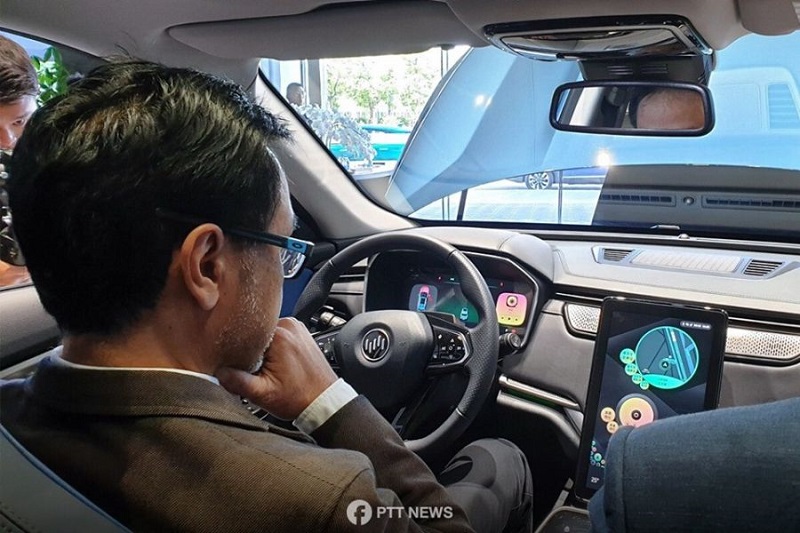
Amid fierce competition from major manufacturers and ASEAN countries (such as Malaysia, Singapore, Indonesia, the Philippines, and Vietnam) that also aim to become electric vehicle manufacturing bases like Thailand.
Thailand must accelerate the development of its business environment and electric vehicle ecosystem to attract investment, aiming to be both a manufacturing base and a potential market. It may seek partnerships with major global electric vehicle manufacturers from countries like Japan, Germany, the U.S., South Korea, and China to exchange knowledge for development and increase opportunities to be part of the global electric vehicle supply chain.
The government must facilitate trade and investment to foster the development of the entire electric vehicle system and promote investments in new markets such as Mexico, which can access the U.S. market through the USMCA (United States-Mexico-Canada Agreement), or Germany to enter the European market, as well as consider investing in existing markets to maintain customer bases and reduce risks in case manufacturers from other countries invest in production and sales in those markets.