Real Estate Signals for 2021: The Rise of Condos Under 1 Million - Suburban Areas in Demand
In 2020, real estate developers faced significant challenges as they navigated through a tough market, particularly in the condominium sector, which saw the most adjustments in a decade. This was largely due to the impact of COVID-19, which caused a slowdown in the market due to a continuous decline in purchasing power since 2019.
According to Nexus Property, only 20,100 new condominium units were launched in 2020 across 64 projects, representing a 39% decrease from the average annual increase of 51,000 units over the past five years. This decline was due to developers' lack of confidence in the situation, leading to the postponement or cancellation of 5,800 units across 18 projects, which accounted for 29% of new condominiums in 2020.
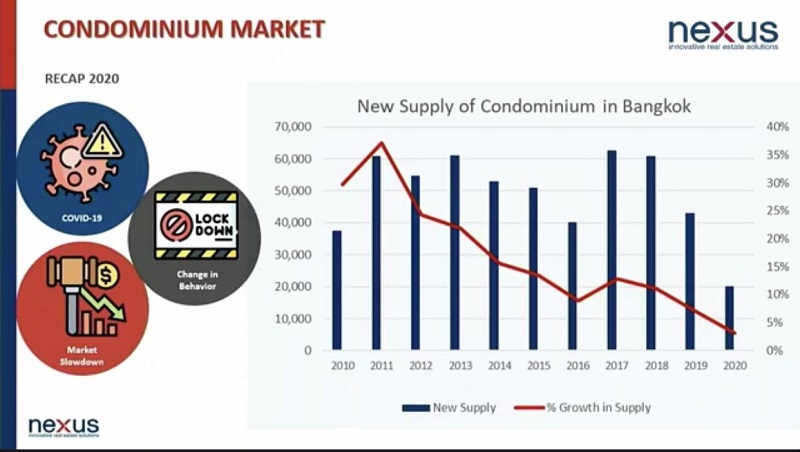
In 2020, the condominium market closed with sales of 32,800 units.
Despite the negative factors impacting the market, developers adapted well, achieving total sales of 32,800 units for the year. This was in comparison to the 20,100 new units launched, indicating an improved market potential in terms of overall sales.
Sales were divided into approximately 23,700 units from condominiums launched before 2020 and 9,100 units from new launches in 2020, resulting in an average sales rate of 45% for newly launched units.
The higher sales compared to the new supply led to an overall sales rate in the market increasing to 93%, primarily driven by owner-occupiers, while investors represented a small portion, and speculative buying almost disappeared from the market.
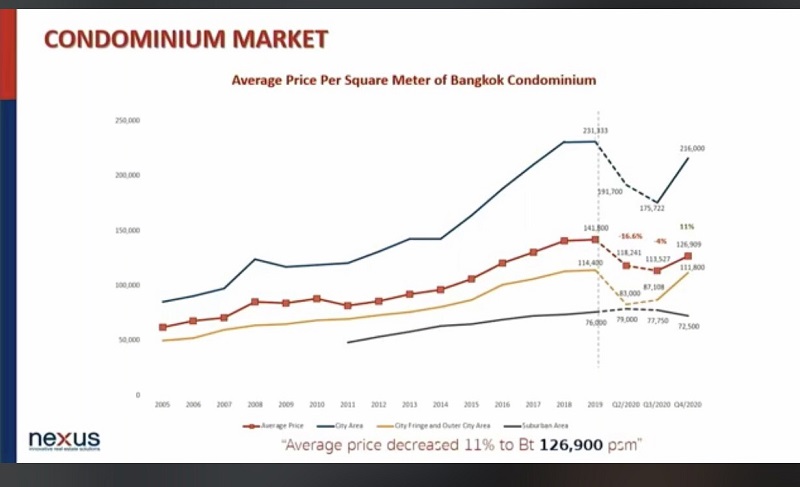
Condominium prices in 2020 decreased.
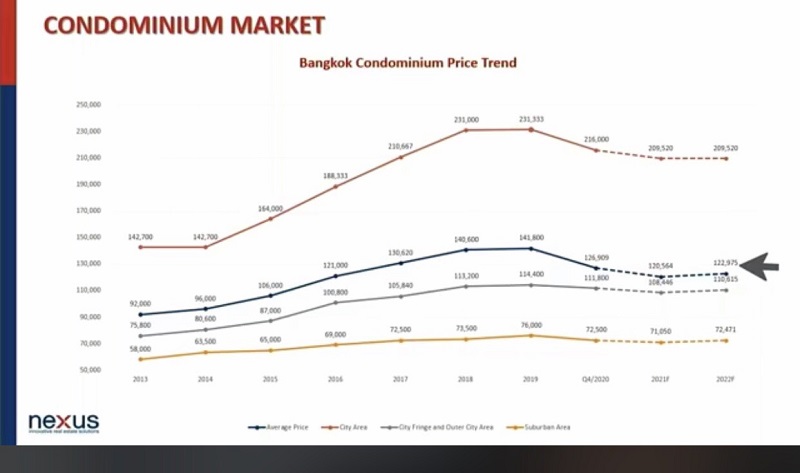
Since the first half of 2020, condominium prices dropped by approximately 16.6% and further decreased by 4% in the third quarter. In the fourth quarter, prices slightly increased to 126,909 THB per square meter, down from an average of 141,800 THB per square meter in 2019.
This price reduction was a key factor in boosting sales, as developers slashed prices by more than half to clear stock and generate cash flow for their companies.
For 2021, it is expected that condominium prices will continue to decline, averaging around 121,564 THB per square meter.
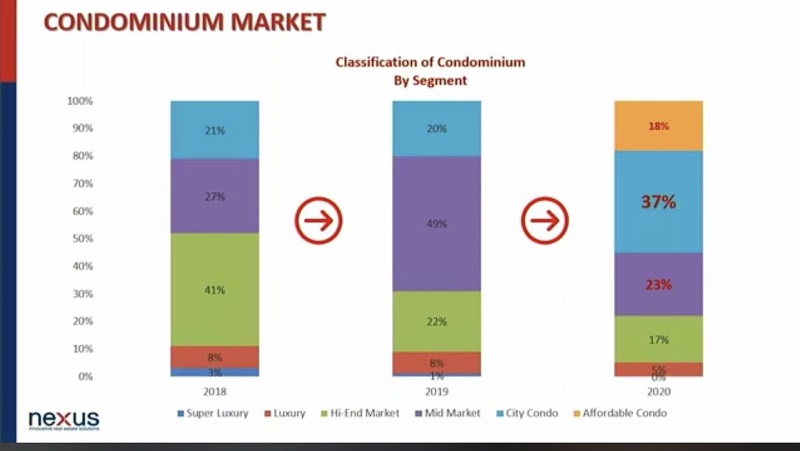
Trends for 2021: Continued price drops, with developers focusing on condos under 1 million THB – targeting suburban areas.
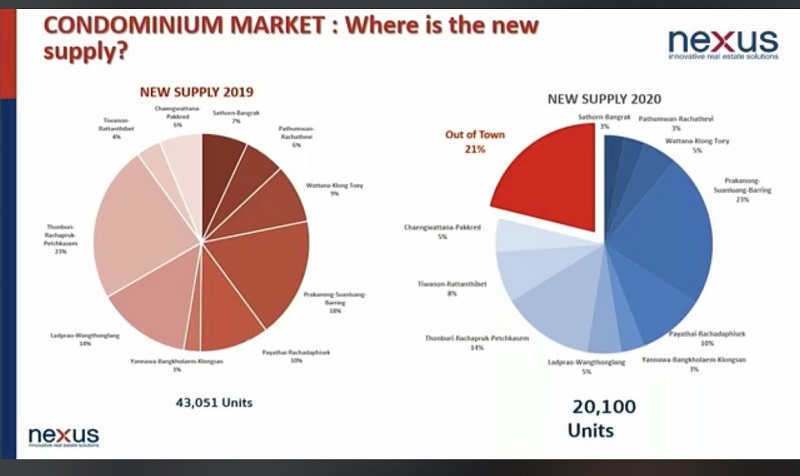
For new condominiums expected in 2021, around 33,000 - 38,000 units are anticipated, partly due to projects that were delayed in 2020 and those for which developers have already purchased land and announced development plans, totaling over 16,000 units.
New projects are likely to be smaller in size and priced lower, with prime locations in suburban areas or peripheries accessible by public transport, extending further from the city center, both to the east and north of Bangkok, with prices ranging from 1-5 million THB. It is expected that low-priced condos will account for about 6,000 units or 20% of the new supply in 2021.
In the first half of 2021, demand for condominiums is expected to remain low. However, if tourism resumes and the economy begins to recover in the third quarter, an increase in market demand is likely. The expected demand will remain close to 2020 levels, around 30,000 - 35,000 units. Based on these estimates, the overall sales rate is likely to remain at 93%, similar to 2020, but average prices may continue to decline due to price reductions from completed projects and the introduction of new projects aimed at the mid-market segment.
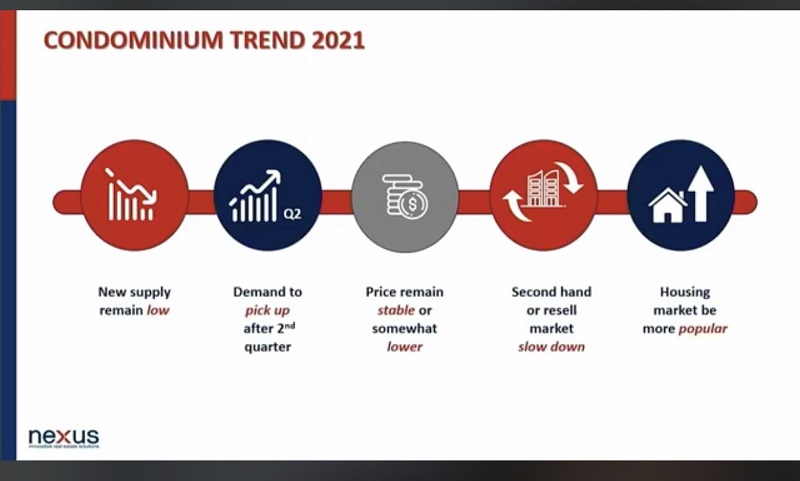
Nevertheless, 2021 remains a buyer's market. Therefore, developers' strategies this year may need to focus on creating appealing products in accessible price ranges to target lower to middle-income customers who still have purchasing power. Additionally, measures to reduce land and property taxes, along with lowering transfer fees, are believed to be helpful in stimulating and revitalizing the real estate market.
As for the second-hand condominium market in 2021, it is expected to slow down due to price adjustments, supply, and demand for new condominiums throughout 2020, along with changing consumer behavior that is increasingly favoring horizontal housing, with continuous demand across all price levels.