COVID-19 and the Thai Economy in 2021
The resurgence of COVID-19 at the end of 2020 has once again caused concern across the nation, with the number of daily infections rising.
The damage from COVID-19 to the Thai economy in 2020 began in the second quarter when the government announced a lockdown. It is estimated that the daily economic loss was around 10 to 20 billion baht, totaling over 2 trillion baht. This led to a significant decline in economic growth during this period, worse than the 1997 financial crisis.
The impact of the second wave of COVID-19 has forced the government's efforts to revive and support the population through various measures to start over again. The business and service sectors, restaurants, tourism, and farmers, who were expected to earn income during the New Year, have all been affected. The estimated damage at the end of the year is around 45 to 60 billion baht.
According to the latest data from the Bank of Thailand, the Thai economy for the entire year of 2020 is expected to contract by 6.6%, an improvement from the previous estimate of an 8.1% contraction.
As the new year 2021 begins, a sense of desolation has returned. Although there are no lockdown measures, Thais must once again “stay vigilant” to help control the spread of the virus strictly. Many citizens are concerned about this situation, leading to signs of reduced spending, high unemployment rates, and delays in debt relief requests.

Joint Private Sector Committee (JPS) predicts Thai GDP growth in the range of 1.5 – 3.5%
The Joint Private Sector Committee (JPS), consisting of the Thai Chamber of Commerce, the Federation of Thai Industries, and the Thai Bankers' Association, predicts that the Thai economy in 2021 will grow in the range of 1.5 - 3.5% if the outbreak can be controlled within three months, down from the previous estimate of 2.0 - 4.0% growth.
Similarly, the export forecast for 2021 is expected to grow by only 3.0-5.0%, while the general inflation rate will be in the range of 0.8 - 1.0%.
It is suggested that the government should expedite measures to control the outbreak and assist affected businesses and workers as a priority, while also building confidence in the country's products, emphasizing that the majority of transmission is person-to-person, not through food or goods. Additionally, there should be a swift procurement of vaccines to meet demand and ensure that Thai people receive effective vaccines.
The government should also expedite the implementation of a 200 billion baht budget for assistance, with clear and rapid execution methods, as this could help sustain the economy. This could be achieved by extending the “Half-Half” project and increasing the spending budget per person to 5,000 baht, along with measures to reduce the cost of living for affected citizens and businesses, such as a 5% reduction in electricity bills and effective use of financial tools like Asset Warehousing and the Credit Guarantee Corporation.
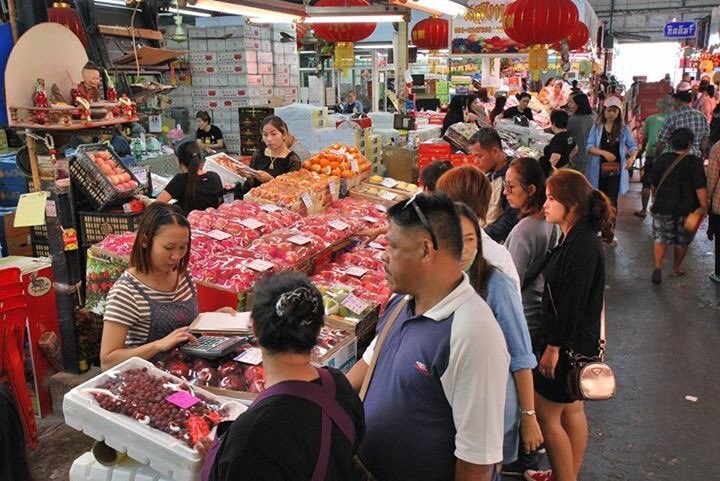
“Domestic purchasing power” is the main engine driving the economy this year
Mr. Arkhom Termpittayapaisith, Minister of Finance predicts that the Thai economy in 2021 will grow by about 4% with domestic purchasing power being the main driver for both spending and public investment, while the export sector is beginning to improve and will also contribute to driving the Thai economy this year.
How confident citizens feel about spending will depend on government measures to assist. Projects that started in 2020 and continue into 2021, such as the “Half-Half” project Phase 2 with a budget of 45 billion baht and additional funding for the state welfare card of 21 billion baht, totaling over 60 billion baht, will be crucial in ensuring money circulates in the economy and helping GDP figures grow by an additional 0.2% next year.
“I believe everyone is placing their hopes on the vaccine. I think the second half of 2021 will be much better.”

The private sector urges the government to inject 200 billion baht into the system to support the economy in the first quarter of 2021
Mr. Thanawat Phonwicha, advisor to the Economic and Business Forecasting Center at the University of the Thai Chamber of Commerce stated that the second wave of the outbreak may result in Thailand's GDP growth this year being reduced to 2.2% from the previously forecasted 2.8% due to impacts on domestic spending, production, exports, and tourism.
It is estimated that the situation should not last longer than three months. The government needs to inject at least 200 billion baht into the economy in the first quarter of this year and implement measures to help reduce the cost of living for citizens while stimulating consumer spending.
The “Half-Half” measure is considered one of the best approaches as it helps circulate money in the economy by at least 2-3 times. Currently, it is still viewed that the Thai economy in the first quarter may contract by -4%, and if the outbreak situation can be resolved within the first quarter, there is a chance that GDP in the second quarter could rebound to grow by 8-10%, due to the low base from the previous year.
However, if the outbreak cannot be controlled and the government is forced to implement stricter lockdown measures (hard lockdown), there is a possibility that the Thai economy could face a severe contraction, with predictions of a -11.3% contraction in the first quarter of 2021.

Investors are advised to adjust their portfolios, focusing on cash and bond funds
Mr. Somboon Narawutchai, Secretary-General of the Association of Investment Analysts discussed the results of a survey of analysts and fund managers regarding investment perspectives and predictions for the direction of the Thai stock index. From 23 companies, it was found that the GDP assumption for 2021 is viewed positively by all respondents, with an average of 3.74%.
Regarding the Thai stock index, 60.87% of analysts and fund managers believe it will trend positively, while 26.09% see it remaining relatively unchanged from the end of 2020, and 13.04% anticipate a negative change.
They view negative factors affecting the Thai capital market in 2021 to include the ongoing COVID-19 situation at 78.26%, followed by domestic political factors at 73.91%, and the domestic economy at 52.17%.
For the opinions of analysts and fund managers, it is suggested that in 2021, investors should hold 12.17% of their portfolios in cash and 16.30% in bond funds.
As for investments in high-risk assets, it is recommended to allocate 28.43% to Thai stocks or Thai equity funds, followed by 28.39% in foreign stocks or foreign equity funds, 7.85% in gold, and 6.85% in real estate investment trusts (REITs).
Investors should avoid stocks related to tourism, such as hotels and airlines, and also avoid certain stocks that have surged over 1,000% as their prices exceed fundamental values significantly.
Ultimately, whether the economy can grow according to the set targets depends on the preparedness of all parties to handle the situation, which is crucial for everyone to recognize. The government must have measures to assist citizens, while businesses need to adapt quickly, especially in times of widespread risk. Some businesses may be heavily impacted, but others may find golden opportunities to rapidly expand their production of goods and services to meet consumer demand in this era.