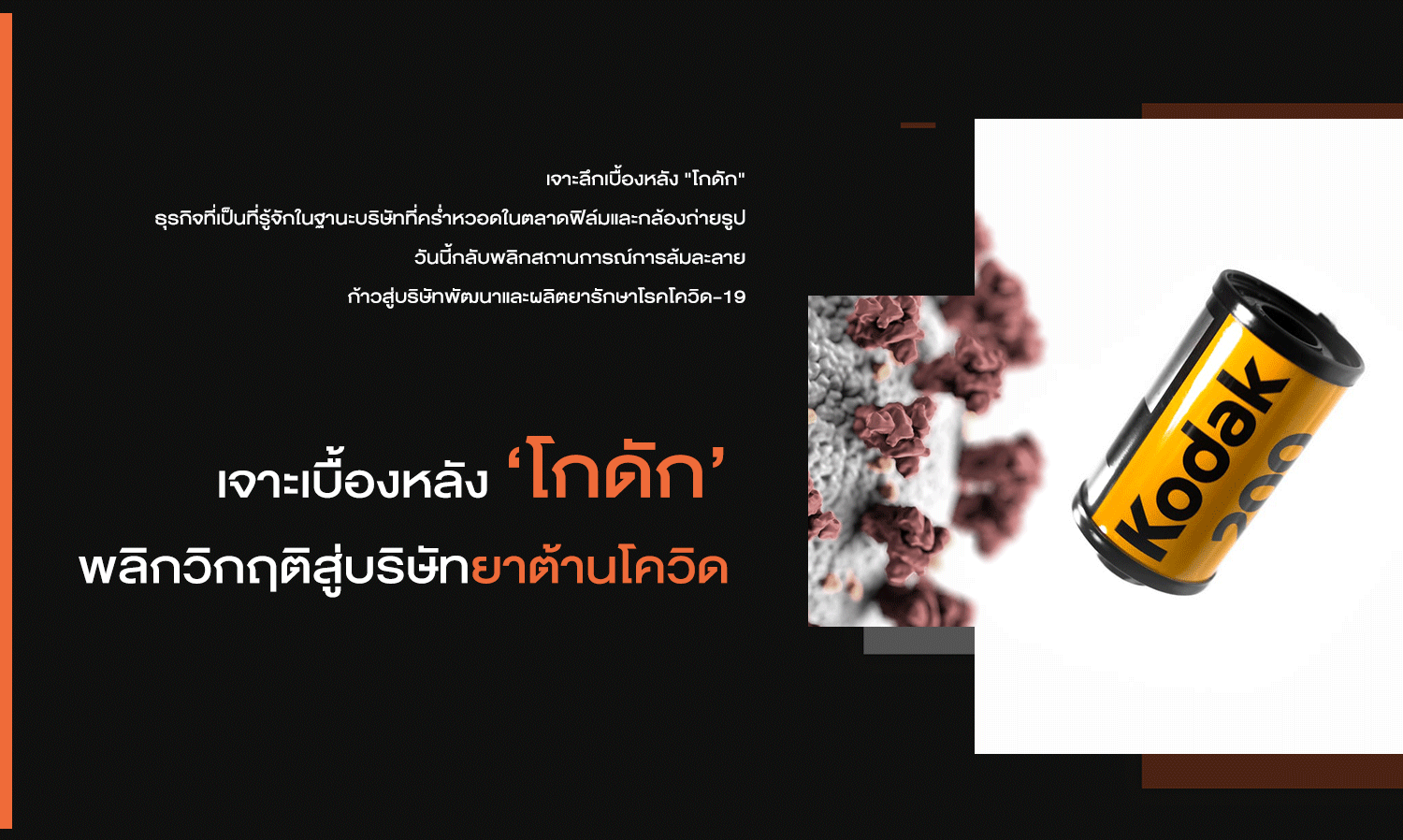
Behind the Scenes of Kodak: Turning Crisis into a COVID-19 Drug Company
An In-Depth Look at Kodak, a Business Known for Its Legacy in Film and Photography, Now Transforming from Bankruptcy to a Developer and Manufacturer of COVID-19 Treatments
The COVID-19 pandemic has created an economic crisis worldwide, but it has also opened up opportunities for Kodak, the American company known for its past bankruptcy and its resurgence as a partner with the U.S. government to produce components for COVID-19 treatments.
The U.S. government has provided a $765 million loan to Eastman Kodak Company as an investment to develop and produce components for COVID-19 treatments, ensuring that the U.S. has sufficient medication for its citizens to combat the virus outbreak.
Jim Continenza, CEO of Kodak, revealed that the pharmaceutical production segment accounts for about 30-40% of Kodak's business, and it may take time to ramp up drug production.
Kodak is making a significant shift from the photography industry to drug manufacturing, which may be seen as following in the footsteps of its former rival, Fujifilm Holdings Corporation of Japan. Both companies fiercely competed in the film market during the 20th century, but Fujifilm has proven to be more adept at innovating and adapting to the modern world than its American counterpart.
Kodak was once the king of the film and photography industry in 1976, monopolizing the U.S. market with 90% of film sales and 85% of camera sales. However, as the world transitioned to digital photography, Kodak suffered greatly due to its slow adaptation to new technology.
Although Kodak invented the first digital camera in 1975, at that time, Kodak's film was like a golden egg, which ultimately hindered the company from seizing beneficial opportunities. The company's executives hesitated to pivot the business to align with global trends, leading to its bankruptcy filing under U.S. Chapter 11 in September 2012.
While most companies in the photography industry rapidly shifted towards printing and digital technologies to meet consumer demands, Kodak struggled to keep pace.
After a brief hiatus, Kodak launched a digital currency called “KodakCoin” for buying and selling photographs on the “KodakOne” platform, which aimed to manage the copyrights of both professional and amateur photographers, but these investments seemed to falter.
Continenza believes that the mission Kodak has been assigned by the U.S. government to produce COVID-19 treatments could be a chance for the company, which has been around for 131 years, to survive and restore its status.
The loan Kodak received is the first under the Defense Production Act, and it is a commercial loan that must be repaid over 25 years.
Kodak has been involved in the chemicals industry for over a century, and its existing infrastructure will facilitate rapid production. Kodak plans to expand its facilities in St. Paul, Minnesota, and Rochester, New York, as well as establish a new pharmaceuticals division.
Looking back to 1990, Kodak was once involved in the global production of widely used drugs like aspirin before selling its pharmaceutical division to GlaxoSmithKline, a British giant, for $2.925 billion in 1997.
The CEO of Kodak is committed to ensuring that the production of COVID-19 treatment components will alleviate the shortage of medications in the U.S. as the country faces the ongoing virus outbreak.
Currently, the U.S. has the highest number of COVID-19 cases in the world, with 5,841,211 confirmed cases and 180,168 deaths.
SOURCE: www.bangkokbiznews.com