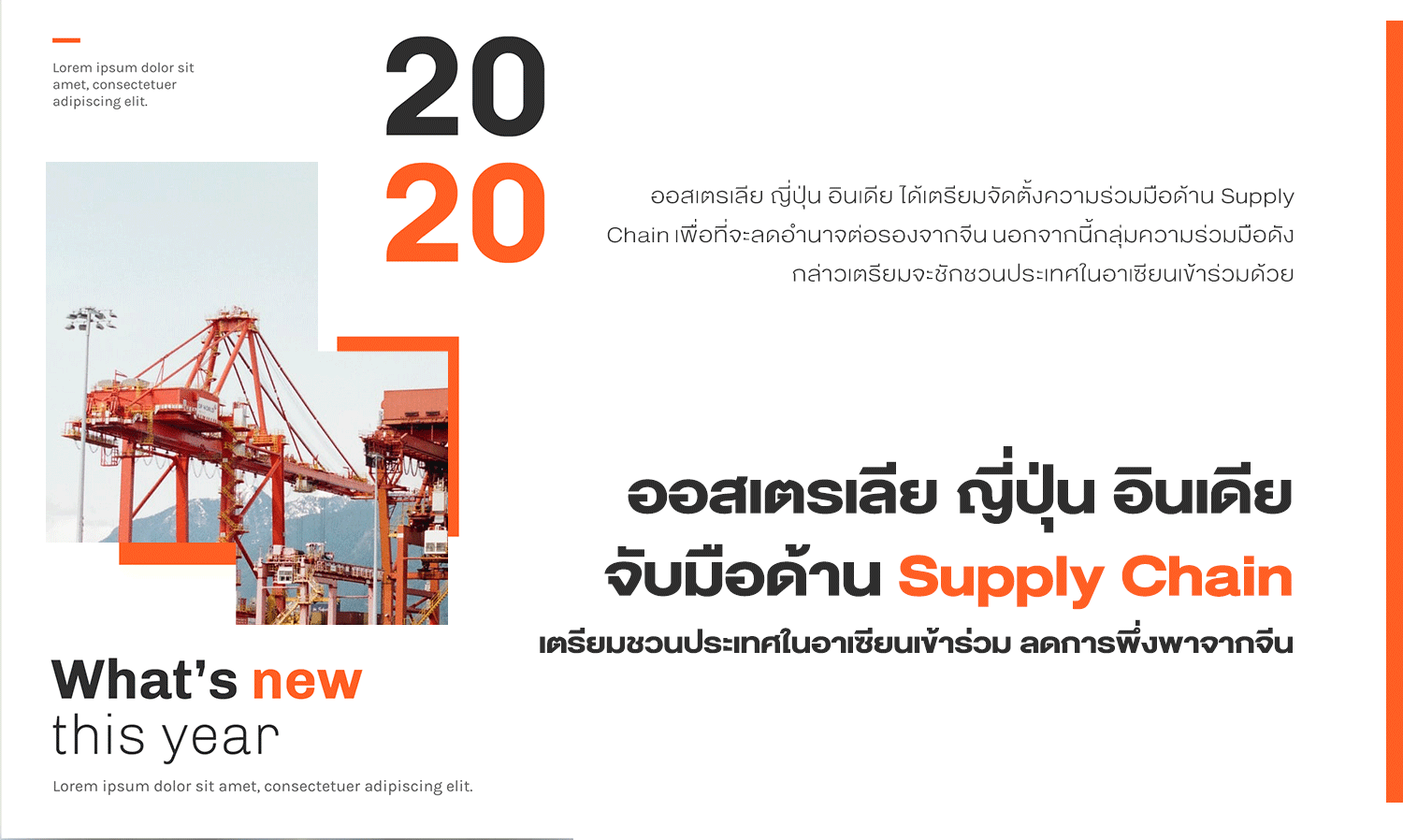
Australia, Japan, and India Collaborate on Supply Chain to Invite ASEAN Countries and Reduce Dependence on China
Australia, Japan, and India are preparing to establish a collaboration on supply chains to reduce leverage from China. Additionally, this collaborative group plans to invite ASEAN countries to join.
The governments of the three countries—Australia, Japan, and India—are working together on a supply chain initiative called the “Supply Chain Resilience Initiative” to decrease reliance on China and mitigate the impact of disruptions that may occur due to unforeseen events in the future. This initiative comes in the wake of the COVID-19 pandemic that originated in Wuhan, which affected the manufacturing sector of various goods worldwide.
This collaboration was initiated by Japan's trade minister, who invited India and Australia to participate. India has agreed to this collaboration to reduce China's manufacturing power, especially following the border conflicts between China and India. Meanwhile, Australia aims to decrease the proportion of its national income that comes from China, and Japan has also faced disruptions in production due to its reliance on China.
Previously, the trade ministers of Australia and India discussed supply chains, focusing on increasing production diversification. Furthermore, Australia seeks to attract more investment into the Indo-Pacific region.
In the coming weeks, the trade ministers of the three countries will meet, and the collaboration will be officially established in November. It is also expected that this group will invite ASEAN countries to join.
The trade conflict between the United States and China has raised concerns among foreign companies with manufacturing bases in China regarding the viability of their operations due to various factors, such as potential increased tariffs from the U.S. and rising labor costs in China. Additionally, the COVID-19 pandemic has impacted supply chains in other countries, further accelerating the shift of manufacturing bases and reducing dependence on China as the world's factory.
SOURCE: brandinside