ASEAN-China Economy in October 2025 (Kasikorn Research Center)
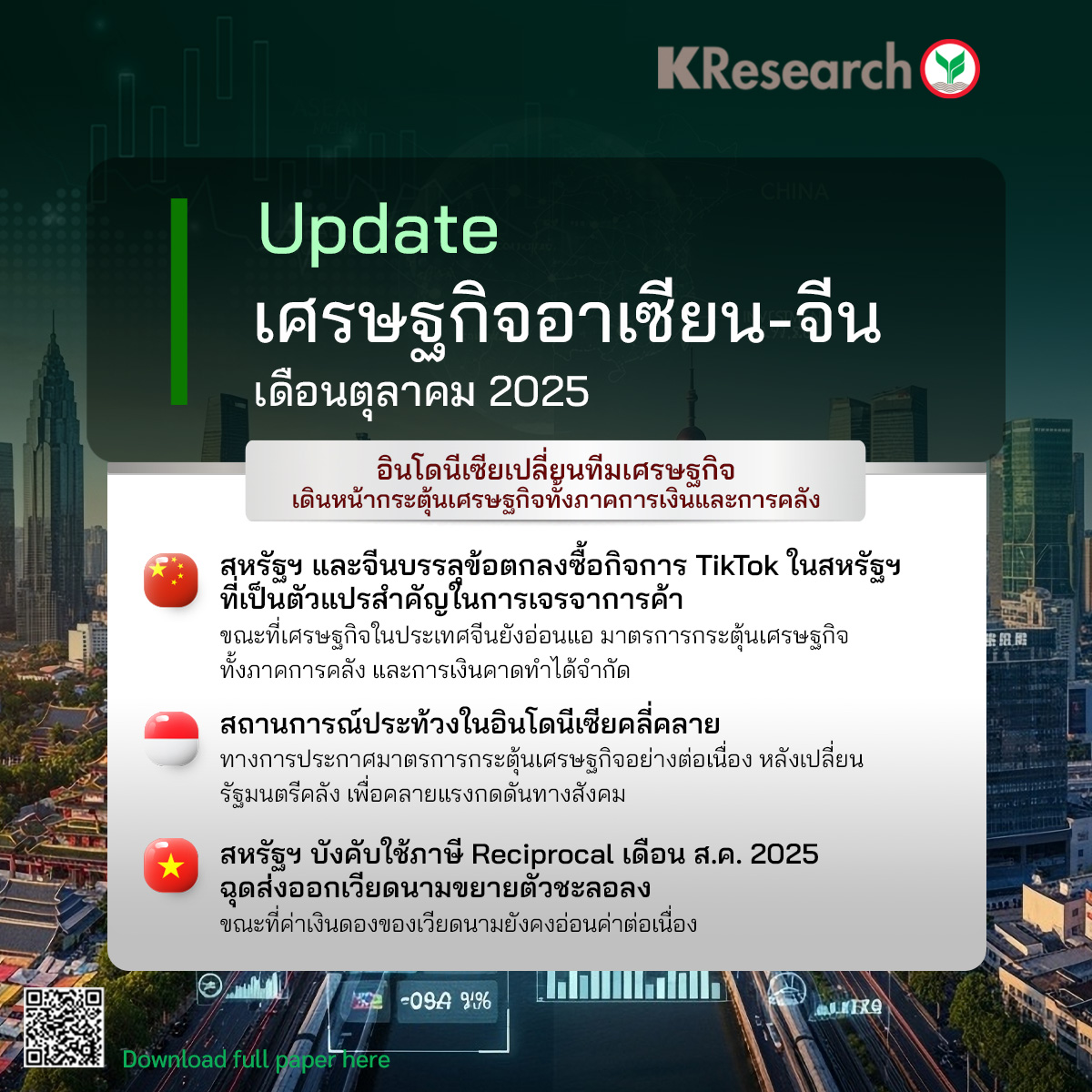
The ASEAN and Chinese economies in October 2025 face various challenges and policy changes, particularly in international trade, domestic politics, and economic stimulus measures. Key issues include the US-China negotiations, the TikTok agreement, and the impact of reciprocal tariffs affecting exports in the region.
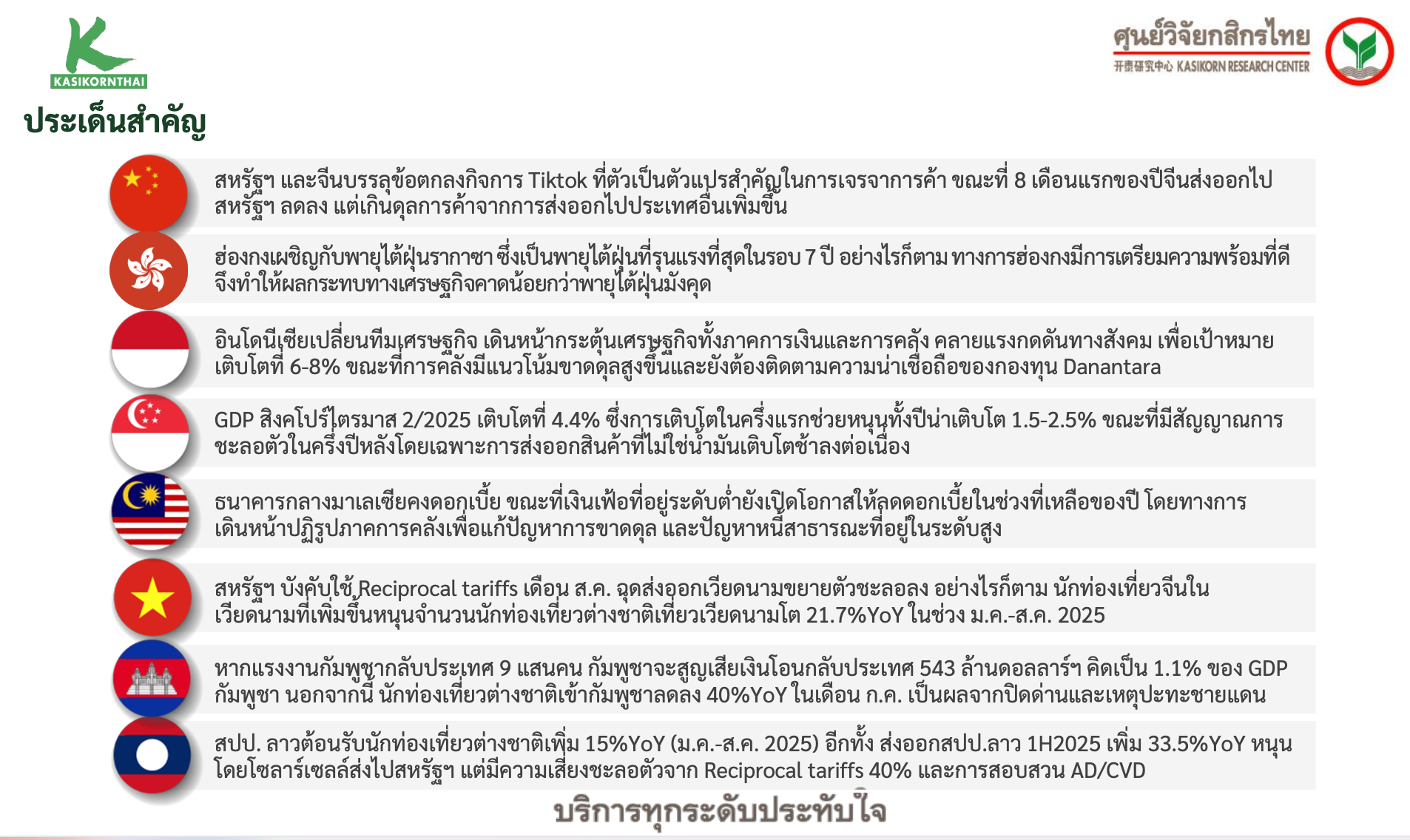
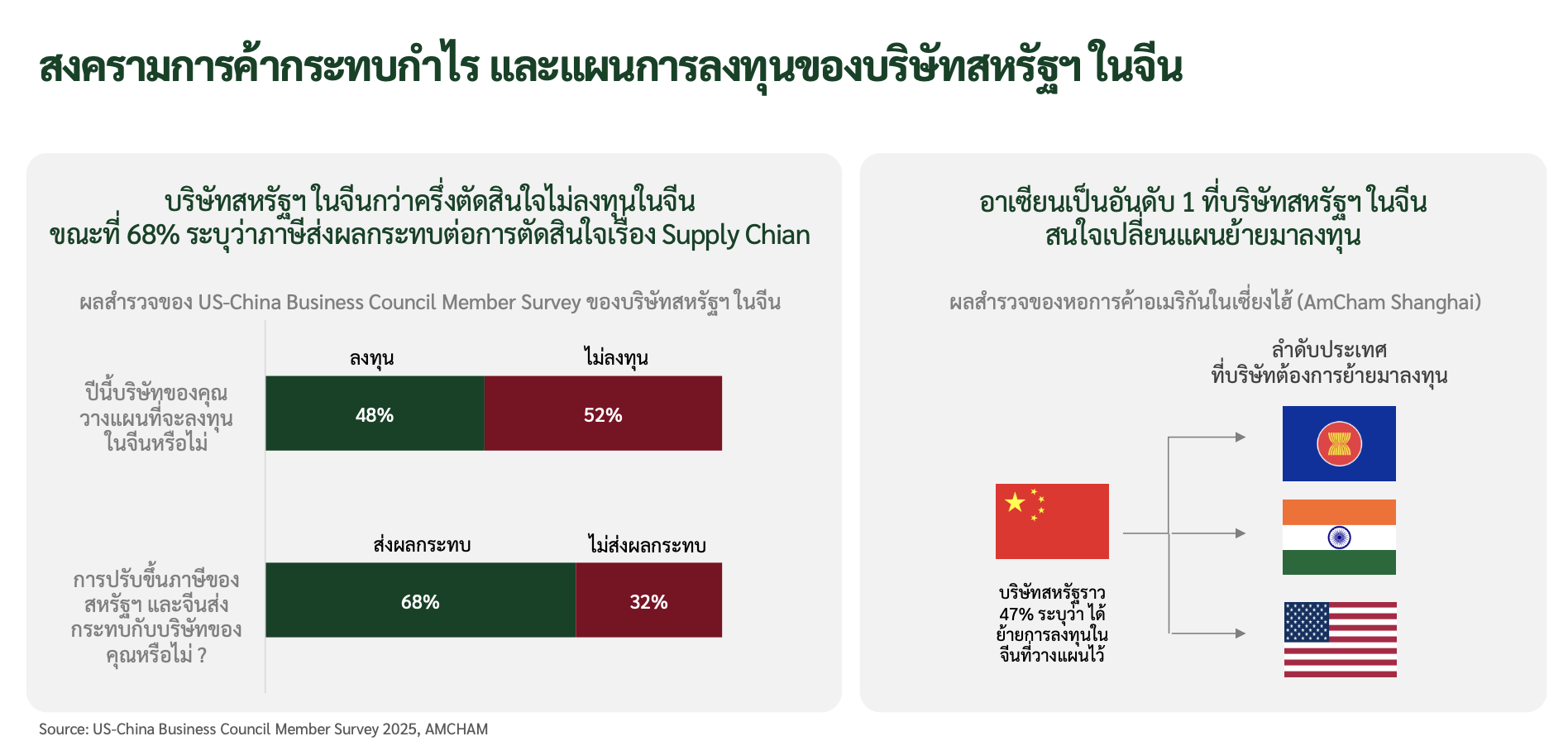
The US and China successfully reached a framework agreement for the acquisition of TikTok in the US, with the US holding over 80% of the shares and managing user data, while ByteDance's role is reduced to less than 20%. This deal is viewed as a potential turning point in the trade war between the two countries. Although China's exports to the US continue to decline, it maintains a trade surplus through growing exports to ASEAN and Europe.
However, the Chinese economy remains weak due to deflationary pressures, with the Producer Price Index (PPI) in August 2025 showing a continuous decline. Meanwhile, the youth unemployment rate rose to a record high of 18.9% in the same month, reflecting the fragility of domestic purchasing power. Although the government is attempting to implement employment and skill training policies, these efforts are still insufficient.
In Indonesia, the situation following large protests from late August to early September began to stabilize after the government appointed Mr. Purbayana Yudi Sadeva as the new finance minister and advanced the proactive economic policy “Purbayanomics,” injecting over 200 trillion rupiah into the system with hopes of achieving GDP growth of 6-8%. However, this growth may come with risks related to fiscal discipline and public debt in the long term.
In Malaysia, the economy continues to rely on the nascent electric vehicle (EV) industry. Despite the establishment of EV manufacturing plants, the ecosystem remains incomplete, relying heavily on imports of components from China and Korea. Additionally, the federal government's public debt exceeds 65% of GDP, limiting the ability to adjust the budget for economic stimulus.
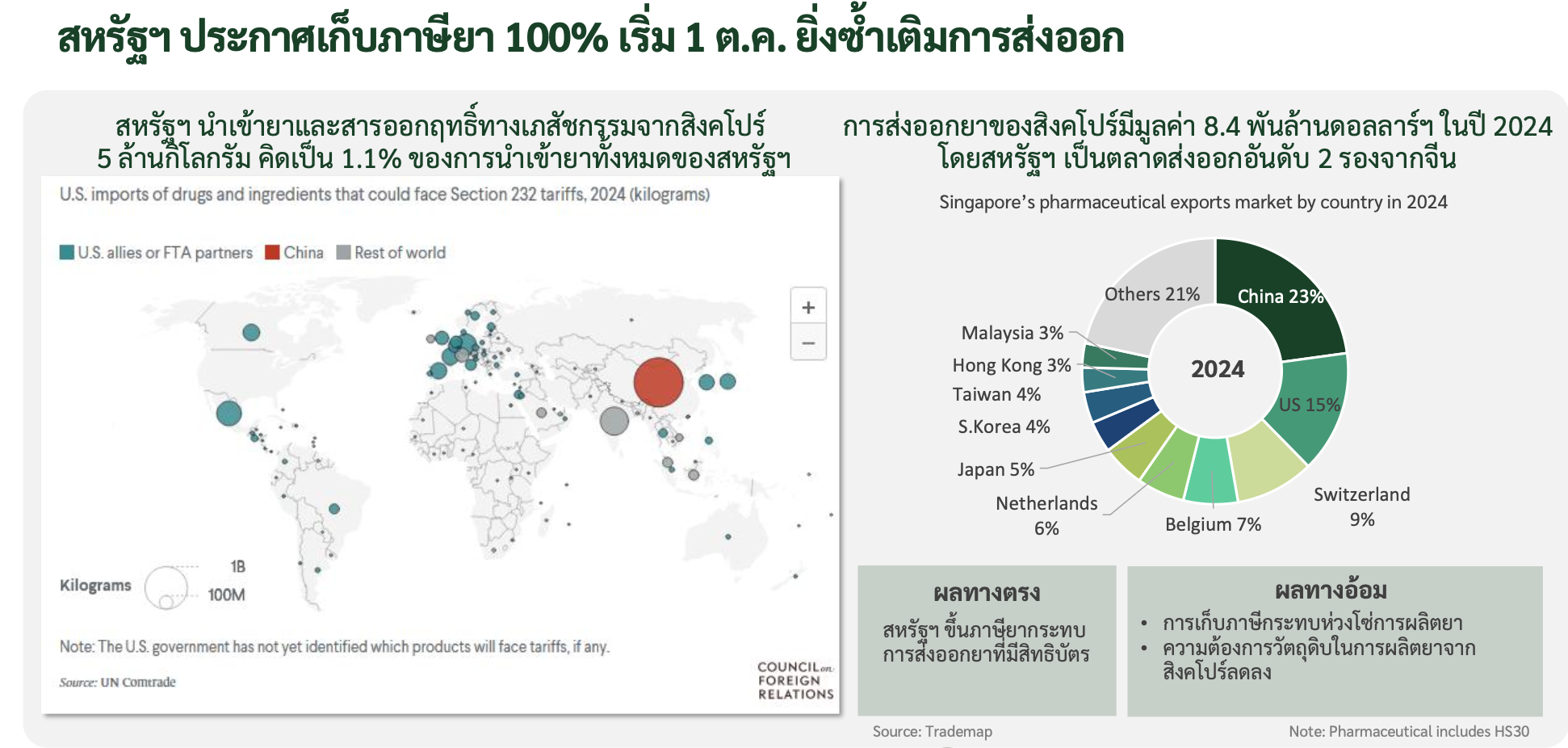
Singapore is facing pressure from slowing exports, with GDP growth of 4.4% in Q2 2025, but an expected annual growth of only 1.5-2.5%. Non-oil exports have begun to decline, particularly in the US market, which announced a 100% tax on pharmaceuticals starting October 1, impacting the pharmaceutical industry with exports valued at over $8.4 billion.
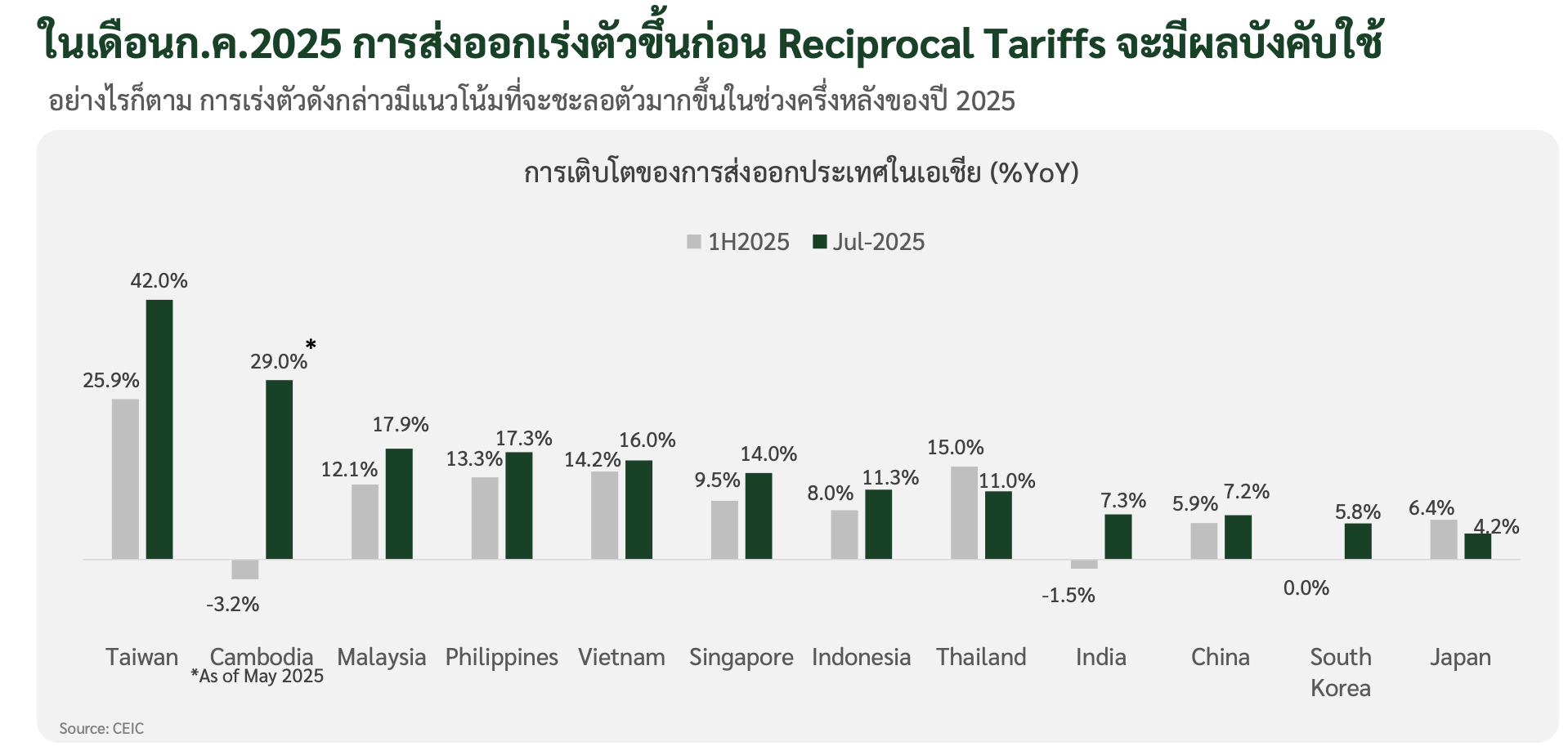
Vietnam has been directly affected by the implementation of reciprocal tariffs by the US in August, leading to a slowdown in export growth. At the same time, the Vietnamese dong has continued to depreciate to a record low. Although the stock market has improved, the financial account remains negative due to capital outflows. Tourism has become a significant support factor, with Chinese tourists helping to increase the number of foreign visitors to Vietnam by 21.7% year-on-year in the first eight months.
Cambodia is facing significant pressure from labor issues and the closure of the Thai-Cambodian border. If over 900,000 workers return to their home country, Cambodia could lose remittances of about $543 million, equivalent to 1.1% of GDP. Additionally, the number of foreign tourists in July contracted by 40% year-on-year, and exports to Thailand are expected to shrink by 50-60% in the second half of 2025, potentially reducing GDP growth from 4.7% to just 2.4%.
Conversely, Laos has a more positive outlook, with exports growing by 33.5% year-on-year in the first half of 2025, driven by solar cell exports to the US, despite risks of being investigated for AD/CVD. Meanwhile, tourism expanded by 15% year-on-year, resulting in a continuous current account surplus of over $1.09 billion, supporting reserves to six months of imports, exceeding IMF standards.
Overall, the ASEAN-China economy in October 2025 is a mix of pressures from the trade war, tax measures, and social vulnerabilities in several countries, while also benefiting from tourism and new investments, particularly in technology and clean energy industries that are starting to play a more significant role.