'Essential Skills' for Working in a Post-COVID World
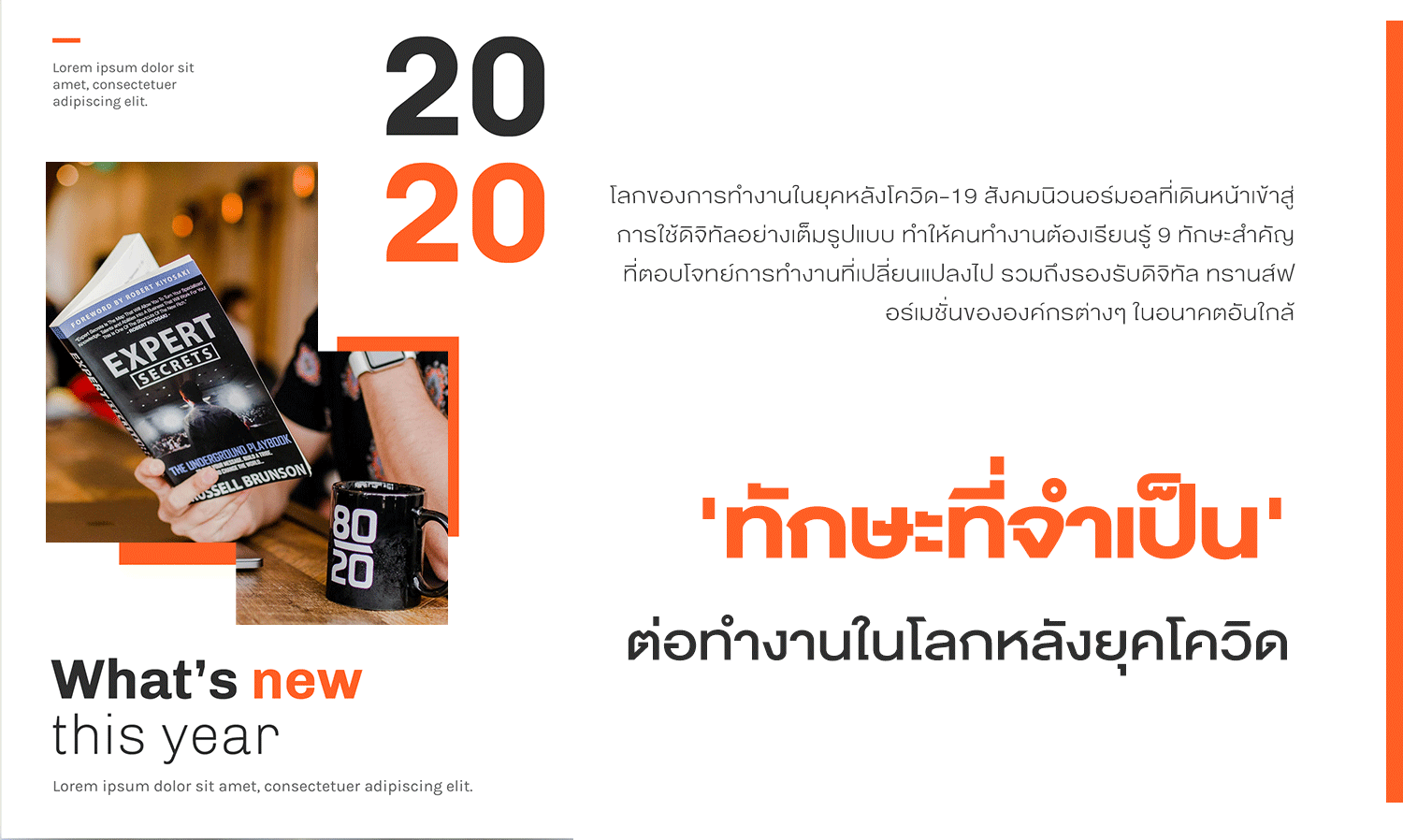
The world of work in the post-COVID-19 era, in a new normal society that is fully embracing digital technology, requires workers to learn 9 essential skills that address the changing nature of work and support the digital transformation of various organizations in the near future.
The COVID crisis has led many sectors to acknowledge that the world will change in various aspects, including daily life, healthcare, travel, and work. Moreover, the COVID crisis is not yet over, and it may take a long time before we can return to our previous way of life 100%, or some aspects may never return to how they were.
In fact, even before COVID, there was talk about a new industrial revolution and the emergence of digital disruption that would transform many businesses and industries, including the potential change or disappearance of certain professions.
The new normal we are witnessing now is characterized by society's full adoption of digital technology. Since the onset of remote work, people have become more accustomed to online meetings, remote collaboration, and behaviors such as online food ordering and mobile payments. The increased use of various applications and digital technologies has accelerated digital disruption faster than anticipated.
There has been discussion about how universities need to change their teaching methods, open new programs to accommodate the world's changes, and develop individuals who can work in the new professions that will emerge. The younger generation may need to possess a wider range of skills; in addition to being proficient in technology, they may need knowledge in AI or programming. However, these skills are essential for preparing the new generation to compete globally. At the same time, the current workforce must adapt their skills to continue working in a changing world.
Bernard Marr, a digital transformation expert, wrote an article on Forbes' website outlining the 9 skills that workers should have in the post-COVID era (which actually starts from today): 1. Adaptability and flexibility. The work model will change from what it used to be, and lifelong careers in the same profession will become less common. Therefore, workers must be ready to continuously adapt themselves.
2. Understanding technology. The COVID crisis has accelerated organizations to undergo digital transformation, which may require the use of digital technologies such as AI, big data, or the Internet of Things. Thus, workers in any position need to understand and work with new technologies proficiently.
3. Creativity and innovation. Technology and innovation will play a significant role in economic activities. Workers may need to collaborate to create new products or services that are in demand in the post-COVID world.
4. Data literacy. In the era of Industry 4.0, organizations that have data and can analyze or predict various matters, such as customer demand, will be more competitive. Workers need to know how to use data and foster a culture of data utilization within their organizations.
5. Analytical thinking. The digital world generates a vast amount of information, including data from social media. Workers need the ability to analyze and differentiate between various information and news available on the internet and select what is useful for their work.
6. Digital skills and programming. The digital transformation of organizations requires personnel with strong technology skills, which may include programming, web development, or even online marketing.
7. Leadership. Modern organizations will have flatter structures with less complex hierarchies. Sometimes, workers may need to work alone at home or off-site, or in small teams. Therefore, everyone must take responsibility and demonstrate leadership in decision-making, as well as the ability to collaborate with others.
8. Emotional intelligence. In uncertain work situations in a changing world, workers must know how to manage their emotions and help boost morale among their colleagues.
9. Lifelong learning. Working in the new era requires workers to continually acquire new skills, being ready to learn new subjects that may be necessary for future work. Learning in the new era may also require online learning skills in addition to traditional classroom learning.
The skills mentioned above are not only beneficial for everyone in adapting to the current changing work environment towards full digitalization but are also advantageous for organizations that need to develop their workforce to support the digital transformation that will occur in the future.
SOURCE: www.bangkokbiznews.com