'COVID' Erupts Again: Is Thailand Ready to Handle It?
The resurgence of COVID-19 in several countries, coupled with Thailand's increasing relaxation of various measures to strike a balance between "stopping COVID but not stopping the Thai economy," has led experts to unanimously predict, "Thailand will definitely face a second wave of COVID, and it will be more severe than the first!"
Although there have been no reported domestic infections for 78 consecutive days, how prepared is the Ministry of Public Health (MoPH), the leading agency in disease prevention, control, and treatment?
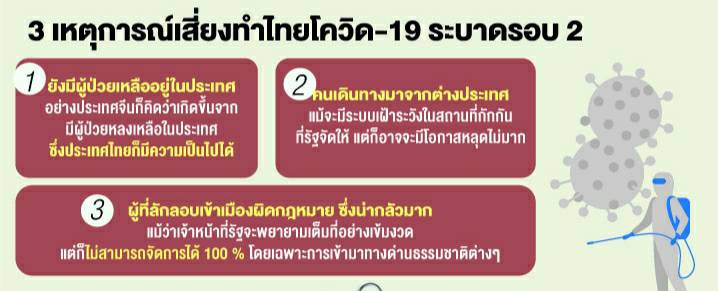
Currently, even though Thailand has not encountered domestic infections, the possibility of new cases remains. The absence of reports does not mean there are no patients, as the reported global COVID-19 infection numbers are estimated to be ten times lower than the actual cases.
For instance, Vietnam, which went 90 days without reporting infections, eventually faced another outbreak. The exact source is still unknown, but it may stem from remaining infected individuals within the country or imported cases from abroad. Despite having quarantine facilities for incoming travelers, there may still be loopholes, and illegal entries could occur.
“Thailand will certainly see new patients again; the likelihood is quite high. However, we hope it won't lead to a widespread outbreak. If it does, it will be contained and not too extensive, allowing us to control the disease quickly. The goal is not to have zero cases in the country but to limit the spread if cases are found,” said Dr. Thanarak Pholpipat, Deputy Director-General of the Department of Disease Control (DDC).
A crucial factor in controlling the COVID situation swiftly and preventing widespread outbreaks, Dr. Thanarak stated, depends on the rapid identification of patients, prompt investigation of cases, and quick tracking of contacts, ensuring comprehensive coverage and placing everyone in quarantine. If this is achieved, the disease can be controlled effectively. Additionally, the cooperation of the local population in areas with reported cases is vital. If the public cooperates well, Thailand may encounter patients without experiencing an outbreak.
Rapid surveillance and detection of infections focus on two areas: 1. Preventing imported cases from abroad in various types of quarantine facilities for a full 14 days, including at airports, land borders, and seaports; and 2. Identifying domestic infections, where the key mechanisms for detection are "healthcare facilities" and "patients" themselves.
Patients exhibiting respiratory symptoms, fever, or clear cough, or those with flu-like symptoms should seek medical attention. Simultaneously, healthcare facilities must maintain rigorous measures to identify infections, particularly among three specified groups: pneumonia patients, symptomatic healthcare workers, and clusters of respiratory illness cases.
The government is fully prepared to limit the spread of COVID, ensuring a timely response to the situation by increasing disease control operational units in every province to investigate cases and track contacts swiftly.
Importantly, efforts will focus on containing COVID within specific areas and only closing high-risk locations deemed necessary by health officials. “There will be no blanket closures of similar venues nationwide,” avoiding a repeat of the first wave's approach.
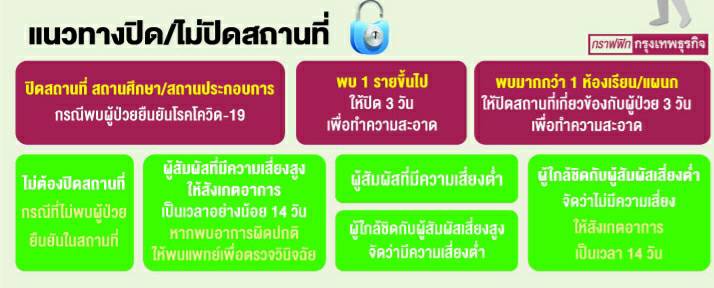
Additionally, proactive surveillance will be conducted by deploying royal vehicles to collect samples from the public in areas to test for COVID-19, capable of processing around 1,000 samples daily. For example, testing was conducted for individuals who visited the same shopping mall as an infected Egyptian soldier in Rayong, resulting in 6,501 tests between July 14-19, 2020, to ensure there were no other infections in that area.
As for the healthcare plan for treating patients, data from the end of June indicated that hospitals had 571 ICU beds, 11,206 isolation rooms for severe cases, and 10,349 general beds. Medical supplies, such as N95 masks, are prepared in over 1.12 million pieces, and high-level medical-grade PPE suits are available in over 511,000 sets, with 350,000 distributed to all hospitals and 150,000 reserved at the Government Pharmaceutical Organization (GPO) for emergencies. There are also 11,000 ventilators available.
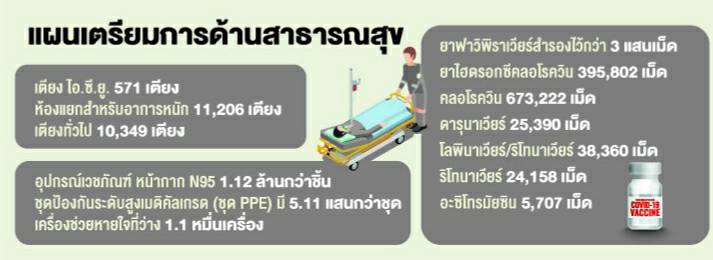
Medications include over 300,000 tablets of favipiravir specifically for treatment, along with other drugs: 395,802 tablets of hydroxychloroquine, 673,222 tablets of chloroquine, 25,390 tablets of darunavir, 38,360 tablets of lopinavir/ritonavir, 24,158 tablets of ritonavir, and 5,707 tablets of azithromycin.
Regardless of how prepared the response plan is, it remains a reactive strategy. The most crucial proactive measure is "prevention." At the individual level, personal protective measures must be maintained, including wearing masks, frequent handwashing, avoiding crowded places, and using personal utensils for food. At the organizational level, employees should work from home as much as possible, stagger work hours, implement screening measures, and ensure that individuals with respiratory illnesses stay home. Workspaces should be arranged to maintain a distance of 2 meters, and ventilation strategies should be considered for enclosed areas, as poorly ventilated spaces pose a 19 times higher risk of disease transmission compared to open areas.
Are the Thai people sufficiently ready to cooperate in disease prevention and control, especially when recent surveys show that "preventive behaviors among Thais have decreased from 90% to 79%!"
SOURCE: www.bangkokbiznews.com