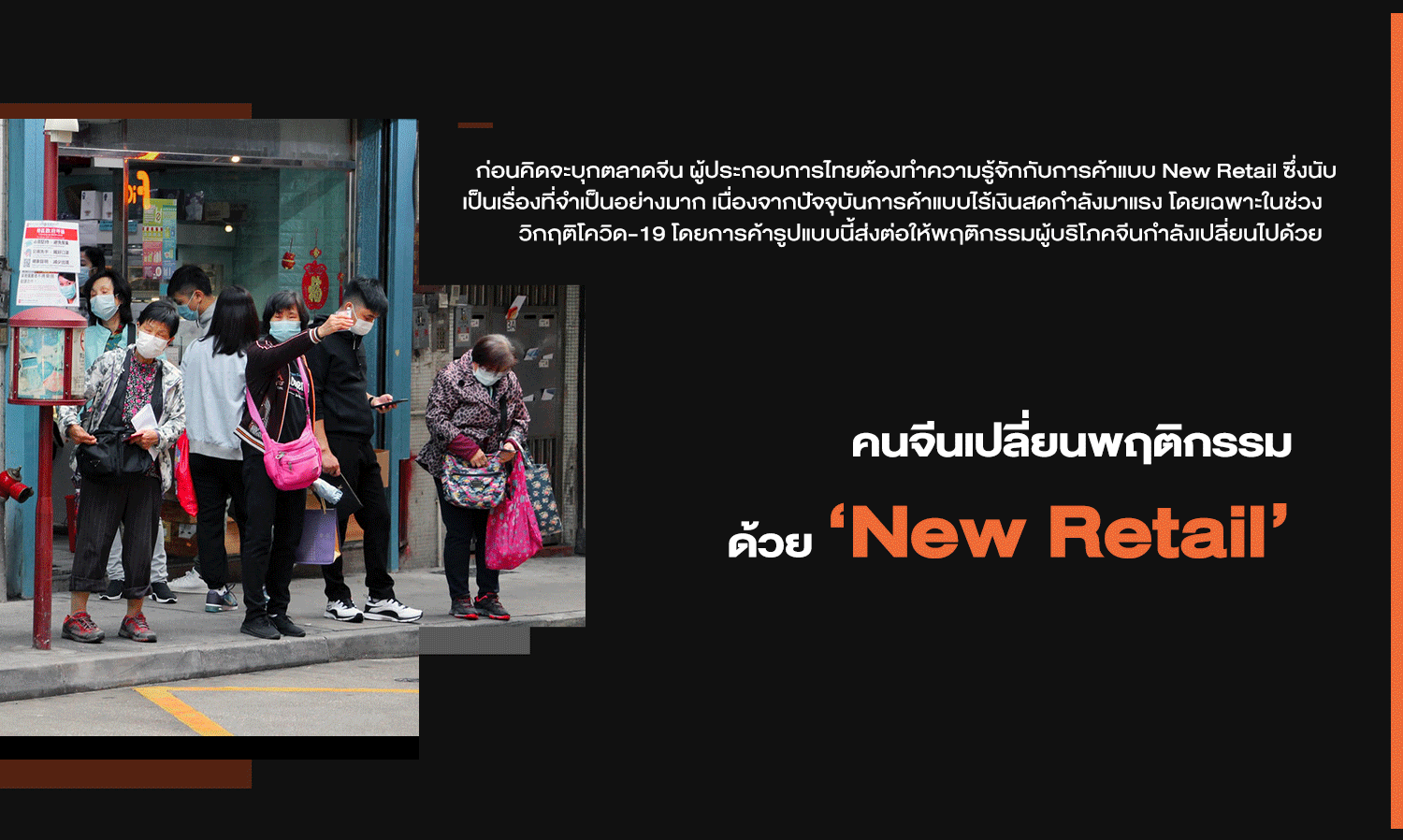
Chinese Consumers Changing Behavior with 'New Retail'
Before entering the Chinese market, Thai entrepreneurs must familiarize themselves with New Retail, which is becoming increasingly essential. Currently, cashless commerce is on the rise, especially during the COVID-19 crisis, and this model is influencing the changing behavior of Chinese consumers.
Cashless online stores in China are booming, particularly after the COVID-19 outbreak. Those looking to penetrate the Chinese market should prioritize online channels, making New Retail a necessity. It's also important to update on the post-COVID-19 situation and its impact on Chinese consumer behavior.
The clear advantage of New Retail is the seamless integration of payment and transactions through user-friendly online wallets, easily linked to mobile phones. Just scanning a QR code can handle transactions.
Additionally, it allows spending abroad where participating merchants accept it. The most popular applications are Alipay and WeChat, both of which most Chinese people already have downloaded on their smartphones.
A single mobile phone can do it all. As Chinese consumers increasingly prefer online payments via mobile apps, the approach for e-commerce in China is to centralize payment methods and transactions on mobile platforms, under a comprehensive usage model known as “One Platform.”
This is a crucial factor enabling Chinese consumers to conduct transactions and shop for various products with just one mobile phone and two main apps. Currently, WeChat is not only the platform with the highest user base in China, boasting 1 billion users, but it also facilitates various online transactions. Meanwhile, Alipay is the most widely used platform for e-commerce, with over 800 million users.
Moreover, data shows that Chinese consumers prefer depositing cash into their Alipay accounts rather than keeping it in banks due to better interest rates and the convenience of conducting transactions simply by scanning QR codes. Additionally, it can be used abroad without needing to exchange cash, as long as the local merchants accept it.
Shopping in supermarkets without cash is becoming more common in China, with the rise of New Retail stores. A notable example is Hema, established by Alibaba, which has gained popularity and serves as a model for modern department stores and supermarkets.
Big data enhances services. Nowadays, online business and commerce have become integral to Chinese life. Major companies like Alibaba and JD.com are beginning to utilize big data, particularly in collecting customer shopping data and general behaviors, such as purchasing frequency, product types, and preferred prices and promotions.
Big data enables brands to process this information to predict customer spending behaviors and product preferences. At the same time, they can create promotions or marketing programs that directly reach customers through various mobile applications.
For instance, analyzing consumer purchasing behaviors to determine what products they frequently buy can lead to targeted advertisements or promotions sent to customers' WeChat accounts. Currently, Tencent and JD.com are starting this approach and are pushing to expand it across China.
Lower-tier cities are gaining momentum. When marketing in China, another consideration is whether the customers are from local areas, provinces, or tiered cities. For example, Tmall is a popular platform with many branded products, primarily attracting customers from tier 1-2 cities or major urban areas with high purchasing power and tastes, such as Shanghai, Beijing, Guangzhou, Shenzhen, Chengdu, Tianjin, and Chongqing.
However, for products targeting the Gen Y and Gen Z demographics, platforms like Xiaohongshu, TikTok, or general lower-tier market products should be utilized, focusing on consumer goods on platforms like Pinduoduo.
For Thai entrepreneurs, an important trend is that New Retail will undoubtedly play a larger role in Thailand in the future. Although it may take some time, what has already occurred is that post-COVID-19, consumer behavior in many countries has changed, including attitudes towards products. Therefore, these changes will inevitably impact the lives of Thai people sooner or later.
SOURCE : www.bangkokbiznews.com