How Will the Thai Economy Recover Without Foreign Tourists?
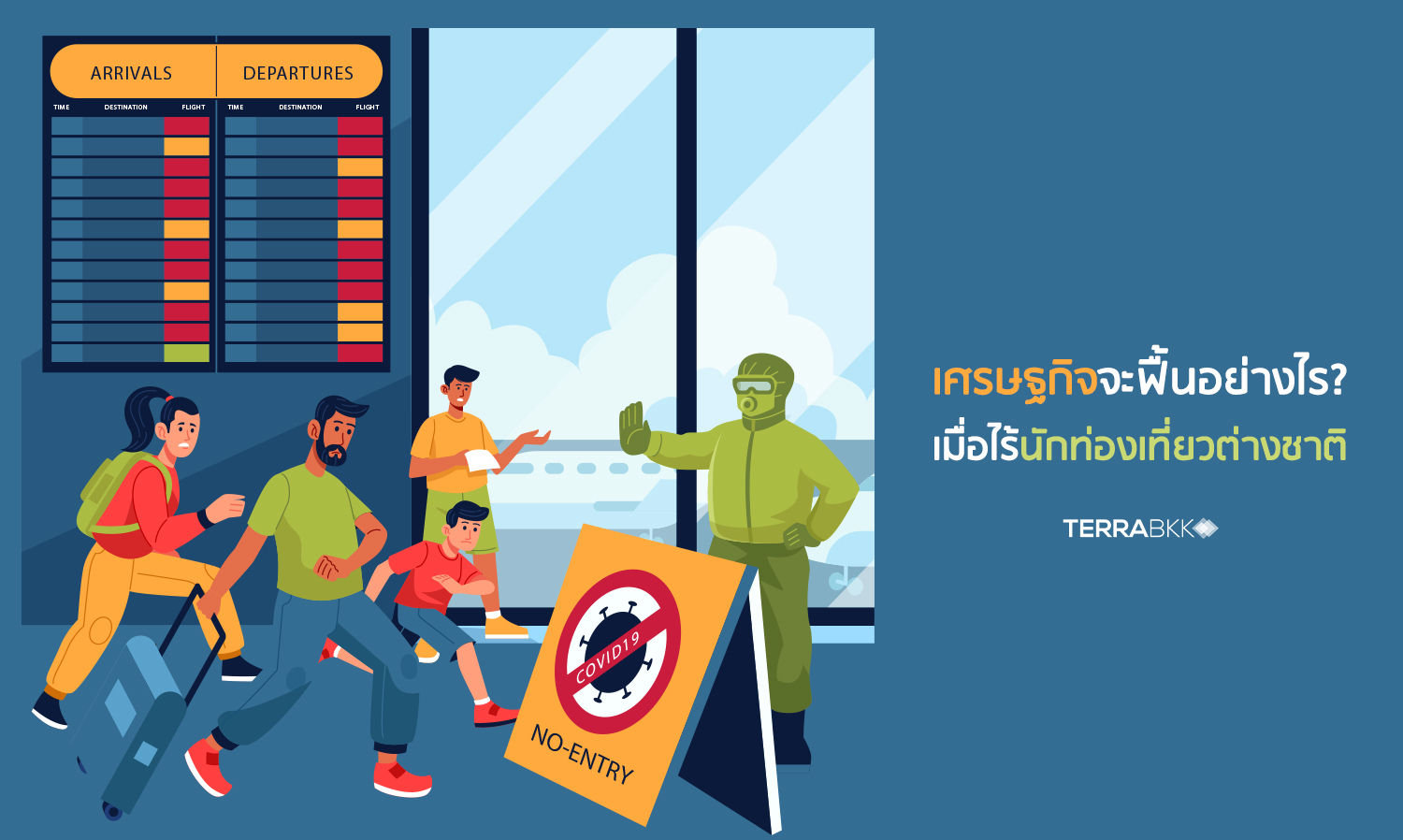
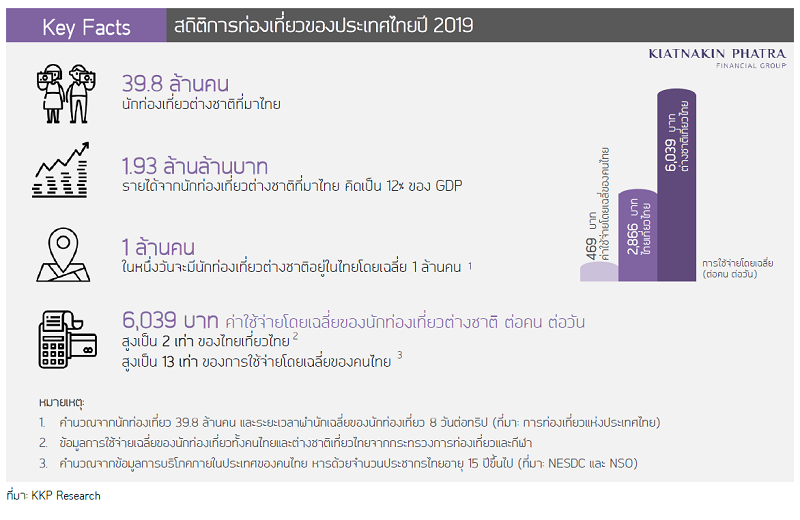
Despite having a low number of COVID-19 cases and managing the situation better than many other countries, Thailand's economy has been significantly impacted by this crisis, especially in the tourism sector, which is one of the main engines of the Thai economy. Revenue from foreign tourists accounts for about 12% of GDP.
As the Thai economy heavily relies on tourism, and international travel is likely to be the last restriction to be lifted, what will be the impact on the Thai economy? Will it recover quickly or in a V-shaped manner? These are critical questions that many are still concerned about and seeking solutions for.
According to data from KKP Research, part of Kiatnakin Phatra Financial Group, the Thai economy may not be able to expect a rapid recovery even with the gradual reopening of cities, for at least three reasons:
The reopening to foreign tourists is likely to be the last restriction to be lifted.
Domestic economic activities may resume somewhat with the lifting of restrictions, but domestic spending will not be sufficient to compensate for the loss of revenue from tourism, which was a significant income source for Thailand.
Statistics indicate that in 2019, there were about 1 million foreign tourists in Thailand daily on average (this may vary by season), and according to national income accounts, the average spending of foreign tourists in Thailand was 6,039 baht per person per day, more than twice the average spending of Thai tourists traveling domestically and 13 times more than the average spending of Thai citizens. For domestic spending to fully compensate for the economic impact from lost tourism revenue, every Thai citizen aged 15 and over, totaling 56.5 million people, would need to increase their spending by 20%, which is unlikely in the current economic situation.
The reopening to foreign tourists is likely to be the last restriction to be lifted due to the challenges in verifying incoming tourists. There is currently no effective system for rapid testing of incoming cases, nor a comprehensive tracking system for those in close contact with infected individuals.
In 2019, Thailand welcomed 39.8 million foreign tourists, averaging 109,040 arrivals daily. If tourism is to fully reopen now, there will need to be preparations for verification systems, quarantine facilities, and tracking systems to accommodate the large number of daily arrivals. Therefore, it is difficult to expect Thailand to fully reopen to tourists and return to normalcy within this year.
Reopening with strict social distancing measures
Social distancing remains a priority to control the disease. Thus, even if Thailand can open its borders to allow travel and tourism from certain countries or groups, the requirement for quarantine and social distancing will affect foreign tourists' decisions to travel and increase costs, making it difficult for many businesses to operate at full capacity. Hotels, restaurants, spas, tour groups, bus transport, entertainment venues, and bars will all need to reorganize, potentially serving only half of their normal customer capacity. Some high-risk businesses may face prolonged closures.
"If tourism-related income does not return to normal, it will inevitably impact the income and spending capacity of operators and workers."
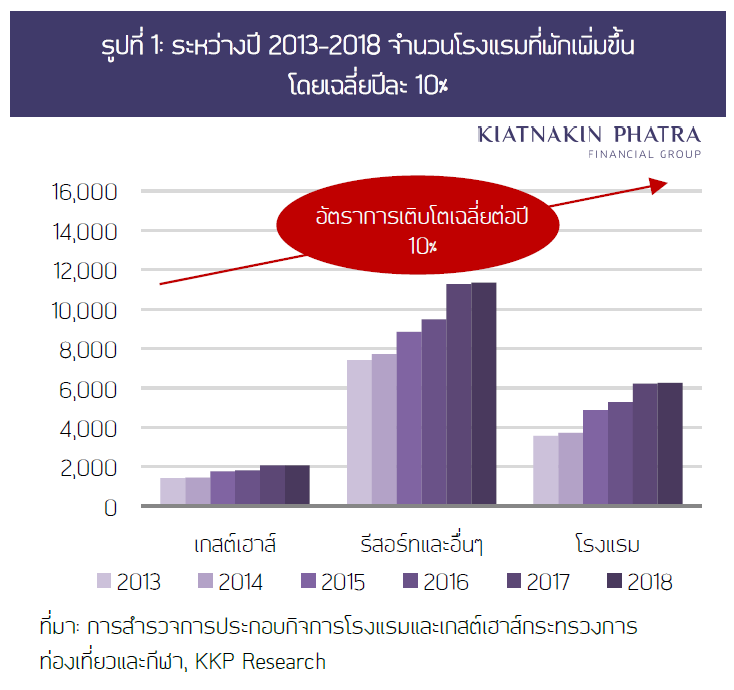
Over the past decade, Thailand has seen an average annual increase of 12% in foreign tourists. This rapid growth in tourism has led many Thais to enter the hotel and accommodation business, with an average annual increase of 10% in hotel establishments from 2013 to 2018 (not including unregistered accommodations, which likely increased significantly).
However, the growth rate of available rooms has been lower, at 7% per year, indicating that newer accommodations tend to be smaller, with more small operators entering the market. The number of workers in the hotel and restaurant sector has also increased by an average of 4% per year.
If tourists do not return, these small businesses may not survive and will have to close. The crisis in Thai tourism will have a massive impact on the income of operators and employees in the tourism industry and related businesses, further hindering the economy's recovery, even as cities begin to reopen.
Therefore, the Thai business sector, especially in tourism, whether large or small, must adapt significantly to prepare for changes. Given the revised forecast for tourist numbers for the remainder of the year, which is expected to increase by only 3 million under the assumption that Thailand can gradually open to low-risk countries, the total number of foreign tourists this year is projected to be only 9 million, a 77% decrease from last year. If we cannot open the country at all, there is a risk that the number of tourists will be even lower, leading KKP Research to adjust its forecast for GDP this year to a negative growth of 9%, down from the previous estimate of negative 6.8%.
“Thai Tourism” is the last hope for the tourism business.
This year, the overall tourism situation in Thailand may see total revenue shrink to just one-third of the target revenue of 3.18 trillion baht set at the end of 2019, or about 1.23 trillion baht, especially with revenue from foreign tourists expected to drop to around 700-800 billion baht from a target of 14-16 million tourists.
Therefore, the hope for the tourism business will depend on domestic tourism, “Thai Tourism,” which is expected to generate around 400-500 billion baht to support the economy. Currently, the government is preparing measures to stimulate domestic tourism and Thai consumption to revive the economy from a budget of 400 billion baht under the 1.9 trillion baht emergency decree.
Data from the Tourism Authority of Thailand (TAT) reveals that these measures are being implemented under a tourism stimulus program, with the government aiming to encourage domestic travel. The main challenge is how to get Thai people to travel during July to October 2020, especially in July, when the government is considering adding compensatory holidays from the April period.
“If additional holidays are combined with government incentives, it should result in tourism revenue this year of no less than 1.23 trillion baht, with 400-500 billion baht coming from domestic tourism, which should be closer to reality.”
The Ministry of Finance has revealed plans to stimulate tourism, starting with promoting travel for medical personnel and community health volunteers. They are also considering implementing a cash-back scheme to encourage tourism, where the government would reimburse citizens immediately after their travel expenses. This approach is expected to be more effective, with details on the reimbursement amount currently under consideration, and everything will need to be finalized into a single package for submission to the screening committee and subsequent approval by the Cabinet.
The idea of distributing cash or vouchers is another proposal from TAT, which is still under consideration, as it requires careful evaluation of the pros and cons of each approach to ensure it is cost-effective and meets the goal of genuinely stimulating domestic tourism.
“The key variables that determine whether tourism will recover quickly or slowly are three main factors: 1. The domestic outbreak situation, 2. The outbreak situation abroad, as 2 out of 3 of tourism revenue comes from abroad, and 3. The readiness of operators to adapt, such as hygiene standards that are the new normal.”

The Domestic Tourism Business Association states that currently hotels, tourist attractions, and restaurants are running campaigns offering discounts and promotions to bring in cash flow to sustain their businesses, as the current reopening does not mean that people will travel as actively as before; many are still fearful and are traveling mainly to return home or for work, with tourism volumes remaining low. Some operators are still not reopening, fearing that if they do, there may not be enough tourists to justify the costs.
It is estimated that it may take about three months after the government lifts restrictions for Thai people to feel comfortable traveling for tourism. If there is no second wave of outbreaks in the next three months (June-August), it is believed that tourism operators across all sectors will gradually reopen, and the atmosphere for domestic tourism may return to normal by the last quarter of this year.
The Domestic Tourism Business Association is also preparing marketing plans and campaigns to kick off domestic tourism in collaboration with the Tourism Authority of Thailand (TAT) to create an atmosphere and build confidence for tourists to travel.
This will start with a project taking operators to assess the readiness of Kanchanaburi province, which has been the first to announce the lifting of tourism restrictions, welcoming the first caravan of tourism operators at the end of June under the project name “SHA Caravan,” with travel programs set to be sold starting in July.
Following this, there are plans to assess the readiness of Rayong, Nakhon Si Thammarat, Ranong, and the three central provinces of Ang Thong, Sing Buri, and Chai Nat, respectively, along with other provinces that are ready.
In addition to assessing the readiness to accommodate tourists, the TAT is also developing new tourism activity formats in line with social distancing measures, which are the new norm for the tourism sector. Activities planned in Kanchanaburi will follow a “drive-in” concept, where people can drive to watch movies in a large open area, eat in their cars or outside, while remaining within their designated space. In Rayong, a concept is being proposed to TAT for a small concert by the beach, where tourists can drive their caravans to watch the concert while remaining in their vehicles or in their designated areas.
These plans represent adaptations; if viewed positively, this COVID-19 crisis is an opportunity for the Thai economy to 'reset' itself, reducing the over-concentration of economic structures in any one sector and seeking new economic engines.